Sonia Gandhi: Saviour-in-chief of Congress in dark times

Agencies
August 11, 2019

New Delhi, Aug 11: Having earned the distinction of being the longest-serving Congress president, Sonia Gandhi is once again at the helm to steer her party out of troubled waters.

Sonia Gandhi, 72, has been made interim president barely 20 months after she voluntarily relinquished the top post in favour of son Rahul Gandhi who refused to continue on as Congress chief after a humiliating 2019 general election defeat.

For the Congress Working Committee (CWC) the natural choice was Sonia Gandhi, who has been the party's saviour-in-chief in times of crisis and a binding force.

Critics say the development has once again highlighted how the Congress is unable to look beyond the Gandhi family when it comes to leadership. With no timeline set for party elections, Sonia is likely to continue in the top post in coming months.

In her 19-year stint as Congress chief, Sonia Gandhi was hailed for deft handling of party intrigues and judgment that gave the party two consecutive wins at the Centre and several in states.

In her decision to accept the CWC's unanimous request to lead the 134-year-old party, Sonia Gandhi has displayed courage given her continuing frail health, sources said.

Once considered an unlikely heir to the grand political legacy of the Gandhi family, Sonia went on to create history as the longest-serving president from 1998 to 2017.

In her political innings defined by a successful coalition experiment in the form of UPA, Sonia Gandhi has always credited mother-in-law and former prime minister Indira Gandhi for her achievements.

Bringing disparate political groupings together on one platform in a pre-poll coalition to stump the BJP out of power in 2004, was one of her biggest successes.

Though the UPA floundered in its second innings starting 2009, Sonia Gandhi helmed the coalition from the shadows, often inviting the criticism of running a cabinet parallel to that of former prime minister Manmohan Singh who led the Congress-led alliance government.

Sonia Gandhi lost no time to resign from the Lok Sabha when the office of profit controversy gripped her over her role as chairperson of the National Advisory Council during UPA-1. She returned to the Lok Sabha with a higher margin in a re-election.

But in the 2019 general elections, Sonia Gandhi's victory margin in her traditional Rae Bareli seat plummeted to 1 lakh, like never before, signalling changing contours of politics under an aggressive BJP.

Gradual decline in Congress electoral fortunes under Rahul Gandhi, desertions from Congress to BJP, deepening division in opposition ranks and a surging BJP were some factors that seemed to have weighed on Sonia Gandhi's mind when she accepted the CWC suggestion on Saturday.

Her return coincides with a critical election season with polls in Haryana, Jharkhand and Maharashtra due later this year. Her first challenge would be to fight the BJP in these states having seen Congress getting reduced to just four states under her son.

After Congress' lacklustre performance in the first session of the new Parliament, party leaders hope Sonia Gandhi's leadership will reinvigorate the cadre and bind the ranks that have reeled in a leadership vacuum after Rahul Gandhi resigned as party president on May 25.

It is also felt Sonia Gandhi's return will give reason for a divided opposition to come together to fight the BJP.

This is exactly how things unfolded starting 1998 after she took charge as Congress chief. The party was then in tatters at the Centre and in power in only four states. She assumed charge, united the opposition and bound the party which had seen record desertions under past chief Sitaram Kesri.

As Sonia begins her fresh innings, her toughest so far, she is bound to find herself in familiar territory – a demoralised and desertion-hit Congress, a disunited opposition and a surging BJP.

Congress leaders, however, feel she has all it takes to hit back, silence and dignity being her most lethal weapons.

The BJP, on the other hand, may again rake her foreign origins, a touchy subject for Sonia Gandhi, who lost colleagues like Sharad Pawar on this count. But over the years even Pawar has made peace with her.

Though the NCP has denied talks of a merger with Congress, the grand old party might urge all its former members to return.

It remains to be seen how Sonia Gandhi reconciles with the new political landscape where the BJP has almost made coalition politics redundant.

Having picked up Hindi, a language alien to her, and having won many hearts, she will again be counted upon to deliver big.

Born to Italian parents in Lusiana, Vicenza (Italy), on December 9, 1946, Sonia met late PM Rajiv Gandhi in England where she was studying. The two got married in 1968.

Contemporary history recalls how she cradled Indira Gandhi's body after she was gunned down by her bodyguards, and tried to persuade her husband, who was assassinated in 1991, not to take up the PM's post.

Sonia Gandhi took primary membership of Congress in 1997 and became its president in 1998. She was first elected to Lok Sabha from Amethi in 1999.

In 2004, she shifted to Rae Bareli to accommodate son Rahul in Amethi. The same year she steered the party's electoral campaign and led it to victory.

Sonia Gandhi went on to decline prime ministership nominating Manmohan Singh for the post, a move many read as a political masterstroke. Behind the scenes, she remained the supreme Congress leader as UPA chairperson. 

Comments

Add new comment

  • Coastaldigest.com reserves the right to delete or block any comments.
  • Coastaldigset.com is not responsible for its readers’ comments.
  • Comments that are abusive, incendiary or irrelevant are strictly prohibited.
  • Please use a genuine email ID and provide your name to avoid reject.
News Network
December 7,2025

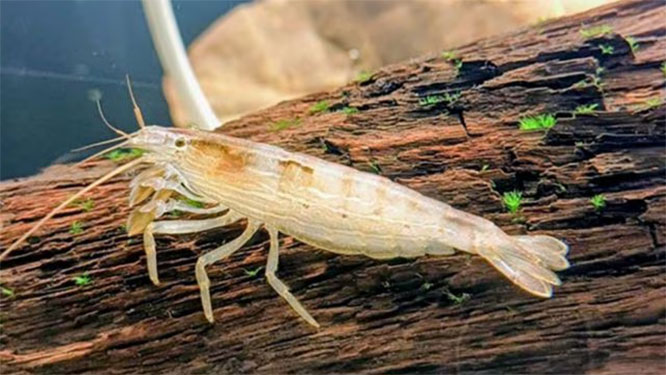
SHRIMP.jpg

Mangaluru, Dec 7: A rare bamboo shrimp has been rediscovered on mainland India more than 70 years after it was last reported, confirming for the first time the presence of Atyopsis spinipes in the country. The find was made by researchers from the Centre for Climate Change Studies at Sathyabama Institute of Science and Technology, Chennai, during surveys in Karnataka and Odisha.

The team — shrimp expert Dr S Prakash, PhD scholar K Kunjulakshmi, and Mangaluru-based researcher Maclean Antony Santos — combined field surveys, ecological assessments and DNA analysis to identify the elusive species. Their findings, published in Zootaxa, resolve decades of taxonomic confusion stemming from a 1951 report that misidentified the species as Atyopsis moluccensis without strong evidence.

The shrimp has now been confirmed at two locations: the Mulki–Pavanje estuary near Mangaluru and the Kuakhai River in Bhubaneswar. Historical specimens from the Andaman Islands, previously labelled as A. moluccensis, were also found to be misidentified and actually belong to A. spinipes.

The rediscovery began after an aquarium hobbyist in Odisha spotted a shrimp in 2022, prompting systematic surveys across Udupi, Karwar and Mangaluru. Four female specimens were collected in Mulki and one in Odisha, all genetically matching.

Researchers warn the species may exist in very small, vulnerable populations as freshwater habitats face increasing pressure from pollution, sand mining and infrastructure development. All verified specimens have been deposited with the Zoological Survey of India for future reference.

Comments

Add new comment

  • Coastaldigest.com reserves the right to delete or block any comments.
  • Coastaldigset.com is not responsible for its readers’ comments.
  • Comments that are abusive, incendiary or irrelevant are strictly prohibited.
  • Please use a genuine email ID and provide your name to avoid reject.
News Network
December 15,2025

Mangaluru, Dec 15: Air India Express has announced that it will resume direct flight services between Mangaluru and Muscat from March 2026, restoring an important international air link for passengers from the coastal region.

Airport authorities said the service will operate twice a week—on Sundays and Tuesdays—from March 1. The initial flights are scheduled on March 3, 8 and 10, followed by March 15 and 17, with the same operating pattern to continue thereafter. The flight duration is approximately three hours and 25 minutes.

The Mangaluru–Muscat route was earlier operated under the 2025 summer schedule, with services beginning on July 14. At that time, Air India Express had operated four flights a week before suspending the service.

Officials said the summer schedule will come into effect from March 29, after which changes in flight timings and departure schedules from Mangaluru are expected. Passengers have been advised to check the latest schedules while planning their travel.

The resumption of direct flights to Muscat is expected to significantly benefit expatriates, business travellers and others, further strengthening Mangaluru’s air connectivity with the Gulf region.

Comments

Add new comment

  • Coastaldigest.com reserves the right to delete or block any comments.
  • Coastaldigset.com is not responsible for its readers’ comments.
  • Comments that are abusive, incendiary or irrelevant are strictly prohibited.
  • Please use a genuine email ID and provide your name to avoid reject.
News Network
December 13,2025

New Delhi: School-going children are picking up drug and smoking habits and engaging in consumption of alcohol, with the average age of introduction to such harmful substances found to be around 13 years, suggesting a need for earlier interventions as early as primary school, a multi-city survey by AIIMS-Delhi said.

The findings also showed substance use increased in higher grades, with grade XI/XII students two times more likely to report use of substances when compared with grade VIII students. This emphasised the importance of continued prevention and intervention through middle and high school.

The study led by Dr Anju Dhawan of AIIMS's National Drug Dependence Treatment Centre, published in the National Medical Journal of India this month, looks at adolescent substance use across diverse regions.

The survey included 5,920 students from classes 8, 9, 11 and 12 in urban government, private and rural schools across 10 cities -- Bengaluru, Chandigarh, Delhi, Dibrugarh, Hyderabad, Imphal, Jammu, Lucknow, Mumbai, and Ranchi. The data were collected between May 2018 and June 2019.

The average age of initiation for any substance was 12.9 (2.8) years. It was lowest for inhalants (11.3 years) followed by heroin (12.3 years) and opioid pharmaceuticals (without prescription; 12.5 years).

Overall, 15.1 per cent of participants reported lifetime use, 10.3 per cent reported past year use, and 7.2 per cent reported use in the past month of any substance, the study found.

The most common substances used in the past year, after tobacco (4 per cent) and alcohol (3.8 per cent), were opioids (2.8 per cent), followed by cannabis (2 per cent) and inhalants (1.9 per cent). Use of non-prescribed pharmaceutical opioids was most common among opioid users (90.2 per cent).

On being asked, 'Do you think this substance is easily available for a person of your age' separately for each substance category, nearly half the students (46.3 per cent) endorsed that tobacco products and more than one-third of the students (36.5 per cent) agreed that a person of their age can easily procure alcohol products.

Similarly, for Bhang (21.9 per cent), ganja/charas (16.1 per cent), inhalants (15.2 per cent), sedatives (13.7 per cent), opium and heroin (10 per cent each), the students endorsed that these can be easily procured.

About 95 per cent of the children, irrespective of their grade, agreed with the statement that 'drug use is harmful'.

The rates of substance use (any) among boys were significantly higher than those of girls for substance use (ever), use in the past year and use in the past 30 days. Compared to grade VIII students, grade IX students were more likely, and grade XI/XII students were twice as likely to have used any substance (ever).

The likelihood of past-year use of any substance was also higher for grade IX students and for grade XI/XII students as compared to grade VIII students.

About 40 per cent of students mentioned that they had a family member who used tobacco or alcohol each. The use of cannabis (any product) and opioid (any product) by a family member was reported by 8.2 per cent and 3.9 per cent of students, respectively, while the use of other substances, such as inhalants/sedatives by family was 2-3 per cent, the study found.

A relatively smaller percentage of students reported use of tobacco or alcohol among peers as compared to among family members, while a higher percentage reported inhalants, sedatives, cannabis or opioid use among peers.

Children using substances (past year) compared to non-users reported significantly higher any substance use by their family members and peers.

There were 25.7 per cent students who replied 'yes' to the question 'conflicts/fights often occur in your family'. Most students also replied affirmatively to 'family members are aware of how their time is being spent' and 'damily members are aware of with whom they spend their time'.

Comments

Add new comment

  • Coastaldigest.com reserves the right to delete or block any comments.
  • Coastaldigset.com is not responsible for its readers’ comments.
  • Comments that are abusive, incendiary or irrelevant are strictly prohibited.
  • Please use a genuine email ID and provide your name to avoid reject.