



A tailor by day and killer by night; Bhopal man murdered 33

TOI
September 12, 2018

Bhopal, Sept 12: During the day Adesh Khamra stitched clothes, hunched over his sewing machine in a small shop on the fringes of Bhopal. In the night, as he tossed in bed, consumed by visions of deadly crimes that he wanted to commit, he perhaps saw himself switching the needle for an axe, the thread into a hangman's noose.

Then the killings started. Sometime around 2010. The first one in Amravati, the other in Nashik. Soon, bodies started popping up everywhere in MP, some even in Maharashtra, UP and Bihar. There was one element that connected the murders. All the victims were truck drivers and their helpers. But no one thought the quiet, affable tailor from Mandideep could have been behind the brutality.

Last week, when the local police finally nabbed Khamra, they were stunned he admitted to 30 killings. On Tuesday, he said he had killed three more. At 33 serial strikes, that would make him one of India's deadliest killers, behind the likes of Raman Raghav, who was charged with slaughtering 42, Surendra Koli and the Stoneman of Kolkata. Khamra, who was arrested from the jungles of Sultanpur in UP by a daring woman cop after a three-day chase last week, "was admitting to murders so rapidly" that the raiding team said it was struggling to keep up with the flow of information.

‘He killed drivers to give them salvation’

It was Bhopal city SP Bittu Sharma — a taekwondo black belt and Asian Games bronze medalist in judo — who took Khamra down at gunpoint in the dead of the night. Neither she nor SP Lodha Rahul Kumar, who headed investigations into two recent murders of truckers, had any clue then that they possibly had one of India’s most notorious serial killers in their custody. “This is a once-in-a-lifetime case,” said Lodha.

Co-accused Jaykaran has told police that whenever they asked him why he killed the drivers, he would laugh and say he is granting them salvation. “They lead hard lives,” he would laugh. “I am giving them mukti, freeing them from pain.”

Friends and relatives said it was unbelievable that they had lived next to a monster all this while. “He was a quiet man, well behaved. There is no way anyone will accept he has the blood of so many on his hands,” said a neighbor.

Bhopal DIG Dharmendra Choudhary said Khamra, 48 now, could put up a disarming show of warmth and friendliness. He used this to befriend truckers and trap them. While his men looted the cargo, he would strangle the drivers with a length of rope. Occasionally, he used poison to silence his victims.

The modus operandi was chillingly effective — ensnare truckers over drinks, drug them, murder them, strip them of every bit of clothing that could lead to their identification, and dump bodies under culverts or on hilly roads.

This way, bodies would turn up in states ranging from MP to Maharashtra, UP, Bihar and Jharkhand, with police struggling to join the dots. “That is what makes this gang so deadly. We don’t know how many more cold cases will be traced back to them,” said an officer interrogating Khamra.

Talking to Khamra is quite unsettling, police officers involved in the probe said. He shows no remorse. “And he remembers every little detail about everyone he has killed. The victim’s last meal, where they ate, what they wore, where and how he was killed and where exactly the body was dumped. The details are bloodcurdling. In postmortem reports, the injuries were exactly where he had dealt the blows,” added a police officer.

For police, there were more startling disclosures in store. Khamra was most likely influenced by a dreaded killer he called uncle, a man whose name was Ashok Khamra. Ashok himself had admitted to 100 trucker murders when he was arrested in 2010, police said. Ashok drugged his police escort while being brought to Bhopal by train and escaped. He hasn’t been seen since.

In the close-knit Khamra community — a group of hard working, educated people whose forefathers came as refugees from Pakistan — Ashok’s notoriety is a matter of shame. So is Khamra’s now.

Comments

Add new comment

  • Coastaldigest.com reserves the right to delete or block any comments.
  • Coastaldigset.com is not responsible for its readers’ comments.
  • Comments that are abusive, incendiary or irrelevant are strictly prohibited.
  • Please use a genuine email ID and provide your name to avoid reject.
News Network
January 23,2026

oscar.jpg

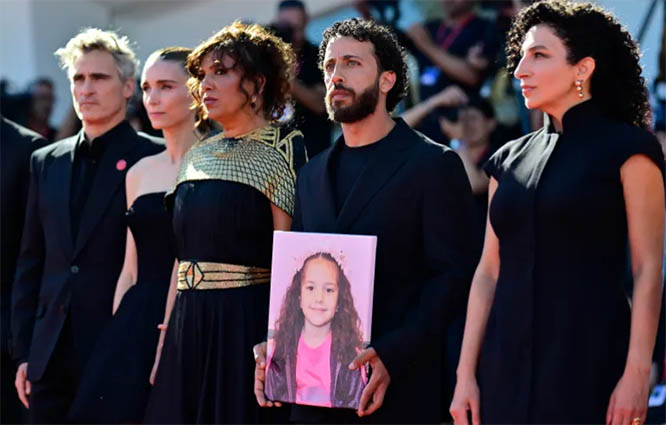
The Voice of Hind Rajab, inspired by the tragic final moments of a young Palestinian girl killed by Israeli fire in Gaza, has been nominated for an Academy Award in the Best International Feature Film category.

Directed by Tunisian filmmaker Kaouther Ben Hania, the film recounts the true story of five-year-old Hind Rajab, who lost her life in January 2024 while fleeing Israeli bombardment with her family.

The film features the real audio of Hind’s desperate call to the Palestinian Red Crescent Society, where she pleaded for help moments before the vehicle she was in was struck by 355 bullets.

The haunting narrative begins with a brief call made from the besieged Tel al-Hawa neighborhood of Gaza, where gunfire and armored vehicles drowned out every sound.

After witnessing the brutal killing of her family, she made a trembling call, her voice reduced to a whisper as she spoke of the massacre and her unbearable loneliness as the sole survivor.

Premiering at the Venice International Film Festival in September 2025, The Voice of Hind Rajab garnered widespread acclaim, receiving a record-setting 23-minute standing ovation and the Silver Lion Grand Jury Prize, the festival’s second-highest honor.

In her acceptance speech, Ben Hania dedicated the film to humanitarian workers and first responders in Gaza, emphasizing that Hind's voice symbolizes countless civilians affected by war.

She aims to give voice to victims often reduced to mere statistics, highlighting the broader suffering of civilians in war zones.

The film’s Oscar nomination underscores its powerful storytelling and ethical approach to depicting real-life tragedy, making it a crucial piece of contemporary cinema.

It serves not only as a narration of individual tragedy but also as an artistic and documentary response to the silence and censorship that often overshadow West Asian struggles and wars.

Using an innovative method she calls docufiction, Ben Hania bridges unvarnished reality and narrative structure, creating a work that is both artistically valuable and socially impactful.

Born in 1977 in Sidi Bouzid—later the epicenter of the Arab revolution—her background profoundly influenced her worldview and artistic approach.

She is a graduate of the Higher School of Audiovisual Arts of Tunis, Pantheon-Sorbonne University, and La Fémis in Paris, where her studies equipped her with the technical and theoretical tools needed to address complex subjects. 

Comments

Add new comment

  • Coastaldigest.com reserves the right to delete or block any comments.
  • Coastaldigset.com is not responsible for its readers’ comments.
  • Comments that are abusive, incendiary or irrelevant are strictly prohibited.
  • Please use a genuine email ID and provide your name to avoid reject.
News Network
February 1,2026

US President Donald Trump on Saturday claimed that the government of India led by Prime Minister Narendra Modi has made a deal to buy Venezuelan oil, as opposed to purchasing it from Iran.

"We've already made that deal, the concept of the deal," he told reporters on Air Force One.

Trump had imposed 25% tariffs on countries buying Venezuelan oil, including India, in March 2025. He had also hit India with tariffs for buying Russian oil, saying it was "funding" President Vladimir Putin's war against Ukraine.

Trump has said that the US has taken control of the oil-rich Venezuela after capturing former President Nicolas Maduro in January.

A fleet of 18 ships loaded with crude oil bound for refineries in Texas, Louisiana, and Mississippi in January, the most since December 2024, according to a report by the news agency Bloomberg.

Combined crude deliveries to the US will reach about 2,75,000 barrels a day, more than doubling volumes seen in December last year. Shipments to China, which averaged 4,00,000 barrels a day last year, fell to zero in January.

PM Modi, Venezuelan President Agree To Expand Ties

Prime Minister Narendra Modi and Venezuela's acting President Delcy Rodriguez spoke on Friday and agreed to take the bilateral relations to "new heights" in the years ahead.

It was the first phone call between the two leaders since the capture of Maduro and his wife by the US on January 3.

"Spoke with Acting President of Venezuela, Ms. Delcy Rodriguez. We agreed to further deepen and expand our bilateral partnership in all areas, with a shared vision of taking India-Venezuela relations to new heights in the years ahead," PM Modi said in a post on X.

A statement from Prime Minister Modi's office said the two leaders agreed to further expand and deepen the India-Venezuela partnership in all areas, including trade and investment, energy, digital technology, health, agriculture, and people-to-people ties.

They exchanged views on various regional and global issues of mutual interest and underscored the importance of their close cooperation for the Global South, the statement said.

Rodriguez also said that they discussed partnerships in the fields of agriculture, science and technology, mining, and tourism, as well as the pharmaceutical and automotive industries.

Comments

Add new comment

  • Coastaldigest.com reserves the right to delete or block any comments.
  • Coastaldigset.com is not responsible for its readers’ comments.
  • Comments that are abusive, incendiary or irrelevant are strictly prohibited.
  • Please use a genuine email ID and provide your name to avoid reject.