Tense scene in Kashmir Valley acts as bait for jihad: Kasuri

July 7, 2016

New Delhi, Jul 7: Kashmir has a deep resonance inside Pakistan and the tense situation in the Valley acts as bait and encourages radical elements 'to wage jihad to liberate fellow Muslims', says former Pakistan foreign minister Khurshid Mahmud Kasuri.

fm
He also says that there will always be a minority opinion sympathising with the activities of the jihadis due to the staunch commitment of Pakistanis to the Kashmir cause.

"If that were not the case," he says, "there would be no willing recruits from among the masses to the jihadi cause." However, among influential sections of public opinion and in the corridors of power it was realised that Pakistan's policy of support to non-state actors had actually boomeranged on it, says the senior leader of Pakistan's Tehreek-e-Insaf party who has dealt with India-Pakistan relations.

On the Pakistan-India dynamics, he says, "Pakistan-India relationship does have an impact radicalising elements among Muslims in Pakistan. Kashmir has a deep resonance inside Pakistan. Furthermore, the tense situation in the Kashmir Valley also acts as bait and encourages radical elements ‘to wage jihad to liberate fellow Muslims'."

He feels normalisation of relations between Pakistan and India will help pluralistic and liberal forces in Pakistan besides helping the conditions of minorities in both countries. Kasuri is also of the opinion that notwithstanding the initial romance surrounding the Mujahideen activities, the West and particularly Pakistan continue to pay a heavy price for this jihad and both are still suffering from its blowback.

"Over time, the West and Pakistan have had to contend with increasing linkages between terrorist groups of different orientations. Pakistan also discovered, to its horror, that some of the groups fighting in Kashmir could just as easily attack its own civilians and security forces.

"In many cases, the intelligence and law enforcement agencies were also targeted. Public opinion in Pakistan began turning against the activities of violent groups for whatever cause," he writes in an article in the Equator Line magazine's latest issue, contributors to which are all Pakistanis. Kasuri says that there was a growing recognition among the middle-classes and major sections of the media that Kashmir and other issues with India could not be resolved by resorting to violence by non-state actors and although their activities definitely attracted a lot of international attention, it was equally clear after 9/11 that the international community had lost any appetite for such activities.

"It came to be realised that Pakistan and India would have to find a negotiated settlement to Kashmir and other outstanding issues between them. I do not wish to convey the impression that, at the time when I assumed office, the support for jihadi groups had evaporated among all sections of public opinion. Due to the staunch commitment of Pakistanis to the Kashmir cause, there will always be a minority opinion sympathising with the activities of the jihadis," he writes.

According to Kasuri, there are many reasons for the rise of fundamentalism in Pakistan and it may be helpful to look at the subject from at least four perspectives.

"First, Pakistan's political and constitutional struggle to create a new dispensation after Partition; this determined the role of the ulema allowing for its expansion under General Zia-ul-Haq. This, in turn, contributed later on to the strengthening of the fundamentalist forces.

"Second, the situation since 1979 following the Iranian Revolution, the invasion of Afghanistan by the Soviet Union and Pakistan's role in resisting it with the help of the entire Western world, China and the Islamic fraternity with Saudi Arabia taking a lead role (along with the general spread of radicalism throughout the Muslim world for various reasons - falling outside the scope of this article) greatly strengthened the fundamentalists and militants.

"Third, the Pakistan-India dynamic helped strengthen reactionary elements inside Pakistan at the expense of the liberals. The fourth factor we have to consider is the situation in Pakistan in the post Zarb-e-Azb operation by the Pakistan Army to clear the Federally Administered Tribal Areas (FATA) of the terrorists who had taken refuge there and created an infrastructure to support their activities," he writes.


Comments

Add new comment

  • Coastaldigest.com reserves the right to delete or block any comments.
  • Coastaldigset.com is not responsible for its readers’ comments.
  • Comments that are abusive, incendiary or irrelevant are strictly prohibited.
  • Please use a genuine email ID and provide your name to avoid reject.
News Network
December 6,2025

pilot.jpg

New Delhi: IndiGo, India’s largest airline, faced major operational turbulence this week after failing to prepare for new pilot-fatigue regulations issued by the Directorate General of Civil Aviation (DGCA). The stricter rules—designed to improve flight safety—took effect in phases through 2024, with the latest implementation on November 1. IndiGo has acknowledged that inadequate roster planning led to widespread cancellations and delays.

Below are the key DGCA rules that affected IndiGo’s operations:

1. Longer Mandatory Weekly Rest

Weekly rest for pilots has been increased from 36 hours to 48 hours.

The government says the extended break is essential to curb cumulative fatigue. This rule remains in force despite the current crisis.

2. Cap on Night Landings

Pilots can now perform only two night landings per week—a steep reduction from the earlier limit of six.

Night hours, defined as midnight to early morning, are considered the least alert period for pilots.

Given the disruptions, this rule has been temporarily relaxed for IndiGo until February 10.

3. Reduced Maximum Night Flight Duty

Flight duty that stretches into the night is now capped at 10 hours.

This measure has also been kept on hold for IndiGo until February 10 to stabilize operations.

4. Weekly Rest Cannot Be Replaced With Personal Leave

Airlines can no longer count a pilot’s personal leave as part of the mandatory 48-hour rest.

Pilots say this closes a loophole that previously reduced actual rest time.

Currently, all airlines are exempt from this rule to normalise travel.

5. Mandatory Fatigue Monitoring

Airlines must submit quarterly fatigue reports along with corrective actions to DGCA.

This system aims to create a transparent fatigue-tracking framework across the industry.

The DGCA has stressed that these rules were crafted to strengthen flight safety and align India with global fatigue-management standards. The temporary relaxations are expected to remain until February 2025, giving IndiGo time to stabilise its schedules and restore normal air travel.

Comments

Add new comment

  • Coastaldigest.com reserves the right to delete or block any comments.
  • Coastaldigset.com is not responsible for its readers’ comments.
  • Comments that are abusive, incendiary or irrelevant are strictly prohibited.
  • Please use a genuine email ID and provide your name to avoid reject.
News Network
December 16,2025

jordan.jpg

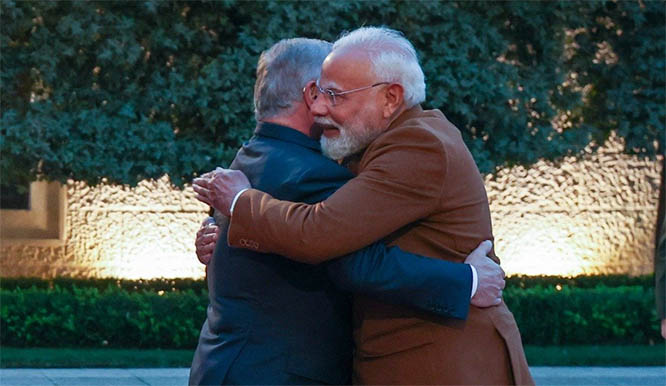
Prime Minister Narendra Modi on Monday held talks with Jordan’s King Abdullah II in Amman, during which the two leaders discussed ways to further strengthen bilateral relations, with the Prime Minister outlining an eight-point vision covering key areas of cooperation.

Describing the meeting as “productive”, PM Modi said he shared a roadmap focused on trade and economy, fertilisers and agriculture, information technology, healthcare, infrastructure, critical and strategic minerals, civil nuclear cooperation, and people-to-people ties.

In a post on social media platform X, the Prime Minister praised King Abdullah II’s personal commitment to advancing India–Jordan relations, particularly as both countries mark the 75th anniversary of the establishment of diplomatic ties this year.

“Held productive discussions with His Majesty King Abdullah II in Amman. His personal commitment towards vibrant India-Jordan relations is noteworthy. This year, we are celebrating the 75th anniversary of our bilateral diplomatic relations,” PM Modi said.

The meeting took place at the Al Husseiniya Palace, where the two leaders also exchanged views on regional and global issues of mutual interest. According to the Ministry of External Affairs (MEA), both sides agreed to further deepen cooperation in areas including trade and investment, defence and security, counter-terrorism and de-radicalisation, fertilisers and agriculture, infrastructure, renewable energy, tourism, and heritage.

The MEA said both leaders reaffirmed their united stand against terrorism.

PM Modi arrived in Amman earlier on Monday and was received by Jordanian Prime Minister Jafar Hassan, who accorded him a formal welcome. Following the talks, King Abdullah II hosted a banquet dinner in honour of the Prime Minister, reflecting the warmth of bilateral ties.

Jordan is the first leg of PM Modi’s three-nation tour. From Amman, the Prime Minister will travel to Ethiopia at the invitation of Prime Minister Abiy Ahmed Ali, marking his first official visit to the African nation. The tour will conclude with a visit to Oman.

Comments

Add new comment

  • Coastaldigest.com reserves the right to delete or block any comments.
  • Coastaldigset.com is not responsible for its readers’ comments.
  • Comments that are abusive, incendiary or irrelevant are strictly prohibited.
  • Please use a genuine email ID and provide your name to avoid reject.
News Network
December 6,2025

indigoticket.jpg

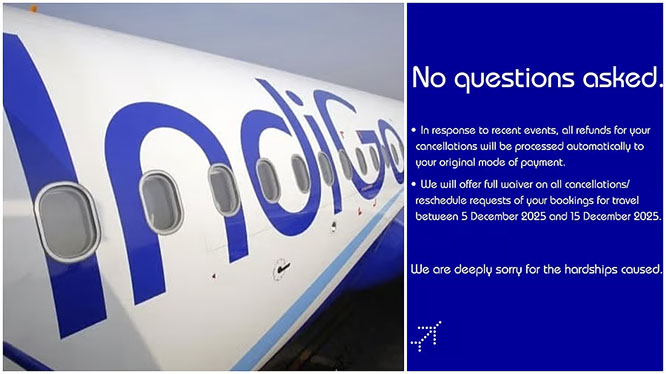
With IndiGo flight disruptions impacting thousands of passengers, the airline on Saturday said that it will offer full waiver on all cancellations/reschedule requests for travel bookings between December 5, 2025 and December 15, 2025.

Earlier in the day, the civil aviation ministry had directed the airline to complete the ticket refund process for the cancelled flights by Sunday evening, as well as ensure baggage separated from the travellers are delivered in the next two days.

In a post on X, titled 'No questions asked', IndiGo wrote, "In response to recent events, all refunds for your cancellations will be processed automatically to your original mode of payment."

"We are deeply sorry for the hardships caused," it further added.

Several passengers, however, complained of not getting full refund as promised by the airline.

Netizens have shared screenchots of getting charged for airline cancellation fee and convenience fee.

"Please tell me why u have did this airline cancellation charges when u say full amount will be refunded (sic)," a user wrote sharing a screenshot of the refund page.

"Well, but you have still debited the convenience charges," wrote another.

Passengers have also raised concerns about the "cancel" option being disabled on the IndiGo app. "First enable the 'Cancel' button on your App & offer full refund on tickets cancelled by customers between the said dates," wrote a user.

A day after the country's largest airline, IndiGo, cancelled more than 1,000 flights and caused disruptions for the fifth day on Saturday, the ministry said that any delay or non-compliance in refund processing will invite immediate regulatory action.

The refund process for all cancelled or disrupted flights must be completed by 8 pm on Sunday, the ministry said in a statement.

"Airlines have also been instructed not to levy any rescheduling charges for passengers whose travel plans were affected by cancellations," it said.

On Saturday, more than 400 flights were cancelled at various airports.

IndiGo has also been instructed to set up dedicated passenger support and refund facilitation cells.

Comments

Add new comment

  • Coastaldigest.com reserves the right to delete or block any comments.
  • Coastaldigset.com is not responsible for its readers’ comments.
  • Comments that are abusive, incendiary or irrelevant are strictly prohibited.
  • Please use a genuine email ID and provide your name to avoid reject.