



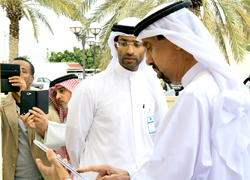
UAE's first smart mosque launched in Jumeirah

[email protected] (Khaleej Times)
February 12, 2014

Smart_mosque
Abu Dhabi, Feb 12: Can a mosque be smart? Yes, now through the Quick Response (QR) code technology, people can get general information about a mosque — its history, capacity, nature, area, prayer timings, lectures or courses offered by the mosque, as well as information about Friday sermon — round the clock.

The first smart mosque in the country was launched on Sunday by the Department of Islamic Affairs and Charitable Activities (DIACA) in Dubai on Sunday morning.

The Shaikh Mohammed bin Rashid Al Maktoum mosque in Jumeirah 3, is now equipped with the QR code technology for the first time in government buildings and is part of Phase-I of developing smart mosques that also includes nine other mosques which will follow suit later this year.

The move is in line with the Smart Government initiative announced by His Highness Shaikh Mohammed bin Rashid Al Maktoum, Vice-President and Prime Minister of the UAE and Ruler of Dubai, in May 2013.

Dr Hamad Al Shaibani, Director-General – DIACA, said the interactive services available are accessible through smart phones and tablets 24X7.

“We are using the QR code technology to identify all mosques of the emirate to help develop and add more value to them, and make the electronic services easier and more accessible.” For comments on the smart services available, the public may call (04-6087844), mentioning the name and mosque code which is 74, he noted.

Nassir Mubarak, head of IT section at DIACA, said the smart mosques project is a new channel that aims at better communication with the public.

The public may also send their suggestions, remarks, feedback, complaints, or reports on any dysfunction through the smart mosque initiative. “Electronic donation – under development, shall also be available, along with more services in the future.”

QR code is the trademark name for the two dimensional barcode system which was originally invented in 1994 by Denso Wave, a Toyota subsidiary, as a way to track vehicles assembled in a place, and to scan components at high speeds. QR codes have long since expanded their usefulness beyond the automotive industry. They're used today in everything from inventory tracking, to shipping and logistics, to online ticketing.

“The QR code technology allows mosque-goers to access a special webpage of the mosque by scanning its barcode with a smart phone or tablet which are automatically equipped with this technology; otherwise an app for QR code can be downloaded easily for concerned online stores.”

Comments

Add new comment

  • Coastaldigest.com reserves the right to delete or block any comments.
  • Coastaldigset.com is not responsible for its readers’ comments.
  • Comments that are abusive, incendiary or irrelevant are strictly prohibited.
  • Please use a genuine email ID and provide your name to avoid reject.
News Network
January 31,2026

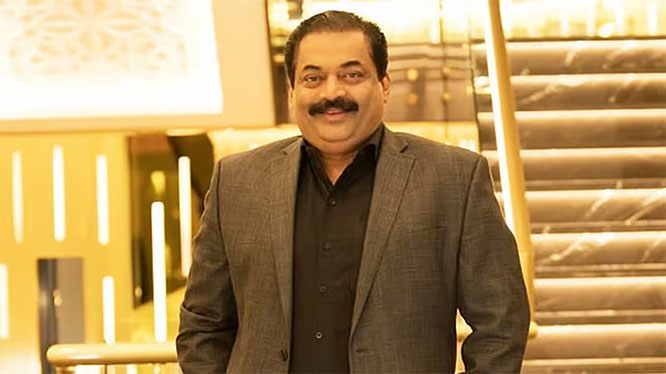
Roy.jpg

Bengaluru: The shooting incident involving CJ Roy, founder of the Confident Group, has once again put the spotlight on a businessman whose life has swung between flamboyant global success and persistent controversy at home.

Though Roy’s business interests extended across continents, his roots lay firmly in Karnataka. An alumnus of Christ School in Bengaluru, he later moved to Tumakuru to pursue an engineering degree. Those familiar with his early years describe him as intensely ambitious, beginning his career as a salesman at a small electronics firm dealing in computers.

Roy’s entry into large-scale real estate came through the Crystal Group, where he worked closely with Latha Namboothiri and rose from manager to director. However, the launch of the Confident Group in 2005 was clouded by industry speculation. Insiders speak of a fallout involving alleged “benami” properties and claims of deception that ultimately led to his independent venture—an episode Roy spent years trying to distance himself from, according to associates.

A tale of two cities

Roy’s professional trajectory diverged sharply across geographies.

In Dubai, he built a reputation as a bold and efficient developer, completing massive luxury residential projects in record time—some reportedly within 11 months. His rapid project delivery and lavish lifestyle in the Emirates earned him admiration and visibility in the real estate sector.

In Bengaluru, however, his image remained far more fractured. Sources say Roy stayed away from the city for several years amid disputes over unpaid dues to vendors and suppliers. Several projects were allegedly stalled, with accusations of unfulfilled commitments to cement and steel suppliers continuing to follow him.

Roy’s return to Bengaluru’s business and social circles began around 2018, marked by a conscious attempt at rebranding. His appointment as Honorary Consul of the Slovak Republic added diplomatic legitimacy, which he complemented with visible CSR initiatives, including ambulance donations and high-profile charity events.

Heavy police presence in Langford Town

Following the incident, police personnel from the Central division were deployed outside the Confident Group building in Langford Town, which also houses the Slovak Honorary Consulate in Bengaluru.

The otherwise busy premises near Hosur Road wore a deserted look on Friday, reflecting the shock and uncertainty that followed the tragedy.

Comments

Add new comment

  • Coastaldigest.com reserves the right to delete or block any comments.
  • Coastaldigset.com is not responsible for its readers’ comments.
  • Comments that are abusive, incendiary or irrelevant are strictly prohibited.
  • Please use a genuine email ID and provide your name to avoid reject.
News Network
February 5,2026

In an era where digital distractions are the primary rival to academic excellence, the Karnataka Education Department is taking the fight directly to the living room. As the SSLC (Class 10) annual examinations loom, officials have launched a localized "digital strike" to ensure students aren't losing their competitive edge to scrolling or soap operas.

The 7-to-9 Lockdown

The department has issued a formal directive urging—and in some cases, enforcing via home visits—a total blackout of mobile phones and television sets between 7:00 PM and 9:00 PM. This two-hour window is being designated as "sacred study time" across the state until the examinations conclude on April 2.

Key Pillars of the Initiative:

•    Doorstep Advocacy: Teachers are transitioning from classrooms to living rooms, meeting parents to explain the psychological benefits of a distraction-free environment.

•    Parental Accountability: The campaign shifts the burden of discipline from the student to the household, asking parents to lead by example and switch off their own devices.

•    The Timeline: The focus remains sharp on the upcoming exam block, scheduled from March 18 to April 2.

"The objective is simple: uninterrupted focus. We are reclaiming the evening hours for the students, ensuring their environment is as prepared as their minds," stated a senior department official.

Student vs. Reality

While the student community has largely welcomed the "forced focus"—with many admitting they lack the willpower to ignore notifications—the move has sparked a debate on enforceability. Without a "TV Police," the success of this initiative rests entirely on the shoulders of parents and the persuasive power of visiting educators.

Comments

Add new comment

  • Coastaldigest.com reserves the right to delete or block any comments.
  • Coastaldigset.com is not responsible for its readers’ comments.
  • Comments that are abusive, incendiary or irrelevant are strictly prohibited.
  • Please use a genuine email ID and provide your name to avoid reject.