Uddhav bats for Ram temple; backs tie-up with BJP

Agencies
October 9, 2019

New Delhi, Oct 9: Shiv Sena chief Uddhav Thackeray on Tuesday made a strong pitch for a Ram temple in Ayodhya and demanded enactment of a special law to facilitate its construction, while he justified his decision to ally with the BJP for the October 21 Maharashtra assembly elections.

Making a slew of announcements ahead of the polling, he said the Shiv Sena is committed to providing reservation in jobs and education to the Dhangar (shepherd) community and will also fight for the rights of "India-loving" Muslims.

In his 35-minute-long speech at the Sena's annual Dussehra rally in Shivaji Park in central Mumbai, Thackeray spoke on a range of issues, from Article 370 to the ongoing protests in Hong Kong.

"Courts have a holiday on the day when Lord Ram killed Ravan (on Dussehra). Courts are also closed the day when Ram returned to Ayodhya (on Diwali) after killing Ravan. The only issue of contention now is whether Ram was born in Ayodhya," he said.

He said Prime Minister Narendra Modi had advised not to speak on the Ram temple issue as the matter is pending before the Supreme Court.

"The Supreme Court verdict is expected this month, but our demand remains that a special law is enacted for construction of a Ram mandir in Ayodhya," he said.

Speaking at a rally in Nashik last month, Modi, in an apparent jibe at ally Shiv Sena, had said the Supreme Court is hearing the Ram mandir case and asked "some loudmouths" to refrain from making statements on the issue.

"I am amazed at the 'bayan bahadurs and badbole' (loudmouths) on the Ram Mandir issue. Everyone in the country respects the Supreme Court. The apex court is hearing the case. I want to tell these people with folded hands to have faith in the judicial system," Modi had said.

Speaking at the Dussehra rally, Thackeray said his party is not the raising the issue of Ram temple for politics or electoral gains.

"We are committed to the construction of the temple. When we got our bow and arrow symbol, the issue of Ram mandir wasn't there," he said to drive home the point that the sensitive matter was above politics for the party.

Thackeray sought to dispel the notion that the Shiv Sena had "surrendered" while entering into a pre-poll alliance with the BJP for the assembly polls.

Of the 288 seats, the BJP is contesting 164 and the Shiv Sena 124, establishing the latter as a junior ally in a state where it was once the senior coalition partner.

"The Shiv Sena doesn't bow before anyone except Chhatrapati Shivaji Maharaj and the Marathi-speaking people," he asserted.

"We did make some compromises for the alliance to happen, but they were in the interest of Maharashtra. I apologise to Shiv Sainiks whose seats have gone to the allies.

"You have to continue working hard to make the party strong and work to ensure its victory," he said, seeking to assuage the feelings of those left out in ticket race and to ensure they don't work against official alliance nominees.

In an apparent reference to the BJP, Thackeray said no one should even dare to betray Shiv Sainik.

"Chhatrapati Shivaji's Maharashtra doesn't kowtow before anyone. The Shiv Sainik is my sword. I will not give strength to the Congress which opposed scrapping of Article 370 (which accorded special status to Jammu and Kashmir) and wanted to repeal sedition laws," he said.

Thackeray said there was a vast difference between the Sena-BJP alliance and the SP-BSP tie-up in Uttar Pradesh.

"Ours is a genuine alliance, while the SP-BSP pact was solely for the lust of power so people rejected it," the Sena president said.

Hitting out at the Congress-NCP combine, Thackeray mocked senior Congress leader Sushilkumar Shinde for his remarks that the two opposition parties are now tired as separate entities and should come together.

"First decide who is your leader - (NCP president) Sharad Pawar or (Congress chief) Sonia Gandhi because of whom the NCP was formed. Don't be tired."

"Keep yourself fresh to have our victory pedas (sweets)," he said, expressing confidence about the saffron front's win in the polls.

After Article 370, construction of a Ram temple in Ayodhya and enactment of a Uniform Civil Code should be next on agenda of the government, Thackeray said.

Taking potshots at NCP leader Ajit Pawar, who recently got emotional at a press conference, the Sena chief said he was merely shedding crocodile tears.

Speaking about the Opposition's charge that the BJP-led government was acting out of revenge, reflected in an ED case against Sharad Pawar and his nephew Ajit, he said in 2000, the then Congress-NCP government had acted out of revenge by arresting his father, Bal Thackeray, in a 10-year-old riot case.

Thackeray also criticised the Congress-NCP combine over their manifesto promising 80 per cent reservation in jobs to local youth.

"When Shiv Sena fought for the rights of the Marathi youth, the Congress government had punished Shiv Sainiks with lathis," Thackeray said.

He said on being voted to power, the Sena will ensure loan waiver for farmers, 'thali' of nutritious food at Rs 10 for the poor, reduce electricity rates for consumption up to 300 units, start health check-up at Re one and launch special bus services for women.

Thackeray said this year Vijayadashmi is being celebrated on two days - October 8 and October 24 (when assembly election results will be announced).

Comments

Add new comment

  • Coastaldigest.com reserves the right to delete or block any comments.
  • Coastaldigset.com is not responsible for its readers’ comments.
  • Comments that are abusive, incendiary or irrelevant are strictly prohibited.
  • Please use a genuine email ID and provide your name to avoid reject.
News Network
December 7,2025

envoy.jpg

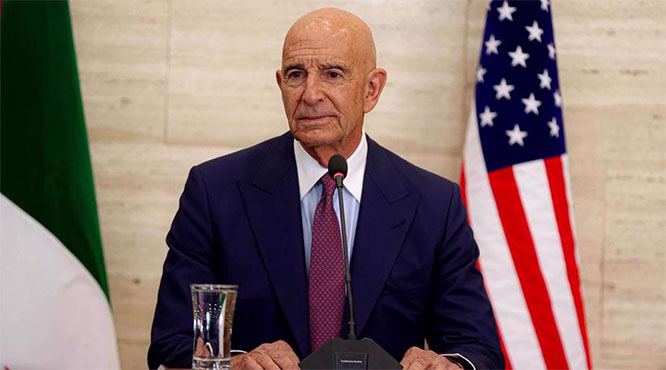
Since 1946, the United States has attempted 93 coups or “regime change” operations across the world — including two in Iran, US Special Envoy for Syria Tom Barrack has admitted.

Speaking to the UAE-based IMI Media Group, in remarks published by The National, Barrack said Washington tried twice to overthrow the Iranian government but failed both times. 

“For (Trump) then to be imputed with regime change — we had two regime changes in Iran already. Neither one worked. So I think wisely leave it to the region to solve,” said Barrack, who also serves as the US ambassador to Turkey.

His comments come six months after the US joined Israel in airstrikes against Iran during ongoing indirect nuclear negotiations between Tehran and Washington.

On June 13, Israel launched an attack on Iran that killed at least 1,064 people and hit civilian infrastructure. Days later, the United States targeted three nuclear facilities — Fordow, Natanz and Isfahan — in what Iran called a clear violation of international law. Iranian retaliation eventually forced a halt to the assault on June 24.

Barrack further claimed that US President Donald Trump and Foreign Secretary Marco Rubio are “not into regime change” and prefer a regional approach driven by Middle Eastern countries themselves. According to him, regional dialogue and non-interference by outside powers offer a more durable path forward.

He added that Washington is still open to an agreement with Tehran if Iranian authorities show “seriousness” and willingness to engage constructively.

However, Iran maintains the US has not shown readiness for meaningful talks. In an interview with Japan’s Kyodo News, Iranian Foreign Minister Abbas Araghchi said negotiations could advance only if Washington acknowledges Iran’s right to peaceful nuclear energy and lifts unilateral sanctions.

Comments

Add new comment

  • Coastaldigest.com reserves the right to delete or block any comments.
  • Coastaldigset.com is not responsible for its readers’ comments.
  • Comments that are abusive, incendiary or irrelevant are strictly prohibited.
  • Please use a genuine email ID and provide your name to avoid reject.
News Network
December 16,2025

bengal.jpg

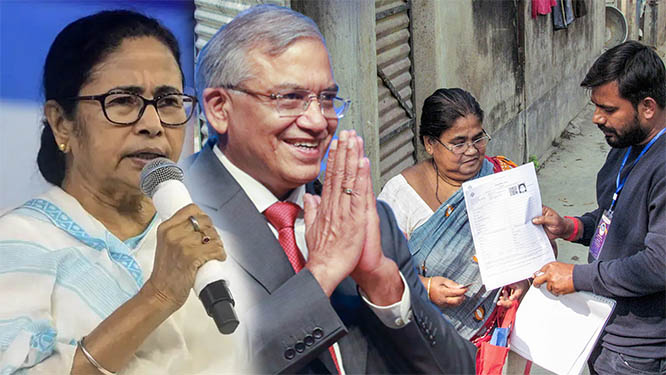
The deletion of over 58 lakh names from West Bengal’s draft electoral rolls following a Special Intensive Revision (SIR) has sparked widespread concern and is likely to deepen political tensions in the poll-bound state.

According to the Election Commission, the revision exercise has identified 24 lakh voters as deceased, 19 lakh as relocated, 12 lakh as missing, and 1.3 lakh as duplicate entries. The draft list, published after the completion of the first phase of SIR, aims to remove errors and duplication from the electoral rolls.

However, the scale of deletions has raised fears that a large number of eligible voters may have been wrongly excluded. The Election Commission has said that individuals whose names are missing can file objections and seek corrections. The final voter list is scheduled to be published in February next year, after which the Assembly election announcement is expected. Notably, the last Special Intensive Revision in Bengal was conducted in 2002.

The development has intensified the political row over the SIR process. Chief Minister Mamata Banerjee and her Trinamool Congress have strongly opposed the exercise, accusing the Centre and the Election Commission of attempting to disenfranchise lakhs of voters ahead of the elections.

Addressing a rally in Krishnanagar earlier this month, Banerjee urged people to protest if their names were removed from the voter list, alleging intimidation during elections and warning of serious consequences if voting rights were taken away.

The BJP, meanwhile, has defended the revision and accused the Trinamool Congress of politicising the issue to protect what it claims is an illegal voter base. Leader of the Opposition Suvendu Adhikari alleged that the ruling party fears losing power due to the removal of deceased, fake, and illegal voters.

The controversy comes amid earlier allegations by the Trinamool Congress that excessive work pressure during the SIR led to the deaths by suicide of some Booth Level Officers (BLOs), for which the party blamed the Election Commission. With the draft list now out, another round of political confrontation appears imminent.

As objections begin to be filed, the focus will be on whether the correction mechanism is accessible, transparent, and timely—critical factors in ensuring that no eligible voter is denied their democratic right ahead of a crucial election.

Comments

Add new comment

  • Coastaldigest.com reserves the right to delete or block any comments.
  • Coastaldigset.com is not responsible for its readers’ comments.
  • Comments that are abusive, incendiary or irrelevant are strictly prohibited.
  • Please use a genuine email ID and provide your name to avoid reject.
News Network
December 16,2025

jordan.jpg

Prime Minister Narendra Modi on Monday held talks with Jordan’s King Abdullah II in Amman, during which the two leaders discussed ways to further strengthen bilateral relations, with the Prime Minister outlining an eight-point vision covering key areas of cooperation.

Describing the meeting as “productive”, PM Modi said he shared a roadmap focused on trade and economy, fertilisers and agriculture, information technology, healthcare, infrastructure, critical and strategic minerals, civil nuclear cooperation, and people-to-people ties.

In a post on social media platform X, the Prime Minister praised King Abdullah II’s personal commitment to advancing India–Jordan relations, particularly as both countries mark the 75th anniversary of the establishment of diplomatic ties this year.

“Held productive discussions with His Majesty King Abdullah II in Amman. His personal commitment towards vibrant India-Jordan relations is noteworthy. This year, we are celebrating the 75th anniversary of our bilateral diplomatic relations,” PM Modi said.

The meeting took place at the Al Husseiniya Palace, where the two leaders also exchanged views on regional and global issues of mutual interest. According to the Ministry of External Affairs (MEA), both sides agreed to further deepen cooperation in areas including trade and investment, defence and security, counter-terrorism and de-radicalisation, fertilisers and agriculture, infrastructure, renewable energy, tourism, and heritage.

The MEA said both leaders reaffirmed their united stand against terrorism.

PM Modi arrived in Amman earlier on Monday and was received by Jordanian Prime Minister Jafar Hassan, who accorded him a formal welcome. Following the talks, King Abdullah II hosted a banquet dinner in honour of the Prime Minister, reflecting the warmth of bilateral ties.

Jordan is the first leg of PM Modi’s three-nation tour. From Amman, the Prime Minister will travel to Ethiopia at the invitation of Prime Minister Abiy Ahmed Ali, marking his first official visit to the African nation. The tour will conclude with a visit to Oman.

Comments

Add new comment

  • Coastaldigest.com reserves the right to delete or block any comments.
  • Coastaldigset.com is not responsible for its readers’ comments.
  • Comments that are abusive, incendiary or irrelevant are strictly prohibited.
  • Please use a genuine email ID and provide your name to avoid reject.