Was Emergency in India akin to Hitler’s Regime?

Ram Puniyani
July 9, 2018

On the eve of 43rd anniversary of the Emergency, which was imposed on the country in 1975, BJP has come out strongly condemning the event, has issued half page advertisement and Modi said that it was imposed to save the power of a family. There are claims that BJP’s parent organization RSS and its political predecessors valiantly fought against emergency. Surprisingly many streams of Indian politics, like CPI (M), shades of socialists, and sections of dissident Congress streams who fought against Emergency did not make any noise about their role. While Congress itself has not overtly criticized the act of its leader Indira Gandhi, it needs to be recalled that Mrs. Gandhi had regretted the excesses during this period in a speech in Yavatmal in 1978. Apart from Jaitly and BJP leaders there are many others also who compare the authoritarian regime and its excesses with what happened during Hitler’s fascist regime.

It’s true that during this period there was a serious violation of democratic freedoms. The similarity with Hitler’s fascist regime ends here. The main mechanism of Hitler’s regime was to instigate emotions, ntensifying divisiveness by activating the storm troopers and targeting against the racial minority; the Jews. Other characteristics of his regime were to promote the interests of big business houses and suppress the rights of working class in particular. It projected the golden past and also promoted ultra nationalism and implemented muscular foreign policy leading the soured relations with neighbors. People like Einstein left the country. The targeting of racial minorities was the central and most conspicuous part of the policy. The excesses which took place during emergency were not targeting any minority. It’s true that the pavement dwellers suffered a lot, demolitions and the compulsory vasectomy of poor sections affected Muslims as well, but it was not targeted against Muslim community in any way.

How can one say that Emergency which was authoritarianism was not fascism in any way? In fascist methods what is central to the undermining of democracy is to operate through the mechanism of mobilization of foot soldiers, whipping up mass hysteria and giving prominence to emotive issues. Let’s remember Indira Gandhi herself had lifted the Emergency and called for elections in a democratic way, elections in which she suffered a massive defeat. In Germany fascist regime destroyed Germany itself.

While a lot is being said about emergency, what was the role of RSS during this period? The claims that RSS was a central force to fight against this regime are a cock and bull story. TV Rajeswar, who served as Governor of Uttar Pradesh and Sikkim after his retirement from service, in his book, ‘India: The Crucial Years” [Harper Collins] tells us “Not only they (RSS) were supportive of this [Emergency], they wanted to establish contact apart from Mrs. Gandhi, with Sanjay Gandhi also”. Rajeswar in an interview with Karan Thapar disclosed that Deoras “quietly established a link with the PM’s house and expressed strong support for several steps taken to enforce order and discipline in the country. Deoras was keen to meet Mrs. Gandhi and Sanjay. But Mrs. Gandhi refused.”As a matter of fact the executioners of emergency excesses found good favor with BJP as it was formed after Jana Sangh component leaving the Janata Party. One recalls the emergency time slogan, “Aapatkal ke tin dalal: Sanjay, Vidya, Bansilal” (three executioners of Emergency: Sanjay, Vidya, Bansilal). Later BJP gave ticket to Vidya Charan Shukla, and allied with Bansilal to form the Government in Haryana. Sanjay Gandhi’s wife Maneka was taken in to BJP and became minister without ever condemning the excesses committed during that period.

As a matter of fact what is happening today is much more repressive though there is no official emergency. Many have labeled it as undeclared emergency. Nayantara Sahgal, who was a strong critic of Emergency, has stated very aptly that “…we have an undeclared Emergency; there is no doubt about that. We have seen a huge, massive attack on the freedom of expression.” The observation is that there are killings of innocent, helpless Indians killed because they did not fit into the RSS’s view of India. Every dissent is labeled as anti-National. She continues “Writers like Gauri Lankesh have been killed. And there has been no justice for the families of the wage earners who have lost their lives in this fashion. In fact they are now being called the accused. So we have a horrendous situation, a nightmare which is worse than the Emergency.” Similarly we know that today the dangers to civic liberties and democratic rights is through the ideologically indoctrinated foot soldiers, who have been called fringe elements, but as such they are part of a clear division of labor, working against Indian Constitution and for Hindu Nation.

The prevalence of violence against religious minorities, the intimidation, the lynching in the name of Holy cow, beef, love jihad, ghar wapasi has become a sort of New Normal of present regime. It not only goes beyond the authoritarian regime but borders on the divisive politics which is out to relegate the religious minorities to second class status in the country. While the top rulers keep quiet in cases of serious violations, the ground level vigilantes have a field day in furthering the agenda which is outcome of RSS ideology. Lately even the use of tricolor to instigate violence as witnessed in Kasgaonj is further stifling our democracy.

We need to distinguish between the authoritarian regime of Emergency where the machinery of state was used to suppress democratic rights with fascist regimes which are guided by narrow nationalism and target the minorities while pushing forward Hindu nationalism and bringing in divisions in society on sectarian grounds. Democracy is stifled in both cases, but in narrow nationalism the very concept of citizenship is denied to the sections o society on the grounds of their religion or race. And this is the crucial marker of sectarian nationalism.

Comments

Add new comment

  • Coastaldigest.com reserves the right to delete or block any comments.
  • Coastaldigset.com is not responsible for its readers’ comments.
  • Comments that are abusive, incendiary or irrelevant are strictly prohibited.
  • Please use a genuine email ID and provide your name to avoid reject.
News Network
January 31,2026

Roy.jpg

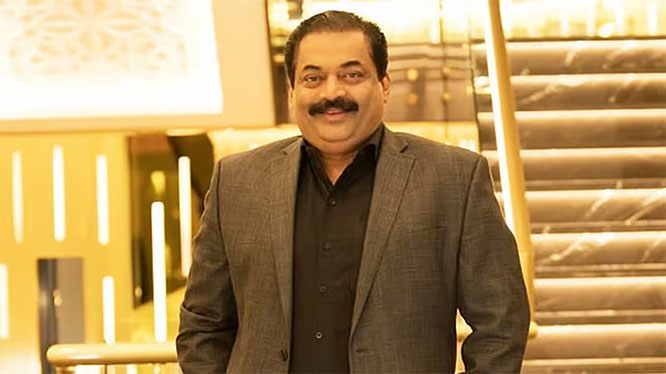
Bengaluru: The shooting incident involving CJ Roy, founder of the Confident Group, has once again put the spotlight on a businessman whose life has swung between flamboyant global success and persistent controversy at home.

Though Roy’s business interests extended across continents, his roots lay firmly in Karnataka. An alumnus of Christ School in Bengaluru, he later moved to Tumakuru to pursue an engineering degree. Those familiar with his early years describe him as intensely ambitious, beginning his career as a salesman at a small electronics firm dealing in computers.

Roy’s entry into large-scale real estate came through the Crystal Group, where he worked closely with Latha Namboothiri and rose from manager to director. However, the launch of the Confident Group in 2005 was clouded by industry speculation. Insiders speak of a fallout involving alleged “benami” properties and claims of deception that ultimately led to his independent venture—an episode Roy spent years trying to distance himself from, according to associates.

A tale of two cities

Roy’s professional trajectory diverged sharply across geographies.

In Dubai, he built a reputation as a bold and efficient developer, completing massive luxury residential projects in record time—some reportedly within 11 months. His rapid project delivery and lavish lifestyle in the Emirates earned him admiration and visibility in the real estate sector.

In Bengaluru, however, his image remained far more fractured. Sources say Roy stayed away from the city for several years amid disputes over unpaid dues to vendors and suppliers. Several projects were allegedly stalled, with accusations of unfulfilled commitments to cement and steel suppliers continuing to follow him.

Roy’s return to Bengaluru’s business and social circles began around 2018, marked by a conscious attempt at rebranding. His appointment as Honorary Consul of the Slovak Republic added diplomatic legitimacy, which he complemented with visible CSR initiatives, including ambulance donations and high-profile charity events.

Heavy police presence in Langford Town

Following the incident, police personnel from the Central division were deployed outside the Confident Group building in Langford Town, which also houses the Slovak Honorary Consulate in Bengaluru.

The otherwise busy premises near Hosur Road wore a deserted look on Friday, reflecting the shock and uncertainty that followed the tragedy.

Comments

Add new comment

  • Coastaldigest.com reserves the right to delete or block any comments.
  • Coastaldigset.com is not responsible for its readers’ comments.
  • Comments that are abusive, incendiary or irrelevant are strictly prohibited.
  • Please use a genuine email ID and provide your name to avoid reject.
News Network
January 20,2026

Mangaluru: In a major step towards strengthening rural innovation, the Office of the Principal Scientific Adviser (PSA) to the Government of India is supporting the establishment of RuTAGe Smart Village Centres (RSVCs) across the country through collaborations with academic institutions, civil society organisations and philanthropic partners.

As part of this national initiative, Nitte (Deemed to be University) will set up the first RSVCs in the region at Nitte GP in Udupi district and at the Nitte Health Centre, Sevanjali Trust, Farangipete, in Dakshina Kannada district. The centres will be inaugurated on January 21. In South India, the programme is being implemented by the Section Infin-8 Foundation (SI-8).

Speaking to reporters on Monday, SI-8 founder-director Vishwas US said experts from Nitte University and SI-8 would work closely with farmers, students, youth and local entrepreneurs to adapt and deploy technologies tailored to local needs.

Project head Prof Iddya Karunasagar, representing Nitte DU, said the RSVCs at Nitte and Farangipete would serve as demonstration hubs for a wide range of agriculture, energy, skill-development and assistive technologies. These include solar dryers for fruits, vegetables and crops; soil-testing solutions; power weeders and women-friendly farm tools; wind-powered devices for rural artisans; grain storage systems; grass-cutting and tree-climbing equipment; and liquid fertiliser production using cowshed waste.

SI-8 CEO Aravind C Kumar said the centres would also provide access to digital and knowledge-based platforms such as ISRO applications, government scheme portals, market linkage tools and gamified learning resources, along with assistive technologies for persons with visual impairments.

Highlighting the broader impact of the initiative, Principal Scientific Adviser Prof Ajay Kumar Sood said it demonstrated how applied research could bridge the rural–urban divide and help create self-reliant, technology-enabled villages.

The initiative has been made possible through philanthropic support from Dr NC Murthy of ACM Business Solutions, LLC, USA. Dr Sapna Poti, Director (Strategic Alliances) at the Office of the Principal Scientific Adviser, said the long-term objective is to build self-sufficient, technology-driven communities capable of generating sustainable livelihoods on their own.

Comments

Add new comment

  • Coastaldigest.com reserves the right to delete or block any comments.
  • Coastaldigset.com is not responsible for its readers’ comments.
  • Comments that are abusive, incendiary or irrelevant are strictly prohibited.
  • Please use a genuine email ID and provide your name to avoid reject.
coastaldigest.com news network
January 19,2026

rizwanzameer.jpg

Bengaluru: As the dust settles on the recent legislative session, the corridors of Vidhana Soudha are buzzing with more than just policy talk. A high-stakes game of political musical chairs has begun, exposing a deepening rift within the Congress party’s Muslim leadership as a major Cabinet reshuffle looms.

With the party hierarchy signaling a "50% refresh" to gear up for the 2028 Assembly elections, the race to fill three projected Muslim ministerial berths has transformed from a strategic discussion into an all-out turf war.

The "Star Son" Spark

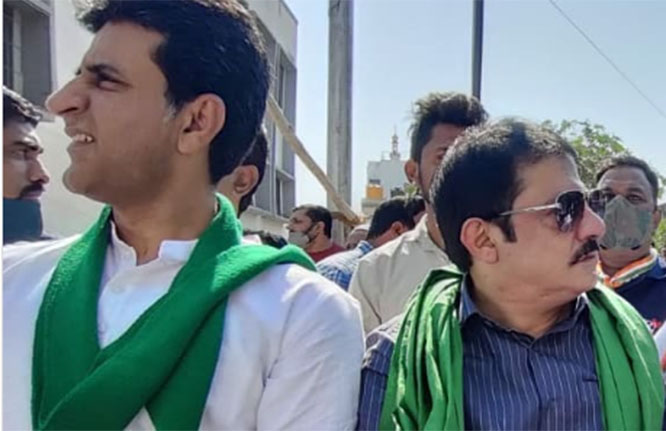
The internal friction turned public this week following provocative remarks by Zaid Khan, actor and son of Wakf Minister Zameer Ahmed Khan. Zaid’s claim—that his father "helped" secure a ticket for Shivajinagar MLA Rizwan Arshad in 2023—has acted as a lightning rod for resentment.

Rizwan’s camp was quick to fire back, dismissing the comment as a desperate attempt by Zameer to manufacture seniority. "Rizwan’s political pedigree was forged in the NSUI and Youth Congress long before Zameer even stepped into the party," a supporter noted, highlighting Rizwan’s tenure as an AICC secretary and his two-term presidency of the State Youth Congress.

A Tale of Two Loyalists

While both Zameer Ahmed Khan and Rizwan Arshad are staunch allies of Chief Minister Siddaramaiah and represent Bengaluru strongholds, their political DNA could not be more different:

•    Zameer Ahmed Khan: A four-time MLA who crossed over from JD(S) in 2018. Known for his "overzealous" and often polarizing outreach during communal flashpoints—from the DJ Halli riots to the recent Wakf land notice controversy—his style has frequently left the Congress high command in a state of "discomfort."

•    Rizwan Arshad: A homegrown organizational man. Seen as a "quiet performer," Arshad represents the sophisticated, moderate face of the party, preferred by those who find Zameer’s brand of politics too volatile.

The Outsiders Looking In

The bickering isn't limited to a duo. The "Beary" community, represented by leaders like N A Haris and Saleem Ahmed, is demanding its pound of flesh. Saleem Ahmed, the Chief Whip in the Legislative Council, has dropped the veil of diplomacy, openly declaring his ministerial aspirations.

"I was the only working president not included in the Cabinet last time," Saleem noted pointedly, signaling that the "loyalty quota" is no longer enough to keep the peace.

As Chief Minister Siddaramaiah prepares to finalize the list, he faces a delicate balancing act: rewarding the aggressive grassroots mobilization of Zameer’s camp without alienating the organizational stalwarts and minority sub-sects who feel increasingly sidelined by the "Chamarajpet-Shivajinagar" binary.

Comments

Add new comment

  • Coastaldigest.com reserves the right to delete or block any comments.
  • Coastaldigset.com is not responsible for its readers’ comments.
  • Comments that are abusive, incendiary or irrelevant are strictly prohibited.
  • Please use a genuine email ID and provide your name to avoid reject.