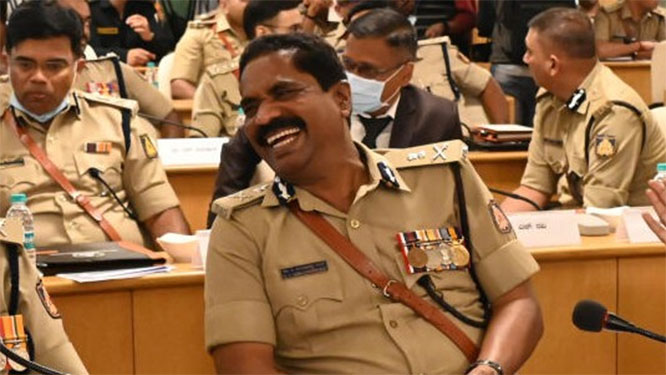
‘We must overcome trust-deficit and religious issues’ | interview with MLA Dr Bharath Shetty

Atul Pai | coastaldigest.com
July 3, 2018

Dentist-turned-politician Dr Y Bharath Shetty, who wrestled the Mangaluru City North constituency from Congress leader B A Mohiuddin Bava in 2018 Karnataka Assembly polls, feels that police should be given a free hand to keep a check on communal tensions in coastal Karnataka. The enthusiastic first time MLA, in a candid chat with coastaldigest.com, also elaborates his plan for the constituency. Excerpts:

Do you have any timeline in mind to deliver your promises in the electoral manifesto?

Bharath Shetty: I am focusing on the education system, especially the government schools. There are around 20 schools in the rural areas and we are surveying to understand their needs on emergency basis. We are planning to improve the road connectivity to these schools and also upgrade the school buildings that rarely happen. We will coordinate with private firms and encourage them to use their Corporate Social Responsibility (CSR) funds for bettering the school infrastructure, few of them have agreed orally and simultaneously we are also getting onboard with school authorities for such discussions.

Secondly, there are a lot of companies here such as Baikampady Industrial Area, Mangalore Refinery Petroleum Ltd (MRPL) and New Mangalore Port Trust (NMPT), but very less employment opportunity for the locals. We are trying to talk to them to start some vocation courses in our constituency and train people for skilled or non-skilled courses under Skill-India programme and get them work opportunities in the industrial area. We are targeting especially youngsters’ so that they can get job opportunity in the firms within the constituency.

What are your comments on the current political scenario in the state?

Bharath Shetty: People’s mandate is the ultimate verdict, there is certain kind of maturity needed in politics; At present Congress-JD(S) alliance has just become a number game. The mandate is clearly against the former (Congress) government, even the JD(S) has got lesser assembly seats during the polls and the BJP has people’s approval. So it’s not right (to form the government).

Do you feel that it will be difficult for you to work with the present state government; do you think it will be indifferent towards the coastal district?

Bharath Shetty: I hope it won’t be a problem.

In the entire coastal district the BJP had a decisive victory, compared to the 2013 assembly polls. What do you think was the major factor that swung votes in favor of the BJP?

Bharath Shetty: We enjoyed a majority in the district even in former elections as well (except 2013), but most importantly it was the anti-Hindu policy of the former Chief Minister Siddaramaiah that secured us people approval in 2018. Congress went overboard with anti-Hindu policies and I don’t think people took it nicely. Moreover there was a lot of corruption all round, a percentage (kickback) was fixed for every public work by Congress. Also people in the region could see through the appeasement politics, and may be one of the main factors they lost.

Since you have taken over from a former Congress MLA’s constituency, do you think that you have lot of challenges that are waiting in your assembly limits to be solved?

Bharath Shetty: I don’t want to take potshot at ex-MLA at personal level, but there was a lot of gimmickry going on instead of public work. The work should be done in a time bound manner; you can’t just pop-up some last minute public work (eve of election) and call it as a service. I don’t want to get into it. But a lot of unwanted, unhealthy practices took place. For example the deluge in Mangaluru during pre-monsoon rains, shows how the city planning is not properly done by the previous government. City faced flood was a showcase of previous legislators poor performance.

Any action plan in progress to prevent calamities during the monsoon in the region?

Bharath Shetty: We are in touch with the district administration and corporation commissioner regarding this issue, and we have been told that the last month’s flood was due to blockage of storm water drain, since permission was given to build houses and structures that obstructed the flow of water. Not only the city has issue of improper drainage, the width and depth of these drainages have no scientific basis and are constructed erratically. Some of the drainages have been filled-up and unauthorized structures have come-up over that.

The DC who is leading the probe has assured that MCC is already in the process of reclaiming the land where unauthorized structures were built and the drains will be bought back to the original size, because the recent flood looked like an artificial one, created due to unscientific obstacles.

There have been repeated communal incidents in Mangaluru North constituency as recently as January this year. Any measures will be taken by you to build the communal solidarity in the constituency?

Bharath Shetty: To keep a check on communal violence, the police force, security and the law and order should be fair. I think they should be given a free hand to work. Unless and until there are instances of wrongdoing by the police, politicians should not interfere, then everything will fall back in line. The department must not be used for vote-bank politics or appeasement of certain section, as this leads to a problem. Political interference should be minimal, the law and order should be fair enough and we must support good police officers.

What are the major overhauls that you plan for your constituency that requires legislative intervention you think?

Bharath Shetty: We have underground drainage in Surathkal which is not connected, and leading to water contamination. Crores of Rupees have been spent on this underground drainage, but so far no sustainable solution has been seen. We need to plan and have more number of underwater drainage systems so that twenty years down the line our future generation need not have any water-hygiene related issues. There is a need to focus on implementing more rain water harvesting initiatives to improve the ground water table.

I want to promote rain water harvesting, solar power, installing of the bio toilets and I have spoken to few companies regarding this and we will come to a decision soon.

Overall Mangaluru is known is known as the educational hub, with good train connectivity, airport, and sea-port; we have lot of potential to grow. However, we must overcome a lot of trust-deficit and religious issues that are faced among the communities and we definitely need to think beyond that for the welfare of our region as a whole.

Any ideas on making the constituency senior citizen friendly?

Bharath Shetty: Yes, we are taking stock of primary health centre and the facilities for senior citizens in such establishments. We want to provide them with necessary medical support and facilities such as ambulances, bike driven paramedical. I have personally spoken to some friends at World Health Organization (WHO) who have worked in such specialized areas in other countries and I am actively taking consultation with them. However, for implementation of these projects it requires a lot of funding from the state government, since it is the Congress-JDS rule in the state, they need to help us out on such proposals, otherwise we may have to look at some other source of funding.


Comments

Add new comment

  • Coastaldigest.com reserves the right to delete or block any comments.
  • Coastaldigset.com is not responsible for its readers’ comments.
  • Comments that are abusive, incendiary or irrelevant are strictly prohibited.
  • Please use a genuine email ID and provide your name to avoid reject.
News Network
January 31,2026

Roy.jpg

Bengaluru: The shooting incident involving CJ Roy, founder of the Confident Group, has once again put the spotlight on a businessman whose life has swung between flamboyant global success and persistent controversy at home.

Though Roy’s business interests extended across continents, his roots lay firmly in Karnataka. An alumnus of Christ School in Bengaluru, he later moved to Tumakuru to pursue an engineering degree. Those familiar with his early years describe him as intensely ambitious, beginning his career as a salesman at a small electronics firm dealing in computers.

Roy’s entry into large-scale real estate came through the Crystal Group, where he worked closely with Latha Namboothiri and rose from manager to director. However, the launch of the Confident Group in 2005 was clouded by industry speculation. Insiders speak of a fallout involving alleged “benami” properties and claims of deception that ultimately led to his independent venture—an episode Roy spent years trying to distance himself from, according to associates.

A tale of two cities

Roy’s professional trajectory diverged sharply across geographies.

In Dubai, he built a reputation as a bold and efficient developer, completing massive luxury residential projects in record time—some reportedly within 11 months. His rapid project delivery and lavish lifestyle in the Emirates earned him admiration and visibility in the real estate sector.

In Bengaluru, however, his image remained far more fractured. Sources say Roy stayed away from the city for several years amid disputes over unpaid dues to vendors and suppliers. Several projects were allegedly stalled, with accusations of unfulfilled commitments to cement and steel suppliers continuing to follow him.

Roy’s return to Bengaluru’s business and social circles began around 2018, marked by a conscious attempt at rebranding. His appointment as Honorary Consul of the Slovak Republic added diplomatic legitimacy, which he complemented with visible CSR initiatives, including ambulance donations and high-profile charity events.

Heavy police presence in Langford Town

Following the incident, police personnel from the Central division were deployed outside the Confident Group building in Langford Town, which also houses the Slovak Honorary Consulate in Bengaluru.

The otherwise busy premises near Hosur Road wore a deserted look on Friday, reflecting the shock and uncertainty that followed the tragedy.

Comments

Add new comment

  • Coastaldigest.com reserves the right to delete or block any comments.
  • Coastaldigset.com is not responsible for its readers’ comments.
  • Comments that are abusive, incendiary or irrelevant are strictly prohibited.
  • Please use a genuine email ID and provide your name to avoid reject.
News Network
January 20,2026

DGP.jpg

Karnataka DGP (Civil Rights Enforcement) K Ramachandra Rao was suspended with immediate effect, as per a state government order issued on Monday, 19 January. The order cited conduct unbecoming of a government servant and causing embarrassment to the state administration.

The Karnataka government suspended Rao after a purported video showed him in a compromising position with a woman inside his official chamber. The video went viral on social media. Rao rejected the videos outright, terming them "fabricated and false".

Who is K Ramachandra Rao?

Rao is a DGP-rank officer who was heading the Directorate of Civil Rights Enforcement until his suspension. He was promoted to DGP in September 2023 and assumed office in October 2023, the Sunday Guardian reported.

He also served as the Chairman and Managing Director of the Karnataka State Police Housing and Infrastructure Development Corporation Limited.

His stint as the Inspector General of Police (IGP) for the Southern Range was also marred by controversy. In 2014, during a cash seizure near Mysuru’s Yelwal, officials claimed the seized amount was ₹20 lakh, while the accused (Kerala-based merchants) claimed it was around ₹2.27 crore.

Rao, who was present during the seizure, denied all allegations. However, he was transferred soon after.

Allegations of collusion with a businessman surfaced, and a senior police officer was quoted by The Sunday Guardian as saying, “In Rao’s case, the CID has clearly mentioned that there was a great degree of lapse on the part of Rao and a deputy superintendent of police after it was brought to their notice that a few policemen, including a gunman attached to the IGP, were involved in the robbery.”

Rao had denied all wrongdoing in that incident. Despite past controversies, he rose to the state’s top police position, the Sunday Guardian reported.

Ranya Rao’s stepfather

Rao is the stepfather of Kannada actress Harshavardhini Ranya alias Ranya Rao, accused of orchestrating the illegal import of gold worth over ₹12.56 crore from Dubai to India along with two others — businessman Tarun Raju, and jewellery dealer Sahil Jain.

‘Obscene video’ controversy

A viral video showed Rao behaving inappropriately with a woman inside his office while in uniform.

The Karnataka government said in its Monday order that “vide videos and news reports widely broadcast on public news channels and media platforms, it is observed that Dr K Ramachandra Rao has acted in an obscene manner which is unbecoming of a Government Servant and also causing embarrassment to the Government.”

The order said the matter was examined by the state government, which found that the officer's conduct amounted to a violation of Rule 3 of the All India Services (Conduct) Rules, 1968.

The government said it is prima facie satisfied that "it is necessary to place Rao under suspension with immediate effect, pending inquiry".

During the suspension period, Rao will be entitled to subsistence allowance as per Rule 4 of the All India Services (Discipline and Appeal) Rules, 1969.

The order also places restrictions on his movement, stating that during the period of suspension, the officer must not leave headquarters under any circumstances without the written permission of the state government.

Comments

Add new comment

  • Coastaldigest.com reserves the right to delete or block any comments.
  • Coastaldigset.com is not responsible for its readers’ comments.
  • Comments that are abusive, incendiary or irrelevant are strictly prohibited.
  • Please use a genuine email ID and provide your name to avoid reject.
News Network
January 23,2026

Mangaluru: The Karnataka Government Polytechnic (KPT), Mangaluru, has achieved autonomous status from the All India Council for Technical Education (AICTE), becoming the first government polytechnic in the country to receive such recognition in its 78-year history. The status was granted by AICTE, New Delhi, and subsequently approved by the Karnataka Board of Technical Education in October last year.

Officials said the autonomy was conferred a few months ago. Until recently, AICTE extended autonomous status only to engineering colleges, excluding diploma institutions. However, with a renewed national focus on skill development, several government polytechnics across India have now been granted autonomy.

KPT, the second-largest polytechnic in Karnataka, was established in 1946 with four branches and has since expanded to offer eight diploma programmes, including computer science and polymer technology. The institution is spread across a 19-acre campus.

Ravindra M Keni, the first dean of the institution, told The Times of India that AICTE had proposed autonomous status for polytechnic institutions that are over 25 years old. “Many colleges applied. In the first round, 100 institutions were shortlisted, which was further narrowed down to 15 in the second round. We have already completed one semester after becoming an autonomous institution,” he said. He added that nearly 500 students are admitted annually across eight three-year diploma courses.

Explaining the factors that helped KPT secure autonomy, Keni said the institution has consistently recorded 100 per cent admissions and placements for its graduates. He also noted its strong performance in sports, with the college emerging champions for 12 consecutive years, along with active student participation in NCC and NSS activities.

Autonomous status allows KPT to design industry-oriented curricula, conduct examinations, prepare question papers, and manage academic documentation independently. The institution can also directly collaborate with industries and receive priority funding from AICTE or the Ministry of Education. While academic autonomy has been granted, financial control will continue to rest with the state government.

“There will be separate committees for examinations, question paper setting, boards of studies, and boards of examiners. The institution will now have the freedom to conduct admissions without government notifications and issue its own marks cards,” Keni said, adding that new academic initiatives would be planned after a year of functioning under the autonomous framework.

Comments

Add new comment

  • Coastaldigest.com reserves the right to delete or block any comments.
  • Coastaldigset.com is not responsible for its readers’ comments.
  • Comments that are abusive, incendiary or irrelevant are strictly prohibited.
  • Please use a genuine email ID and provide your name to avoid reject.