



What is GST and how will it affect the common man?

News Network
July 1, 2017

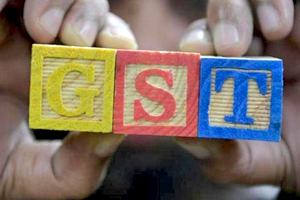
New Delhi, Jul 1: Sixteen years in the making, India rolls out the Goods and Services Tax (GST) from July 1, 2017. The Narendra Modi-led government inaugurated the new indirect tax at the stroke of midnight of June 30 in Parliament.
gst-1

What is GST?

The GST is meant to be a unified indirect tax across the country on products and services. In the current system, tax is levied at each stage separately by the Union government and the States at varying rates, on the full value of the goods. But under the GST system, tax will be levied only on the value added at each stage. It is a single tax (collected at multiple points) with a full set-off for taxes paid earlier in the value chain.

Thus, the final consumer will bear only the GST charged by the last dealer in the supply chain with set-off benefits at all the previous stages.

What is State GST and Central GST?

For transactions within a State, there will be two components of GST - Central GST (CGST) and State GST (SGST) - levied on the value of goods and services. Both the Centre and the States will simultaneously levy GST across the value chain.

In the case of inter-State transactions, the Centre would levy and collect the Integrated Goods and Services Tax (IGST). The IGST would be roughly equal to CGST plus SGST.

Why was GST established?

The GST was established to subsume various indirect taxes levied at different levels, with the idea of reducing red-tape, plugging leakages and paving the way for a transparent indirect tax regime.

How will GST affect the common man?

The impact of the GST on the prices of goods and services will largely depend on the item in question. It will also depend upon the respective State governments and their intervention with respect to controlling prices of essential commodities. Milk, for example, which is likely to see a spike in prices after GST is implemented, can still be sold at cheaper rates, if the State government offers a subsidy on it.

How will GST help in getting rid of tax evasion?

A comprehensive IT system, GSTN, will allot universal GST numbers (similar to PAN) to all manufacturers, traders, stockists, wholesalers and retailers. This will simplify the administration of indirect taxes and plug leakages. The government also plans to incentivise tax compliance by traders.

Whether the GST will be beneficial to the poor or not only time can tell. Prices of vegetables and fruits are likely to rise under the GST regime and services such as eating at restaurants will get more expensive. What will likely get cheaper are items such as clothes, as cascading taxes at various stages of manufacturing would no longer apply to them.

Is GST going to benefit people below the poverty line?

(Answered by Grant Thornton India LLP)

With respect to those living below the poverty line, there might not be a direct impact of the GST on them as such since basic necessities like food are unlikely to attract the GST but increased collections of the GST with a larger tax base should provide an impetus to the government to allocate more money for social and poverty alleviation programmes. Thus, the GST should benefit all sections of the society. Additionally, the GST, being a nationwide tax, could lead to possibly higher inflation in the first few years of its introduction but would gradually increase the overall GDP.

How will GST affect tax deductions of a salaried person?

The GST is an indirect tax collected from customers who buy manufactured goods or services. So whether you are earning a salary or not, as long as you buy something, you’ll be paying tax.

Which are the items that could become costlier and which are those that could become cheaper?

(Answered by Deloitte Haskins & Sells LLP)

Broadly, services are expected to become costlier under the GST regime, as the expected GST rate would be higher than the existing service tax rate of 15%. Clearly, the GST is expected to bring down prices of indigenously manufactured goods on account of current effective indirect taxes (central excise @ 12.5%, State VAT @ 5%-15% etc.) being higher as compared to recommended lower GST rate @ 5% and standard GST rates @ 12% and 18%. Thus, price of certain category of goods may come down depending on the effective rate of indirect taxes being paid at present and the tax brackets under which goods are classified under the GST.

Comments

Add new comment

  • Coastaldigest.com reserves the right to delete or block any comments.
  • Coastaldigset.com is not responsible for its readers’ comments.
  • Comments that are abusive, incendiary or irrelevant are strictly prohibited.
  • Please use a genuine email ID and provide your name to avoid reject.
News Network
December 16,2025

Mangaluru, Dec 16: The Mangaluru City police have significantly escalated their campaign against drug trafficking, arresting 25 individuals and booking 12 cases under the Narcotic Drugs and Psychotropic Substances (NDPS) Act between November 30 and December 13. The crackdown resulted in the seizure of a substantial quantity of illicit substances, including 685.6 grams of MDMA and 1.5 kg of ganja.

The success of this recent drive has been significantly boosted by the city’s innovative, QR code-based anonymous reporting system.

"The anonymous reporting system has received an encouraging response. Several recent arrests were made based on inputs received through this system, helping police tighten the noose around drug peddlers," said the City Police Commissioner.

The latest arrests contribute to a robust year-to-date record, underscoring the police's relentless commitment to combating the drug menace.

Up to December 14 this year, the police have registered a total of 107 cases of drug peddling, leading to the arrest of 219 peddlers. Furthermore, they have booked 562 cases of drug consumption, resulting in the arrest of 671 individuals.

The scale of the seizure for the year reflects the magnitude of the problem being tackled: police have seized 320.6 kg of ganja worth ₹88.7 lakh and 1.4 kg of MDMA valued at ₹1.2 crore. Other significant seizures include hydro-weed ganja worth ₹94.7 lakh and cocaine worth ₹1.9 lakh, among others.

The Commissioner emphasized a policy of rigorous enforcement: "We ensure that peddlers are caught red-handed so that they cannot later dispute the case or claim innocence."

To counter the rising trend of substance abuse among youth, the Mangaluru City police have rolled out uniform guidelines for random drug testing across educational institutions.

As part of the drive, tests were conducted in approximately 100 institutions, screening an estimated 5,500 to 6,000 students in the first phase. 20 students tested positive for drug consumption during the initial screening.

Students who tested positive have been provided counselling and are scheduled for re-testing in the second quarter. The testing will also be expanded to students not covered in the first phase. In a move to ensure strict implementation, police personnel were deployed in mufti in some institutions. Reiterating a zero-tolerance stance, the Commissioner confirmed that random testing will continue, and colleges have also been instructed to conduct drug tests at the time of admission to deter substance abuse from an early stage.

Comments

Add new comment

  • Coastaldigest.com reserves the right to delete or block any comments.
  • Coastaldigset.com is not responsible for its readers’ comments.
  • Comments that are abusive, incendiary or irrelevant are strictly prohibited.
  • Please use a genuine email ID and provide your name to avoid reject.
News Network
December 7,2025

Mangaluru, Dec 7: A 34-year-old fruit and vegetable trader in Mangaluru has reportedly lost ₹33.1 lakh after falling victim to an online investment scam run through a fake mobile app.

Police said the scam began in September, when the victim received a link on Facebook. Clicking it connected him to a WhatsApp number, where an unidentified person introduced a high-return investment scheme and instructed him to download an app.

To build trust, the fraudster asked him to invest ₹30,000 on September 24. The trader soon received ₹34,000 as “profit,” convincing him the scheme was genuine. Over the next two months, he transferred money in multiple instalments via Google Pay and IMPS to different scanner codes and bank accounts shared by the scammers. Between September 24 and December 3, he ended up sending a total of ₹33.1 lakh.

When he later requested a refund of his investment and promised returns, the scammers demanded additional payments, claiming he needed to pay a “service tax” first. Even after he paid a small amount, no money was returned, and the scammers continued pressuring him for more.

A case has been registered at the CEN Crime Police Station.

Comments

Add new comment

  • Coastaldigest.com reserves the right to delete or block any comments.
  • Coastaldigset.com is not responsible for its readers’ comments.
  • Comments that are abusive, incendiary or irrelevant are strictly prohibited.
  • Please use a genuine email ID and provide your name to avoid reject.
News Network
December 19,2025

Mangaluru: Public transport in Mangaluru is set for a state-led transformation as the government moves to deploy 100 new electric govt buses to replace unreliable private services. The initiative aims to provide a dependable alternative to private operators who have been frequently "cutting trips," leaving thousands of commuters stranded.

The announcement was made by Deputy Commissioner and MCC Administrator Darshan HV during a public phone-in session. The move specifically targets routes where private bus service has become erratic, ensuring that citizens no longer have to rely on a fluctuating private sector for their daily commute.

Restoring the Govt Presence

The transport crisis was brought to the forefront by Ramayya, a resident of Bajal, who highlighted a growing trend of private buses skipping morning and night trips. With the previous KSRTC (govt) services discontinued, residents have been left without a fallback option.

To fix this, the DC confirmed that the PM-eBus Sewa Scheme will bring 100 government-owned electric buses to the city:

•    Phased Deployment: The first 50 of the new 100 government buses are scheduled to arrive by March 2026.

•    State Infrastructure: Two new government depots, including one at Mudipu, are being prepared for operations.

•    Recruitment: The state has already begun training a new batch of government bus drivers to ensure the fleet is operational the moment it arrives.

Comments

Add new comment

  • Coastaldigest.com reserves the right to delete or block any comments.
  • Coastaldigset.com is not responsible for its readers’ comments.
  • Comments that are abusive, incendiary or irrelevant are strictly prohibited.
  • Please use a genuine email ID and provide your name to avoid reject.