


Whither Secularism: Democratic Society and Minority Rights

Ram Puniyani
June 9, 2019

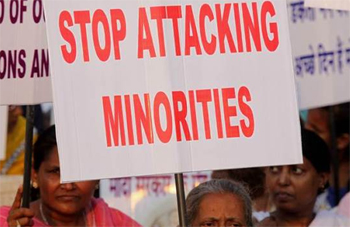
We are living in times where the social norms, the values of Constitution have been violated times and over again. The increasing atrocities on dalits, the lynchings of minorities in the name of Cow-Beef have changed the social equations in a drastic way during last few years. This in a way is part of the ascendance of a politics of communalism which believes in narrow, sectarian religious identity as its defining point. This may get further worsened with the big mandate for Modi in 2019 elections. In the aftermath of elections leading to his return to power, Modi in his victory speech made certain observations which are very disturbing on one hand and also give an idea of shape of things to come.

He stated that this election campaign has unmasked the deceitful claims of secularists and that said that now they can’t mislead the country. As per him secularism as a mask has been destroyed in these elections and that secularism was a cover for minority appeasement. He states that minorities have been deceived and cheated by the parties claiming to be secular.

This statement is not just in the euphoria of victory. For communalism it has been a deeper agenda to do away with the practice of secularism. It is true that there had been aberrations and weaknesses in the practice of this concept, with fallacies like the reversal of Shah Bano judgment or opening the gates of Babri mosque for Shilanyas. The assertion that minorities have been appeased is a total lie. The reports of Gopal Singh Commission, Rangnath Mishra Commission and Sachar Committee tell us about the worsening plight of the Muslim minorities. Some fundamentalist elements within Muslim community have been promoted but the Muslim community as a whole has on one hand been economically marginalized and on the other been subjected to social insecurity. Going beyond the obvious one need to understand as to why the shortfalls in the practice of secularism have dogged our nation?

Secularism has been defined and interpreted a various ways. In Indian context ‘Sarva Dharma Sambhave’ has been the major interpretation. Also that state will not interfere in the maters of religion and religion (clergy) will not dictate and state policy has been the major understanding of this concept, secularism, which is core and integral part of the concept of democracy. Some examples of this are in order. In the wake of demand for renovation of Somnath Temple, Gandhi said that Hindu community is capable of building its own temple. While his disciple Nehru did follow Gandhi’s path in times to come. Same Nehru later called the dams, industries and universities as temples of Modern India.

Gandhi in his own way puts it up brilliantly when he says, “Religion and state will be separate. I swear by my religion, I will die for it. But it is my personal affair. The state has nothing to with it. The state will look after your secular welfare…”

Social scientist Rajiv Bhargava points out that secularism “…combats not just discrimination and other worse forms of inter-religious domination such as exclusion, oppression and humiliation. It is equally opposed to intra-religious domination, i.e. the domination (of women, Dalits, dissenters) within every religious community”

Secularism did not have smooth march in India. It came up with the rising classes during colonial period. The classes which came up with the changes like industrialization, communication and modern education. They called the process of comprehensive change as ‘India as a nation in the making’. The streams like those represented by Bhagat Singh, Ambedkar and Gandhi made it the foundation of their political ideology and struggle for better society. They stood for Indian nationalism. While the declining classes of Landlords and kings shaken by the changes in social fabric and loss of their earlier hegemony came up with communal politics. This communal politics in turn had a bifurcation, Muslim communalism and Hindu communalism. They dreamt of Muslim Nation and Hindu nation respectively. As Professor Bipan Chandra points out Communalism regards a community of one religion as a nation. In India it went through different phases of mild, moderate and extreme communalism. Its understanding is that people of one religion have similar interests, which in turn are different from those of other religion, and so the religious communities are made to pitch against each other. This politics regards the ‘other’ community as a threat to its’ own self. At the same time the intra societal hierarchies are put under the carpet, as the deeper agenda of these groups is to maintain those hierarchies of caste and gender.

One of the weaknesses of practice of secularism in India has been the tremendous opposition from communalism which has been on a rise. While in Pakistan, Muslim communalism was strong right from the beginning; in India it has become stronger during last four decades or so. Its strength has been founded on the polarization, which is an outcome of communal violence. Its issues are those of identity issues like Ram Temple, Love Jihad, Ghar wapsi and Holy cow-beef. It is this communalism which has stood as a counter to the secular ethos of the country; it is this which is the major obstacle for secularism being properly implemented. There are many factors which have been conducive to and helping in the promotion of divisive politics of communalism, one of them being the non completion of secularization process, the process whereby the power of landlord-clergy duo is abolished in a society marching towards democracy.

In India, due to colonial rule, the national movement had to direct its energy primarily against the colonial rulers, while the landlords-kings, to be later joined by some elite-middle classes, continued on the margins, giving the life breath to communalism, leading to partition of the country among other negative phenomenon in the society. Surely India’s plurality and diversity, though currently under cloud, will not let the secular values being eclipsed by the sectarian politics, which is currently on the prowl.

Comments

Add new comment

  • Coastaldigest.com reserves the right to delete or block any comments.
  • Coastaldigset.com is not responsible for its readers’ comments.
  • Comments that are abusive, incendiary or irrelevant are strictly prohibited.
  • Please use a genuine email ID and provide your name to avoid reject.
News Network
January 23,2026

Mangaluru: The Karnataka Government Polytechnic (KPT), Mangaluru, has achieved autonomous status from the All India Council for Technical Education (AICTE), becoming the first government polytechnic in the country to receive such recognition in its 78-year history. The status was granted by AICTE, New Delhi, and subsequently approved by the Karnataka Board of Technical Education in October last year.

Officials said the autonomy was conferred a few months ago. Until recently, AICTE extended autonomous status only to engineering colleges, excluding diploma institutions. However, with a renewed national focus on skill development, several government polytechnics across India have now been granted autonomy.

KPT, the second-largest polytechnic in Karnataka, was established in 1946 with four branches and has since expanded to offer eight diploma programmes, including computer science and polymer technology. The institution is spread across a 19-acre campus.

Ravindra M Keni, the first dean of the institution, told The Times of India that AICTE had proposed autonomous status for polytechnic institutions that are over 25 years old. “Many colleges applied. In the first round, 100 institutions were shortlisted, which was further narrowed down to 15 in the second round. We have already completed one semester after becoming an autonomous institution,” he said. He added that nearly 500 students are admitted annually across eight three-year diploma courses.

Explaining the factors that helped KPT secure autonomy, Keni said the institution has consistently recorded 100 per cent admissions and placements for its graduates. He also noted its strong performance in sports, with the college emerging champions for 12 consecutive years, along with active student participation in NCC and NSS activities.

Autonomous status allows KPT to design industry-oriented curricula, conduct examinations, prepare question papers, and manage academic documentation independently. The institution can also directly collaborate with industries and receive priority funding from AICTE or the Ministry of Education. While academic autonomy has been granted, financial control will continue to rest with the state government.

“There will be separate committees for examinations, question paper setting, boards of studies, and boards of examiners. The institution will now have the freedom to conduct admissions without government notifications and issue its own marks cards,” Keni said, adding that new academic initiatives would be planned after a year of functioning under the autonomous framework.

Comments

Add new comment

  • Coastaldigest.com reserves the right to delete or block any comments.
  • Coastaldigset.com is not responsible for its readers’ comments.
  • Comments that are abusive, incendiary or irrelevant are strictly prohibited.
  • Please use a genuine email ID and provide your name to avoid reject.
News Network
January 23,2026

Karnataka Governor Thaawarchand Gehlot read only three lines from the 122-paragraph address prepared by the Congress-led state government while addressing the joint session of the Legislature on Thursday, effectively bypassing large sections critical of the BJP-led Union government.

The omitted portions of the customary Governor’s address outlined what the state government described as a “suppressive situation in economic and policy matters” under India’s federal framework. The speech also sharply criticised the Centre’s move to replace the Mahatma Gandhi National Rural Employment Guarantee Act (MGNREGA) with the Viksit Bharat–Guarantee for Rozgar and Ajeevika Mission (Gramin) Act, commonly referred to as the VB-GRAM (G) Act.

Governor Gehlot had earlier conveyed his objection to several paragraphs that were explicitly critical of the Union government. On Thursday, he confined himself to the opening lines — “I extend a warm welcome to all of you to the joint session of the State legislature. I am extremely pleased to address this august House” — before jumping directly to the concluding sentence of the final paragraph.

He ended the address by reading the last line of paragraph 122: “Overall, my government is firmly committed to doubling the pace of the State’s economic, social and physical development. Jai Hind — Jai Karnataka.”

According to the prepared speech, the Karnataka government demanded the scrapping of the VB-GRAM (G) Act, describing it as “contractor-centric” and detrimental to rural livelihoods, and called for the full restoration of MGNREGA. The state government argued that the new law undermines decentralisation, weakens labour protections, and centralises decision-making in violation of constitutional norms.

Key points from the unread sections of the speech:

•    Karnataka facing a “suppressive” economic and policy environment within the federal system

•    Repeal of MGNREGA described as a blow to rural livelihoods

•    VB-GRAM (G) Act accused of protecting corporate and contractor interests

•    New law alleged to weaken decentralised governance

•    Decision-making said to be imposed by the Centre without consulting states

•    Rights of Adivasis, women, backward classes and agrarian communities curtailed

•    Labourers allegedly placed under contractor control

•    States facing mounting fiscal stress due to central policies

•    VB-GRAM (G) Act accused of enabling large-scale corruption

Comments

Add new comment

  • Coastaldigest.com reserves the right to delete or block any comments.
  • Coastaldigset.com is not responsible for its readers’ comments.
  • Comments that are abusive, incendiary or irrelevant are strictly prohibited.
  • Please use a genuine email ID and provide your name to avoid reject.
coastaldigest.com news network
January 19,2026

rizwanzameer.jpg

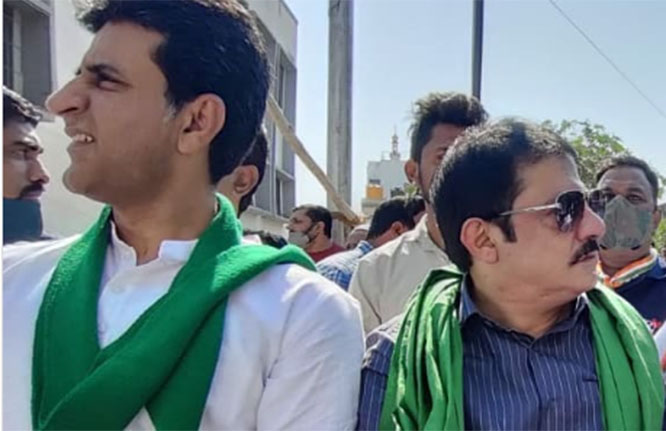
Bengaluru: As the dust settles on the recent legislative session, the corridors of Vidhana Soudha are buzzing with more than just policy talk. A high-stakes game of political musical chairs has begun, exposing a deepening rift within the Congress party’s Muslim leadership as a major Cabinet reshuffle looms.

With the party hierarchy signaling a "50% refresh" to gear up for the 2028 Assembly elections, the race to fill three projected Muslim ministerial berths has transformed from a strategic discussion into an all-out turf war.

The "Star Son" Spark

The internal friction turned public this week following provocative remarks by Zaid Khan, actor and son of Wakf Minister Zameer Ahmed Khan. Zaid’s claim—that his father "helped" secure a ticket for Shivajinagar MLA Rizwan Arshad in 2023—has acted as a lightning rod for resentment.

Rizwan’s camp was quick to fire back, dismissing the comment as a desperate attempt by Zameer to manufacture seniority. "Rizwan’s political pedigree was forged in the NSUI and Youth Congress long before Zameer even stepped into the party," a supporter noted, highlighting Rizwan’s tenure as an AICC secretary and his two-term presidency of the State Youth Congress.

A Tale of Two Loyalists

While both Zameer Ahmed Khan and Rizwan Arshad are staunch allies of Chief Minister Siddaramaiah and represent Bengaluru strongholds, their political DNA could not be more different:

•    Zameer Ahmed Khan: A four-time MLA who crossed over from JD(S) in 2018. Known for his "overzealous" and often polarizing outreach during communal flashpoints—from the DJ Halli riots to the recent Wakf land notice controversy—his style has frequently left the Congress high command in a state of "discomfort."

•    Rizwan Arshad: A homegrown organizational man. Seen as a "quiet performer," Arshad represents the sophisticated, moderate face of the party, preferred by those who find Zameer’s brand of politics too volatile.

The Outsiders Looking In

The bickering isn't limited to a duo. The "Beary" community, represented by leaders like N A Haris and Saleem Ahmed, is demanding its pound of flesh. Saleem Ahmed, the Chief Whip in the Legislative Council, has dropped the veil of diplomacy, openly declaring his ministerial aspirations.

"I was the only working president not included in the Cabinet last time," Saleem noted pointedly, signaling that the "loyalty quota" is no longer enough to keep the peace.

As Chief Minister Siddaramaiah prepares to finalize the list, he faces a delicate balancing act: rewarding the aggressive grassroots mobilization of Zameer’s camp without alienating the organizational stalwarts and minority sub-sects who feel increasingly sidelined by the "Chamarajpet-Shivajinagar" binary.

Comments

Add new comment

  • Coastaldigest.com reserves the right to delete or block any comments.
  • Coastaldigset.com is not responsible for its readers’ comments.
  • Comments that are abusive, incendiary or irrelevant are strictly prohibited.
  • Please use a genuine email ID and provide your name to avoid reject.