World should not distinguish between terrorists, says President

Agencies
June 19, 2018

New Delhi, Jun 19: India and the EU must persuade the world that there is no difference between the "good" and "bad" terrorists, President Ram Nath Kovind said today as he called for sanctions on state sponsors of terrorism, in an apparent reference to Pakistan that has been long blamed for providing safe havens to terrorists.

He also said that India was committed to an international order marked by robust, rules-based multilateral institutions, by multi-polarity in international governance, and by connectivity projects that are viable, sustainable, respect the sovereignty and territory of the nation.

"Pockets of instability and extremism can be found in the region to Europe's east and India's west. They are a worry for both Europe and India," Kovind said in a major speech on India's relations with Europe at an event organised by the Hellenic Foundation for European and Foreign Policy - a leading foreign policy think-tank.

Identifying radicalisation and terrorism as pressing global concerns, Kovind said that promotion of terrorism by state and non-state actors, extremism rooted in senseless hate, the proliferation of sensitive weapons, the use of regular communication and financial channels by terror groups pose a challenge to not one nation or the other but to all humanity.

He also sought the strengthening of multilateral platforms such as the Financial Action Task Force (FATF) and the Global Counter-Terrorism Forum to combat the menace and squeeze terrorists' financing.

India, Afghanistan and the US accused Pakistan of providing safe havens to terrorists, elements of the Afghan Taliban and Haqqani Network. Pakistan, however, denies the charge.

In February, the 37-nation FATF placed Pakistan on a watch list of the countries where terrorist outfits are still allowed to raise funds. At a meeting in Paris, Jamat-ud-Dawa chief and 2008 Mumbai terror attack mastermind Hafiz Saeed and his "charities" were top on the list of the groups that the FATF wanted Pakistan to act against.

"India and the EU must persuade the world to not distinguish between so-called 'good' and 'bad' terrorists, to shame and sanction state sponsors of terrorism, and to strengthen multilateral platforms," Kovind told the gathering of diplomats, policymakers and academics.

He expressed India's willingness to share its domestic experiences and success stories in a manner that may be useful to EU.

"India is committed to world peace," Kovind said, adding that India is a steadfast friend and a stakeholder in the continued security and integrity of Europe.

He said that India "sees peace not just as the absence of conflict but as a reflection of sustainable development and indeed of any effort that anticipates and prevents strife and suffering".

"When we work for combating climate change, we contribute to world peace. When we assist other developing countries, as per their priorities, and strive for a less unequal world we contribute to world peace. When we rescue and evacuate not just our own citizens from troubled regions, but those of 40 other countries – as we did during the Yemen crisis of 2015 – we contribute to world peace," he said.

Kovind said that India was committed to an international order marked by robust, rules-based multilateral institutions, and by connectivity projects that are viable, sustainable, respect the sovereignty and territory of nations.

China is engaged in hotly contested territorial disputes in the South and East China Seas. Beijing has also made substantial progress in militarising its manmade islands in the past few years, which it says it has the right to defend.

Beijing claims sovereignty over all of the South China Sea. But Vietnam, Malaysia, the Philippines, Brunei and Taiwan have counter claims. In the East China Sea, Beijing has territorial disputes with Japan.

China is also engaged in an ambitious connectivity project - the Belt and Road Initiative - with an aim to link Southeast Asia, Central Asia, the Gulf, Africa and Europe with a network of land and sea routes.

India has not endorsed the BRI as a USD 50 billion China-Pakistan Economic Corridor, which is part of the BRI, passes through Pakistan-occupied Kashmir (PoK).

On clean energy and climate change, Kovind said that India and the EU are united in their commitment to the 2015 Paris Agreement. "India is scaling up the share of non-fossil fuels in its energy mix. This will go up from the current 31 per cent to 53 per cent by 2027," he said.

The President invited Greece to join the International Solar Alliance (ISA). He also expressed happiness at the European Investment Bank's willingness to mobilise finance for affordable solar energy projects in ISA member countries.

"The EU is among India's largest trading partners," the President said, adding that EU is a critical source of investment and technology, especially for sustainability programmes.

He also said that India was committed to an India-EU Broad-based Trade and Investment Agreement (BTIA), to be achieved in a generous spirit of mutual accommodation and of pragmatism.

"India and Europe must work together to ensure that the multilateral mechanism remains resilient and serves future generations – as well as accommodates new actors with a merit-based claim for a seat at the table," he said.

"Our cooperation – whether diplomatic and political or business and security – rests on a firm people-to-people understanding. There is no substitute for that. The people of India and of Europe have carefully built and tended our relationship, over centuries," he added.

Comments

Add new comment

  • Coastaldigest.com reserves the right to delete or block any comments.
  • Coastaldigset.com is not responsible for its readers’ comments.
  • Comments that are abusive, incendiary or irrelevant are strictly prohibited.
  • Please use a genuine email ID and provide your name to avoid reject.
News Network
December 13,2025

New Delhi: School-going children are picking up drug and smoking habits and engaging in consumption of alcohol, with the average age of introduction to such harmful substances found to be around 13 years, suggesting a need for earlier interventions as early as primary school, a multi-city survey by AIIMS-Delhi said.

The findings also showed substance use increased in higher grades, with grade XI/XII students two times more likely to report use of substances when compared with grade VIII students. This emphasised the importance of continued prevention and intervention through middle and high school.

The study led by Dr Anju Dhawan of AIIMS's National Drug Dependence Treatment Centre, published in the National Medical Journal of India this month, looks at adolescent substance use across diverse regions.

The survey included 5,920 students from classes 8, 9, 11 and 12 in urban government, private and rural schools across 10 cities -- Bengaluru, Chandigarh, Delhi, Dibrugarh, Hyderabad, Imphal, Jammu, Lucknow, Mumbai, and Ranchi. The data were collected between May 2018 and June 2019.

The average age of initiation for any substance was 12.9 (2.8) years. It was lowest for inhalants (11.3 years) followed by heroin (12.3 years) and opioid pharmaceuticals (without prescription; 12.5 years).

Overall, 15.1 per cent of participants reported lifetime use, 10.3 per cent reported past year use, and 7.2 per cent reported use in the past month of any substance, the study found.

The most common substances used in the past year, after tobacco (4 per cent) and alcohol (3.8 per cent), were opioids (2.8 per cent), followed by cannabis (2 per cent) and inhalants (1.9 per cent). Use of non-prescribed pharmaceutical opioids was most common among opioid users (90.2 per cent).

On being asked, 'Do you think this substance is easily available for a person of your age' separately for each substance category, nearly half the students (46.3 per cent) endorsed that tobacco products and more than one-third of the students (36.5 per cent) agreed that a person of their age can easily procure alcohol products.

Similarly, for Bhang (21.9 per cent), ganja/charas (16.1 per cent), inhalants (15.2 per cent), sedatives (13.7 per cent), opium and heroin (10 per cent each), the students endorsed that these can be easily procured.

About 95 per cent of the children, irrespective of their grade, agreed with the statement that 'drug use is harmful'.

The rates of substance use (any) among boys were significantly higher than those of girls for substance use (ever), use in the past year and use in the past 30 days. Compared to grade VIII students, grade IX students were more likely, and grade XI/XII students were twice as likely to have used any substance (ever).

The likelihood of past-year use of any substance was also higher for grade IX students and for grade XI/XII students as compared to grade VIII students.

About 40 per cent of students mentioned that they had a family member who used tobacco or alcohol each. The use of cannabis (any product) and opioid (any product) by a family member was reported by 8.2 per cent and 3.9 per cent of students, respectively, while the use of other substances, such as inhalants/sedatives by family was 2-3 per cent, the study found.

A relatively smaller percentage of students reported use of tobacco or alcohol among peers as compared to among family members, while a higher percentage reported inhalants, sedatives, cannabis or opioid use among peers.

Children using substances (past year) compared to non-users reported significantly higher any substance use by their family members and peers.

There were 25.7 per cent students who replied 'yes' to the question 'conflicts/fights often occur in your family'. Most students also replied affirmatively to 'family members are aware of how their time is being spent' and 'damily members are aware of with whom they spend their time'.

Comments

Add new comment

  • Coastaldigest.com reserves the right to delete or block any comments.
  • Coastaldigset.com is not responsible for its readers’ comments.
  • Comments that are abusive, incendiary or irrelevant are strictly prohibited.
  • Please use a genuine email ID and provide your name to avoid reject.
News Network
December 17,2025

melkar1.jpg

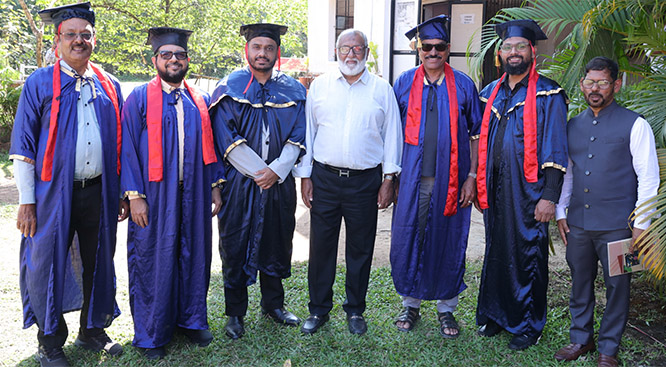
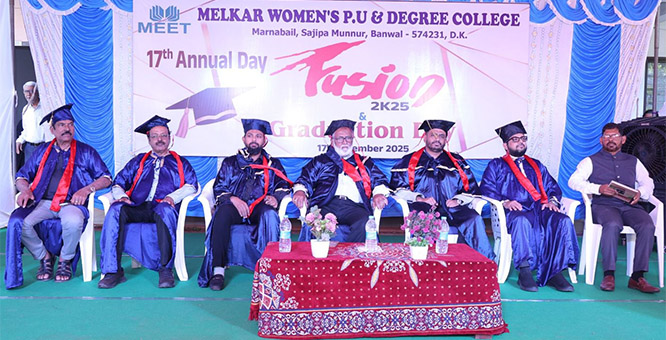
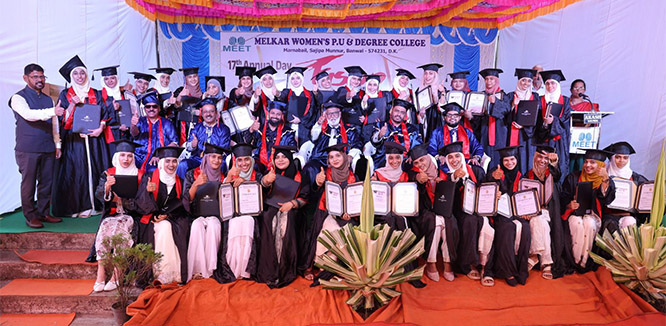
Melkar, Dec 17: The 17th Annual Day and Graduation Ceremony of Melkar Women’s PU and Degree College, themed “Fusion-2K25,” was celebrated with dignity and enthusiasm, marking a significant milestone in the institution’s academic journey. The programme reflected the college’s steadfast commitment to academic excellence, character building, and the holistic development of students.

The event was inaugurated by Mr. Asif Mohammed, whose presence greatly enriched the occasion. The celebration was further graced by the chief guests Mr. P. B. Ahmed Mudassir and Mr. Nissar Fakeer Mohammed, along with the distinguished guests of honour Mr. B. A. Nazeer and Mr. Ibrahim Gadiyar. In their inspiring addresses, the guests encouraged the graduating students and appreciated the dedicated efforts of the management, faculty, and students.

The annual report was presented by the Principal, Mr. Abdul Majeed S, highlighting the institution’s academic progress, notable achievements, and extracurricular accomplishments during the academic year.

The presidential address was delivered by the esteemed Chairman of Melkar Women’s PU and Degree College, Dr. Haji S. M. Rasheed, who emphasized the vital role of education in empowering women and shaping responsible citizens. He also stressed the importance of discipline, dedication, and perseverance in achieving success.

Cultural programmes and academic recognitions formed an integral part of the celebration, showcasing the talents and achievements of the students. The graduation ceremony was a proud moment for the outgoing students as they were formally conferred degrees and wished success in their future endeavours.

Ms. Mashmooma Fathima served as the Master of Ceremonies. The welcome address was delivered by Ms. Fathima Nida, and the programme concluded with a vote of thanks proposed by Ms. Ayisha Suhana.

The event successfully achieved its objectives and was highly appreciated by the guests and attendees.

melkar3.jpg

melkar2.jpg

Comments

Add new comment

  • Coastaldigest.com reserves the right to delete or block any comments.
  • Coastaldigset.com is not responsible for its readers’ comments.
  • Comments that are abusive, incendiary or irrelevant are strictly prohibited.
  • Please use a genuine email ID and provide your name to avoid reject.
News Network
December 19,2025

Saudi Arabia has abolished fees on expatriate workers employed in licensed industrial establishments, signaling a strong push to empower national factories and enhance the Kingdom’s global industrial competitiveness. The move reflects the leadership’s commitment to building a sustainable and resilient industrial economy under Saudi Vision 2030.

The decision was approved by the Council of Ministers, chaired by Crown Prince and Prime Minister Mohammed bin Salman, following a recommendation from the Council of Economic and Development Affairs (CEDA). It forms part of a broader strategy to support, modernize, and strengthen the industrial sector.

By removing fees on foreign workers, industrial establishments gain greater operational flexibility and relief from financial pressures. This is expected to help factories expand production, improve efficiency, and compete more effectively in international markets, while reinforcing long-term sustainability.

The initiative aligns closely with Saudi Vision 2030, which identifies industry as a key pillar of economic diversification. A competitive and resilient industrial base is viewed as essential for driving innovation, attracting investment, and sustaining long-term economic growth.

Overall, the fee exemption underscores the Kingdom’s commitment to creating a supportive environment for industrial development and ensuring that Saudi factories remain globally competitive and capable of leading the nation’s economic transformation.

Comments

Add new comment

  • Coastaldigest.com reserves the right to delete or block any comments.
  • Coastaldigset.com is not responsible for its readers’ comments.
  • Comments that are abusive, incendiary or irrelevant are strictly prohibited.
  • Please use a genuine email ID and provide your name to avoid reject.