‘Produce more kids and avail govt support’: China approves 3-child policy

News Network
August 20, 2021

china.jpg

Beijing, Aug 20: China's national legislature on Friday formally endorsed the three-child policy mooted by the ruling Communist Party, in a major policy shift aimed to prevent a steep decline in birth rates in the world's most populous country.

The revised Population and Family Planning Law, which allows Chinese couples to have three children, was passed by the Standing Committee of the National People's Congress (NPC).

In an apparent attempt to address the reluctance of the Chinese couples to have more children due to mounting costs, the amended law has also passed more social and economic support measures to address the concerns.

The new law stipulates that the country will take supportive measures, including those in finances, taxes, insurance, education, housing and employment, to reduce families' burdens as well as the cost of raising and educating children, state-run China Daily reported.

The NPC has revised the law to implement the central leadership's decision to cope with new circumstances in social and economic development and promote balanced long-term population growth, the report said.

In May this year, the ruling Communist Party of China (CPC) approved a relaxation of its strict two-child policy to allow all couples to have up to three children.

China permitted all couples to have two children in 2016, scrapping the draconian decades-old one-child policy which policymakers blame for the demographic crisis in the country.

Chinese officials claim the one-child policy implemented for over three decades has prevented over 400 million births.

The decision to permit the third child came after this month's once-in-a-decade census showed that China's population grew at the slowest pace to 1.412 billion amid official projections that the decline may begin as early as next year.

The new census figures revealed that the demographic crisis China faced was expected to deepen as the population of people above 60 years grew to 264 million, up by 18.7 per cent last year.

As the calls for the government to do away with the family planning restrictions grew louder due to the concerns that the declining population in the country could result in serious labour shortages and negatively impact the world's second-largest economy, the CPC decided to permit a third child while declining to completely scrap the family planning policy.

"Data shows the ageing of the Chinese population has further deepened, and we will continue to face the pressure to achieve a long-term balanced population development," Ning Jizhe, head of the National Bureau of Statistics (NBS), said while releasing the census figures on May 11.

The two-child policy failed to enthuse couples to have a second child as fewer opted for the second child, citing heavy expenditure in raising the children.

The poor response made Liang Jianzhang, professor at Peking University's School of Economics, to suggest the government offer parents one million yuan (USD 156,000) for each newborn child to shore up the country's declining birth rate.

Dan Wang, the chief economist at Hang Seng Bank (China), said the three-child policy would have a positive impact on China's birth rate, but not as much as the authorities hoped for.

"The high costs of housing and education, as well as a lack of job protection for women, are strong economic constraints on having children," she said, adding that the cost of having a third child would be too high for most middle-class families.

The declining trend prompted Chinese demographers to predict that India's population may overtake China's earlier than the UN projection of 2027 to take the top spot as the most populous country in the world.

Projected to surpass China as the world's most populous country around 2027, India is expected to add nearly 273 million people between now and 2050 and will remain the most populated country through the end of the current century, a UN report said in 2019.

The UN report stated that in 2019, India had an estimated population of 1.37 billion and China 1.43 billion and by 2027 India's population is projected to surpass China's.

Lu Jiehua, professor of sociology at Peking University, said that China's population may peak by 2027 before it starts to decline. Some demographers believe the peak may come as soon as 2022.

China is also facing the risk of falling into the trap of low fertility, as it recorded 12 million births in 2020, marking a drop for the fourth consecutive year.

China's total fertility rate of women of childbearing age was 1.3, a relatively low level.

A report this year by China's central bank - the People's Bank of China (PBOC) - said demographics of China is set to change as its population growth enters negative growth after 2025, which will result in a shortage of consumer demand.

"When the total population enters negative growth [after 2025], there will be a shortage of demand. We need to pay attention to the impact of demographics on future consumption," said Cai Fang, a member of the monetary policy committee of the PBOC.

The PBOC study said China should immediately liberalise its birth policies or face a scenario in which it has a lower share of workers and a higher burden of elderly care than the US by 2050.

It said the country should not interfere with people's ability to have children or it will be too late to reverse the economic impact of a declining population.

China is also eyeing a progressive, flexible and differentiated path to raising the retirement age.


Comments

Add new comment

  • Coastaldigest.com reserves the right to delete or block any comments.
  • Coastaldigset.com is not responsible for its readers’ comments.
  • Comments that are abusive, incendiary or irrelevant are strictly prohibited.
  • Please use a genuine email ID and provide your name to avoid reject.
News Network
December 2,2025

DKSsiddu.jpg

Bengaluru: 'Nati koli saaru' (country chicken curry) considered one of Chief Minister Siddaramaiah’s favourites along with steaming hot idlis was on the breakfast menu at Deputy CM D K Shivakumar’s residence on Tuesday, according to official sources.

The spread also included 'nati koli' fry, vada and pongal, among other items, they said.

In an apparent show of unity, Siddaramaiah visited Shivakumar’s residence for breakfast, just days after the two leaders shared a meal amid a simmering power tussle in the state Congress.

Siddaramaiah drove to the Deputy CM’s residence in Sadashivanagar, where he was received by Shivakumar and his brother D K Suresh, who is a former Congress MP.

Suresh and Kunigal MLA H D Ranganath, a relative of Shivakumar, joined them for breakfast, which featured a mix of vegetarian and non-vegetarian dishes.

Speaking to reporters later, Siddaramaiah said Shivakumar had invited him during his visit to the CM’s residence for breakfast on Saturday.

Asked about the difference between the two meals, the chief minister said, "At his (Shivakumar’s) house it was non-veg, while at my house it was veg. He is a vegetarian, I am a non-vegetarian. I had not prepared non-veg. I told DK to get chicken from the village as you won’t get the original in Bengaluru."

Shivakumar said he had initially invited Siddaramaiah to his residence, but the CM had suggested visiting his place first and reciprocating later. "It was a vegetarian breakfast at the CM’s house on Saturday," he noted.

"Today, I invited him (the CM) to my house. He enjoyed the breakfast, which had his Mysuru taste," Shivakumar added. At this point, Siddaramaiah remarked that Shivakumar’s wife is also from Mysuru.

Saturday’s breakfast at Siddaramaiah’s official residence, held as part of efforts by the Congress high command to ease tensions in the leadership dispute between the two, reportedly included idlis and sambar, according to official sources.

Comments

Add new comment

  • Coastaldigest.com reserves the right to delete or block any comments.
  • Coastaldigset.com is not responsible for its readers’ comments.
  • Comments that are abusive, incendiary or irrelevant are strictly prohibited.
  • Please use a genuine email ID and provide your name to avoid reject.
News Network
December 6,2025

indigoticket.jpg

With IndiGo flight disruptions impacting thousands of passengers, the airline on Saturday said that it will offer full waiver on all cancellations/reschedule requests for travel bookings between December 5, 2025 and December 15, 2025.

Earlier in the day, the civil aviation ministry had directed the airline to complete the ticket refund process for the cancelled flights by Sunday evening, as well as ensure baggage separated from the travellers are delivered in the next two days.

In a post on X, titled 'No questions asked', IndiGo wrote, "In response to recent events, all refunds for your cancellations will be processed automatically to your original mode of payment."

"We are deeply sorry for the hardships caused," it further added.

Several passengers, however, complained of not getting full refund as promised by the airline.

Netizens have shared screenchots of getting charged for airline cancellation fee and convenience fee.

"Please tell me why u have did this airline cancellation charges when u say full amount will be refunded (sic)," a user wrote sharing a screenshot of the refund page.

"Well, but you have still debited the convenience charges," wrote another.

Passengers have also raised concerns about the "cancel" option being disabled on the IndiGo app. "First enable the 'Cancel' button on your App & offer full refund on tickets cancelled by customers between the said dates," wrote a user.

A day after the country's largest airline, IndiGo, cancelled more than 1,000 flights and caused disruptions for the fifth day on Saturday, the ministry said that any delay or non-compliance in refund processing will invite immediate regulatory action.

The refund process for all cancelled or disrupted flights must be completed by 8 pm on Sunday, the ministry said in a statement.

"Airlines have also been instructed not to levy any rescheduling charges for passengers whose travel plans were affected by cancellations," it said.

On Saturday, more than 400 flights were cancelled at various airports.

IndiGo has also been instructed to set up dedicated passenger support and refund facilitation cells.

Comments

Add new comment

  • Coastaldigest.com reserves the right to delete or block any comments.
  • Coastaldigset.com is not responsible for its readers’ comments.
  • Comments that are abusive, incendiary or irrelevant are strictly prohibited.
  • Please use a genuine email ID and provide your name to avoid reject.
News Network
December 7,2025

SHRIMP.jpg

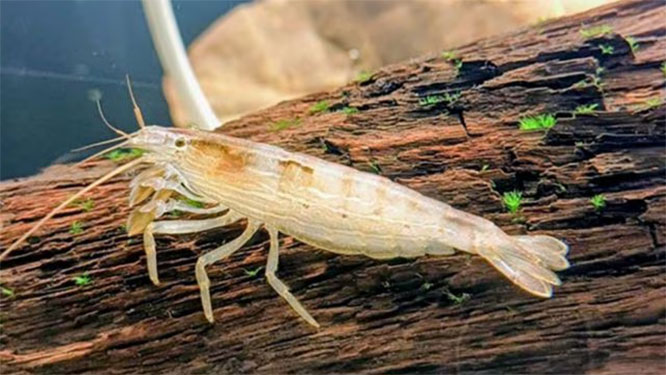
Mangaluru, Dec 7: A rare bamboo shrimp has been rediscovered on mainland India more than 70 years after it was last reported, confirming for the first time the presence of Atyopsis spinipes in the country. The find was made by researchers from the Centre for Climate Change Studies at Sathyabama Institute of Science and Technology, Chennai, during surveys in Karnataka and Odisha.

The team — shrimp expert Dr S Prakash, PhD scholar K Kunjulakshmi, and Mangaluru-based researcher Maclean Antony Santos — combined field surveys, ecological assessments and DNA analysis to identify the elusive species. Their findings, published in Zootaxa, resolve decades of taxonomic confusion stemming from a 1951 report that misidentified the species as Atyopsis moluccensis without strong evidence.

The shrimp has now been confirmed at two locations: the Mulki–Pavanje estuary near Mangaluru and the Kuakhai River in Bhubaneswar. Historical specimens from the Andaman Islands, previously labelled as A. moluccensis, were also found to be misidentified and actually belong to A. spinipes.

The rediscovery began after an aquarium hobbyist in Odisha spotted a shrimp in 2022, prompting systematic surveys across Udupi, Karwar and Mangaluru. Four female specimens were collected in Mulki and one in Odisha, all genetically matching.

Researchers warn the species may exist in very small, vulnerable populations as freshwater habitats face increasing pressure from pollution, sand mining and infrastructure development. All verified specimens have been deposited with the Zoological Survey of India for future reference.

Comments

Add new comment

  • Coastaldigest.com reserves the right to delete or block any comments.
  • Coastaldigset.com is not responsible for its readers’ comments.
  • Comments that are abusive, incendiary or irrelevant are strictly prohibited.
  • Please use a genuine email ID and provide your name to avoid reject.