1,400 migrant workers die in Qatar building World Cup football stadiums: TV documentary

Agencies
June 9, 2019

New Delhi, Jun 9: At least 1,400 migrant workers from Nepal have died while helping to build football stadiums for the 2022 FIFA World Cup in Qatar, a shock TV documentary has revealed.
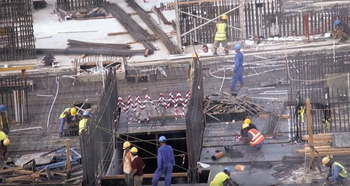
Construction site accidents and squalid living conditions in the Gulf state are claiming around 110 lives every year, according to Nepali government figures. 

And bereaved families of dead workers told German broadcaster WDR that they had received no compensation from Doha for their tragic losses.

WDR’s investigative documentary, titled “Trapped in Qatar,” on Friday exposed the harrowing plight of workers forced to live in crowded camps without many basic human needs.

Despite Nepal’s efforts to discourage its citizens from heading to Qatar for work, many still leave in the hope of finding better-paid jobs.

One Nepali stadia construction worker, Dil Prasad, said: “We are captured, and every day we nourish ourselves on water and bread. Without money we can’t do anything else. Month on month our situation gets worse. I’m not sure how much longer I can do it. I just want to go home. We can’t even call our families in Nepal.”

Dinesh Regimi, a Katmandu-based journalist who spent three years in Qatar as a reporter, said conditions for Nepali workers had not improved since Doha won its bid to stage the prestigious football competition almost a decade ago.

“When I was there few years ago, I saw only suffering of Nepali workers who migrated to that inhospitable country with lots of hope. They were denied a basic salary, their living conditions were very bad and there was always a long queue (of migrant workers) in the Nepali embassy in Doha seeking relief and intervention,” Regimi told Arab News.

He added: “The migrants faced difficulties returning home. Some died while working, some passed away while sleeping. The heat and living conditions claimed many lives. The Qatari government would not conduct any post-mortems on these workers.

“I can vouch for 150 deaths per year. For me it was difficult to see the pain of the workers.”

In 2017, Regimi travelled to Nepal to meet families who had lost loved ones working in Qatar.

Kishore Tamang from the Bara district of Nepal, around 250 km south of the capital Katmandu, went to Qatar in 2015 hoping to earn enough money to pay off family debts. But within a year he was dead, after being killed in a fall from a wall at a new football stadium being built for the World Cup. No compensation was paid to his family.

It was a similar story for the family of Jagat Nepali from the Nuwakot district. Within six months of arriving in Qatar he suffered a cardiac arrest brought on, his relatives said, by the intolerable heat and poor living conditions in the migrant workers’ camp.

A government official from Nepal’s Department of Immigration, told Arab News: “We are aware of the situation in Qatar and the difficulties Nepali workers face there. We try to discourage people from going to such places.”

Comments

Add new comment

  • Coastaldigest.com reserves the right to delete or block any comments.
  • Coastaldigset.com is not responsible for its readers’ comments.
  • Comments that are abusive, incendiary or irrelevant are strictly prohibited.
  • Please use a genuine email ID and provide your name to avoid reject.
News Network
November 28,2025

fire.jpg

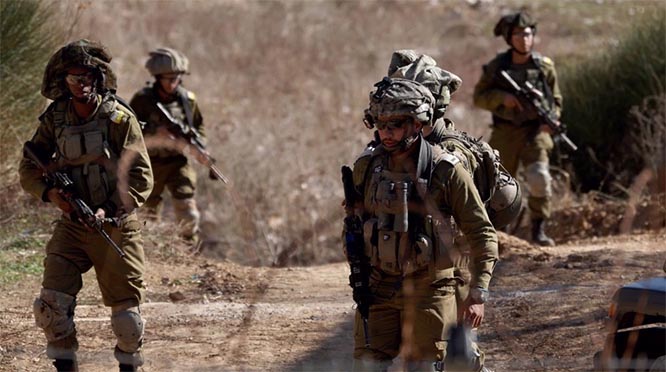
Several Syrians were killed and more than two dozen others injured in Israeli strikes on the outskirts of Damascus, amid intensified incursions by the occupying regime since the fall of former president Bashar al-Assad and the rise of Hayat Tahrir al-Sham (HTS) rule.

Syrian state TV reported that the casualties occurred during an overnight Israeli assault involving helicopters and drones on the town of Beit Jinn in the Damascus countryside. The attack followed an Israeli military unit’s entry into the town, where they were surrounded by local residents, leading to gunfire and direct confrontations.

According to the report, “The occupation army’s helicopters and artillery shelled Beit Jinn, located at the foothills of Mount Hermon, resulting in 13 martyrs and 25 injured civilians.” The broadcaster did not specify the full extent of damage.

Al-Ikhbariyah Syria confirmed that the shelling coincided with Israeli soldiers entering Beit Jinn, while artillery pounded surrounding areas. The broadcaster stated that the escalation began after local residents clashed with an Israeli patrol that had infiltrated the southern town and “kidnapped” three young men.

Following a two-hour exchange of heavy fire, Israeli forces withdrew and repositioned on the hill of Butt al-Warda at the town’s outskirts.

Israeli media acknowledged that six soldiers were wounded in the clashes—three of them seriously—describing the confrontation as a “sudden ambush” that forced the deployment of reserve units and air support to secure an exit route. No further details were provided.

The aggression has fueled renewed displacement from Beit Jinn, with residents fleeing to nearby villages amid increasingly frequent Israeli attacks.

The raid came just a day after Israeli troops carried out another ground incursion into Umm al-Luqas village in Quneitra province. According to SANA, an Israeli unit in four vehicles entered the village, raided several homes, and later withdrew.

Syria condemned the repeated incursions as violations of the 1974 Disengagement Agreement and UN resolutions, urging the international community to enforce compliance and pressure Israel to halt its operations and withdraw fully.

Israel has expanded its attacks across Syrian territory following the collapse of the Assad government last year. Prime Minister Benjamin Netanyahu has reportedly instructed his forces to push deeper into Syrian territory and seize strategic positions.

Meanwhile, critics say the HTS-led interim government’s inaction and growing normalization gestures toward Israel have emboldened Tel Aviv to intensify its military operations. HTS, formerly linked to al-Qaeda, seized control of Damascus last December, formally ending Assad’s rule.

Comments

Add new comment

  • Coastaldigest.com reserves the right to delete or block any comments.
  • Coastaldigset.com is not responsible for its readers’ comments.
  • Comments that are abusive, incendiary or irrelevant are strictly prohibited.
  • Please use a genuine email ID and provide your name to avoid reject.
News Network
November 24,2025

israelsyra.jpg

Israeli forces have pushed over the Syrian frontier, erecting a checkpoint and stopping vehicles in the southwestern city of Quneitra, in yet another breach of the Arab country’s sovereignty.

The violation took place on Sunday, when the troops made their way across the border, setting up the outpost near the Ain al-Bayda junction in northern Quneitra, Syrian outlets reported.

According to the al-Ikhbariya paper, an Israeli detachment positioned itself at the junction, halting cars and conducting searches.

The Syrian Arab News Agency (SANA) reported that three Israeli military vehicles then moved further into the northern countryside, deploying between the town of Jubata al-Khashab and the villages of Ofaniya and Ain al-Bayda. The agency added that a separate Israeli unit mounted a new incursion in the central region, approaching the villages of Umm Batina and al-Ajraf.

Residents said such activities have surged in recent months, pointing to Israeli advances onto farmland, leveling of extensive forested areas, arrests, and spread of mobile checkpoints.

The Israeli regime began markedly increasing its military aggression against Syria last year.

The escalation coincided with increasingly ferocious onslaughts throughout the country by the so-called Hay'at Tahrir al-Sham (HTS) Takfiri terrorist group, which the government of President Bashar al-Assad had confined to northwestern Syria. The HTS, however, managed to overthrow the government as the Israeli attacks would pummel the country’s civilian and defensive infrastructure.

Various reports have shown that, during the escalation, the regime conducted more than 1,000 airstrikes on the Syrian territory and over 400 ground raids into the south.

Following the collapse of the Assad government, Tel Aviv also widened its grip over the occupied Golan Heights by taking control of a demilitarized buffer zone, in defiance of a 1974 Disengagement Agreement. Earlier this month, senior Israeli officials, including Prime Minister Benjamin Netanyahu, visited the buffer zone, prompting expressions of alarm on the part of the United Nations.

The United States, the regime’s biggest ally, has, meanwhile, been fraternizing the HTS head Abu Mohammed al-Jolani amid the widely reported prospect of rapprochement with Tel Aviv.

Comments

Add new comment

  • Coastaldigest.com reserves the right to delete or block any comments.
  • Coastaldigset.com is not responsible for its readers’ comments.
  • Comments that are abusive, incendiary or irrelevant are strictly prohibited.
  • Please use a genuine email ID and provide your name to avoid reject.