60% of children adopted in India in last 6 years were girls, reveals RTI plea

Agencies
May 6, 2018

New Delhi, May 6: Nearly 60 per cent of children adopted in the last six years were girls across states in India, led by Maharashtra which also recorded the highest number of adoptions in recent years, government data showed. Of the 3,276 children adopted in the country in 2017-18, a total of 1,858 were girls, the data showed.

In reply to an RTI filed by this correspondent on the number of adoptions in every state since 2012, Child Adoption Resource Authority (CARA) said Maharashtra was at the forefront in adopting girls. The number of girls adopted in 2017 was 353 out of a total of 642 adoptions in the state.

Karnataka followed with 286 adoptions, 167 of them girls, CARA, the apex body for adoption in the country, said.

Maharashtra's high score was not just because of the size of the state, but because of the large number of adoption agencies there, said CARA CEO Lieutenant Colonel Deepak Kumar. "Maharashtra has the highest number of adoption agencies in the country at 60 while other states that are bigger have on an average 20 adoption agencies," he said.

In 2017-18, there was an increase in the number of in-country adoptions. Of the 3,276 children adopted within India, 1,858 were girls and 1,418 boys, according to the data given in response to the RTI query.

The inter-country adoption also saw an increase, with the number rising from 578 in 2016-17 to 651 in 2017-18. In 2017-18, most adoptions of Indian children were by families in the US, Italy, France and Spain, Kumar said.

In 2016-2017, out of the 3,210 children adopted within India, 1,915 or almost 60 per cent were girls.

Maharashtra (711) and Karnataka (252) again recorded the highest numbers, followed by West Bengal (203).

Data for the past five years showed that on an average, 59.77 per cent of couples adopted a girl and 40.23 per cent a boy.

"This reflects that things are changing now. Moreover, people feel that it is easier to manage a girl child than a boy, and that's another big plus point for the girl child to be considered for adoption," Kumar said.

Kumar refuted reports that more girls were adopted because many more of them were given away for adoption.

"It is not that availability of the girl child is higher but that parents are opting more for a girl child. We give them three choices - one can either opt for a girl or a boy or can give no preference...The percentage of those opting specifically for girls to boys would be 55:45," he said.

Similar trends were observed for the years since 2012, the period the RTI query focused on.

Of the 5,002 adoptions in 2012-13, 3,050 were girls, and of 4,354 in 2013-14, 2,601 were girls.

In 2014-15, 2,555 of the 4,362 children adopted were girls while in 2015-16, 2,295 of the 3,677 adopted were girls.

Even states with low sex ratios such as Haryana and Uttar Pradesh, couples were opting for adopting girls.

In Haryana, 31 girls and 19 boys were adopted while in Uttar Pradesh, 86 girls and 40 boys were adopted in 2016-17, according to the data.

The data come amid a recent report by NITI Aayog which said the sex ratio at birth (SRB) in India had seen a decline in 17 out of the 21 large states.

The report which stressed on the need to check sex-selective abortion said among the 17 states were those that recorded a substantial drop of 10 points or more.

In Gujarat the SRB fell to 854 females from 907 females per 1,000 males born, registering a drop of 53 points from 2012-14 (base year) to 2013-15 (reference year).

Kumar welcomed the trend of more girls being adopted, but also acknowledged issues related with adoption of children in India.

"In foreign countries, the domestic adoption process is through a lot of other programmes such as sponsorship and foster care. Many children who are in foster care are subsequently adopted. India also has a foster care programme but it has not really taken on because of the mindset of the people," Kumar said.

He said most people who wished to adopt children did not want a child who was older than 4 or 5 years of age.

"So the probability of a child getting adopted almost diminishes to negligible domestically if the child crosses the age of 5-6 years. I have 20,000 parents registered but we have very few children of a younger age who are legally free for adoption," he said.

The other issue was people's reluctance to adopt a child with special needs.

"We in India don't want to adopt a child with special needs while in foreign countries, people are open to it because they have a better healthcare facility and the government support is much higher," Kumar said.


Comments

Add new comment

  • Coastaldigest.com reserves the right to delete or block any comments.
  • Coastaldigset.com is not responsible for its readers’ comments.
  • Comments that are abusive, incendiary or irrelevant are strictly prohibited.
  • Please use a genuine email ID and provide your name to avoid reject.
News Network
December 16,2025

bengal.jpg

The deletion of over 58 lakh names from West Bengal’s draft electoral rolls following a Special Intensive Revision (SIR) has sparked widespread concern and is likely to deepen political tensions in the poll-bound state.

According to the Election Commission, the revision exercise has identified 24 lakh voters as deceased, 19 lakh as relocated, 12 lakh as missing, and 1.3 lakh as duplicate entries. The draft list, published after the completion of the first phase of SIR, aims to remove errors and duplication from the electoral rolls.

However, the scale of deletions has raised fears that a large number of eligible voters may have been wrongly excluded. The Election Commission has said that individuals whose names are missing can file objections and seek corrections. The final voter list is scheduled to be published in February next year, after which the Assembly election announcement is expected. Notably, the last Special Intensive Revision in Bengal was conducted in 2002.

The development has intensified the political row over the SIR process. Chief Minister Mamata Banerjee and her Trinamool Congress have strongly opposed the exercise, accusing the Centre and the Election Commission of attempting to disenfranchise lakhs of voters ahead of the elections.

Addressing a rally in Krishnanagar earlier this month, Banerjee urged people to protest if their names were removed from the voter list, alleging intimidation during elections and warning of serious consequences if voting rights were taken away.

The BJP, meanwhile, has defended the revision and accused the Trinamool Congress of politicising the issue to protect what it claims is an illegal voter base. Leader of the Opposition Suvendu Adhikari alleged that the ruling party fears losing power due to the removal of deceased, fake, and illegal voters.

The controversy comes amid earlier allegations by the Trinamool Congress that excessive work pressure during the SIR led to the deaths by suicide of some Booth Level Officers (BLOs), for which the party blamed the Election Commission. With the draft list now out, another round of political confrontation appears imminent.

As objections begin to be filed, the focus will be on whether the correction mechanism is accessible, transparent, and timely—critical factors in ensuring that no eligible voter is denied their democratic right ahead of a crucial election.

Comments

Add new comment

  • Coastaldigest.com reserves the right to delete or block any comments.
  • Coastaldigset.com is not responsible for its readers’ comments.
  • Comments that are abusive, incendiary or irrelevant are strictly prohibited.
  • Please use a genuine email ID and provide your name to avoid reject.
News Network
December 3,2025

arrival.jpg

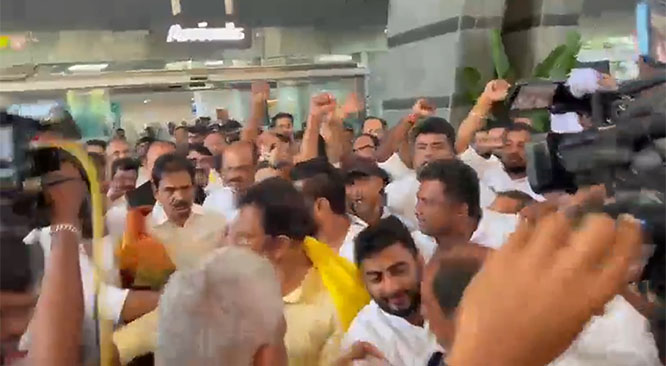
Mangaluru, Dec 3: A group of Congress workers gathered at the Mangaluru International Airport on Wednesday to welcome AICC general secretary K C Venugopal, but the reception quickly turned into a display of support for Deputy Chief Minister D K Shivakumar.

Venugopal arrived in the city to participate in the centenary commemoration of the historic dialogue between Mahatma Gandhi and Narayana Guru. The event, organised by the Sivagiri Mutt, Varkala, in association with the Mangalore University Sri Narayana Guru Study Chair, is being held on the university’s Konaje campus.

KPCC general secretary Mithun Rai and several party workers had assembled at the airport to receive Venugopal. However, the moment he stepped out, workers began raising slogans backing Shivakumar.

The university programme will be inaugurated by Chief Minister Siddaramaiah.

This show of support comes just a day after Siddaramaiah remarked that Shivakumar would lead the government “when the high command decides.” The chief minister made the comment after a breakfast meeting at Shivakumar’s residence—another public display of camaraderie between the two leaders amid ongoing attempts by the party high command to downplay their leadership rivalry.

Comments

Add new comment

  • Coastaldigest.com reserves the right to delete or block any comments.
  • Coastaldigset.com is not responsible for its readers’ comments.
  • Comments that are abusive, incendiary or irrelevant are strictly prohibited.
  • Please use a genuine email ID and provide your name to avoid reject.
News Network
December 16,2025

Mangaluru, Dec 16: The Mangaluru City police have significantly escalated their campaign against drug trafficking, arresting 25 individuals and booking 12 cases under the Narcotic Drugs and Psychotropic Substances (NDPS) Act between November 30 and December 13. The crackdown resulted in the seizure of a substantial quantity of illicit substances, including 685.6 grams of MDMA and 1.5 kg of ganja.

The success of this recent drive has been significantly boosted by the city’s innovative, QR code-based anonymous reporting system.

"The anonymous reporting system has received an encouraging response. Several recent arrests were made based on inputs received through this system, helping police tighten the noose around drug peddlers," said the City Police Commissioner.

The latest arrests contribute to a robust year-to-date record, underscoring the police's relentless commitment to combating the drug menace.

Up to December 14 this year, the police have registered a total of 107 cases of drug peddling, leading to the arrest of 219 peddlers. Furthermore, they have booked 562 cases of drug consumption, resulting in the arrest of 671 individuals.

The scale of the seizure for the year reflects the magnitude of the problem being tackled: police have seized 320.6 kg of ganja worth ₹88.7 lakh and 1.4 kg of MDMA valued at ₹1.2 crore. Other significant seizures include hydro-weed ganja worth ₹94.7 lakh and cocaine worth ₹1.9 lakh, among others.

The Commissioner emphasized a policy of rigorous enforcement: "We ensure that peddlers are caught red-handed so that they cannot later dispute the case or claim innocence."

To counter the rising trend of substance abuse among youth, the Mangaluru City police have rolled out uniform guidelines for random drug testing across educational institutions.

As part of the drive, tests were conducted in approximately 100 institutions, screening an estimated 5,500 to 6,000 students in the first phase. 20 students tested positive for drug consumption during the initial screening.

Students who tested positive have been provided counselling and are scheduled for re-testing in the second quarter. The testing will also be expanded to students not covered in the first phase. In a move to ensure strict implementation, police personnel were deployed in mufti in some institutions. Reiterating a zero-tolerance stance, the Commissioner confirmed that random testing will continue, and colleges have also been instructed to conduct drug tests at the time of admission to deter substance abuse from an early stage.

Comments

Add new comment

  • Coastaldigest.com reserves the right to delete or block any comments.
  • Coastaldigset.com is not responsible for its readers’ comments.
  • Comments that are abusive, incendiary or irrelevant are strictly prohibited.
  • Please use a genuine email ID and provide your name to avoid reject.