85,000 kids dead of starvation or disease in Yemen

Agencies
November 21, 2018

Dubai, Nov 21: As many as 85,000 infants under the age of five may have died from starvation or disease since 2015 in war-ravaged Yemen, humanitarian organisation Save the Children said on Wednesday.

It said the estimate was based on data compiled by the United Nations, which has warned that up to 14 million people are at risk of famine in Yemen, where Saudi-backed forces are battling Iran-aligned Huthi rebels.

"For every child killed by bombs and bullets, dozens are starving to death and it's entirely preventable," said Tamer Kirolos, Save the Children's country director in Yemen.

"Children who die in this way suffer immensely as their vital organ functions slow down and eventually stop," he said.

"Their immune systems are so weak they are more prone to infections with some too frail to even cry. Parents are having to witness their children wasting away, unable to do anything about it."

Hodeida port, the entry point for some 80 percent of food imports and aid into Yemen, has been under blockade by the Saudi-led coalition backing the government since last year.

Save the Children said that it had been forced to bring supplies for the north of the country through the southern port of Aden, significantly slowing aid deliveries.

It also reported a "dramatic increase" in air strikes on the battleground city of Hodeida.

"In the past few weeks there have been hundreds of air strikes in and around Hodeida, endangering the lives of an estimated 150,000 children still trapped in the city. Save the Children is calling for an immediate end to the fighting so no more lives are lost," Kirolos said.

The plea comes as UN envoy Martin Griffiths prepares to hold talks with the rebels in the capital Sanaa during a visit aimed at laying the groundwork for peace talks in Sweden.

Under heavy Western pressure, the government and its Saudi-led military backers have largely suspended a five-month-old offensive on the Red Sea port city as UN envoy Martin Griffiths makes the biggest peace push in two years.

But a devastating all-out assault on the city's lifeline docks still threatens as coalition commanders scent a potentially game-changing victory in their three-and-a-half year war on the rebels.

UN agencies say up to 14 million Yemenis are at risk of starvation if the port of Hodeida is closed by fighting or damage.

The city is virtually the sole gateway to the capital and rebel-held territory in the densely populated highlands, and some 80 percent of commercial food imports and virtually all UN-supervised humanitarian aid pass through its docks.

Griffiths was due to fly into Sanaa for talks with rebel political leaders later on Wednesday as he attempts to revive a peace process that collapsed in acrimony in Switzerland in September when the rebels failed to show up.

The rebels have said repeatedly that they need stronger security guarantees from the international community that they will be given safe passage through the crippling air and sea blockade the coalition has enforced since March 2015.

The international community is demanding in return that the rebels halt all offensive operations, particularly missile attacks on neighbouring Saudi Arabia, and commit to joining talks on handing over of the port of Hodeida to UN control.

"Griffiths faces the sternest test of his young tenure," said Brussels-based think tank International Crisis Group.

"If his mediation efforts succeed in preventing a destructive battle for Hodeida, he could build momentum toward reviving a peace process that has been stalled for the past two years.

"But if he fails, peace in Yemen will look increasingly remote and the prospects for its embattled population increasingly dire."

Both sides have in the past week expressed support for the envoy and his mission to convene new peace talks in Sweden, but fierce clashes flared again in Hodeida late Tuesday.

Just hours before Griffiths' planned arrival in Sanaa, residents in the east of Hodeida told AFP by telephone they could hear fighting, and reported shrapnel falling in residential neighbourhoods.

On Monday, Britain presented to the UN Security Council a draft resolution urging an immediate truce in Hodeida and setting a two-week deadline for the warring sides to remove all barriers to humanitarian aid.

The proposed resolution would significantly ratchet up pressure on the Saudi-led coalition and the rebels to seek a negotiated settlement.

It also calls for a large injection of foreign cash to support Yemen's collapsing currency and for salaries of civil servants, teachers, and health workers to be paid within a month.

Multiple past attempts to hold negotiations have failed.

Griffiths said Monday he hoped the rivals would meet in Sweden "within the next few weeks". No date has been set. 

The rebels overran Sanaa in late 2014, when they also took control of Hodeida and its port.

A year later, the coalition intervened as President Abedrabbo Mansour Hadi fled into Saudi exile.

Both parties in the conflict stand accused of acts that could amount to war crimes.

Although Western governments have condemned civilian deaths in Yemen, they remain political and military backers of Saudi Arabia, which is a regional ally and spends billions of dollars on arms from the United States, Britain, and France.

They have come under increased domestic political pressure to halt, or at least attach conditions to, their arms deliveries since the murder of dissident Saudi journalist Jamal Khashoggi in the kingdom's consulate in Istanbul last month by top agents Riyadh insists were acting without orders.

The World Health Organization says nearly 10,000 people -- mostly civilians -- have been killed in Yemen since the Saudi-led intervention began, but human rights groups believe the toll may be five times higher.

The World Food Programme says up to 14 million Yemenis are at risk of starvation.

Save the Children said on Wednesday that some 85,000 infants under the age of five may have died of severe malnutrition or related diseases between March 2015 and this October based on UN agency figures.

Comments

Add new comment

  • Coastaldigest.com reserves the right to delete or block any comments.
  • Coastaldigset.com is not responsible for its readers’ comments.
  • Comments that are abusive, incendiary or irrelevant are strictly prohibited.
  • Please use a genuine email ID and provide your name to avoid reject.
News Network
December 7,2025

envoy.jpg

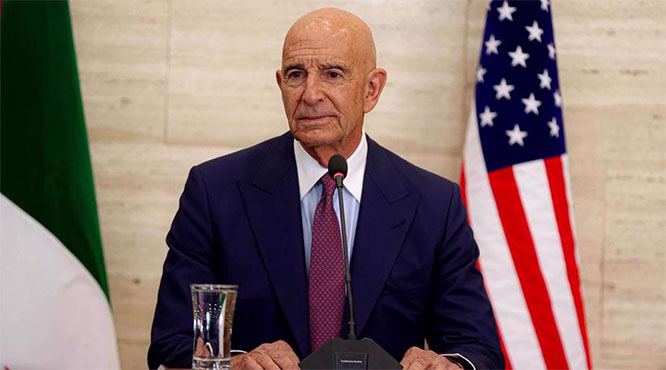
Since 1946, the United States has attempted 93 coups or “regime change” operations across the world — including two in Iran, US Special Envoy for Syria Tom Barrack has admitted.

Speaking to the UAE-based IMI Media Group, in remarks published by The National, Barrack said Washington tried twice to overthrow the Iranian government but failed both times. 

“For (Trump) then to be imputed with regime change — we had two regime changes in Iran already. Neither one worked. So I think wisely leave it to the region to solve,” said Barrack, who also serves as the US ambassador to Turkey.

His comments come six months after the US joined Israel in airstrikes against Iran during ongoing indirect nuclear negotiations between Tehran and Washington.

On June 13, Israel launched an attack on Iran that killed at least 1,064 people and hit civilian infrastructure. Days later, the United States targeted three nuclear facilities — Fordow, Natanz and Isfahan — in what Iran called a clear violation of international law. Iranian retaliation eventually forced a halt to the assault on June 24.

Barrack further claimed that US President Donald Trump and Foreign Secretary Marco Rubio are “not into regime change” and prefer a regional approach driven by Middle Eastern countries themselves. According to him, regional dialogue and non-interference by outside powers offer a more durable path forward.

He added that Washington is still open to an agreement with Tehran if Iranian authorities show “seriousness” and willingness to engage constructively.

However, Iran maintains the US has not shown readiness for meaningful talks. In an interview with Japan’s Kyodo News, Iranian Foreign Minister Abbas Araghchi said negotiations could advance only if Washington acknowledges Iran’s right to peaceful nuclear energy and lifts unilateral sanctions.

Comments

Add new comment

  • Coastaldigest.com reserves the right to delete or block any comments.
  • Coastaldigset.com is not responsible for its readers’ comments.
  • Comments that are abusive, incendiary or irrelevant are strictly prohibited.
  • Please use a genuine email ID and provide your name to avoid reject.
News Network
December 6,2025

pilot.jpg

New Delhi: IndiGo, India’s largest airline, faced major operational turbulence this week after failing to prepare for new pilot-fatigue regulations issued by the Directorate General of Civil Aviation (DGCA). The stricter rules—designed to improve flight safety—took effect in phases through 2024, with the latest implementation on November 1. IndiGo has acknowledged that inadequate roster planning led to widespread cancellations and delays.

Below are the key DGCA rules that affected IndiGo’s operations:

1. Longer Mandatory Weekly Rest

Weekly rest for pilots has been increased from 36 hours to 48 hours.

The government says the extended break is essential to curb cumulative fatigue. This rule remains in force despite the current crisis.

2. Cap on Night Landings

Pilots can now perform only two night landings per week—a steep reduction from the earlier limit of six.

Night hours, defined as midnight to early morning, are considered the least alert period for pilots.

Given the disruptions, this rule has been temporarily relaxed for IndiGo until February 10.

3. Reduced Maximum Night Flight Duty

Flight duty that stretches into the night is now capped at 10 hours.

This measure has also been kept on hold for IndiGo until February 10 to stabilize operations.

4. Weekly Rest Cannot Be Replaced With Personal Leave

Airlines can no longer count a pilot’s personal leave as part of the mandatory 48-hour rest.

Pilots say this closes a loophole that previously reduced actual rest time.

Currently, all airlines are exempt from this rule to normalise travel.

5. Mandatory Fatigue Monitoring

Airlines must submit quarterly fatigue reports along with corrective actions to DGCA.

This system aims to create a transparent fatigue-tracking framework across the industry.

The DGCA has stressed that these rules were crafted to strengthen flight safety and align India with global fatigue-management standards. The temporary relaxations are expected to remain until February 2025, giving IndiGo time to stabilise its schedules and restore normal air travel.

Comments

Add new comment

  • Coastaldigest.com reserves the right to delete or block any comments.
  • Coastaldigset.com is not responsible for its readers’ comments.
  • Comments that are abusive, incendiary or irrelevant are strictly prohibited.
  • Please use a genuine email ID and provide your name to avoid reject.
News Network
December 6,2025

indigoticket.jpg

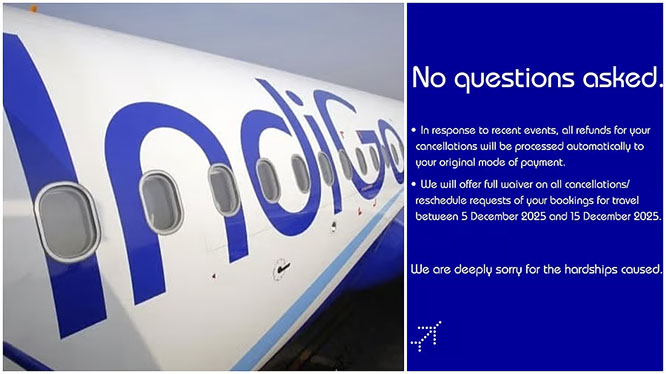
With IndiGo flight disruptions impacting thousands of passengers, the airline on Saturday said that it will offer full waiver on all cancellations/reschedule requests for travel bookings between December 5, 2025 and December 15, 2025.

Earlier in the day, the civil aviation ministry had directed the airline to complete the ticket refund process for the cancelled flights by Sunday evening, as well as ensure baggage separated from the travellers are delivered in the next two days.

In a post on X, titled 'No questions asked', IndiGo wrote, "In response to recent events, all refunds for your cancellations will be processed automatically to your original mode of payment."

"We are deeply sorry for the hardships caused," it further added.

Several passengers, however, complained of not getting full refund as promised by the airline.

Netizens have shared screenchots of getting charged for airline cancellation fee and convenience fee.

"Please tell me why u have did this airline cancellation charges when u say full amount will be refunded (sic)," a user wrote sharing a screenshot of the refund page.

"Well, but you have still debited the convenience charges," wrote another.

Passengers have also raised concerns about the "cancel" option being disabled on the IndiGo app. "First enable the 'Cancel' button on your App & offer full refund on tickets cancelled by customers between the said dates," wrote a user.

A day after the country's largest airline, IndiGo, cancelled more than 1,000 flights and caused disruptions for the fifth day on Saturday, the ministry said that any delay or non-compliance in refund processing will invite immediate regulatory action.

The refund process for all cancelled or disrupted flights must be completed by 8 pm on Sunday, the ministry said in a statement.

"Airlines have also been instructed not to levy any rescheduling charges for passengers whose travel plans were affected by cancellations," it said.

On Saturday, more than 400 flights were cancelled at various airports.

IndiGo has also been instructed to set up dedicated passenger support and refund facilitation cells.

Comments

Add new comment

  • Coastaldigest.com reserves the right to delete or block any comments.
  • Coastaldigset.com is not responsible for its readers’ comments.
  • Comments that are abusive, incendiary or irrelevant are strictly prohibited.
  • Please use a genuine email ID and provide your name to avoid reject.