



Airports across India struggling to cope with massive passenger surge

Agencies
March 19, 2018

Mumbai, Mar 19: India’s airports are struggling to cope with a massive surge in passenger numbers and billions of dollars must be spent to boost their capacity, analysts have warned.

The country is witnessing a huge boom in air travel as its growing middle class increasingly takes to the skies but experts say infrastructure is failing to keep up.

“There’s an urgent need for capacity building in major Indian airports as they are bursting at the seams and close to saturation,” Binit Somaia, South Asia Director at the Centre for Aviation (CAPA), said.

India has witnessed a six-fold increase in passenger numbers over the past decade as citizens take advantage of better connectivity and cheaper fares thanks to a host of low-cost airlines.

Indian airports handled 265 million domestic passengers in 2016 and will cross 300 million this year, according to CAPA. The country’s entire airport network is only capable of handling 317 million passengers, it says.

According to data compiled by the Directorate General of Civil Aviation (DGCA), an Indian regulatory body, there were just 44 million Indians travelling by plane in 2008.

Now CAPA predicts India will overtake Britain as the world’s third-largest market by 2025 and will have 478 million flyers by 2036.

Aviation experts say the government faces a race against time to build the infrastructure to handle the soaring congestion.

“Some top airports have reached saturation. In the next five to seven years, the top 30 to 40 airports in India will be performing beyond their capacity,” said Somaia of the Sydney-based CAPA.

Flights have increased by around 20 per cent every year over the last three years, stretching many airports to breaking point.

Travellers can snap up tickets sometimes for as little as 1,000 rupees ($15) — cheaper than many fares on the country’s rickety train network.

Ten Indian airports — including Dehradun, Jaipur, Guwahati, Mangalore, Srinagar and Pune — are already operating beyond their capacity, CAPA said in a report released last month. Others are nearing their limit.

The aviation body predicts that New Delhi’s Indira Gandhi International Airport and Chennai’s International Airport will reach their handling capacity within four to six years.

World record

The situation is even more pressing at Mumbai’s Chhatrapati Shivaji International Airport (CSIA). CAPA says it is at 94 per cent capacity and is “close to saturation”.

Earlier this year, the airport said it had broken its own world record for handling the most number of arrivals and departures on a single runway in one day. Some 980 flights landed and took off within a 24-hour period.

Domestic travellers flying into India’s financial capital regularly complain of flights having to circle for up to half an hour before the plane is given a slot to land.

The airport is surrounded by slum settlements, making it impossible to increase the number of runways and highlighting the problem of acquiring space for infrastructure projects in India’s heavily congested cities.

The government is building a new airport at Navi Mumbai, 30 kilometres away, to ease the burden. It has been repeatedly delayed due to land disputes and is currently scheduled to open in 2023.

“The situation at CSIA will worsen until the new airport is operational,” Amber Dubey, India head of aerospace and defence at global consultancy KPMG, told AFP, describing the delays as “unacceptable”.

Prime Minister Narendra Modi has made making air travel accessible to all a key priority since his election in 2014. He recently launched a scheme to connect remote regions of the country by air.

In the budget last month, Finance Minister Arun Jaitley allocated $613 million to the Airports Authority of India to expand facilities.

CAPA estimates that India needs to invest $45 billion by 2030 to keep up with demand.

“The government needs to ensure we have infrastructure to manage [the] growth rate,” Manish Agarwal, an infrastructure expert at PricewaterhouseCoopers, said.

Comments

Add new comment

  • Coastaldigest.com reserves the right to delete or block any comments.
  • Coastaldigset.com is not responsible for its readers’ comments.
  • Comments that are abusive, incendiary or irrelevant are strictly prohibited.
  • Please use a genuine email ID and provide your name to avoid reject.
News Network
December 4,2025

Udupi: A 40-year-old NRI from Udupi has reportedly lost more than Rs 12.25 lakh in an online investment scam operated through Telegram.

According to a complaint filed at the CEN police station, Leo Jerome Mendonsa, who has been working in Dubai for the past 15 years in computer accessories sales, maintains NRI accounts in Karkala and Nitte.

On November 12, 2025, Mendonsa was added to a Telegram group called Instaflow Earnings by unknown individuals. Users identified as Priya and Dipannita persuaded him to invest in “Revenue Tasks.” Initially, Mendonsa transferred Rs 1,100 multiple times and received the promised returns, encouraging him to continue.

On November 14, another user, Nishmitha Shetty, directed him to register on a website, digitvisionuoce.cc, and invest Rs 4 lakh in various shares. Over the next few days, he made multiple transfers totaling Rs 12,25,000, including Rs 50,000 via Google Pay, believing the scheme was legitimate.

After receiving the money, the alleged handlers stopped responding, and neither the invested amount nor the promised profits were returned.

The CEN police have registered a case under Sections 66(C) and 66(D) of the IT Act and Section 318(4) of the Bharatiya Nyaya Sanhita (BNS), and investigations are ongoing.

Comments

Add new comment

  • Coastaldigest.com reserves the right to delete or block any comments.
  • Coastaldigset.com is not responsible for its readers’ comments.
  • Comments that are abusive, incendiary or irrelevant are strictly prohibited.
  • Please use a genuine email ID and provide your name to avoid reject.
News Network
November 24,2025

Mangaluru, Nov 24: The original departure time of 11.10 pm was a distant memory for scores of Dammam-bound passengers at Mangaluru International Airport last Friday night, as their Air India Express flight was abruptly cancelled at the eleventh hour, sparking hours of frustration and chaos.

The flight, IX 885, initially scheduled to depart at 11.10 pm on November 22, was subject to two back-to-back reschedules—first pushed to 11.45 pm and then significantly postponed to 1.40 am—before the final, crushing announcement of cancellation was made. For the travellers, many of whom are likely expatriate workers with tight schedules, the last-minute change marked the beginning of a distressing ordeal.

"There was no drinking water, no food, and absolutely no proper guidance. We were left stranded like refugees," complained a stranded passenger.

According to multiple passenger accounts, the airline's ground staff failed to provide adequate support or essential amenities following the cancellation. Complaints poured in about the total absence of drinking water, food provisions, and any reliable guidance from the carrier's representatives. Travellers alleged they were left stranded for a considerable period, with no immediate arrangements or clear communication offered regarding accommodation or alternative travel to send them back home.

The incident has highlighted serious concerns over the carrier's contingency planning and customer service protocols during flight disruptions at one of India's key international gateways. The airline is yet to issue a comprehensive statement addressing the alleged lapse in passenger care.
 

Comments

Add new comment

  • Coastaldigest.com reserves the right to delete or block any comments.
  • Coastaldigset.com is not responsible for its readers’ comments.
  • Comments that are abusive, incendiary or irrelevant are strictly prohibited.
  • Please use a genuine email ID and provide your name to avoid reject.
News Network
November 24,2025

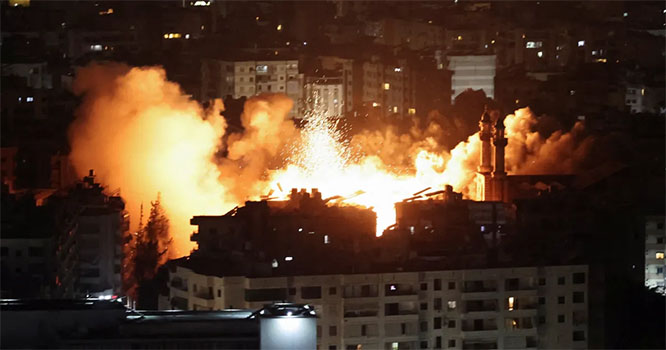
lebanon.jpg

Israel has launched a new act of aggression on a residential neighborhood in Lebanon's capital, Beirut, killing and injuring about two dozen civilians.

The Israeli regime's military said in a statement that its forces carried out a so-called precise strike in a residential apartment in Dahiyeh in the southern suburbs of Beirut on Sunday.

The aggression targeted residential areas, killing at least five people and injuring more than 28 people, Lebanon's Health Ministry said. 

Hezbollah announced the martyrdom of senior Hezbollah commander Haytham Ali Tabatabai and four resistance fighters.

Lebanese President Michel Aoun condemned the airstrike, calling it a clear demonstration of Tel Aviv’s disregard for repeated international calls to halt violations on Lebanese soil.

“Israel refuses to implement international resolutions and all efforts aimed at ending the escalation and restoring stability,” Aoun said, urging the international community to take action to prevent further aggression.

The Palestinian Islamic Jihad movement also condemned the attack, holding the international community accountable. 

“The international community bears responsibility and continues to provide cover for these attacks as long as it does not restrain the occupiers,” said Ali Abu Shahin, a member of the group’s political bureau.

Israeli prime minister Benjamin Netanyahu’s office announced that the Israeli army carried out a strike “in the heart of Beirut."

Netanyahu reportedly approved the operation following recommendations from top Israeli security officials.

Two senior US officials commented on the Israeli strike.

The first official said that Israel did not notify Americans in advance about the attack. "We were informed immediately after the strike was carried out."

The second senior official said that the "US knew for several days that Israel was planning to escalate its strikes in Lebanon, but did not know in advance the timing, location, or target of the strike."

Speaking from the site of the Israeli strike, Lebanese MP Ali Ammar condemned the attack as part of a broader campaign of aggression that has targeted "all of Lebanon since the Washington-sponsored ceasefire."

He stated that "any attack on Lebanon is a violation of red lines; this aggression is part and parcel of the entity that targets Lebanon's dignity, sovereignty, and security of citizens."

Ammar went on to say the resistance is responding with "utmost wisdom, patience, and will confront the enemy at the appropriate time."

"Unfortunately, the enemy is emboldened to commit its aggression by voices within Lebanon that have turned themselves into tools that support its aggression," he added.

The Israeli attack on the southern suburbs of the Lebanese capital is the latest blatant violation of the ceasefire Israel signed with Hezbollah in November 2024, which was intended to end hostilities that had escalated into full-scale war.

An Israeli strike on the Ain al-Hilweh camp near Sidon in southern Lebanon late Tuesday killed at least 14 people. It wounded several others, including young students, according to the Lebanese health ministry.

The military claimed the attack targeted “a Hamas training compound” used to plan and carry out attacks against the regime -- a claim that has frequently been made without evidence.

Hamas rejected the allegations as “a blatant lie aimed at justifying the massacre,” stating it had “no military installations in the Palestinian camps in Lebanon” and that the targeted site was merely “an open sports field.”

According to Lebanese authorities, Israeli attacks have killed approximately 4,000 people and displaced more than 1.2 million residents across the country since October 2023.

Comments

Add new comment

  • Coastaldigest.com reserves the right to delete or block any comments.
  • Coastaldigset.com is not responsible for its readers’ comments.
  • Comments that are abusive, incendiary or irrelevant are strictly prohibited.
  • Please use a genuine email ID and provide your name to avoid reject.