



Arun Jaitley warns of tough action against those hiding assets abroad

October 5, 2015

New Delhi, Oct 5: Finance Minister Arun Jaitley on Sunday warned that those who did not declare overseas black money during compliance window will face the consequences as the government will receive information about their wealth under automatic exchange of information, while others who took advantage of the scheme to come clean can "sleep well".
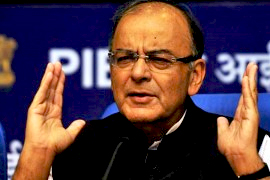
Arun
The Minister also clarified that Rs 6,500 crore of black money, talked about by Prime Minister Narendra Modi in his Independence Day speech, pertained to illegal money of account holders in the LGT Bank of Liechtenstein and HSBC Bank, Geneva, while declarations made under the one-time compliance window totalled Rs 3,770 crore.

The government's policy, Jaitley said, "is rationalisation of tax structures, taxing at reasonable rates, placing more money in the hands of small earners, encouraging and promoting the use of plastic money by all sections of society and creating deterrence against those who continue to use unaccounted money."

In his Facebook post, the Minister also expressed the commitment of the government to fight the menace of the domestic black money by making furnishing of PAN mandatory for cash transactions beyond a threshold.

"The government is at an advanced stage in considering the requirement of furnishing PAN card details if cash transactions beyond a certain limit are undertaken," he said.

Referring to the declarations made under the black money compliance window which closed on September 30, Jaitley said, "Those who chose to declare between this period would not be prosecuted under the new black money law... These declarants can now sleep well."

Taking advantage of the one-time 90-days compliance window under the Black Money law, 638 persons declared their income amounting to Rs 3770 crore.

About those who have undisclosed foreign assets but failed to file such a declaration, Jaitley said, "(They) will now be subjected to penal provisions of this law. They will be liable to pay 30 per cent tax and a penalty of 90 per cent, thus leading to confiscation of the assets plus more.

"In addition, they will be liable to prosecution where they can be sentenced up to 10 years. This law will create a deterrent in future against the flight of capital from India."

"... thus those with illegal assets abroad, who have failed to make declaration, would now stand the risk of information relating to them eventually reaching the Indian taxation authorities."

On domestic black money, Jaitley said bulk of of it is still within India.

"We thus need a change in national attitude where plastic currency becomes the norm and cash an exception.

"Being seized of this problem, the Government has been working with various authorities in order to incentivise this change. The opening of a large number of payment gateways, internet banking, payment banks and the emerging reality of e-commerce will prompt the use of banking transactions and plastic money rise significantly," he said.

In the Facebook post titled - The NDA Government's campaign against black money – Jaitley said the comparison of the amounts listed under HSBC Bank, Geneva, and through the compliance window with amnesty schemes relating to domestic black money is ill conceived.

"The assessed income of Rs 6,500 crore in HSBC and Rs 3,770 crore declared income during the compliance window should not be treated as income under any immunity scheme. The comparison of these amounts with amnesty schemes relating to domestic black money is ill-conceived. The campaign against domestic black money has to be separately dealt with for which Government is independently taking steps," Jaitley said.

Modi in his Independence Day speech had said that the government's efforts to deal with the menace of black money were working and "people have declared undisclosed income of about Rs 6,500 crore. This money will come into the treasury and will be used for betterment of the poor".

The government's recent announcement that the compliance window, which closed on September 30, resulted in total disclosure amounting to Rs 3,700 crore drew criticism from some quarters about the amount being less than that mentioned in the Prime Minister's speech.

Stressing that no society can indefinitely sustain a system where income earners consider tax evasion to be a way of life, Jaitley said high tax rates in the past have encouraged tax evasion.

"Regrettably our high taxation regime in the past eventually ended up encouraging tax evasion. When States tax their people reasonably, they can persuade them to honestly declare their incomes. The early decades after independence witnessed India with high taxation rates, prompting people to evade. The capacity of the State to detect evasion was less than adequate," Jaitley said.

The Finance Minister said over the years India has slowly started moving towards moderate rates of taxation.

"It has been a conscious strategy of the NDA Government to put more money in the pockets of middle and low income groups by raising exemption limits and incentivising savings through fiscal policy. This will encourage consumption and bring more money into the system. Consumption increases the volumes of indirect taxation," he said.

Jaitley said to make India more investment friendly destination, the government is committed to lowering of corporate tax rate to 25 per cent over the next four years and also phase out exemptions.

"The Government's policy is rationalisation of tax structures, taxing at reasonable rates, placing more money in the hands of small earners, encouraging and promoting the use of plastic money by all sections of society and creating deterrence against those who continue to use unaccounted money," Jaitley said.

In its campaign against black money stashed abroad, he said the government has formulated a conscious strategy to deal with the menace of black money and the first cabinet meeting of the NDA government implemented the direction of the Supreme Court to constitute Special Investigation Team to monitor efforts against black money.

"The UPA Government had tried to evade the Supreme Court direction on one pretext or the other for over three years. The Government swung into action and accelerated all the income tax assessments against those with regard to whom information about holding illegal money abroad in Lichtenstein and in the HSBC bank at Geneva, were available," he added.

"Most assessments have been completed and wherever illegalities are being found, criminal prosecutions have been launched against beneficiaries of these bank accounts," Jaitley said.

In order to encourage international cooperation in the matters of tax evasion, Jaitley said the government has taken a series of steps.

"The Prime Minister took the initiative at the G-20 meeting in order to bring about international cooperation in tackling unlawful assets held by the residents of one country in foreign soil. The G-20 initiative is intended to lift the veil of secrecy in banking transactions and in real time inform domestic taxation authorities about transactions of their citizens internationally."

The government has signed an understanding with the US under FATCA wherein the United States and India would disclose to each other any real time transaction in accounts with financial institutions, by its citizens in foreign territories.

This cooperation would also extend to all those countries which would become signatories to global standards on Automatic Exchange of Information being developed under the mandate of G20.

Further, the Revenue Secretary led a team of Indian officials and has held extensive discussions with Swiss authorities. Discussions have also been held at the ministerial level.

"Switzerland has agreed to provide India with proof relating to several HSBC accounts where India can give some evidence over and above the stolen data, which was delivered to India through France. It is expected that over the next two years this international cooperation will be worked out and information with regard to illegal assets held abroad, subject to certain conditions, would be available to each of the demanding nations.

"Thus, those with illegal assets abroad, who have failed to make declaration, would now stand the risk of information relating to them eventually reaching the Indian taxation authorities," Jaitley said.

Comments

Add new comment

  • Coastaldigest.com reserves the right to delete or block any comments.
  • Coastaldigset.com is not responsible for its readers’ comments.
  • Comments that are abusive, incendiary or irrelevant are strictly prohibited.
  • Please use a genuine email ID and provide your name to avoid reject.
News Network
December 16,2025

jordan.jpg

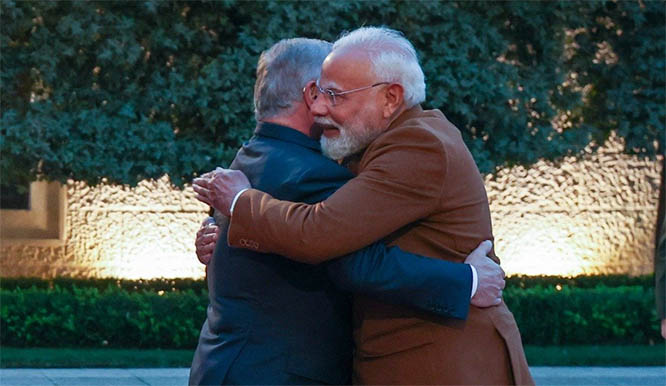
Prime Minister Narendra Modi on Monday held talks with Jordan’s King Abdullah II in Amman, during which the two leaders discussed ways to further strengthen bilateral relations, with the Prime Minister outlining an eight-point vision covering key areas of cooperation.

Describing the meeting as “productive”, PM Modi said he shared a roadmap focused on trade and economy, fertilisers and agriculture, information technology, healthcare, infrastructure, critical and strategic minerals, civil nuclear cooperation, and people-to-people ties.

In a post on social media platform X, the Prime Minister praised King Abdullah II’s personal commitment to advancing India–Jordan relations, particularly as both countries mark the 75th anniversary of the establishment of diplomatic ties this year.

“Held productive discussions with His Majesty King Abdullah II in Amman. His personal commitment towards vibrant India-Jordan relations is noteworthy. This year, we are celebrating the 75th anniversary of our bilateral diplomatic relations,” PM Modi said.

The meeting took place at the Al Husseiniya Palace, where the two leaders also exchanged views on regional and global issues of mutual interest. According to the Ministry of External Affairs (MEA), both sides agreed to further deepen cooperation in areas including trade and investment, defence and security, counter-terrorism and de-radicalisation, fertilisers and agriculture, infrastructure, renewable energy, tourism, and heritage.

The MEA said both leaders reaffirmed their united stand against terrorism.

PM Modi arrived in Amman earlier on Monday and was received by Jordanian Prime Minister Jafar Hassan, who accorded him a formal welcome. Following the talks, King Abdullah II hosted a banquet dinner in honour of the Prime Minister, reflecting the warmth of bilateral ties.

Jordan is the first leg of PM Modi’s three-nation tour. From Amman, the Prime Minister will travel to Ethiopia at the invitation of Prime Minister Abiy Ahmed Ali, marking his first official visit to the African nation. The tour will conclude with a visit to Oman.

Comments

Add new comment

  • Coastaldigest.com reserves the right to delete or block any comments.
  • Coastaldigset.com is not responsible for its readers’ comments.
  • Comments that are abusive, incendiary or irrelevant are strictly prohibited.
  • Please use a genuine email ID and provide your name to avoid reject.
News Network
December 13,2025

New Delhi: School-going children are picking up drug and smoking habits and engaging in consumption of alcohol, with the average age of introduction to such harmful substances found to be around 13 years, suggesting a need for earlier interventions as early as primary school, a multi-city survey by AIIMS-Delhi said.

The findings also showed substance use increased in higher grades, with grade XI/XII students two times more likely to report use of substances when compared with grade VIII students. This emphasised the importance of continued prevention and intervention through middle and high school.

The study led by Dr Anju Dhawan of AIIMS's National Drug Dependence Treatment Centre, published in the National Medical Journal of India this month, looks at adolescent substance use across diverse regions.

The survey included 5,920 students from classes 8, 9, 11 and 12 in urban government, private and rural schools across 10 cities -- Bengaluru, Chandigarh, Delhi, Dibrugarh, Hyderabad, Imphal, Jammu, Lucknow, Mumbai, and Ranchi. The data were collected between May 2018 and June 2019.

The average age of initiation for any substance was 12.9 (2.8) years. It was lowest for inhalants (11.3 years) followed by heroin (12.3 years) and opioid pharmaceuticals (without prescription; 12.5 years).

Overall, 15.1 per cent of participants reported lifetime use, 10.3 per cent reported past year use, and 7.2 per cent reported use in the past month of any substance, the study found.

The most common substances used in the past year, after tobacco (4 per cent) and alcohol (3.8 per cent), were opioids (2.8 per cent), followed by cannabis (2 per cent) and inhalants (1.9 per cent). Use of non-prescribed pharmaceutical opioids was most common among opioid users (90.2 per cent).

On being asked, 'Do you think this substance is easily available for a person of your age' separately for each substance category, nearly half the students (46.3 per cent) endorsed that tobacco products and more than one-third of the students (36.5 per cent) agreed that a person of their age can easily procure alcohol products.

Similarly, for Bhang (21.9 per cent), ganja/charas (16.1 per cent), inhalants (15.2 per cent), sedatives (13.7 per cent), opium and heroin (10 per cent each), the students endorsed that these can be easily procured.

About 95 per cent of the children, irrespective of their grade, agreed with the statement that 'drug use is harmful'.

The rates of substance use (any) among boys were significantly higher than those of girls for substance use (ever), use in the past year and use in the past 30 days. Compared to grade VIII students, grade IX students were more likely, and grade XI/XII students were twice as likely to have used any substance (ever).

The likelihood of past-year use of any substance was also higher for grade IX students and for grade XI/XII students as compared to grade VIII students.

About 40 per cent of students mentioned that they had a family member who used tobacco or alcohol each. The use of cannabis (any product) and opioid (any product) by a family member was reported by 8.2 per cent and 3.9 per cent of students, respectively, while the use of other substances, such as inhalants/sedatives by family was 2-3 per cent, the study found.

A relatively smaller percentage of students reported use of tobacco or alcohol among peers as compared to among family members, while a higher percentage reported inhalants, sedatives, cannabis or opioid use among peers.

Children using substances (past year) compared to non-users reported significantly higher any substance use by their family members and peers.

There were 25.7 per cent students who replied 'yes' to the question 'conflicts/fights often occur in your family'. Most students also replied affirmatively to 'family members are aware of how their time is being spent' and 'damily members are aware of with whom they spend their time'.

Comments

Add new comment

  • Coastaldigest.com reserves the right to delete or block any comments.
  • Coastaldigset.com is not responsible for its readers’ comments.
  • Comments that are abusive, incendiary or irrelevant are strictly prohibited.
  • Please use a genuine email ID and provide your name to avoid reject.
News Network
December 6,2025

pilot.jpg

New Delhi: IndiGo, India’s largest airline, faced major operational turbulence this week after failing to prepare for new pilot-fatigue regulations issued by the Directorate General of Civil Aviation (DGCA). The stricter rules—designed to improve flight safety—took effect in phases through 2024, with the latest implementation on November 1. IndiGo has acknowledged that inadequate roster planning led to widespread cancellations and delays.

Below are the key DGCA rules that affected IndiGo’s operations:

1. Longer Mandatory Weekly Rest

Weekly rest for pilots has been increased from 36 hours to 48 hours.

The government says the extended break is essential to curb cumulative fatigue. This rule remains in force despite the current crisis.

2. Cap on Night Landings

Pilots can now perform only two night landings per week—a steep reduction from the earlier limit of six.

Night hours, defined as midnight to early morning, are considered the least alert period for pilots.

Given the disruptions, this rule has been temporarily relaxed for IndiGo until February 10.

3. Reduced Maximum Night Flight Duty

Flight duty that stretches into the night is now capped at 10 hours.

This measure has also been kept on hold for IndiGo until February 10 to stabilize operations.

4. Weekly Rest Cannot Be Replaced With Personal Leave

Airlines can no longer count a pilot’s personal leave as part of the mandatory 48-hour rest.

Pilots say this closes a loophole that previously reduced actual rest time.

Currently, all airlines are exempt from this rule to normalise travel.

5. Mandatory Fatigue Monitoring

Airlines must submit quarterly fatigue reports along with corrective actions to DGCA.

This system aims to create a transparent fatigue-tracking framework across the industry.

The DGCA has stressed that these rules were crafted to strengthen flight safety and align India with global fatigue-management standards. The temporary relaxations are expected to remain until February 2025, giving IndiGo time to stabilise its schedules and restore normal air travel.

Comments

Add new comment

  • Coastaldigest.com reserves the right to delete or block any comments.
  • Coastaldigset.com is not responsible for its readers’ comments.
  • Comments that are abusive, incendiary or irrelevant are strictly prohibited.
  • Please use a genuine email ID and provide your name to avoid reject.
