



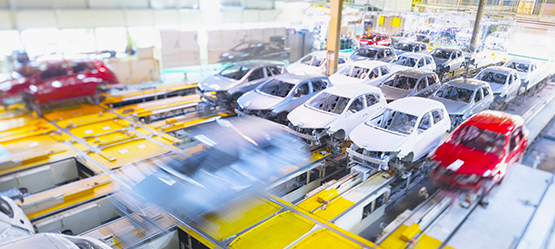
Toyota stops expansion plans in India, blames high tax regime

Agencies
September 15, 2020

toyota.jpg

Mumbai, Sept 15: Toyota Motor Corp. won’t expand further in India due to the country’s high tax regime, a blow for Prime Minister Narendra Modi, who’s trying to lure global companies to offset the deep economic malaise brought on by the coronavirus pandemic.

The government keeps taxes on cars and motorbikes so high that companies find it hard to build scale, said Shekar Viswanathan, vice chairman of Toyota’s local unit, Toyota Kirloskar Motor. The high levies also put owning a car out of reach of many consumers, meaning factories are idled and jobs aren’t created, he said.

“The message we are getting, after we have come here and invested money, is that we don’t want you,” Viswanathan said in an interview. In the absence of any reforms, “we won’t exit India, but we won’t scale up.”

Toyota, one of the world’s biggest carmakers, began operating in India in 1997. Its local unit is owned 89% by the Japanese company and has a small market share -- just 2.6% in August versus almost 5% a year earlier, Federation of Automobile Dealers Associations data show.

In India, motor vehicles including cars, two-wheelers and sports utility vehicles (although not electric vehicles), attract taxes as high as 28%. On top of that there can be additional levies, ranging from 1% to as much as 22%, based on a car’s type, length or engine size. The tax on a four-meter long SUV with an engine capacity of more than 1500 cc works out to be as high as 50%.

Ford, GM Out

The additional levies are typically imposed on what are considered to be “luxury” goods. As well as cars, in India that can include cigarettes and sparkling water.

India is planning to offer incentives worth $23 billion to attract firms to set up manufacturing, people familiar with the matter said last week, including production-linked breaks for automakers. International automakers have struggled to expand in the world’s fourth-biggest car market.

General Motors Co. quit the country in 2017 while Ford Motor Co. agreed last year to move most of its assets in India into a joint venture with Mahindra & Mahindra Ltd. after struggling for more than two decades to win over buyers. That effectively ended independent operations in a country Ford had once said it wanted to be one of its top three markets by 2020.

Such punitive taxes discourage foreign investment, erode automakers’ margins and make the cost of launching new products “prohibitive,” Viswanathan said.

“You’d think the auto sector is making drugs or liquor,” he said. Toyota, which also has an alliance with Suzuki Motor Corp. to sell some of Suzuki’s compact cars under its own brand, is currently utilizing just about 20% of its capacity in a second plant in India.

Automobile sales in India were weathering a slump before the coronavirus pandemic, with at least half a million jobs lost.

Taxes on electric vehicles, currently 5%, will probably also go up once sales increase, Viswanathan said, referring to what he says has become a pattern with successive governments in India.

While discussions are ongoing between ministries for a reduction in taxes, there may not any immediate agreement on an actual cut, India’s Heavy Industries Minister Prakash Javadekar said earlier this month.

A finance ministry spokesman didn’t immediately respond to messages seeking comment.

EV Challenge

Automobile sales in India were weathering a slump before the coronavirus pandemic, with at least half a million jobs lost. A lobby group has predicted it may take as many as four years for sales to return to levels seen before the slowdown.

The biggest players are the local units of Suzuki and Hyundai Motor Co., which have cornered the market for compact, affordable cars. Maruti Suzuki India Ltd. and Hyundai Motor India Ltd. have a combined share of almost 70%.

Toyota in India has largely pivoted toward hybrid vehicles, which attract taxes of as much as 43% because they aren’t purely electric.

But in a nation where few can even afford a car, let alone a more environmentally friendly one, EVs or their hybrid cousins have yet to gain much acceptance. Elon Musk, the billionaire founder of Tesla Inc., has said import duties would make his vehicles unaffordable in India.


“Market India always has to precede Factory India, and this is something the politicians and bureaucrats don’t understand,” Viswanathan said. Modi’s much-touted Make in India is another program aimed at attracting foreign companies.


India needs to have demand for a product before asking firms to set up shop, yet “at the slightest sign of a product doing well, they slap it with a higher and higher tax rate,” he said.

Comments

Add new comment

  • Coastaldigest.com reserves the right to delete or block any comments.
  • Coastaldigset.com is not responsible for its readers’ comments.
  • Comments that are abusive, incendiary or irrelevant are strictly prohibited.
  • Please use a genuine email ID and provide your name to avoid reject.
News Network
December 1,2025

hindutvaboy.jpg

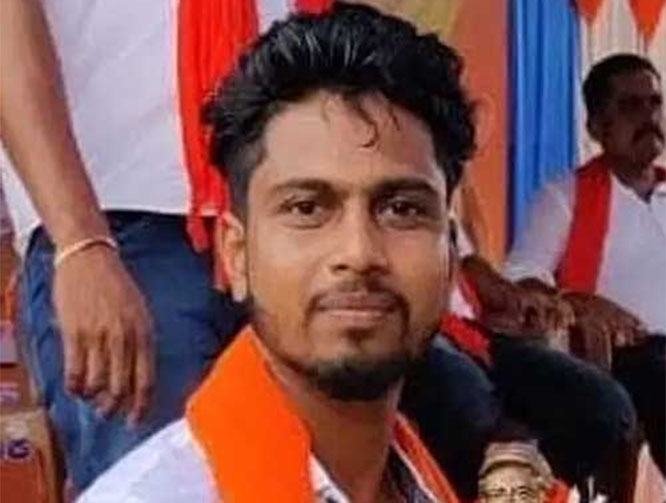
Udupi, Dec 1: A horrific case of alleged rape has unfolded in Udupi, where a worker from a Hindutva organisation, previously arrested and released on bail for harassing a young woman, is now accused of waylaying and sexually assaulting her.

The arrested individual has been identified as Pradeep Poojary (26), a member of the Hindu Jagarana Vedike's Nairkode unit in Perdur.

Poojary had allegedly been relentlessly harassing the young woman, pressuring her to marry him. When she bravely stood up to him and refused his demands, she filed a formal complaint at the Hiriyadka police station. He was subsequently arrested in that initial harassment case but was later granted bail.

According to police reports, driven by the same malicious grudge, Poojary allegedly intercepted the woman again on November 29. While she was walking through a deserted area, the accused is claimed to have threatened her by grabbing her neck. When she again refused to marry him, he allegedly proceeded to rape her.

The survivor immediately informed her family about the traumatic assault. Following this, her parents lodged a complaint at the Udupi women’s police station.

Police arrested Poojary again and produced him before the court. He has since been remanded to judicial custody.

Comments

Add new comment

  • Coastaldigest.com reserves the right to delete or block any comments.
  • Coastaldigset.com is not responsible for its readers’ comments.
  • Comments that are abusive, incendiary or irrelevant are strictly prohibited.
  • Please use a genuine email ID and provide your name to avoid reject.
News Network
December 4,2025

Udupi: A 40-year-old NRI from Udupi has reportedly lost more than Rs 12.25 lakh in an online investment scam operated through Telegram.

According to a complaint filed at the CEN police station, Leo Jerome Mendonsa, who has been working in Dubai for the past 15 years in computer accessories sales, maintains NRI accounts in Karkala and Nitte.

On November 12, 2025, Mendonsa was added to a Telegram group called Instaflow Earnings by unknown individuals. Users identified as Priya and Dipannita persuaded him to invest in “Revenue Tasks.” Initially, Mendonsa transferred Rs 1,100 multiple times and received the promised returns, encouraging him to continue.

On November 14, another user, Nishmitha Shetty, directed him to register on a website, digitvisionuoce.cc, and invest Rs 4 lakh in various shares. Over the next few days, he made multiple transfers totaling Rs 12,25,000, including Rs 50,000 via Google Pay, believing the scheme was legitimate.

After receiving the money, the alleged handlers stopped responding, and neither the invested amount nor the promised profits were returned.

The CEN police have registered a case under Sections 66(C) and 66(D) of the IT Act and Section 318(4) of the Bharatiya Nyaya Sanhita (BNS), and investigations are ongoing.

Comments

Add new comment

  • Coastaldigest.com reserves the right to delete or block any comments.
  • Coastaldigset.com is not responsible for its readers’ comments.
  • Comments that are abusive, incendiary or irrelevant are strictly prohibited.
  • Please use a genuine email ID and provide your name to avoid reject.
News Network
December 6,2025

pilot.jpg

New Delhi: IndiGo, India’s largest airline, faced major operational turbulence this week after failing to prepare for new pilot-fatigue regulations issued by the Directorate General of Civil Aviation (DGCA). The stricter rules—designed to improve flight safety—took effect in phases through 2024, with the latest implementation on November 1. IndiGo has acknowledged that inadequate roster planning led to widespread cancellations and delays.

Below are the key DGCA rules that affected IndiGo’s operations:

1. Longer Mandatory Weekly Rest

Weekly rest for pilots has been increased from 36 hours to 48 hours.

The government says the extended break is essential to curb cumulative fatigue. This rule remains in force despite the current crisis.

2. Cap on Night Landings

Pilots can now perform only two night landings per week—a steep reduction from the earlier limit of six.

Night hours, defined as midnight to early morning, are considered the least alert period for pilots.

Given the disruptions, this rule has been temporarily relaxed for IndiGo until February 10.

3. Reduced Maximum Night Flight Duty

Flight duty that stretches into the night is now capped at 10 hours.

This measure has also been kept on hold for IndiGo until February 10 to stabilize operations.

4. Weekly Rest Cannot Be Replaced With Personal Leave

Airlines can no longer count a pilot’s personal leave as part of the mandatory 48-hour rest.

Pilots say this closes a loophole that previously reduced actual rest time.

Currently, all airlines are exempt from this rule to normalise travel.

5. Mandatory Fatigue Monitoring

Airlines must submit quarterly fatigue reports along with corrective actions to DGCA.

This system aims to create a transparent fatigue-tracking framework across the industry.

The DGCA has stressed that these rules were crafted to strengthen flight safety and align India with global fatigue-management standards. The temporary relaxations are expected to remain until February 2025, giving IndiGo time to stabilise its schedules and restore normal air travel.

Comments

Add new comment

  • Coastaldigest.com reserves the right to delete or block any comments.
  • Coastaldigset.com is not responsible for its readers’ comments.
  • Comments that are abusive, incendiary or irrelevant are strictly prohibited.
  • Please use a genuine email ID and provide your name to avoid reject.
