



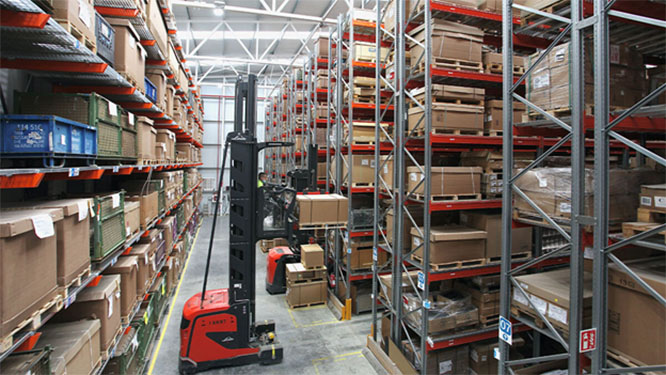
Warehouses handle a wide range of goods every day. Each product type needs the right handling and the right system. This is why racking and storage decisions shape warehouse design and performance. The nature of the load determines how goods are received, checked, moved, and stored. It also influences order picking and dispatch. When the team understands the load type, they can plan efficient operations. Better planning helps reduce waste and improve safety. Modern systems utilise automation and engineered layouts to facilitate faster and more efficient movement of goods.
What is a Unit Load?
A unit load is a group of products placed on a stable support. The support can be a pallet, box or container. The aim is to reduce handling time. It allows goods to move as a single group. This keeps storage simple and protects the products.
Types of Load by Recording Method:
General Load
These goods need individual packaging. Some units can be moved one at a time. Others are grouped on pallets or in containers. Their quantity is recorded as units.
Bulk Load
Bulk loads do not use small packaging. They move directly inside tanks, silos or special containers. Liquids and gases fall into this group. They are measured by mass and volume.
Types of Load by Volume:
Small Loads
These goods are light and easy to hold. Items like food packs or small cartons belong here.
Medium Loads
These weigh up to 10 kg. They are still easy to handle by hand. Both small and medium loads fit well in picking systems. Long-span shelving and carton flow racks are suitable for these loads. These systems offer easy access and steady movement.
Large or Pallet Loads
These goods need pallets for support. Forklifts or stackers handle them. They are suitable for selective pallet racks, double-deep racks, shuttle racks, and other high-density storage systems. The choice depends on access needs and available warehouse space.
Bulky Loads
These goods are large and hard to stack. Appliances and steel beams fall into this group. Cantilever racking is ideal for such items.
Special Size Loads
These loads are extremely large and heavy. They need special transport and support vehicles.
Types of Load by Weight:
● Light loads under 5 kg
● Medium loads between 5 and 25 kg
● Heavy loads between 25 kg and one tonne
● Very heavy loads above one tonne
Each weight category needs a suitable handling plan. Safety becomes more important as weight increases.
Types of Load by Useful Life:
Perishable Loads
These products have expiry dates. They need fast movement. Stock rotation is important. Cold storage and controlled environments protect these goods.
Non-Perishable Loads
These items do not depend on expiry dates. They allow flexible storage and handling.
Types of Load by Resistance:
Resistant Loads
These goods can support weight on top. They allow stacking.
Light Loads
These can be stacked with limits. They need clear rules to avoid damage.
Fragile Loads
These loads need gentle handling. They cannot be stacked. They must be stored on shelves that offer individual support.
Types of Load by Dangerous Property:
Dangerous goods need special rules. They include gases, explosives, flammable liquids and corrosive substances. Each class requires a safe storage plan. Racks must allow ventilation, stability and easy access for trained staff.
Types of Load by Batch
Some products move as single units. Others move in packs with many units. Batch size depends on the product type.
Choosing the Right Storage Method
Load type controls the layout and equipment used. A well-designed warehouse creates a smooth workflow. This reduces time and cost.
Storage for Small and Medium Loads
Shelving systems give direct access. Carton flow racks work well for fast-moving goods. They reduce walking time and save effort.
Storage for Pallet Loads
Selective pallet racking offers direct access. It suits operations with many item types. Drive-in and shuttle racks are ideal for bulk storage. They save space and increase density. Very narrow aisle racks maximise height with guided trucks.
Storage for Bulky and Special Loads
Cantilever racking is designed to hold long and heavy items. It keeps aisles clear. Large loads need cranes or special lifting tools.
Storage for Mixed Loads
A flexible system helps when goods vary in size. Many warehouses utilise a mix of pallet racking, shelving and automated zones.
Using Multi-Level Solutions
Large warehouses often use a mezzanine floor to increase space. This converts unused height into new storage areas. It supports light loads, picking zones and packing stations.
Role of Smart Systems and Automation
Automation improves speed and safety. It also reduces damage. Some systems use sensors to monitor movement. Others manage inventory with high accuracy. A crane-based Automated Storage and Retrieval System (ASRS) support smooth pallet handling. It reduces manual work and improves order accuracy. Automated systems protect fragile loads and reduce forklift traffic.
Why Load Identification Matters
Knowing the load type helps avoid damage. It also helps in planning safe movement. With correct information, the team can plan for forklifts, conveyors and racks. This reduces risks and improves output.
Conclusion
Every warehouse handles a unique mix of loads. Each type requires the right plan, the right support, and the right movement method. Reliable racking and storage systems protect goods and increase efficiency. They also help teams manage work safely. When storage aligns with product needs, operations run smoothly. Leading companies like the Godrej Enterprises Group offer solutions for a variety of loads. From crane-based pallet ASRS to cantilever racks, these solutions help businesses stay ready for the future. A smart warehouse grows with the business and creates more usable space through simple, well-planned design.
Comments
Add new comment