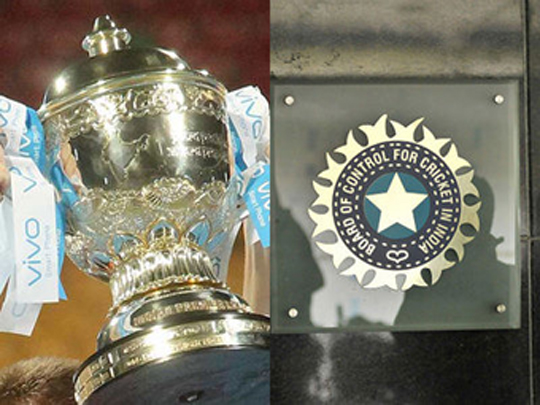
BCCI set to earn over Rs 2000-cr from IPL

Times of India
February 13, 2018

NEW DELHI, Feb 13: The Indian Premier League (IPL), which started as a sideshow by the Board of Control for Cricket in India (BCCI) in 2008, is now set to account for nearly 95 percent of the board’s surplus.
Captains-coaches meeting date advanced by BCCI

BCCI’s projections of its income and spending in the coming financial year suggest that the IPL will earn a surplus of Rs 2,017 crore, while the rest of the board’s operations - international fixtures as well as domestic - will contribute barely Rs 125 crore to its surplus.

Since IPL launch, BCCI has paid Rs 3,500cr in tax

What these projections mean is that BCCI will make 16 times more profit during the 45-day IPL window than it is likely to in the remaining 320 days of the year. This net surplus will accrue after BCCI’s expenditure on the game’s infrastructure and other heads, amounting to approximately Rs 1,272 crore against an income of Rs 3,413 crore.

In the current year, IPL is estimated to contribute 60 percent of BCCI’s overall surplus of a little under Rs 670 crore. Now, thanks to the five-year mega media rights deal worth Rs 16,347 crore with Star India, IPL is going to bring in a surplus of Rs 2017 crore as compared to Rs 400 crore in the last financial year. Keeping the surplus generated from the IPL aside, BCCI is likely to end up generating a surplus of Rs 125 crore out of its international calendar and domestic matches.

Thus, the net surplus of the board is projected to see a threefold increase from Rs 665 crore to 2,142 crore. The allocation ratio (IPL:BCCI) has changed to 80:20 from 52:48 due to change in revenue shares. This means BCCI’s establishment and administration expenses are likely to come down to Rs 19 crore from Rs 51crore.

Based on the Future Tours Programme, the board will see a marginal drop of Rs 5 crore in the surplus from the men’s team’s international tours, leading to a substantial drop of Rs 78 crore in income from media rights alone.

Interestingly, the projections indicate that the Indian team may not play any Test matches in New Zealand when they tour early next year after a gap of five years. India will play 12 Tests in the next financial year with only two Tests at home - against West Indies.

Income from media rights per international fixture - Tests, ODIs or T20Is - is billed at Rs 43.20 crore. India will play 10 international matches each in Australia and New Zealand in the coming financial year. They are slated to play four Tests, three ODIs and three T20Is in Australia, before flying out to New Zealand for five ODIs and five T20Is. The media rights agreement with Star is due for renewal in April 2018.

“There is a lot of risk of losing money in a five-day game starting at 3 am India time (in New Zealand). Anyway, it will be a World Cup year by the time India travel to New Zealand. India will be playing just white-ball cricket after the Tests in Australia get over till the World Cup in England arrives.

India will host Australia after they come back from New Zealand and will travel to Zimbabwe for three T20Is before the 2019 IPL,” a senior BCCI official in the know of things told TOI.

India played just two Tests and five One-Day Internationals last time when they visited New Zealand in 2014.

Supervised by the Supreme Court-appointed committee of administrators (CoA), the board had announced in December that it is keen on reducing the number of playing days without cutting down on the number of matches. Playing just the shorter formats in New Zealand could be a step in that direction.

BCCI CEO Rahul Johri had recently claimed that there would be ‘virtually no or very little’ international cricket during the IPL in the FTP from 2019. “The other boards understand the opportunity of the IPL. They all want their players to be available. In the FTP from 2019, there's virtually no or very little international cricket during that period in the calendar. Our endeavour is to overcome even that little international cricket. That is testimony to the strength of the IPL,” Johri had told TOI last month.

India A, junior, women and NCA programmes to be strengthened

The board is likely to double its expenditure budget on international tours for India A, junior and women. The board has plans to set aside Rs 48.5 crore for these tours with the women’s tours seeing an increase of Rs 9 crore.

BCCI also plans to increase camps and activities at the National Cricket Academy (NCA) by allocating Rs 50 crore as compared to Rs 26 crore last year. There is an increase of Rs 14 crore for conducting domestic matches as the BCCI plans to increase the number of domestic matches too. This could be because of the board’s endeavour to strengthen women’s and junior cricket.

Comments

Add new comment

  • Coastaldigest.com reserves the right to delete or block any comments.
  • Coastaldigset.com is not responsible for its readers’ comments.
  • Comments that are abusive, incendiary or irrelevant are strictly prohibited.
  • Please use a genuine email ID and provide your name to avoid reject.
coastaldigest.com news network
December 2,2025

karkala.jpg

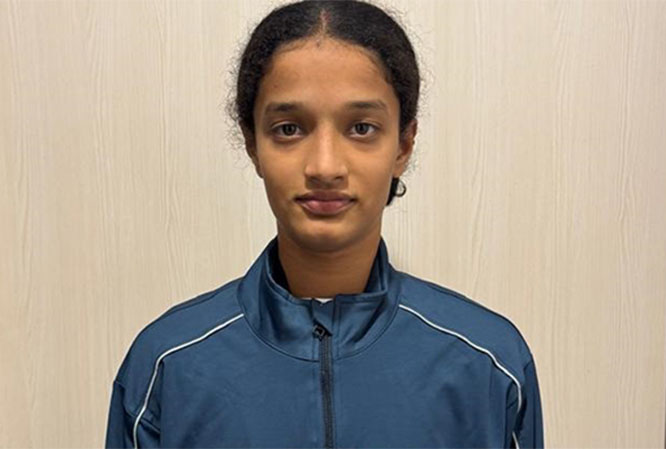
Udupi, Dec 2: A wave of regional pride is sweeping through Udupi district as Shagun S Verma Hegde, a talented Class 9 student from Christ King English Medium High School, Karkala, has been named the captain of the Indian National Team for the Under-15 Girls’ Volleyball Championship.

Shagun holds the unique distinction of being the sole player from Karnataka selected to represent the country in the prestigious international tournament. The championship, organized by the School Games Federation, is scheduled to take place in Shangluo, China, from December 3 to 13, where Shagun will lead the national squad.

A Remarkable Journey to the Top

Shagun’s selection is a testament to her dedication and exceptional skill on the court. Her journey included several rigorous rounds of selection:

•    She was the only player from Udupi district to qualify for the state-level selection camp.

•    Out of eight players from Karnataka who advanced to the national selection camp in Pune, Maharashtra, Shagun was the only one to secure a place in the final national squad.

•    The national camp saw participation from approximately 200 players, which was shortlisted to 23. Shagun not only made the final cut but was also ranked as the second-best player overall, solidifying her leadership role.

Shagun, who is the daughter of Sandesh Verma and Shruthiraj of Kallotte, Karkala, has trained under experienced coaches Santosh D’Souza, Jeevan D’Silva, Jairaj Poojary, and Ramesh. Her selection as the team captain has brought profound honour to her family, school, the Udupi district, and the entire state of Karnataka.

Comments

Add new comment

  • Coastaldigest.com reserves the right to delete or block any comments.
  • Coastaldigset.com is not responsible for its readers’ comments.
  • Comments that are abusive, incendiary or irrelevant are strictly prohibited.
  • Please use a genuine email ID and provide your name to avoid reject.
News Network
November 24,2025

israelsyra.jpg

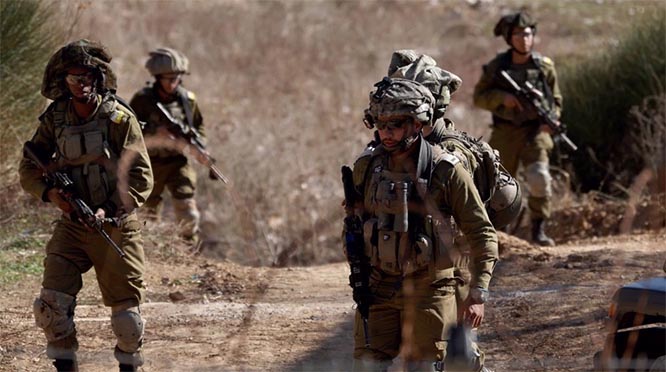
Israeli forces have pushed over the Syrian frontier, erecting a checkpoint and stopping vehicles in the southwestern city of Quneitra, in yet another breach of the Arab country’s sovereignty.

The violation took place on Sunday, when the troops made their way across the border, setting up the outpost near the Ain al-Bayda junction in northern Quneitra, Syrian outlets reported.

According to the al-Ikhbariya paper, an Israeli detachment positioned itself at the junction, halting cars and conducting searches.

The Syrian Arab News Agency (SANA) reported that three Israeli military vehicles then moved further into the northern countryside, deploying between the town of Jubata al-Khashab and the villages of Ofaniya and Ain al-Bayda. The agency added that a separate Israeli unit mounted a new incursion in the central region, approaching the villages of Umm Batina and al-Ajraf.

Residents said such activities have surged in recent months, pointing to Israeli advances onto farmland, leveling of extensive forested areas, arrests, and spread of mobile checkpoints.

The Israeli regime began markedly increasing its military aggression against Syria last year.

The escalation coincided with increasingly ferocious onslaughts throughout the country by the so-called Hay'at Tahrir al-Sham (HTS) Takfiri terrorist group, which the government of President Bashar al-Assad had confined to northwestern Syria. The HTS, however, managed to overthrow the government as the Israeli attacks would pummel the country’s civilian and defensive infrastructure.

Various reports have shown that, during the escalation, the regime conducted more than 1,000 airstrikes on the Syrian territory and over 400 ground raids into the south.

Following the collapse of the Assad government, Tel Aviv also widened its grip over the occupied Golan Heights by taking control of a demilitarized buffer zone, in defiance of a 1974 Disengagement Agreement. Earlier this month, senior Israeli officials, including Prime Minister Benjamin Netanyahu, visited the buffer zone, prompting expressions of alarm on the part of the United Nations.

The United States, the regime’s biggest ally, has, meanwhile, been fraternizing the HTS head Abu Mohammed al-Jolani amid the widely reported prospect of rapprochement with Tel Aviv.

Comments

Add new comment

  • Coastaldigest.com reserves the right to delete or block any comments.
  • Coastaldigset.com is not responsible for its readers’ comments.
  • Comments that are abusive, incendiary or irrelevant are strictly prohibited.
  • Please use a genuine email ID and provide your name to avoid reject.
News Network
December 6,2025

pilot.jpg

New Delhi: IndiGo, India’s largest airline, faced major operational turbulence this week after failing to prepare for new pilot-fatigue regulations issued by the Directorate General of Civil Aviation (DGCA). The stricter rules—designed to improve flight safety—took effect in phases through 2024, with the latest implementation on November 1. IndiGo has acknowledged that inadequate roster planning led to widespread cancellations and delays.

Below are the key DGCA rules that affected IndiGo’s operations:

1. Longer Mandatory Weekly Rest

Weekly rest for pilots has been increased from 36 hours to 48 hours.

The government says the extended break is essential to curb cumulative fatigue. This rule remains in force despite the current crisis.

2. Cap on Night Landings

Pilots can now perform only two night landings per week—a steep reduction from the earlier limit of six.

Night hours, defined as midnight to early morning, are considered the least alert period for pilots.

Given the disruptions, this rule has been temporarily relaxed for IndiGo until February 10.

3. Reduced Maximum Night Flight Duty

Flight duty that stretches into the night is now capped at 10 hours.

This measure has also been kept on hold for IndiGo until February 10 to stabilize operations.

4. Weekly Rest Cannot Be Replaced With Personal Leave

Airlines can no longer count a pilot’s personal leave as part of the mandatory 48-hour rest.

Pilots say this closes a loophole that previously reduced actual rest time.

Currently, all airlines are exempt from this rule to normalise travel.

5. Mandatory Fatigue Monitoring

Airlines must submit quarterly fatigue reports along with corrective actions to DGCA.

This system aims to create a transparent fatigue-tracking framework across the industry.

The DGCA has stressed that these rules were crafted to strengthen flight safety and align India with global fatigue-management standards. The temporary relaxations are expected to remain until February 2025, giving IndiGo time to stabilise its schedules and restore normal air travel.

Comments

Add new comment

  • Coastaldigest.com reserves the right to delete or block any comments.
  • Coastaldigset.com is not responsible for its readers’ comments.
  • Comments that are abusive, incendiary or irrelevant are strictly prohibited.
  • Please use a genuine email ID and provide your name to avoid reject.