Charlottesville violence tests Donald Trump’s presidential mettle

Agencies
August 13, 2017

Bedminster, Aug 13: For President Donald Trump, this was the week when the real world began to intrude upon his presidency. The violent clashes in Charlottesville, Virginia, between white nationalists and counter-protesters confronted Trump with perhaps the first true domestic crisis of his young administration. And to some, even within his own Republican Party, he came up short. It followed days of blustery threats toward North Korea that rattled some Americans and unnerved allies. Both are the kinds of white-knuckle challenges that define presidents – and which Trump largely has avoided during the first months of his tenure.

As images of rising tensions and a deadly car rampage in Charlottesville filled TV screens nationwide, the president was criticized first for waiting too long to address the violence and then, when he did so, failing to explicitly condemn the white-supremacist marchers who ignited the melee. Marco Rubio, a Republican senator who was Trump’s rival for the presidential nomination, quickly suggested Trump’s initial response was inadequate. On Twitter, Rubio wrote that it was, “Very important for the nation to hear describe events in Charlottesville for what they are: a terror attack by #whitesupremacists.”

While Trump has had to deal with the pressures of the federal probe into Russian meddling in last year’s election, disarray in his White House, and conflicts with Congress over his stalled agenda, there are have been few external crises that have tested his presidential mettle. By contrast, his predecessor, Barack Obama, inherited a severe economic downturn during his first year in office, and would go on to face, among other tests, a catastrophic oil spill in the Gulf of Mexico, Middle East upheaval, terror attacks in Boston, Orlando, and elsewhere, and civil unrest in Ferguson, Missouri and Baltimore, Maryland.

Trump has spent this week at his tony golf club in New Jersey, attempting to show the American public that he is indeed working and not vacationing. He held one event after the other, while answering media questions with an approachability he hasn’t shown for months. Yet, when news of the situation in Charlottesville first started filtering out on Friday, Trump was silent. He first addressed the matter — through a tweet — on Saturday afternoon, after a planned white-supremacist rally had been dispersed, fights had broken out, and a state of emergency declared.

By the time Trump finally appeared before reporters at a staged bill-signing event at his club, footage of a car speeding up and slamming into a crowd of protesters had swamped social media and cable networks, raising the specter of domestic terrorism. At least one woman in the car’s path died and several people suffered critical injuries. At a podium, Trump read a statement rebuking the violence, but without specifically mentioning or faulting the role of white nationalists. “We condemn in the strongest possible terms this egregious display of hatred, bigotry and violence on many sides – on many sides,” Trump said.

He also took the occasion to boast about declining unemployment and new corporate investment in the United States. Afterwards, he ignored shouted questions from reporters as to whether he would denounce white supremacism and whether the car incident constituted terrorism.

REPUBLICAN SENATORS QUESTION RESPONSE

Beyond Rubio, Trump’s response apparently also was not enough for Senator Cory Gardner, who chairs the Republican Party’s Senate-election effort. “Mr. President, we must call evil by its name,” he tweeted. “These were white supremacists and this was domestic terrorism.” Republican Orrin Hatch, who has served as a senator for 40 years, referenced his brother, who was killed in World War II.

“We should call evil by its name. My brother didn’t give his life fighting Hitler for Nazi ideas to go unchallenged here at home,” he said on Twitter. Democratic Senator Brian Schatz said that Trump had not demonstrated moral leadership. “There are NOT many sides to this,” he wrote. Trump tweeted several more times after the press event, offering support to the city of Charlottesville and the police but still declining to critique the violence in more explicit terms.

Both as a candidate and as president, Trump has met with charges that he has courted the support of white supremacists and nationalists, the so-called “alt-right,” as a key part of his passionate voter base. He was forced at one point last year to publicly denounce the Ku Klux Klan and one of its leaders, David Duke. After Trump was elected, he installed Steve Bannon, a trusted figure in nationalist circles and former chairman of the hard-right outlet Breitbart News, as a top adviser in the White House.

Comments

Add new comment

  • Coastaldigest.com reserves the right to delete or block any comments.
  • Coastaldigset.com is not responsible for its readers’ comments.
  • Comments that are abusive, incendiary or irrelevant are strictly prohibited.
  • Please use a genuine email ID and provide your name to avoid reject.
News Network
November 24,2025

israelsyra.jpg

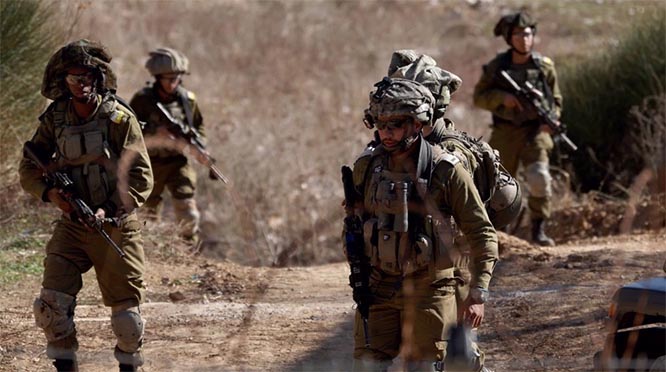
Israeli forces have pushed over the Syrian frontier, erecting a checkpoint and stopping vehicles in the southwestern city of Quneitra, in yet another breach of the Arab country’s sovereignty.

The violation took place on Sunday, when the troops made their way across the border, setting up the outpost near the Ain al-Bayda junction in northern Quneitra, Syrian outlets reported.

According to the al-Ikhbariya paper, an Israeli detachment positioned itself at the junction, halting cars and conducting searches.

The Syrian Arab News Agency (SANA) reported that three Israeli military vehicles then moved further into the northern countryside, deploying between the town of Jubata al-Khashab and the villages of Ofaniya and Ain al-Bayda. The agency added that a separate Israeli unit mounted a new incursion in the central region, approaching the villages of Umm Batina and al-Ajraf.

Residents said such activities have surged in recent months, pointing to Israeli advances onto farmland, leveling of extensive forested areas, arrests, and spread of mobile checkpoints.

The Israeli regime began markedly increasing its military aggression against Syria last year.

The escalation coincided with increasingly ferocious onslaughts throughout the country by the so-called Hay'at Tahrir al-Sham (HTS) Takfiri terrorist group, which the government of President Bashar al-Assad had confined to northwestern Syria. The HTS, however, managed to overthrow the government as the Israeli attacks would pummel the country’s civilian and defensive infrastructure.

Various reports have shown that, during the escalation, the regime conducted more than 1,000 airstrikes on the Syrian territory and over 400 ground raids into the south.

Following the collapse of the Assad government, Tel Aviv also widened its grip over the occupied Golan Heights by taking control of a demilitarized buffer zone, in defiance of a 1974 Disengagement Agreement. Earlier this month, senior Israeli officials, including Prime Minister Benjamin Netanyahu, visited the buffer zone, prompting expressions of alarm on the part of the United Nations.

The United States, the regime’s biggest ally, has, meanwhile, been fraternizing the HTS head Abu Mohammed al-Jolani amid the widely reported prospect of rapprochement with Tel Aviv.

Comments

Add new comment

  • Coastaldigest.com reserves the right to delete or block any comments.
  • Coastaldigset.com is not responsible for its readers’ comments.
  • Comments that are abusive, incendiary or irrelevant are strictly prohibited.
  • Please use a genuine email ID and provide your name to avoid reject.
News Network
November 22,2025

gaza.jpg

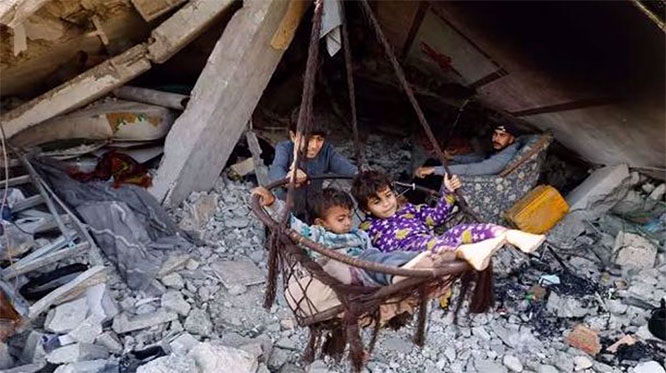
The Israeli regime’s forces have killed two Palestinian children in the Gaza Strip every day since the ceasefire began in early October, UNICEF has warned.

The UN children’s agency said on Friday that Israeli forces continue to attack Palestinians in Gaza even though the agreement was meant to stop the killing.

“Since 11 October, while the ceasefire has been in effect, at least 67 children have been killed in conflict-related incidents in the Gaza Strip. Dozens more have been injured. That is an average of almost two children killed every day since the ceasefire took effect,” UNICEF spokesperson Ricardo Pires said in Geneva, reminding that each number in the statistics represents a child whose life had ended violently.

“These are not statistics,” he said. “Each child had a story, a family, and a future that was stolen from them.”

Data from Palestinian factions, human rights groups, and government bodies recorded since the US-brokered ceasefire deal went into effect on October 10 show that Israeli forces have carried out numerous attacks, each constituting a separate ceasefire violation.

UNICEF teams say they repeatedly continue to witness heart-wrenching scenes of fearful Palestinian children sleeping outdoors with amputated limbs, while others live as orphans in flooded, makeshift shelters.

“I saw this myself in August. There is no safe place for them. The world cannot normalize their suffering,” Pires said, lamenting that the UN could “do a lot more if the aid that is really needed was entering faster.”

The UNICEF spokesperson warned that with the advent of winter, the risks for hundreds of thousands of displaced children will increase.

He warned, “The stakes are incredibly high” for children as winter acts as a threat multiplier, where children have no heating, no insulation, and few blankets. He said respiratory infections rise.

“Too many children have already paid the highest price,” Pires said. “Too many are still paying it, even under a ceasefire. The world promised them it would stop and that we would protect them.”

“Now we must act like it,” the UNICEF spokesperson added.

Since the Israeli regime launched its genocidal war against Palestinians in Gaza in October 2023, it has killed nearly 70,000 people in the territory, most of them women and children, and injured over 170,000 more, while reducing most of the structures in the enclave to rubble.

Comments

Add new comment

  • Coastaldigest.com reserves the right to delete or block any comments.
  • Coastaldigset.com is not responsible for its readers’ comments.
  • Comments that are abusive, incendiary or irrelevant are strictly prohibited.
  • Please use a genuine email ID and provide your name to avoid reject.
News Network
December 4,2025

indigoflight.jpg

Domestic carrier IndiGo has cancelled over 180 flights from three major airports — Mumbai, Delhi and Bengaluru — on Thursday, December 4, as the airline struggles to secure the required crew to operate its flights in the wake of new flight-duty and rest-period norms for pilots.

While the number of cancellations at Mumbai airport stands at 86 (41 arrivals and 45 departures) for the day, at Bengaluru, 73 flights have been cancelled, including 41 arrivals, according to a PTI report that quoted sources.

"IndiGo cancelled over 180 flights on Thursday at three airports-Mumbai, Delhi and Bengaluru," the source told the news agency.

Besides, it had cancelled as many as 33 flights at Delhi airport for Thursday, the source said, adding, "The number of cancellations is expected to be higher by the end of the day."

The Gurugram-based airline's On-Time Performance (OTP) nosedived to 19.7 per cent at six key airports — Delhi, Mumbai, Chennai, Kolkata, Bengaluru and Hyderabad — on December 3, as it struggled to get the required crew to operate its services, down from almost half of December 2, when it was 35 per cent.

"IndiGo has been facing acute crew shortage since the implementation of the second phase of the FDTL (Flight Duty Time Limitations) norms, leading to cancellations and huge delays in its operations across the airports," a source had told PTI on Wednesday.

Chaos continued at several major airports for the third day on Thursday because of the cancellations.

A spokesperson for the Kempegowda International Airport (KIA) in Bengaluru said that 73 IndiGo flights had been cancelled on Thursday.

At least 150 flights were cancelled and dozens of others delayed on Wednesday, airport sources said, leaving thousands of travellers stranded, according to news agency Reuters.

The Directorate General of Civil Aviation (DGCA) has said it is investigating IndiGo flight disruptions and has asked the airline to submit the reasons for the current situation, as well as its plans to reduce flight cancellations and delays.

It may be mentioned here that the pilots' body, Federation of Indian Pilots (FIP), has alleged that IndiGo, despite getting a two-year preparatory window before the full implementation of new flight duty and rest period norms for cockpit crew, "inexplicably" adopted a "hiring freeze".

The FIP said it has urged the safety regulator, the DGCA, not to approve airlines' seasonal flight schedules unless they have adequate staff to operate their services "safely and reliably" in accordance with the New Flight Duty Time Limitations (FDTL) norms.

In a letter to the DGCA late on Wednesday, the FIP urged the DGCA to consider re-evaluating and reallocating slots to other airlines, which have the capacity to operate them without disruption during the peak holiday and fog season if IndiGo continues to "fail in delivering on its commitments to passengers due to its own avoidable staffing shortages."

Comments

Add new comment

  • Coastaldigest.com reserves the right to delete or block any comments.
  • Coastaldigset.com is not responsible for its readers’ comments.
  • Comments that are abusive, incendiary or irrelevant are strictly prohibited.
  • Please use a genuine email ID and provide your name to avoid reject.