Karnataka polls 2023: Battle of survival for JDS or kingmaker once again?

News Network
January 15, 2023

HDKGowda.jpg

Will the 2023 Karnataka assembly polls be a battle of political survival for former Prime Minister H D Deve Gowda-led JD(S), or will the regional party once again emerge as a kingmaker, like it did in 2018, in the event of a hung verdict?

Plagued by desertions, internal rifts, and with the image of a "family party", it remains to be seen how Gowda's son and former Chief Minister H D Kumaraswamy, who is in a way single handedly managing the JD(S)' affairs with aging father taking the back seat, would steer the party in the upcoming Assembly polls.

Since the time of its formation in 1999, JD(S) has never formed a government on its own, but had been in power twice in coalition with both national parties- for 20 months with BJP from February 2006 and with Congress for 14 months after the May 2018 assembly polls- with Kumaraswamy as the Chief Minister.

This time however, the party has set an ambitious target of "mission 123" to independently form a government on its own by winning at least 123 out of total 224 seats going for polls by May, and has been seeking votes repeatedly invoking regional Kannadiga pride and asserting itself to be the only Kannadiga party.

There are however doubts among political observers and within a section of the party itself about JD(S) meeting this ambitious target, as the party's best ever performance so far has been in the 2004 assembly elections, when it won 58 seats, and 40 seats in 2013 was its second best.

In the 2018 polls, JD(S) had managed to win 37 seats. However, some party leaders are hopeful about the JD(S)' prospects of coming to power, by winning a few more seats than they did last time, and once again using the knack of power politics, by holding the key for government formation, in the event of a hung verdict.

"If such a situation arise we will certainly push for our Kumaranna (Kumaraswamy) to become the Chief Minister, but we will be more cautious on our choices and the bargain with the probable alliance partner this time after last time's bad experience," a JD(S) functionary not wanting to be named said, as he maintained that if not 123, the party will at least better its tally this time.

The party’s vote share is stagnant, if not shrinking. It has been ranging between 18-20 per cent, as the party has managed to continue its hold on a sizable number of constituencies, predominantly in the Vokkaliga belt of Old Mysuru region. It is this Gowda family’s hold over the Vokkaliga community that dominates the Old Mysuru region comprising 61 seats (excluding the 28 constituencies in Bengaluru), which the ruling BJP and Congress are looking forward to breaking and improving their prospects.

Congress is considerably strong in Old Mysuru region and has been a traditional rival for the JD(S) in the belt, the BJP however is weak here and is aiming to make swift inroads with an aim to get a clear majority.

Union Home Minister Amit Shah during his recent visit had asked his party leaders to concentrate on the region.

According to political analyst A Narayana from the Azim Premji University, how strong or weak the JD(S) actually is can be decided only after the candidates list is announced, because its survival depends on how many strong aspirants rejected by other parties join it. "It decides two things- the percentage of votes JD(S) is going to poll and the number of seats they win. In constituencies where JD(S) doesn't have strong candidates, they depend on rejects from other parties," he said.

Further, he said that the question is also whether the JD(S) is stronger or weaker in their core area of old Mysuru, when compared to 2018. It appears on the face of it that they are weak, for two reasons- one series of desertions since 2018, second Congress is in a better position among the Vokkaligas; one of the factors for it is D K Shivakumar (a Vokkaliga) as President.

"Also in the 2018 elections, JD(S) won in Mandya and Hassan districts, only because of Vokkaliga anger against Siddaramaiah, and that seems to have not disappeared now but subsided," he said, adding that how the BJP making inroads in Old Mysuru region will affect the JD(S) or Congress, is the question that cannot be answered at the moment.

Political observers are also of the view that the perception about JD(S) being too family centric is one of its major drawbacks.

Eight members of Gowda's immediate family are into active politics. Gowda, who is the JD(S) supremo, is also Member of Rajya Sabha from Karnataka, while his son Kumaraswamy is a former CM and MLA from Channapatna. Kumaraswamy's wife Anitha is MLA from Ramanagara segment, and his son Nikhil, who is the JD(S) youth wing President, had unsuccessfully contested the 2019 Lok Sabha polls from Mandya. The party supremo's elder son H D Revanna is a former minister and MLA from Holenarsipura, his wife Bhavani Revanna was a member of the Hassan Zilla Panchayat, and their sons Prajwal and Suraj are MP from Hassan and a MLC respectively.

The Gowda family has its representation in all the four major houses of public representatives- Lok Sabha, Rajya Sabha, Legislative Assembly and Legislative Council.

James Manor, University of London professor, who has been a keen observer of Karnataka's politics, during a webinar recently said, family-centred politics is causing discontent and leading to desertion. "JD(S) suffers from over-centralisation and dictatorial leadership." Narayana too echoing similar sentiments said, the party is perceived to be "over family centric", even among Vokkaligas, leading to leaders deserting the party. "It was also one of the primary reasons for JD(S)' rout in 2019 Lok Sabha polls, which was its lowest point ever since the party's formation."

According to some political observers, JD(S) inability to grow beyond the Vokkaliga-dominated old Mysuru region, other than in certain select pockets of north Karnataka is seen among its other drawbacks.

Kumaraswamy on Saturday however exuded confidence that his party will grow beyond its traditional old Mysuru region in the upcoming assembly polls and form a government on its own strength in Karnataka. He also claimed that there is a strong undercurrent in favour of him and his party, especially in rural areas.

Narayana further pointed out that Vokkaliga's support for JD(S) has not been consistent. "Of all the caste groups in Karnataka, I would say that Vokkaligas are more matured voters...In one election they will support Deve Gowda and when they perceive that his government or party has not done well or have disappointed them, they don't hesitate in shifting to Congress. This has happened consistently."

Amid questions of the party's survival and "shortage" of active leaders, Kumaraswamy is on a "Pancharatna Ratha Yatre", a statewide tour that he is undertaking ahead of polls.

This Yatre is to inform people about a five-fold programme called 'Pancharatna' that the JD(S) plans to implement on coming to power, which includes quality education, farmer welfare and employment. He has already announced a list of 93 candidates for the assembly polls, and will announce the second list of 50-60 candidates in about 10 days. " I want to give opportunity to fresh faces...want to build a second line of leadership in the party," he has said.

JD(S) believes it suffered damage in 2018 polls, when the Congress repeatedly called it the BJP’s ‘B’ team, which resulted in Muslim votes going away. The party's decision to bring C M Ibrahim as its state president might be a step towards regaining minority votes. However, noting that any such impact would be marginal, Narayana said, as there a growing sense of insecurity among Muslims this time they may go for strategic voting in which they may completely vote in favour of a party or in favour of the candidate, who is most likely to win against BJP in their segment.

Whatever said and done, one needs to be careful before writing off the JD(S), as before every election since 2008, discussions have always taken place in media and political circles, about it being a battle of survival for the regional party, but it has continued to remain a relevant force, according to political analysts.

Pointing out that this is seen by some quarters as Deve Gowda’s last election, Manor had recently said, "His emotional pleas for votes may attract more support from Vokkaligas than that of Shivakumar’s. Also, some Vokkaligas resent Siddaramaiah’s emphasis on minorities, backward classes and Dalits. Perhaps, the JD(S) may not do too badly, and if it does even somewhat well, it will be bad news for the Congress." 

Comments

Add new comment

  • Coastaldigest.com reserves the right to delete or block any comments.
  • Coastaldigset.com is not responsible for its readers’ comments.
  • Comments that are abusive, incendiary or irrelevant are strictly prohibited.
  • Please use a genuine email ID and provide your name to avoid reject.
News Network
December 4,2025

indigocrisis.jpg

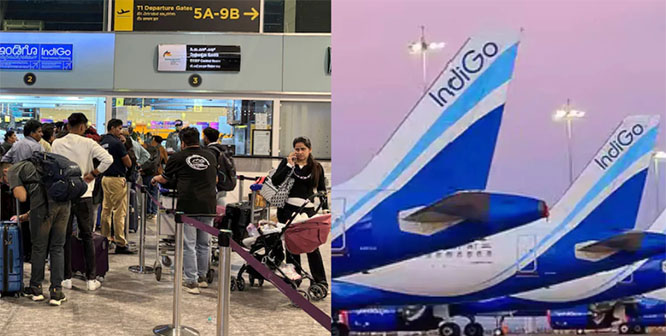
Angry outbursts, long queues, and desperate appeals filled airports across India today as IndiGo grappled with a severe operational breakdown. Hundreds of flights have been cancelled or delayed, leaving thousands of passengers stranded through the night and forcing many to spend long hours at helpdesks.

Social media was flooded with videos of fliers pleading for assistance, accusing the airline of misleading updates, and demanding accommodation after being stuck for 10 to 12 hours at airports such as Hyderabad and Bengaluru.

What Triggered the Meltdown?

IndiGo has attributed the widespread disruption to “a multitude of unforeseen operational challenges.” These include:

•    Minor technology glitches
•    Winter-season schedule adjustments
•    Bad weather
•    Congestion in the aviation network
•    New crew rostering rules (Flight Duty Time Limitations or FDTL)

Among these, the most disruptive has been the implementation of the updated FDTL norms introduced by the Directorate General of Civil Aviation (DGCA) in January 2024.

These rules were designed to reduce pilot fatigue and improve passenger safety. Key changes include:

•    Longer weekly rest periods for flight crew
•    A revised definition of “night,” extending it by an extra hour
•    Tighter caps on flight duty timing and night landings
•    Cutting night shifts for pilots and crew from six per roster cycle to just two

Once these norms became fully enforceable, airlines were required to overhaul rosters well in advance. For IndiGo, this triggered a sudden shortage of crew available for duty, leading to cascading delays and cancellations.

Why IndiGo Was Hit the Hardest

IndiGo is India’s largest airline by a wide margin, operating over 2,200 flights daily. That’s roughly double the number operated by Air India.

When an airline of this size experiences even a 10–20% disruption, it translates to 200–400 flights being delayed or grounded — producing massive spillover effects across the country.

IndiGo also relies heavily on high-frequency overnight operations, a model typical of low-cost carriers that aim to maximise aircraft utilisation and reduce downtime. The stricter FDTL norms clash with these overnight-heavy schedules, forcing the airline to pull back services.

Aviation bodies have also criticised IndiGo’s preparedness. The Airline Pilots' Association of India (ALPA) said airlines were given a two-year window to plan for the new rules but “started preparing rather late.” IndiGo, it said, failed to rebuild crew rosters 15 days in advance as required.

The Federation of Indian Pilots (FIP) went further, calling the crisis the result of IndiGo’s “prolonged and unorthodox lean manpower strategy,” and alleging that the airline adopted a hiring freeze even as it knew the new rules would require more careful staffing.

How Many Flights Are Affected?

In the past 48 hours, over 300 flights have been cancelled. At least 100 more are expected to be cancelled today.

City-wise impact:

•    Hyderabad: 33 expected cancellations; several fliers stranded overnight
•    Bengaluru: over 70 expected cancellations
•    Delhi, Mumbai, Chennai, Kolkata: widespread delays and missed connections

Passengers shared distressing accounts online.

One customer at Hyderabad airport said they waited from 6 PM to 9 AM with “no action taken” regarding their delayed Pune flight. Another said IndiGo repeatedly told them the crew was “arriving soon,” only for the delay to stretch over 12 hours.

IndiGo has apologised for the disruption and promised that operations will stabilise within 48 hours, adding that “calibrated adjustments” are being made to contain the chaos.

What Should Passengers Do Now?

For those flying in the next few days, especially with IndiGo, here are key precautions:

1. Keep Checking Flight Status
Monitor your flight closely before leaving for the airport, as delays may be announced last-minute.

2. Arrive Early
Expect long queues at counters and security due to crowding and rescheduling.

3. Carry Essentials
Pack snacks, water, basic medicines, chargers, and items for children or senior citizens. Extended waiting times should be anticipated.

4. Use Flexible Booking Options
If you booked tickets with a free-date-change or cancellation option, consider using them.
If you haven’t booked yet, prefer refundable or flexible fares, or even consider alternate airlines.

5. Follow IndiGo’s Updates
Keep an eye on IndiGo’s official social media channels and contact customer support for rebooking and refund queries.

What Needs to Change?

Pilot groups have raised concerns not just about staffing but also the planning practices behind it.
The Federation of Indian Pilots accused IndiGo of:

•    Imposing an unexplained hiring freeze despite knowing the FDTL changes were coming
•    Entering non-poaching agreements that limited talent movement
•    Keeping pilot pay frozen
•    Underestimating the need to restructure operations in advance

They have urged DGCA to approve seasonal schedules only after airlines prove they have adequate pilot strength under the new norms.

ALPA also warned that some airlines might be using the delays as an “immature pressure tactic” to push DGCA for relaxations in the new rules — which, if granted, could compromise the very safety standards the norms were meant to protect.

Both pilot bodies stressed that no exemption should dilute safety, and any deviations should be based solely on scientific risk assessment.

Is a Solution in Sight?

While IndiGo says normalcy will return within two days, aviation experts believe that fully stabilising operations could take longer, depending on how quickly the airline can:
•    Re-align rosters
•    Mobilise rested crew
•    Boost staffing
•    Adjust its winter schedule to match regulatory requirements
Passengers are advised to remain prepared for continued delays over the next few days as the airline works through its backlog. 

Comments

Add new comment

  • Coastaldigest.com reserves the right to delete or block any comments.
  • Coastaldigset.com is not responsible for its readers’ comments.
  • Comments that are abusive, incendiary or irrelevant are strictly prohibited.
  • Please use a genuine email ID and provide your name to avoid reject.
News Network
November 22,2025

gaza.jpg

The Israeli regime’s forces have killed two Palestinian children in the Gaza Strip every day since the ceasefire began in early October, UNICEF has warned.

The UN children’s agency said on Friday that Israeli forces continue to attack Palestinians in Gaza even though the agreement was meant to stop the killing.

“Since 11 October, while the ceasefire has been in effect, at least 67 children have been killed in conflict-related incidents in the Gaza Strip. Dozens more have been injured. That is an average of almost two children killed every day since the ceasefire took effect,” UNICEF spokesperson Ricardo Pires said in Geneva, reminding that each number in the statistics represents a child whose life had ended violently.

“These are not statistics,” he said. “Each child had a story, a family, and a future that was stolen from them.”

Data from Palestinian factions, human rights groups, and government bodies recorded since the US-brokered ceasefire deal went into effect on October 10 show that Israeli forces have carried out numerous attacks, each constituting a separate ceasefire violation.

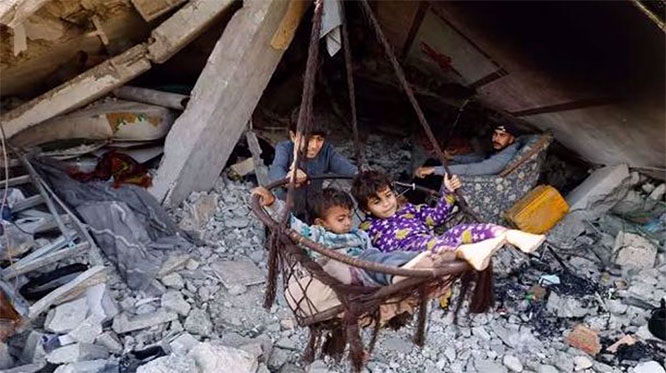
UNICEF teams say they repeatedly continue to witness heart-wrenching scenes of fearful Palestinian children sleeping outdoors with amputated limbs, while others live as orphans in flooded, makeshift shelters.

“I saw this myself in August. There is no safe place for them. The world cannot normalize their suffering,” Pires said, lamenting that the UN could “do a lot more if the aid that is really needed was entering faster.”

The UNICEF spokesperson warned that with the advent of winter, the risks for hundreds of thousands of displaced children will increase.

He warned, “The stakes are incredibly high” for children as winter acts as a threat multiplier, where children have no heating, no insulation, and few blankets. He said respiratory infections rise.

“Too many children have already paid the highest price,” Pires said. “Too many are still paying it, even under a ceasefire. The world promised them it would stop and that we would protect them.”

“Now we must act like it,” the UNICEF spokesperson added.

Since the Israeli regime launched its genocidal war against Palestinians in Gaza in October 2023, it has killed nearly 70,000 people in the territory, most of them women and children, and injured over 170,000 more, while reducing most of the structures in the enclave to rubble.

Comments

Add new comment

  • Coastaldigest.com reserves the right to delete or block any comments.
  • Coastaldigset.com is not responsible for its readers’ comments.
  • Comments that are abusive, incendiary or irrelevant are strictly prohibited.
  • Please use a genuine email ID and provide your name to avoid reject.
coastaldigest.com news network
November 29,2025

health1.jpg

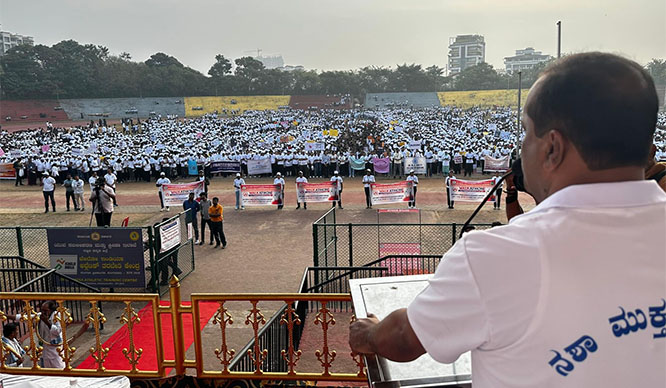
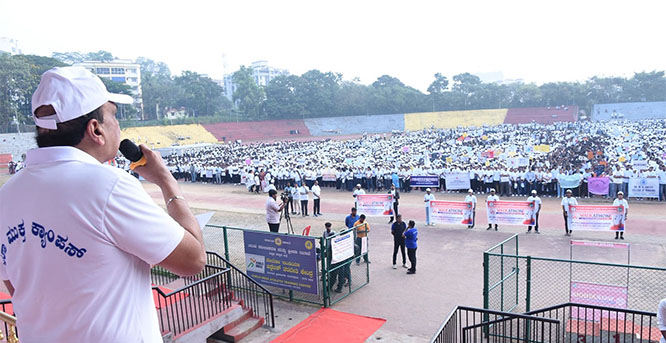
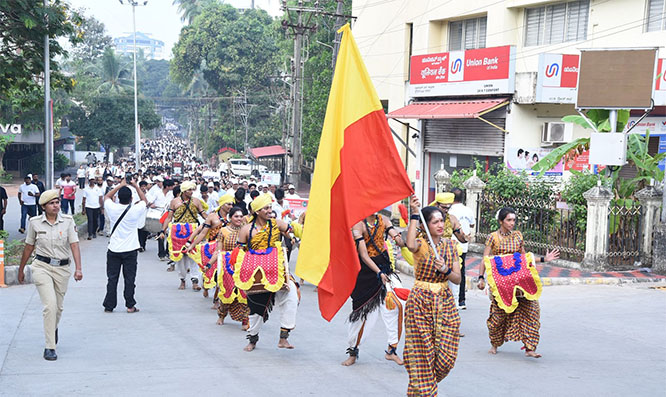
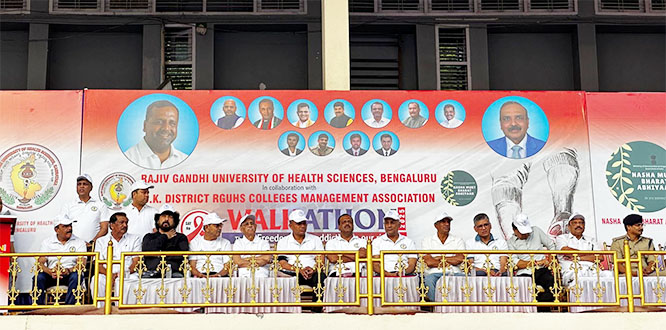
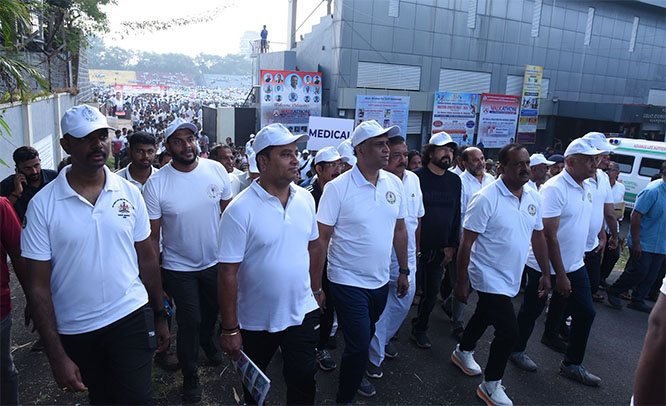
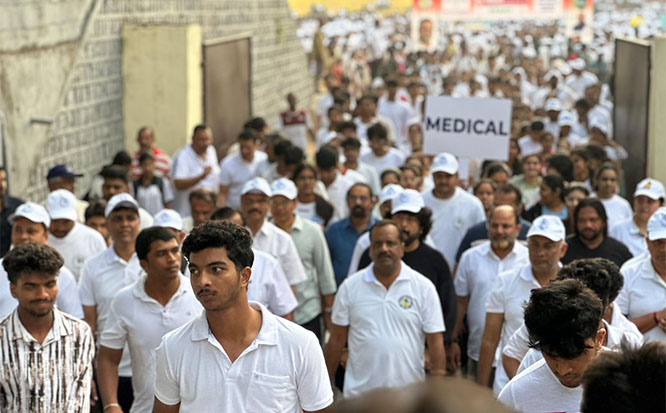
Mangaluru, Nov 29: Around 12,500 healthcare students from Medical, Dental, AYUSH, Pharmacy, Nursing, Physiotherapy and Allied Health Sciences colleges of Dakshina Kannada, affiliated to Rajiv Gandhi University of Health Sciences (RGUHS), took part in a massive walkathon to promote awareness on Organ Donation and Nasha Mukth Bharat.

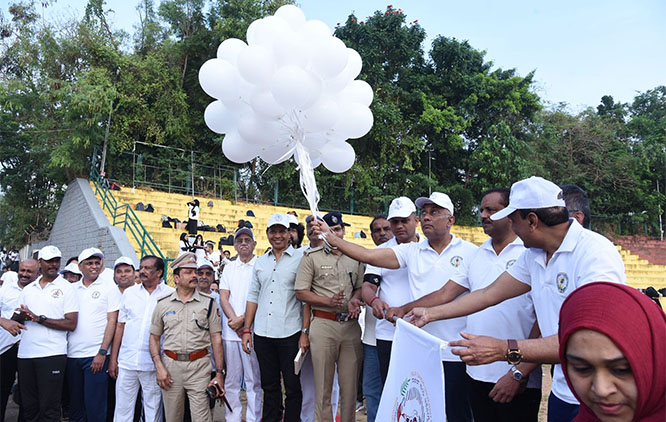
The inaugural ceremony was held at Mangala Stadium. Dr Bhagavan B C, Hon’ble Vice-Chancellor of RGUHS, delivered the welcome address. The walkathon was flagged off by Shri U T Khader, Hon’ble Speaker of the Karnataka Legislative Assembly, and presided over by Shri Dinesh Gundu Rao, Hon’ble Minister for Health, Family Welfare and Dakshina Kannada District In-charge. Dakshina Kannada MP Shri Brijesh Chowta also addressed the students.

Music director Guru Kiran, MLA Dr Bharat Shetty (Mangalore North), Police Commissioner Shri Sudheer Kumar Reddy, Shri Manjunath Bhandary and Shri Harish Kumar were among those present.

Institution heads including Dr Haji U K Monu (Kanachur Colleges), Dr Shantharam Shetty (Tejaswini College), Dr Bhaskar Shetty (City Group of Colleges), Mr Abdul Rahiman (Kanachur Institute of Medical Sciences), and the District Health Officer, Mangalore, also participated.

The vote of thanks was delivered by Prof U T Ifthikar Fareed, Syndicate Member, RGUHS.

The event was organised by Dr U T Ifthikar Ali and Dr Shiva Sharan (Syndicate Members), Prof Vaishali (Senate Member), Prof Mohammad Suhail (Chairman, BOS Physiotherapy), Dr Sharan Shetty (Former Senate Member), along with principals and faculty of various colleges.

Students marched from Mangala Stadium to Karavali Grounds via MCC and Lalbagh signal. The event set a record as one of the largest gatherings of healthcare students for a social cause in the RGUHS Dakshina Kannada Zone.

health7.jpg

health6.jpg

health5.jpg

health4.jpg

health3.jpg

health2.jpg

Comments

Add new comment

  • Coastaldigest.com reserves the right to delete or block any comments.
  • Coastaldigset.com is not responsible for its readers’ comments.
  • Comments that are abusive, incendiary or irrelevant are strictly prohibited.
  • Please use a genuine email ID and provide your name to avoid reject.