All you need to know about Head and Neck Cancer

Dr Sashikanth Jonnalagadda 
April 14, 2021

header-head-neck-cancer.jpg

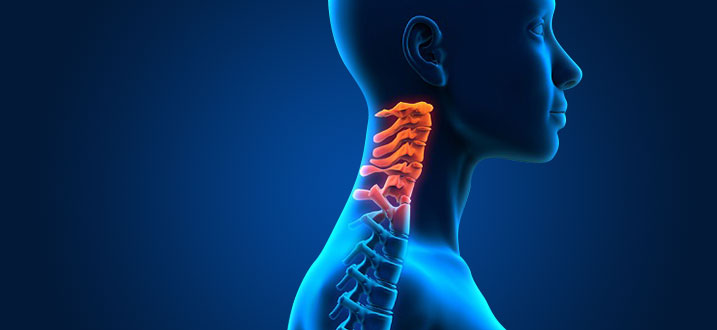
The Head and Neck is a very complex region of the body and consists of several subsites like the Oral Cavity, Oropharynx (Throat), Larynx (voice box), Thyroid, Paranasal Sinuses, and Neck Lymph Nodes. Cancer that occurs in the Oral Cavity (mouth), throat, nose, paranasal sinuses, salivary glands, and other areas of the head and neck are considered Head and Neck cancer.  
  
Squamous cell carcinomas arise in the lining of the mouth, nose, and throat, account for the majority of these cancers.  
  
Because of the widespread use of Tobacco (gutka, pan masala, and betelnut), oral cancers are the most common form of cancer in India and it accounts for roughly 30 percent of all cancers in the body. Oral Cancers and other Head and Neck Cancers are also increased by smoking and alcohol consumption. 
  
Approximately 20 people out of 1,00,000 population are diagnosed with Head and Neck Cancer.  
  
It is very important to pay attention to symptoms such as non-healing ulcers in the mouth or throat, bleeding from mouth or nose, persisting sore throat, breathing or swallowing difficulty, change in voice, and swellings in the neck and face region. 
  
Head and neck tumors affect the patient's ability to chew, swallow, speak and breathe. As a result, early detection of the tumor is critical in order to increase the patient's chances of survival as well as his or her ability to speak and swallow normally during treatment. 
  
Treatment Options 

These symptoms need to be evaluated with a concerned Head and Neck Onco Surgeons who helps patients to make an informed decision about their treatment options.  The first step is to obtain a tissue sample from the affected area, which is done by a biopsy. The type of cancer will be confirmed by Histopathology, which will decide further management. 
 
The next step is staging, which entails deciding how far cancer has spread. It will be obtained by Radiological Imaging such as CT, MRI, and, on rare occasions PET scan. 
 
Cancers can be classified into four stages based on the extent of their spread. Usually, head and neck cancers are treated with surgery followed by adjuvant treatment such as radiation and chemotherapy, if necessary. The tumor and neck nodes are removed during surgery. Plastic surgery procedures are used to reconstruct the shape and function of the removed organ, allowing the patient to appear and function as normally as possible. 
  
After the treatment, the patient is kept on close surveillance for 3 to 5 years with a follow-up with his or her Head and Neck Surgeon. 


By Dr. Sashikanth Jonnalagadda is the Consultant - ENT, Head and Neck Oncology at American Oncology Institute


Comments

Add new comment

  • Coastaldigest.com reserves the right to delete or block any comments.
  • Coastaldigset.com is not responsible for its readers’ comments.
  • Comments that are abusive, incendiary or irrelevant are strictly prohibited.
  • Please use a genuine email ID and provide your name to avoid reject.
News Network
November 27,2025

imrankhan.jpg

Authorities at Pakistan’s high-security Adiala Jail in Rawalpindi on Wednesday dismissed speculation about the condition of imprisoned former Pakistan Prime Minister Imran Khan, rejecting rumours that he had been moved out of the facility or was in danger. Officials said Khan was in “good health” and described the viral death claims as “baseless.”

“There is no truth to reports about his transfer from Adiala Jail,” the Rawalpindi prison administration said in a statement, according to Geo News. “He is fully healthy and receiving complete medical attention.”

Amid swirling rumours on social media, Imran Khan’s party, Pakistan Tehreek-e-Insaf (PTI), urged the federal government to issue an official clarification and demanded that authorities allow his family to meet him immediately, Dawn reported.

The frenzy began after Khan’s three sisters called for an impartial probe into what they described as a “brutal” police assault on them and other PTI supporters outside Adiala Jail last week. Soon after, several social media handles circulated unverified claims alleging that Khan had been “killed” inside the prison.

The rumours intensified when a handle named “Afghanistan Times” claimed that “credible sources” had confirmed Khan’s “murder” and that his body had been moved out of the jail — allegations that have not been verified by any credible agency.

Imran Khan, PTI’s patron-in-chief, has been lodged in the Rawalpindi prison since August 2023 in multiple cases. For over a month, an undeclared restriction has prevented family members and senior PTI leaders from meeting him. Khyber-Pakhtunkhwa Chief Minister Sohail Afridi has reportedly been denied access despite making seven attempts.

In a letter to Punjab Police Chief Usman Anwar, Khan’s sisters — Noreen Niazi, Aleema Khan, and Dr. Uzma Khan — said they were “peacefully protesting” outside the jail when police allegedly launched an unprovoked assault after streetlights were switched off.

“At 71, I was seized by my hair, thrown to the ground and dragged across the road,” Noreen Niazi said, alleging that other women present were also slapped and manhandled.

Adiala Jail officials reiterated that speculation over Imran Khan’s health was unfounded and insisted that his well-being was being ensured, Geo News reported.

Comments

Add new comment

  • Coastaldigest.com reserves the right to delete or block any comments.
  • Coastaldigset.com is not responsible for its readers’ comments.
  • Comments that are abusive, incendiary or irrelevant are strictly prohibited.
  • Please use a genuine email ID and provide your name to avoid reject.
News Network
December 4,2025

Mangaluru: Chaos erupted at Mangaluru International Airport (MIA) after IndiGo flight 6E 5150, bound for Mumbai, was repeatedly delayed and ultimately cancelled, leaving around 100 passengers stranded overnight. The incident highlights the ongoing country-wide operational disruptions affecting the airline, largely due to the implementation of new Flight Duty Time Limitations (FDTL) norms for crew.

The flight was initially scheduled for 9:25 PM on Tuesday but was first postponed to 11:40 PM, then midnight, before being cancelled around 3:00 AM. Passengers expressed frustration over last-minute communication and the lack of clarity, with elderly and ailing travellers particularly affected. “Though the airline arranged food, there was no proper communication, leaving us confused,” said one family member.

An IndiGo executive at MIA cited the FDTL rules, designed to prevent pilot fatigue by limiting crew working hours, as the cause of the cancellation. While alternative arrangements, including hotel stays, were offered, about 100 passengers chose to remain at the airport, creating tension. A replacement flight was arranged but also faced delays due to the same constraints, finally departing for Mumbai around 1:45 PM on Wednesday. Passengers either flew, requested refunds, or postponed their travel.

The Mangaluru delay is part of a broader crisis for IndiGo. The airline has been forced to make “calibrated schedule adjustments”—a euphemism for widespread cancellations and delays—after stricter FDTL norms came into effect on November 1.

While an IndiGo spokesperson acknowledged unavoidable flight disruptions due to technology issues, operational requirements, and the updated crew rostering rules, the DGCA has intervened, summoning senior airline officials to explain the chaos and outline corrective measures.

The ripple effect has been felt across the country, with major hubs like Bengaluru and Mumbai reporting numerous cancellations. The Mangaluru incident underscores the systemic operational strain currently confronting India’s largest carrier, leaving passengers nationwide grappling with uncertainty and delays.

Comments

Add new comment

  • Coastaldigest.com reserves the right to delete or block any comments.
  • Coastaldigset.com is not responsible for its readers’ comments.
  • Comments that are abusive, incendiary or irrelevant are strictly prohibited.
  • Please use a genuine email ID and provide your name to avoid reject.
News Network
November 22,2025

gaza.jpg

The Israeli regime’s forces have killed two Palestinian children in the Gaza Strip every day since the ceasefire began in early October, UNICEF has warned.

The UN children’s agency said on Friday that Israeli forces continue to attack Palestinians in Gaza even though the agreement was meant to stop the killing.

“Since 11 October, while the ceasefire has been in effect, at least 67 children have been killed in conflict-related incidents in the Gaza Strip. Dozens more have been injured. That is an average of almost two children killed every day since the ceasefire took effect,” UNICEF spokesperson Ricardo Pires said in Geneva, reminding that each number in the statistics represents a child whose life had ended violently.

“These are not statistics,” he said. “Each child had a story, a family, and a future that was stolen from them.”

Data from Palestinian factions, human rights groups, and government bodies recorded since the US-brokered ceasefire deal went into effect on October 10 show that Israeli forces have carried out numerous attacks, each constituting a separate ceasefire violation.

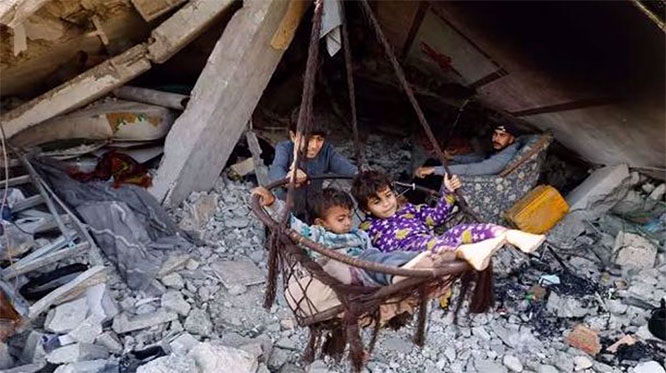
UNICEF teams say they repeatedly continue to witness heart-wrenching scenes of fearful Palestinian children sleeping outdoors with amputated limbs, while others live as orphans in flooded, makeshift shelters.

“I saw this myself in August. There is no safe place for them. The world cannot normalize their suffering,” Pires said, lamenting that the UN could “do a lot more if the aid that is really needed was entering faster.”

The UNICEF spokesperson warned that with the advent of winter, the risks for hundreds of thousands of displaced children will increase.

He warned, “The stakes are incredibly high” for children as winter acts as a threat multiplier, where children have no heating, no insulation, and few blankets. He said respiratory infections rise.

“Too many children have already paid the highest price,” Pires said. “Too many are still paying it, even under a ceasefire. The world promised them it would stop and that we would protect them.”

“Now we must act like it,” the UNICEF spokesperson added.

Since the Israeli regime launched its genocidal war against Palestinians in Gaza in October 2023, it has killed nearly 70,000 people in the territory, most of them women and children, and injured over 170,000 more, while reducing most of the structures in the enclave to rubble.

Comments

Add new comment

  • Coastaldigest.com reserves the right to delete or block any comments.
  • Coastaldigset.com is not responsible for its readers’ comments.
  • Comments that are abusive, incendiary or irrelevant are strictly prohibited.
  • Please use a genuine email ID and provide your name to avoid reject.