
Breast Cancer Awareness Month: What you need to know about your breast

Dr Pragnya Chigurupati Narra
October 17, 2020

cancer.JPG

The breast is a mass of glandular, fibrous and fatty tissue. It is placed over the pectoral (chest) muscle and attached by ligaments called Cooper’s ligaments. Development of these parts of the breast begin at puberty and are dependent on hormones such as estrogen and progesterone. Women may have many changes in their breast during any point of their life. Some are dependent on their menstrual cycle. Others are linked to birth control pills, hormone replacement therapy, family history or lifestyle changes. Most breast conditions are not cancer. They arise from an abnormality in the normal development and ageing of breast tissue.

October is breast cancer awareness month. In a spirit of raising-awareness, we're giving you a two-part series on breast changes in - 1)Premenopausal women 2)Post-menopausal women

Part 1 - Premenopausal women

Breast pain

The most common complaint amongst younger women is pain linked to the menstrual cycle. This is called “Cyclical mastalgia”. It is almost always due to our hormones (estrogen and progesterone). As the pain does not always affect both the breasts, there might be other causes to pain in a single breast. This type of pain might begin at ovulation and last all though the menstrual cycle. Pain that involves both the breasts and is cyclical is generally not harmful. When the breast pain does not correlate with her menstrual cycle, it is called “Non-cyclical breast pain”. It is advisable to chart the breast pain to understand the link better. The pain might be minimal to so severe that you can’t wear tight clothes or move around freely.

When you experience such pain, wear a good bra with adequate support. Maintaining a healthy lifestyle but limiting alcohol, caffeine and increasing greens in your diet are helpful. Pain killers such as Paracetamol may be taken in recommended doses if the pain is severe. Vitamin E capsules and massaging breasts with EPO (Evening primrose oil) have shown some benefit in patients.

Fibrocystic breast changes

These changes are what you feel in your breast prior to your menstrual cycle, commonly in the third and fourth decades of life.  Breasts may feel heavy, sore or lumpy. These changes occur due to an overdrive of estrogen and a deficiency of progesterone. Although these are not cancerous, having certain pathologically proven lesions of the breast which fall under the “fibrocystic” category increase the risk of cancer three-fold.

Infections

Infections are common in breast feeding mothers, smokers and women with systemic illnesses. They may present with lumps, nipple discharge, pain or fever. It is very important to identify and treat these symptoms which may range from simple medical management to surgical treatment.

Cysts

Women who develop a cyst complain of a sudden development of a lump in the breast overnight. Cysts are fluid filled structures in the breast which occur due to a blocked duct or hormonal changes. They are most commonly benign. However, certain cysts may have a small component of a cancerous or precancerous lesion. They are generally seen in the third or the fourth decades of life.

They can be soft or hard. They may be felt by the hand or seen on imaging with a mammogram. They are generally observed or aspirated with a small needle.

Tumors (Benign)

Fibroadenomas (FA) are benign lumps that occur commonly in younger women, especially teens. They however can occur at any age group. They are mobile and slip when being felt. Women generally feel them when examining their breasts. If they are small and not growing, they maybe observed. However, if they are increasing in size or are symptomatic, simple removal is suggested. They very rarely turn cancerous (Complex fibroadenomas)

Phyllodes tumors are generally seen in the third and fourth decades of life and are prone to growing rapidly, changing the shape of the breast. The treatment is relatively complicated compared to a FA. Based on the nature of the tumor, radiotherapy might be required in certain cases and recurrences are common unless they are removed completely.

Breast Cancer

Currently, in India, the rates of cancer have increased in women between the ages of 25-40. The reasons for this might be lifestyle changes, similar to the West. If women under the age of 35 develop cancers, they tend to have a strong family history of ovarian or breast cancers. It is important to get counselled with a professional genetic counsellor.

Remember that ‘Breast Self-Examination” is the most important technique of identifying early breast diseases.  It has to be done every month. Make sure you reach out to a doctor if you find any abnormality in your breasts.

(This is this first article in a two-part series on breast changes)

Dr Pragnya Chigurupati Narra is a Breast Specialist & Oncoplastic Surgeon at American Oncology Institute

Comments

Add new comment

  • Coastaldigest.com reserves the right to delete or block any comments.
  • Coastaldigset.com is not responsible for its readers’ comments.
  • Comments that are abusive, incendiary or irrelevant are strictly prohibited.
  • Please use a genuine email ID and provide your name to avoid reject.
News Network
November 28,2025

ministerPM.jpg

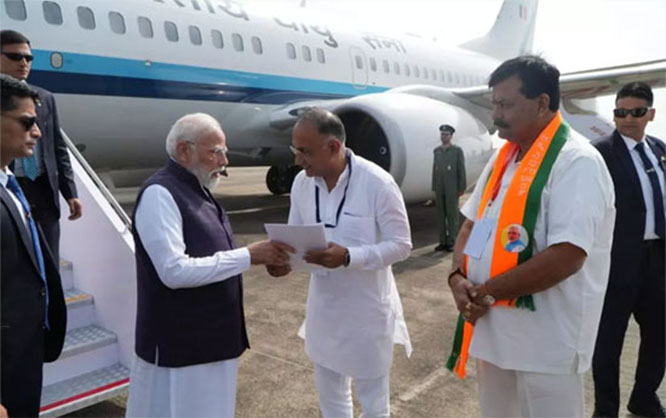
Mangaluru, Nov 28: Karnataka Health Minister and Dakshina Kannada district in-charge minister Dinesh Gundu Rao on Friday handed over Chief Minister Siddaramaiah’s letter to Prime Minister Narendra Modi, highlighting the severe distress faced by farmers due to crashing crop prices.

PM Modi arrived at the Mangaluru International Airport en route to Udupi, where Gundu Rao welcomed him and submitted the letter. The chief minister’s message stressed that farmers are suffering heavy losses because maize and green gram are being bought far below the Minimum Support Price (MSP). The state urged the Centre to immediately begin procurement at MSP.

According to the letter, Karnataka has a bumper harvest this year—over 54.74 lakh metric tons of maize and 1.98 lakh metric tons of green gram—yet farmers are unable to secure fair prices. Against the MSP of ₹2,400/MT for maize and ₹8,768/MT for green gram, market rates have plunged to ₹1,600–₹1,800 and ₹5,400 respectively.

The chief minister has requested the Centre to:

• Direct NAFED, FCI and NCCF to start MSP procurement immediately.
• Ensure ethanol units purchase maize directly from farmers or FPOs.
• Increase Karnataka’s ethanol allocation, citing high production capacity.
• Stop maize imports, which have depressed domestic prices.
• Relax quality norms for green gram, allowing up to 10% discoloration due to rains.

The letter stresses that MSP is crucial for farmer dignity and income stability and calls for swift central intervention to prevent a deepening crisis.

Comments

Add new comment

  • Coastaldigest.com reserves the right to delete or block any comments.
  • Coastaldigset.com is not responsible for its readers’ comments.
  • Comments that are abusive, incendiary or irrelevant are strictly prohibited.
  • Please use a genuine email ID and provide your name to avoid reject.
News Network
December 4,2025

indigoflight.jpg

Domestic carrier IndiGo has cancelled over 180 flights from three major airports — Mumbai, Delhi and Bengaluru — on Thursday, December 4, as the airline struggles to secure the required crew to operate its flights in the wake of new flight-duty and rest-period norms for pilots.

While the number of cancellations at Mumbai airport stands at 86 (41 arrivals and 45 departures) for the day, at Bengaluru, 73 flights have been cancelled, including 41 arrivals, according to a PTI report that quoted sources.

"IndiGo cancelled over 180 flights on Thursday at three airports-Mumbai, Delhi and Bengaluru," the source told the news agency.

Besides, it had cancelled as many as 33 flights at Delhi airport for Thursday, the source said, adding, "The number of cancellations is expected to be higher by the end of the day."

The Gurugram-based airline's On-Time Performance (OTP) nosedived to 19.7 per cent at six key airports — Delhi, Mumbai, Chennai, Kolkata, Bengaluru and Hyderabad — on December 3, as it struggled to get the required crew to operate its services, down from almost half of December 2, when it was 35 per cent.

"IndiGo has been facing acute crew shortage since the implementation of the second phase of the FDTL (Flight Duty Time Limitations) norms, leading to cancellations and huge delays in its operations across the airports," a source had told PTI on Wednesday.

Chaos continued at several major airports for the third day on Thursday because of the cancellations.

A spokesperson for the Kempegowda International Airport (KIA) in Bengaluru said that 73 IndiGo flights had been cancelled on Thursday.

At least 150 flights were cancelled and dozens of others delayed on Wednesday, airport sources said, leaving thousands of travellers stranded, according to news agency Reuters.

The Directorate General of Civil Aviation (DGCA) has said it is investigating IndiGo flight disruptions and has asked the airline to submit the reasons for the current situation, as well as its plans to reduce flight cancellations and delays.

It may be mentioned here that the pilots' body, Federation of Indian Pilots (FIP), has alleged that IndiGo, despite getting a two-year preparatory window before the full implementation of new flight duty and rest period norms for cockpit crew, "inexplicably" adopted a "hiring freeze".

The FIP said it has urged the safety regulator, the DGCA, not to approve airlines' seasonal flight schedules unless they have adequate staff to operate their services "safely and reliably" in accordance with the New Flight Duty Time Limitations (FDTL) norms.

In a letter to the DGCA late on Wednesday, the FIP urged the DGCA to consider re-evaluating and reallocating slots to other airlines, which have the capacity to operate them without disruption during the peak holiday and fog season if IndiGo continues to "fail in delivering on its commitments to passengers due to its own avoidable staffing shortages."

Comments

Add new comment

  • Coastaldigest.com reserves the right to delete or block any comments.
  • Coastaldigset.com is not responsible for its readers’ comments.
  • Comments that are abusive, incendiary or irrelevant are strictly prohibited.
  • Please use a genuine email ID and provide your name to avoid reject.
News Network
November 24,2025

israelsyra.jpg

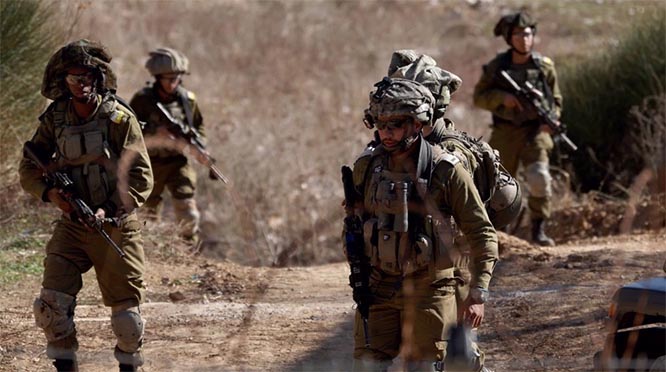
Israeli forces have pushed over the Syrian frontier, erecting a checkpoint and stopping vehicles in the southwestern city of Quneitra, in yet another breach of the Arab country’s sovereignty.

The violation took place on Sunday, when the troops made their way across the border, setting up the outpost near the Ain al-Bayda junction in northern Quneitra, Syrian outlets reported.

According to the al-Ikhbariya paper, an Israeli detachment positioned itself at the junction, halting cars and conducting searches.

The Syrian Arab News Agency (SANA) reported that three Israeli military vehicles then moved further into the northern countryside, deploying between the town of Jubata al-Khashab and the villages of Ofaniya and Ain al-Bayda. The agency added that a separate Israeli unit mounted a new incursion in the central region, approaching the villages of Umm Batina and al-Ajraf.

Residents said such activities have surged in recent months, pointing to Israeli advances onto farmland, leveling of extensive forested areas, arrests, and spread of mobile checkpoints.

The Israeli regime began markedly increasing its military aggression against Syria last year.

The escalation coincided with increasingly ferocious onslaughts throughout the country by the so-called Hay'at Tahrir al-Sham (HTS) Takfiri terrorist group, which the government of President Bashar al-Assad had confined to northwestern Syria. The HTS, however, managed to overthrow the government as the Israeli attacks would pummel the country’s civilian and defensive infrastructure.

Various reports have shown that, during the escalation, the regime conducted more than 1,000 airstrikes on the Syrian territory and over 400 ground raids into the south.

Following the collapse of the Assad government, Tel Aviv also widened its grip over the occupied Golan Heights by taking control of a demilitarized buffer zone, in defiance of a 1974 Disengagement Agreement. Earlier this month, senior Israeli officials, including Prime Minister Benjamin Netanyahu, visited the buffer zone, prompting expressions of alarm on the part of the United Nations.

The United States, the regime’s biggest ally, has, meanwhile, been fraternizing the HTS head Abu Mohammed al-Jolani amid the widely reported prospect of rapprochement with Tel Aviv.

Comments

Add new comment

  • Coastaldigest.com reserves the right to delete or block any comments.
  • Coastaldigset.com is not responsible for its readers’ comments.
  • Comments that are abusive, incendiary or irrelevant are strictly prohibited.
  • Please use a genuine email ID and provide your name to avoid reject.