Omicron, Delta pave the wave for a new super variant – interaction among experts

Agencies
December 3, 2021

What happens when two nasty Covid-19 variants get together and share their most effective mutations? Omicron and delta have brought us closer to the answer, says Peter White, a virologist at the University of New South Wales who warns of the inevitability of a new Covid-19 "super strain."

He joined Stephanie Topp, a global public health expert at James Cook University in Townsville, Australia, and Bloomberg Opinion columnist David Fickling for a Twitter Spaces discussion on the implications of the newest coronavirus variant shaking up the world. Leading the conversation, which has been lightly edited for length and clarity, is Bloomberg Opinion columnist Anjani Trivedi.

Anjani Trivedi: Here we are again. Omicron. Were you surprised, Peter?

Peter White: No, I wasn't surprised because this is what viruses do. Viruses are built to change quickly. That's why every year we have to adjust the flu vaccine. Some viruses change quicker than others. We have to adapt as the virus adapts.

Trivedi: Why is it so difficult for scientists to work out, and for us to understand, how a virus actually works on its hosts?

White: Each of these viruses is somewhere in the order of 50 mutations different from the previous variant of concern. So the first thing we need to do is look at the mutations and where they are and what changes could be important. And then, what is the effect. You cannot tell from the sequence exactly what the virus is going to do.

Trivedi: Is there anything that we're able to conclude with any certainty right now about immune resistance and how contagious this specific variant is?

White: From what I've seen, it looks to be about the same severity as delta, and the fact that it's actually taken over Delta indicates that it's more transmissible. We're seeing quite a rapid spread of it across the globe. But it doesn't seem to be more severe. There's no more hospitalizations in South Africa compared to delta.

Trivedi: Many emerging economies really struggled through previous waves, India being a case in point. How has South Africa gotten so far ahead?

Stephanie Topp: They got there by making good decisions based on need. I would say that the imperative to manage and respond to the HIV epidemic in the 1990s and 2000s, has resulted in a great deal of investment in public health, human and material infrastructure. Developing or developed isn't particularly helpful context. We've also seen the United States of America struggle. A lot can be learned about the way public health and politics intersect, and the way that influences what is seen as a priority.

Trivedi: When we think about the resilience of these health systems, how does that translate into distribution of vaccines?

Topp: What we're talking about here is the fair and equitable distribution of these medical technologies. The reason we're failing the so-called self-interest test is because our global economy is not set up to protect the interests of global populations. It's set up to protect the interests of shareholders. So we lack vaccine equity today, because you see very tight knit relationships between governments and large corporations. That result in political choices to benefit a certain very small segment of the global community.

Trivedi: What are your thoughts on why the death toll hasn't been as bad in South Africa and in Sub Saharan Africa so far?

White: It's a much younger population. That's a major factor. I also think there'll be a big underreporting aspect to this. But I don't really know the answer to that question.

Trivedi: How do we tackle this issue of vaccine demand? Something like one in six people in the US have had Covid-19, and nearly 800,000 people have died. What does that mean for going forward, especially in the next few months?

Topp: This is where education and information — not just risk messaging — of a public health response becomes so critical. Because if people haven't heard about it before, then they are susceptible to misinformation. And in our incredibly hyper social-networked world, the capacity of misinformation to reach people before official information is ever-more present. And that abuts, I think, a growing mistrust of politicians who are in charge of delivering those messages.

Trivedi: What should we be watching out for in the next few months? What answers are you looking for in the data, especially with the new variant?

White: You've got to look at the severity of the new variant. The next thing you've got to ask is, "Does the vaccine cover us?" And the answer that we're seeing at the moment is, "Yes." But in the future, it might be, "No." And so I'll be asking Moderna and Pfizer: "Can you tweak your vaccine?" And they are doing this already. And then the thing I think people haven't realized is that we're going to see the largest-scale mutations, known as recombination in virology terms, between variants of concern. So if we mix the best bits of delta with the best bits of omicron, we might create a super new strain that could be better than both of them [at infecting or sickening people]. And so we need to be looking for these hybrid viruses, and they will pop up in the future. They will come.

Trivedi: If we're going to keep getting new variants, how does that work in terms of vaccines and gaining immunity?

White: Vaccines reduce the severity of the disease. The chances of you dying if you've been vaccinated are many, many times reduced. So it's much better to get the vaccine than it is to get the real virus because you could die. So you can still get the virus even if you'd double vaccinated, but you've got less chance of getting it and you're going to be less ill and you've got less chance of passing it on.

Trivedi: What happens with a super-strain when variants combine? How does that play out?

White: We would then be asking the vaccination companies to adjust their vaccines to give us the immunity that we need to protect us from that variant. And we should be able to do that.

Trivedi: Does this change the business model for pharmaceutical companies? This virus is going to keep changing, and they're going to have to keep adapting their vaccines.

David Fickling: For pharma companies, vaccines are a bit of a backwater. It's not a very attractive business. You have to go through a very, very stringent development process that's very capital intensive. And then you basically have no repeat business. [For many vaccines] you are protected for life. And you're having a price negotiation with a very large and powerful buyer (governments). And so you're not going to get a good profit margin compared to something like drugs against diseases of aging, heart disease and cancer in rich countries. That's actually what they want to be spending money doing. Drug companies have been quitting vaccine development. Now Covid has blown this open to a large extent. We've got the whole world being vaccinated once, twice, three times, and then again with boosters reformulations, potentially.

Trivedi: Quarantines, border closures, how effective are these measures from a public health standpoint?

Topp: No single public health measure by itself is sufficient to manage communicable disease. Things like border shutdowns, quarantines, masking, physical distancing and so forth can be effective but come with substantial and unquantified costs. The fact that we now have a medical technology that can mitigate the acute clinical consequences of this disease is an absolute gift. It's gobsmacking to me that we're not making every effort to utilize this to the best advantage. I mean, here is something that would enable us to very much recapture aspects of our daily lives that we value. The fact that we're not is deeply demonstrative of the pathologies now in our governance systems.

White: we need to learn how to live with this virus. And the only way to do that is to stop people dying through vaccination, and then try to find a sensible balance between lockdowns and being back to normal.

Trivedi: What do you think is the single largest challenge we face right now?

Fickling: It's recognizing the type of business that vaccines are. For companies to make a proper return on vaccines, there has to be an unlevel playing field that produces suboptimal public health outcomes. So I think governments actually need to recognize they have a much bigger role to play. We need to regard the vaccine businesses as something that's much better suited to a public-private system.

Topp: Until we recognize that our health systems mirror the same weaknesses that we see in society, the problems we're having in improving coverage and quality and access to technologies like vaccines are going to continue.

White: To stay ahead of this virus will require funding of proper research and proper surveillance systems. What we don't have now is a proper antiviral [treatment]. We're close. In less than a year, we will have proper drugs targeting the virus and they will work well. And when we get those, are the rich countries going to keep them like they did with other viruses?

Comments

Add new comment

  • Coastaldigest.com reserves the right to delete or block any comments.
  • Coastaldigset.com is not responsible for its readers’ comments.
  • Comments that are abusive, incendiary or irrelevant are strictly prohibited.
  • Please use a genuine email ID and provide your name to avoid reject.
News Network
November 22,2025

gaza.jpg

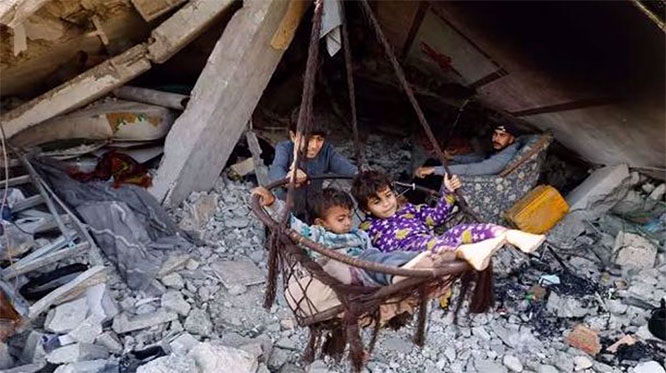
The Israeli regime’s forces have killed two Palestinian children in the Gaza Strip every day since the ceasefire began in early October, UNICEF has warned.

The UN children’s agency said on Friday that Israeli forces continue to attack Palestinians in Gaza even though the agreement was meant to stop the killing.

“Since 11 October, while the ceasefire has been in effect, at least 67 children have been killed in conflict-related incidents in the Gaza Strip. Dozens more have been injured. That is an average of almost two children killed every day since the ceasefire took effect,” UNICEF spokesperson Ricardo Pires said in Geneva, reminding that each number in the statistics represents a child whose life had ended violently.

“These are not statistics,” he said. “Each child had a story, a family, and a future that was stolen from them.”

Data from Palestinian factions, human rights groups, and government bodies recorded since the US-brokered ceasefire deal went into effect on October 10 show that Israeli forces have carried out numerous attacks, each constituting a separate ceasefire violation.

UNICEF teams say they repeatedly continue to witness heart-wrenching scenes of fearful Palestinian children sleeping outdoors with amputated limbs, while others live as orphans in flooded, makeshift shelters.

“I saw this myself in August. There is no safe place for them. The world cannot normalize their suffering,” Pires said, lamenting that the UN could “do a lot more if the aid that is really needed was entering faster.”

The UNICEF spokesperson warned that with the advent of winter, the risks for hundreds of thousands of displaced children will increase.

He warned, “The stakes are incredibly high” for children as winter acts as a threat multiplier, where children have no heating, no insulation, and few blankets. He said respiratory infections rise.

“Too many children have already paid the highest price,” Pires said. “Too many are still paying it, even under a ceasefire. The world promised them it would stop and that we would protect them.”

“Now we must act like it,” the UNICEF spokesperson added.

Since the Israeli regime launched its genocidal war against Palestinians in Gaza in October 2023, it has killed nearly 70,000 people in the territory, most of them women and children, and injured over 170,000 more, while reducing most of the structures in the enclave to rubble.

Comments

Add new comment

  • Coastaldigest.com reserves the right to delete or block any comments.
  • Coastaldigset.com is not responsible for its readers’ comments.
  • Comments that are abusive, incendiary or irrelevant are strictly prohibited.
  • Please use a genuine email ID and provide your name to avoid reject.
News Network
November 30,2025

airportmetro.jpg

Udupi: The pontiffs of Sri Paryaya Puttige Mutt, the sacred seat of Jagadguru Shrimad Madhvacharya Moola Samsthanam, have submitted a proposal to the Prime Minister seeking comprehensive development for Udupi district. 

Proposal for International Airport

A key request is the establishment of an international airport. Highlighting that around 1,000 acres of land are available and suitable, the pontiffs noted that the existing Mangalore Airport provides limited international connectivity. They suggested the airport be developed under a Public-Private Partnership (PPP) or as a Greenfield Airport to boost trade, education, healthcare, and spiritual tourism.

Metro and Rapid Transit Connectivity

The proposal also calls for Metro Rail or Rapid Transit between Mangaluru and Udupi. The 55 km coastal stretch experiences heavy daily commuter traffic, causing congestion. The district administration is ready to prepare an initial project report for a Mass Rapid Transit corridor and requested inclusion under national urban mobility programmes to ensure safe, green, and time-efficient regional transport.

Port and Coastal Development

The pontiffs urged the development of an international-standard port with a cruise terminal along Udupi’s coast. They also requested fast-tracking of pending coastal tourism projects and revising Coastal Regulation Zone (CRZ) norms to encourage sustainable infrastructure and hospitality investment.

IT, AI and Technological Infrastructure

Support was sought for an IT and AI Innovation Park with incubation facilities under Digital India and Startup India initiatives. The proposal also emphasized the need for strengthened data security and cloud computing infrastructure to boost India’s technological independence.

Sports and Education Initiatives

The pontiffs requested national sports status for Kambala, along with financial and infrastructure support. They also sought the establishment of an AIIMS in Udupi, a new IIT campus, and approval for an IIM to promote higher education in the district.

Representation to the Prime Minister

Sri Sugunendra Tirtha Pontiff and Sri Sushrendra Tirtha Swamiji represented the pontiffs in submitting the comprehensive development proposal to the Prime Minister during his recent visit.

Comments

Add new comment

  • Coastaldigest.com reserves the right to delete or block any comments.
  • Coastaldigset.com is not responsible for its readers’ comments.
  • Comments that are abusive, incendiary or irrelevant are strictly prohibited.
  • Please use a genuine email ID and provide your name to avoid reject.
News Network
December 4,2025

indigoflight.jpg

Domestic carrier IndiGo has cancelled over 180 flights from three major airports — Mumbai, Delhi and Bengaluru — on Thursday, December 4, as the airline struggles to secure the required crew to operate its flights in the wake of new flight-duty and rest-period norms for pilots.

While the number of cancellations at Mumbai airport stands at 86 (41 arrivals and 45 departures) for the day, at Bengaluru, 73 flights have been cancelled, including 41 arrivals, according to a PTI report that quoted sources.

"IndiGo cancelled over 180 flights on Thursday at three airports-Mumbai, Delhi and Bengaluru," the source told the news agency.

Besides, it had cancelled as many as 33 flights at Delhi airport for Thursday, the source said, adding, "The number of cancellations is expected to be higher by the end of the day."

The Gurugram-based airline's On-Time Performance (OTP) nosedived to 19.7 per cent at six key airports — Delhi, Mumbai, Chennai, Kolkata, Bengaluru and Hyderabad — on December 3, as it struggled to get the required crew to operate its services, down from almost half of December 2, when it was 35 per cent.

"IndiGo has been facing acute crew shortage since the implementation of the second phase of the FDTL (Flight Duty Time Limitations) norms, leading to cancellations and huge delays in its operations across the airports," a source had told PTI on Wednesday.

Chaos continued at several major airports for the third day on Thursday because of the cancellations.

A spokesperson for the Kempegowda International Airport (KIA) in Bengaluru said that 73 IndiGo flights had been cancelled on Thursday.

At least 150 flights were cancelled and dozens of others delayed on Wednesday, airport sources said, leaving thousands of travellers stranded, according to news agency Reuters.

The Directorate General of Civil Aviation (DGCA) has said it is investigating IndiGo flight disruptions and has asked the airline to submit the reasons for the current situation, as well as its plans to reduce flight cancellations and delays.

It may be mentioned here that the pilots' body, Federation of Indian Pilots (FIP), has alleged that IndiGo, despite getting a two-year preparatory window before the full implementation of new flight duty and rest period norms for cockpit crew, "inexplicably" adopted a "hiring freeze".

The FIP said it has urged the safety regulator, the DGCA, not to approve airlines' seasonal flight schedules unless they have adequate staff to operate their services "safely and reliably" in accordance with the New Flight Duty Time Limitations (FDTL) norms.

In a letter to the DGCA late on Wednesday, the FIP urged the DGCA to consider re-evaluating and reallocating slots to other airlines, which have the capacity to operate them without disruption during the peak holiday and fog season if IndiGo continues to "fail in delivering on its commitments to passengers due to its own avoidable staffing shortages."

Comments

Add new comment

  • Coastaldigest.com reserves the right to delete or block any comments.
  • Coastaldigset.com is not responsible for its readers’ comments.
  • Comments that are abusive, incendiary or irrelevant are strictly prohibited.
  • Please use a genuine email ID and provide your name to avoid reject.