
Understanding Alzheimer’s Disease

Dr Aparna Vijay Kumar
September 20, 2020

almuzaire.JPG

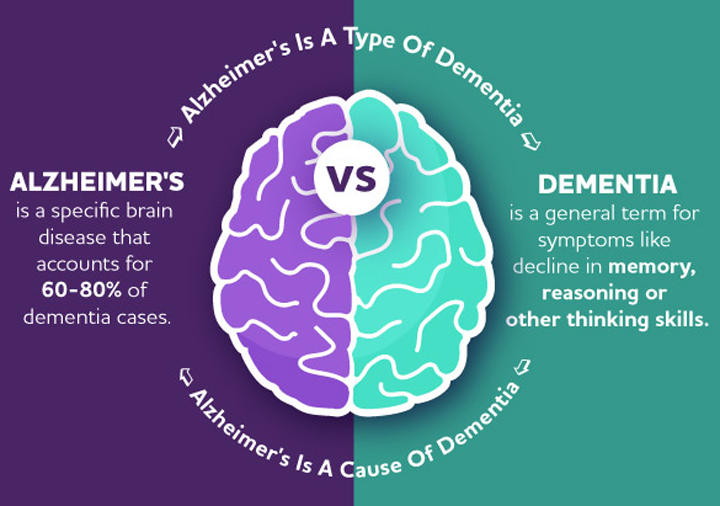
Alzheimer’s disease is a common cause of dementia. Dementia is a general term for loss of memory. Along with loss of short term memory, individuals develop loss of reasoning and thinking; as well as behaviour disturbances.

It is not just a disease of old age, though, it is often seen above 65 years of age. In less than 10% of cases, it is seen in patients between 40 to 60 years of age. It starts with difficulty in learning new things which shows impact on working memory, getting lost in familiar places followed by forgetting people, emotional and behavioural disturbances subsequently leading to a mute, bed bound state.

It is due to death of brain cells or neurons in memory area of the brain causing loss of connectivity with other neurons by the deposition of abnormal protein beta amyloid and tau. What causes this formation of protein is still under research. A combination of genetic, environmental and lifestyle factors is implicated.

The presence of apolipoprotein gene (APOE ) increases the risk but neither all individuals with the gene develop the disease nor all individuals with Alzheimer’s disease have this gene. Presence of metabolic conditions like diabetes, hypertension, heart disease, obesity, obstructive sleep apnea; diet and level of physical and mental activity also are implicated.

Diagnosis is only by clinical history and neurological examination. Imaging like SPECT, PET and MRI brain help in confirmation and ruling out treatable causes of dementia.

It is a slowly progressive disease with no cure as brain cells do not regenerate. Treatment with drugs aims at controlling the symptoms and slowing the progression by regulating the level of neurotransmitters or chemicals.

Care givers have a very challenging and important role in management of patients as caring of a person with Alzheimer’s disease causes physical and financial burden. Care givers also need support to cope up with the stress of handling their loved ones.

The take home message is that a healthy diet and regular exercise early on in life reduces the risk of Alzheimer’s disease. Healthy diet and regular exercise also prevent life style diseases like diabetes, hypertension, obesity and heart problems. Regular walking increases the level of a chemical brain derived neurotrophic factor( BNF) which potentiates memory.

A Mediterranean style of diet rich in fresh fruits and vegetables, nuts, legumes, olive oil has been shown to prevent the progression of disease in patients with minimal cognitive decline, a precursor of Alzheimer’s disease. Diet rich in curcumin, omega-3 fatty acids and cocoa have proven benefits with vitamin B12,D, E  and folate supplements.


Dr Aparna Vijay Kumar Senior Neurologist, Citizens Specialty Hospital

Comments

S C Sharma
 - 
Tuesday, 22 Sep 2020

Very informative article explaining in simplest language.

rmangala raman
 - 
Monday, 21 Sep 2020

Highly informative beneficial and clearly simplified to reach common man. Thank you.

S.Bhagyam Sharma
 - 
Monday, 21 Sep 2020

Very good information thank you very much Dr Aparna

Add new comment

  • Coastaldigest.com reserves the right to delete or block any comments.
  • Coastaldigset.com is not responsible for its readers’ comments.
  • Comments that are abusive, incendiary or irrelevant are strictly prohibited.
  • Please use a genuine email ID and provide your name to avoid reject.
News Network
December 6,2025

pilot.jpg

New Delhi: IndiGo, India’s largest airline, faced major operational turbulence this week after failing to prepare for new pilot-fatigue regulations issued by the Directorate General of Civil Aviation (DGCA). The stricter rules—designed to improve flight safety—took effect in phases through 2024, with the latest implementation on November 1. IndiGo has acknowledged that inadequate roster planning led to widespread cancellations and delays.

Below are the key DGCA rules that affected IndiGo’s operations:

1. Longer Mandatory Weekly Rest

Weekly rest for pilots has been increased from 36 hours to 48 hours.

The government says the extended break is essential to curb cumulative fatigue. This rule remains in force despite the current crisis.

2. Cap on Night Landings

Pilots can now perform only two night landings per week—a steep reduction from the earlier limit of six.

Night hours, defined as midnight to early morning, are considered the least alert period for pilots.

Given the disruptions, this rule has been temporarily relaxed for IndiGo until February 10.

3. Reduced Maximum Night Flight Duty

Flight duty that stretches into the night is now capped at 10 hours.

This measure has also been kept on hold for IndiGo until February 10 to stabilize operations.

4. Weekly Rest Cannot Be Replaced With Personal Leave

Airlines can no longer count a pilot’s personal leave as part of the mandatory 48-hour rest.

Pilots say this closes a loophole that previously reduced actual rest time.

Currently, all airlines are exempt from this rule to normalise travel.

5. Mandatory Fatigue Monitoring

Airlines must submit quarterly fatigue reports along with corrective actions to DGCA.

This system aims to create a transparent fatigue-tracking framework across the industry.

The DGCA has stressed that these rules were crafted to strengthen flight safety and align India with global fatigue-management standards. The temporary relaxations are expected to remain until February 2025, giving IndiGo time to stabilise its schedules and restore normal air travel.

Comments

Add new comment

  • Coastaldigest.com reserves the right to delete or block any comments.
  • Coastaldigset.com is not responsible for its readers’ comments.
  • Comments that are abusive, incendiary or irrelevant are strictly prohibited.
  • Please use a genuine email ID and provide your name to avoid reject.
News Network
November 30,2025

The United Nations Committee against Torture (CAT) has condemned the Israeli regime for enforcing a policy of “organized torture” against Palestinians.

In a report published on Friday, CAT stated that the occupying regime enforces a deliberate policy of “organized and widespread torture and ill-treatment” against Palestinian abductees, particularly since October 7, 2023, when Israel launched its genocidal war on Gaza.

The committee expressed “deep concern over repeated severe beatings, dog attacks, electrocution, water-boarding, use of prolonged stress positions [and] sexual violence” inflicted on Palestinians.

Palestinian prisoners were degraded by “being made to act like animals or being urinated on,” systematically denied medical care, and subjected to excessive restraints, “in some cases resulting in amputation,” the report added.

CAT also condemned the routine application of “unlawful combatants law” to justify the prolonged detention without trial of thousands of Palestinian men, women, and children.

More than 10,000 Palestinians, including women and children, are currently held in Israeli prisons, according to Palestinian and international human rights groups, with 3,474 Palestinians in “administrative detention,” meaning they are imprisoned without trial for indefinite periods.

The report highlighted the “high proportion of children who are currently detained without charge or on remand,” noting that while Israel sets the age of criminal responsibility at 12, even younger children have been abducted.

Children designated as security prisoners face severe restrictions on family contact, may be subjected to solitary confinement, and are denied access to education, in clear violation of international law.

The committee further suggested that Israel’s policies across the Occupied Territories constitute collective torture against the Palestinian population.

“A range of policies adopted by Israel in the course of its continued unlawful presence in the Occupied Palestinian Territory amounts to cruel, inhuman or degrading living conditions for the Palestinian population,” the report said.

On Thursday, the Palestinian resistance movement Hamas condemned the systematic killing and torture of Palestinian abductees in Israeli prisons, urging international action to halt these abuses.

Citing human rights data, Hamas stated that 94 Palestinians have been killed in Israeli prisons since the start of Tel Aviv’s genocidal war on Gaza.

“This reflects an organized criminal approach that has turned these prisons into direct killing grounds to eliminate our people,” the resistance movement said.

Hamas called on the international community, the UN, and human rights organizations to immediately pressure Israel to end crimes against prisoners and uphold their rights as guaranteed by all international conventions and norms.

Comments

Add new comment

  • Coastaldigest.com reserves the right to delete or block any comments.
  • Coastaldigset.com is not responsible for its readers’ comments.
  • Comments that are abusive, incendiary or irrelevant are strictly prohibited.
  • Please use a genuine email ID and provide your name to avoid reject.
News Network
December 3,2025

arrival.jpg

Mangaluru, Dec 3: A group of Congress workers gathered at the Mangaluru International Airport on Wednesday to welcome AICC general secretary K C Venugopal, but the reception quickly turned into a display of support for Deputy Chief Minister D K Shivakumar.

Venugopal arrived in the city to participate in the centenary commemoration of the historic dialogue between Mahatma Gandhi and Narayana Guru. The event, organised by the Sivagiri Mutt, Varkala, in association with the Mangalore University Sri Narayana Guru Study Chair, is being held on the university’s Konaje campus.

KPCC general secretary Mithun Rai and several party workers had assembled at the airport to receive Venugopal. However, the moment he stepped out, workers began raising slogans backing Shivakumar.

The university programme will be inaugurated by Chief Minister Siddaramaiah.

This show of support comes just a day after Siddaramaiah remarked that Shivakumar would lead the government “when the high command decides.” The chief minister made the comment after a breakfast meeting at Shivakumar’s residence—another public display of camaraderie between the two leaders amid ongoing attempts by the party high command to downplay their leadership rivalry.

Comments

Add new comment

  • Coastaldigest.com reserves the right to delete or block any comments.
  • Coastaldigset.com is not responsible for its readers’ comments.
  • Comments that are abusive, incendiary or irrelevant are strictly prohibited.
  • Please use a genuine email ID and provide your name to avoid reject.