



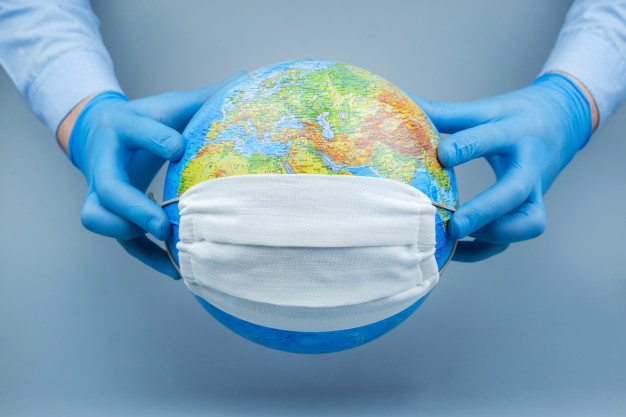
The long term implications of COVID: When it leaves, what remains?

Mafazah Sharafuddin
June 1, 2021

postcovid.jpg

The pandemic has swept the world in a panic. It has come with the pervading sense of fear and loss, and completely unexpectedly to the common man. Although environmentalists have been predicting a rise in pandemics as a consequence of the same things that caused climate change, to the layman, it arrived out of the blue. 

The pandemic has taken away several things that make us social beings. Physical touch, gatherings, dining together etc. have all gone from being something one does for fun to something that could be potentially fatal.

It does not come as a shock that people all of the globe are suffering during the pandemic. While they are unsure of how much longer this will go on, the spread of the vaccines make people hopeful that it will soon come to an end. 

When the pandemic ends, what will it leave behind?

The anxiety of being

With fatal illness and massive death-tolls, anxiety comes as an almost inevitable companion. The compulsive act of using hand sanitizer after touching anything in public is slowly becoming second nature. 

A US study comparing the number of adults experiencing symptoms of an anxiety or depressive disorder saw the number raise from 11% in January 2019 to 41.1% in January 2021. It also showed an increase in suicidal ideation and substance use. 

Another unfortunate consequence of the pandemic is a possible rise in agoraphobia. Agoraphobia is a specific anxiety disorder. It is defined by a fear of being in part of a public environment or activity from which leaving or escaping is perceived to be difficult. Due to the frequent and persistent lockdowns and the association of danger with being in public spaces, the slip towards agoraphobia is understandable. 

An integral part of the human experience is physical touch. While some may be isolating with family, there are many people all over the world who are living along in the middle of the pandemic. The pandemic may also lead to an increase in ‘touch-starvation’ as the stress relieving hormone, oxytocin, is released through touch.

The prevalence of mental illness after a calamity is not a new phenomenon. The aftermath of war and natural disasters have left people suffering in its wake. This is, however, a calamity of global magnitude. Like the survivors of war, those who come out of this pandemic alive are going to carry it with them for the rest of their lives.

A state of grief 

Aptly dubbed the ‘grief pandemic’ by sociologist Holly Prigerson, the Coronavirus pandemic has taken away many loved ones. Children are left orphaned and parents mourn their children. The elderly are kept under keen watch by their loved ones in fear that they, too, will be taken away. 

Grief and mourning have become an everyday thing since the pandemic showed its full strength. With entire families being wiped out, and crematoriums unable to process the bodies at the rate at which they arrive, we as a society are experiencing death in high definition. 

The processing of is complex. It is made more complex by the situation we are in. the constant anxiety and fear of safety are severely detrimental to the processing of grief. There is no room to process grief in a situation where death is continuous. As of now, we are in a persistent state of grief.

Money matters 

The economic implications of the pandemic have been spoken about often at a global scale. Small businesses have shut down. Daily wage laborers struggle to find jobs with the lockdowns in place. Several people who, before 2020, believed they were secure in their jobs, have been unexpectedly dismissed. 

Survival in the middle of a pandemic, even without getting infected, with no incoming money is precarious. People are dependent of the goodwill of social workers and people who give out food, donations, etc. People are being rendered homeless because they are unable to pay rent. The inability to properly socially distance or isolate, however, increases the risk of infection.

If survival for the poor without getting infected is precarious, surviving COVID is a miracle. They have to combat steep prices for treatment, trouble with transportation, being unable to afford medication and several other issues. 

Not only is getting infected and showing symptoms a death sentence for so many, it comes with the fear that it will bankrupt their family. 

The state the economy is in right now has no quick fixes. There are small scale industries that have suffered in a way they may not recover from. An alarming percentage of medium and small enterprises have faced permanent closure. The recovery of the economy is going to a long, arduous process. 

On a positive note

While the pandemic has been a cause of suffering for people everywhere, the long term social implications of it are not all bad. 

For environmentalists, the pandemic has been proof that there can be no real solution to climate change until bog corporations stop contributing to it. With the common people staying at home most of the time, hugely reducing the amount of fuel used by the public, there has been no huge change in the state of the world. 

While it may always be the socially responsible option to continue to use environmentally friendly options, the onus truly does fall on large corporations to limit their damage before it is unsalvageable. 

It addition to this, curb-side pickups, online learning, work from home etc. have shown that it is possible to do these actions remotely. This opens up a whole realm of possibilities for people with disabilities not only in employment and education, but day to day activities.

When accessibility has been made possible because there is no other way, employers and management of educational institutes can no longer give excuses for their lack of accessibility for disabled employees or students. 

The pandemic may leave behind a more accessible world. 

Comments

Ramesh Mishra
 - 
Wednesday, 2 Jun 2021

COVID-19, PANDEMIC
Has put the world behind at least 25 years but India, Pakistan, Bangla Desh, and Nepal 50 years. During the coming 50 years, India would face massive internal conflicts dividing the Provinces. India lacks skilled leaders.

Ramesh Mishra
Victoria BC CANADA

Add new comment

  • Coastaldigest.com reserves the right to delete or block any comments.
  • Coastaldigset.com is not responsible for its readers’ comments.
  • Comments that are abusive, incendiary or irrelevant are strictly prohibited.
  • Please use a genuine email ID and provide your name to avoid reject.
News Network
December 15,2025

Mangaluru, Dec 15: Air India Express has announced that it will resume direct flight services between Mangaluru and Muscat from March 2026, restoring an important international air link for passengers from the coastal region.

Airport authorities said the service will operate twice a week—on Sundays and Tuesdays—from March 1. The initial flights are scheduled on March 3, 8 and 10, followed by March 15 and 17, with the same operating pattern to continue thereafter. The flight duration is approximately three hours and 25 minutes.

The Mangaluru–Muscat route was earlier operated under the 2025 summer schedule, with services beginning on July 14. At that time, Air India Express had operated four flights a week before suspending the service.

Officials said the summer schedule will come into effect from March 29, after which changes in flight timings and departure schedules from Mangaluru are expected. Passengers have been advised to check the latest schedules while planning their travel.

The resumption of direct flights to Muscat is expected to significantly benefit expatriates, business travellers and others, further strengthening Mangaluru’s air connectivity with the Gulf region.

Comments

Add new comment

  • Coastaldigest.com reserves the right to delete or block any comments.
  • Coastaldigset.com is not responsible for its readers’ comments.
  • Comments that are abusive, incendiary or irrelevant are strictly prohibited.
  • Please use a genuine email ID and provide your name to avoid reject.
News Network
December 5,2025

Mangaluru: In a significant step to curb online hate and intimidation, Mangaluru City Police have registered a suo motu case against multiple Instagram accounts accused of circulating alleged provocative and threatening content.

While monitoring social media activity on Tuesday, Kankanady Town PSI Anitha Nikkam identified the Instagram handle ‘team_targetttt_900’ for posting a hate message alongside images of lethal weapons. Another account, ‘team_nagara_900’, allegedly shared a threatening post targeting activist Bharath Kumdelu, tagging additional pages such as KARAVALI-OFFICIAL.

Several other accounts — including ‘immu_bhai.fan’, ‘target_boy_900’, ‘kings_of_manglore’, ‘team_target_boys.900’, ‘arshad_mangalore’, ‘target_ka19_ullal’, ‘team_target__’, ‘troll_tigersz_900’, ‘tr_group_900’, and ‘team_target_900’ — are also under scrutiny for spreading similar inflammatory material, police said.

Authorities have urged citizens, especially young social media users, to report suspicious pages and avoid engaging with groups that glorify violence or threaten individuals. Online hate can quickly escalate into real-world harm, and police stress that sharing or promoting such content can attract legal consequences.

Comments

Add new comment

  • Coastaldigest.com reserves the right to delete or block any comments.
  • Coastaldigset.com is not responsible for its readers’ comments.
  • Comments that are abusive, incendiary or irrelevant are strictly prohibited.
  • Please use a genuine email ID and provide your name to avoid reject.
News Network
December 13,2025

New Delhi: School-going children are picking up drug and smoking habits and engaging in consumption of alcohol, with the average age of introduction to such harmful substances found to be around 13 years, suggesting a need for earlier interventions as early as primary school, a multi-city survey by AIIMS-Delhi said.

The findings also showed substance use increased in higher grades, with grade XI/XII students two times more likely to report use of substances when compared with grade VIII students. This emphasised the importance of continued prevention and intervention through middle and high school.

The study led by Dr Anju Dhawan of AIIMS's National Drug Dependence Treatment Centre, published in the National Medical Journal of India this month, looks at adolescent substance use across diverse regions.

The survey included 5,920 students from classes 8, 9, 11 and 12 in urban government, private and rural schools across 10 cities -- Bengaluru, Chandigarh, Delhi, Dibrugarh, Hyderabad, Imphal, Jammu, Lucknow, Mumbai, and Ranchi. The data were collected between May 2018 and June 2019.

The average age of initiation for any substance was 12.9 (2.8) years. It was lowest for inhalants (11.3 years) followed by heroin (12.3 years) and opioid pharmaceuticals (without prescription; 12.5 years).

Overall, 15.1 per cent of participants reported lifetime use, 10.3 per cent reported past year use, and 7.2 per cent reported use in the past month of any substance, the study found.

The most common substances used in the past year, after tobacco (4 per cent) and alcohol (3.8 per cent), were opioids (2.8 per cent), followed by cannabis (2 per cent) and inhalants (1.9 per cent). Use of non-prescribed pharmaceutical opioids was most common among opioid users (90.2 per cent).

On being asked, 'Do you think this substance is easily available for a person of your age' separately for each substance category, nearly half the students (46.3 per cent) endorsed that tobacco products and more than one-third of the students (36.5 per cent) agreed that a person of their age can easily procure alcohol products.

Similarly, for Bhang (21.9 per cent), ganja/charas (16.1 per cent), inhalants (15.2 per cent), sedatives (13.7 per cent), opium and heroin (10 per cent each), the students endorsed that these can be easily procured.

About 95 per cent of the children, irrespective of their grade, agreed with the statement that 'drug use is harmful'.

The rates of substance use (any) among boys were significantly higher than those of girls for substance use (ever), use in the past year and use in the past 30 days. Compared to grade VIII students, grade IX students were more likely, and grade XI/XII students were twice as likely to have used any substance (ever).

The likelihood of past-year use of any substance was also higher for grade IX students and for grade XI/XII students as compared to grade VIII students.

About 40 per cent of students mentioned that they had a family member who used tobacco or alcohol each. The use of cannabis (any product) and opioid (any product) by a family member was reported by 8.2 per cent and 3.9 per cent of students, respectively, while the use of other substances, such as inhalants/sedatives by family was 2-3 per cent, the study found.

A relatively smaller percentage of students reported use of tobacco or alcohol among peers as compared to among family members, while a higher percentage reported inhalants, sedatives, cannabis or opioid use among peers.

Children using substances (past year) compared to non-users reported significantly higher any substance use by their family members and peers.

There were 25.7 per cent students who replied 'yes' to the question 'conflicts/fights often occur in your family'. Most students also replied affirmatively to 'family members are aware of how their time is being spent' and 'damily members are aware of with whom they spend their time'.

Comments

Add new comment

  • Coastaldigest.com reserves the right to delete or block any comments.
  • Coastaldigset.com is not responsible for its readers’ comments.
  • Comments that are abusive, incendiary or irrelevant are strictly prohibited.
  • Please use a genuine email ID and provide your name to avoid reject.