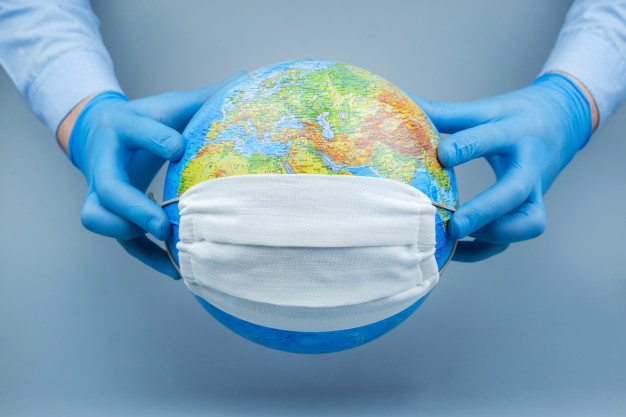
The long term implications of COVID: When it leaves, what remains?

Mafazah Sharafuddin
June 1, 2021

postcovid.jpg

The pandemic has swept the world in a panic. It has come with the pervading sense of fear and loss, and completely unexpectedly to the common man. Although environmentalists have been predicting a rise in pandemics as a consequence of the same things that caused climate change, to the layman, it arrived out of the blue. 

The pandemic has taken away several things that make us social beings. Physical touch, gatherings, dining together etc. have all gone from being something one does for fun to something that could be potentially fatal.

It does not come as a shock that people all of the globe are suffering during the pandemic. While they are unsure of how much longer this will go on, the spread of the vaccines make people hopeful that it will soon come to an end. 

When the pandemic ends, what will it leave behind?

The anxiety of being

With fatal illness and massive death-tolls, anxiety comes as an almost inevitable companion. The compulsive act of using hand sanitizer after touching anything in public is slowly becoming second nature. 

A US study comparing the number of adults experiencing symptoms of an anxiety or depressive disorder saw the number raise from 11% in January 2019 to 41.1% in January 2021. It also showed an increase in suicidal ideation and substance use. 

Another unfortunate consequence of the pandemic is a possible rise in agoraphobia. Agoraphobia is a specific anxiety disorder. It is defined by a fear of being in part of a public environment or activity from which leaving or escaping is perceived to be difficult. Due to the frequent and persistent lockdowns and the association of danger with being in public spaces, the slip towards agoraphobia is understandable. 

An integral part of the human experience is physical touch. While some may be isolating with family, there are many people all over the world who are living along in the middle of the pandemic. The pandemic may also lead to an increase in ‘touch-starvation’ as the stress relieving hormone, oxytocin, is released through touch.

The prevalence of mental illness after a calamity is not a new phenomenon. The aftermath of war and natural disasters have left people suffering in its wake. This is, however, a calamity of global magnitude. Like the survivors of war, those who come out of this pandemic alive are going to carry it with them for the rest of their lives.

A state of grief 

Aptly dubbed the ‘grief pandemic’ by sociologist Holly Prigerson, the Coronavirus pandemic has taken away many loved ones. Children are left orphaned and parents mourn their children. The elderly are kept under keen watch by their loved ones in fear that they, too, will be taken away. 

Grief and mourning have become an everyday thing since the pandemic showed its full strength. With entire families being wiped out, and crematoriums unable to process the bodies at the rate at which they arrive, we as a society are experiencing death in high definition. 

The processing of is complex. It is made more complex by the situation we are in. the constant anxiety and fear of safety are severely detrimental to the processing of grief. There is no room to process grief in a situation where death is continuous. As of now, we are in a persistent state of grief.

Money matters 

The economic implications of the pandemic have been spoken about often at a global scale. Small businesses have shut down. Daily wage laborers struggle to find jobs with the lockdowns in place. Several people who, before 2020, believed they were secure in their jobs, have been unexpectedly dismissed. 

Survival in the middle of a pandemic, even without getting infected, with no incoming money is precarious. People are dependent of the goodwill of social workers and people who give out food, donations, etc. People are being rendered homeless because they are unable to pay rent. The inability to properly socially distance or isolate, however, increases the risk of infection.

If survival for the poor without getting infected is precarious, surviving COVID is a miracle. They have to combat steep prices for treatment, trouble with transportation, being unable to afford medication and several other issues. 

Not only is getting infected and showing symptoms a death sentence for so many, it comes with the fear that it will bankrupt their family. 

The state the economy is in right now has no quick fixes. There are small scale industries that have suffered in a way they may not recover from. An alarming percentage of medium and small enterprises have faced permanent closure. The recovery of the economy is going to a long, arduous process. 

On a positive note

While the pandemic has been a cause of suffering for people everywhere, the long term social implications of it are not all bad. 

For environmentalists, the pandemic has been proof that there can be no real solution to climate change until bog corporations stop contributing to it. With the common people staying at home most of the time, hugely reducing the amount of fuel used by the public, there has been no huge change in the state of the world. 

While it may always be the socially responsible option to continue to use environmentally friendly options, the onus truly does fall on large corporations to limit their damage before it is unsalvageable. 

It addition to this, curb-side pickups, online learning, work from home etc. have shown that it is possible to do these actions remotely. This opens up a whole realm of possibilities for people with disabilities not only in employment and education, but day to day activities.

When accessibility has been made possible because there is no other way, employers and management of educational institutes can no longer give excuses for their lack of accessibility for disabled employees or students. 

The pandemic may leave behind a more accessible world. 

Comments

Ramesh Mishra
 - 
Wednesday, 2 Jun 2021

COVID-19, PANDEMIC
Has put the world behind at least 25 years but India, Pakistan, Bangla Desh, and Nepal 50 years. During the coming 50 years, India would face massive internal conflicts dividing the Provinces. India lacks skilled leaders.

Ramesh Mishra
Victoria BC CANADA

Add new comment

  • Coastaldigest.com reserves the right to delete or block any comments.
  • Coastaldigset.com is not responsible for its readers’ comments.
  • Comments that are abusive, incendiary or irrelevant are strictly prohibited.
  • Please use a genuine email ID and provide your name to avoid reject.
coastaldigest.com news network
November 29,2025

health1.jpg

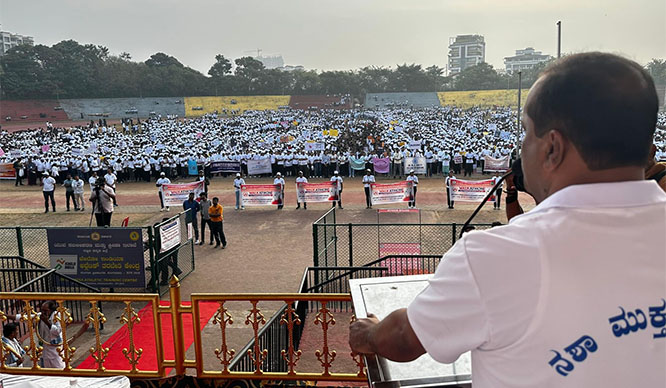
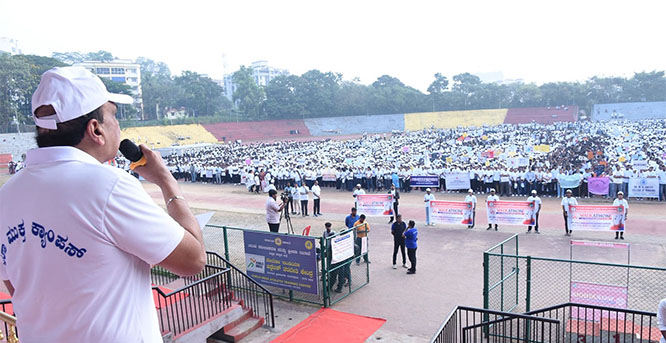
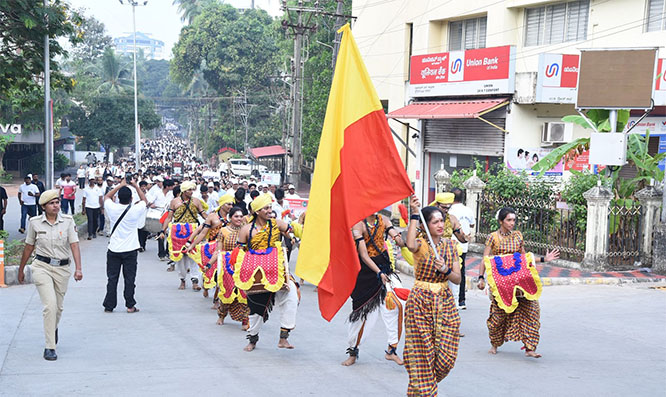
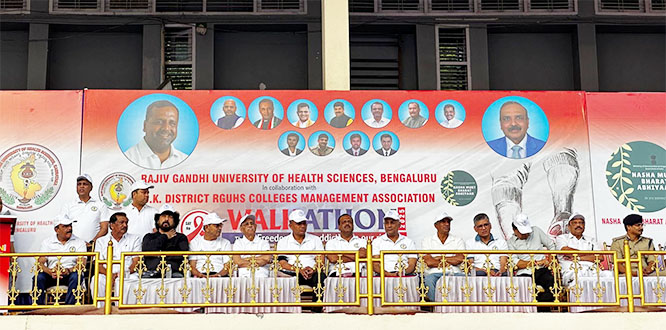
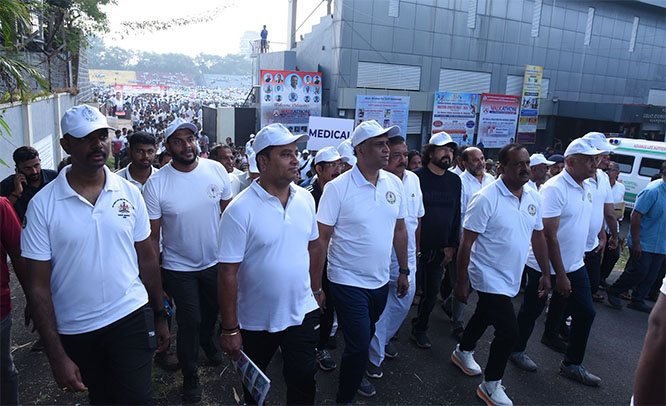
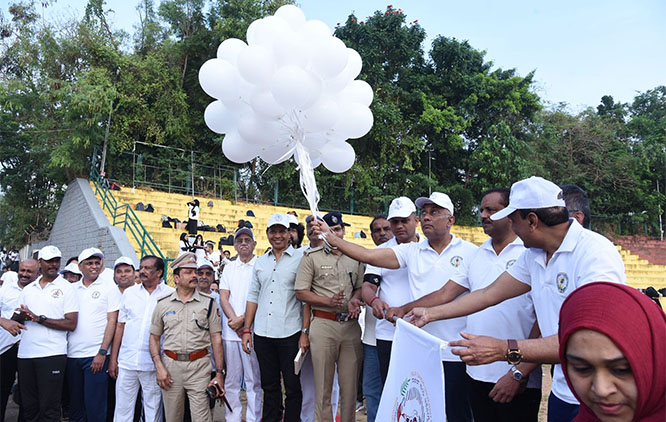
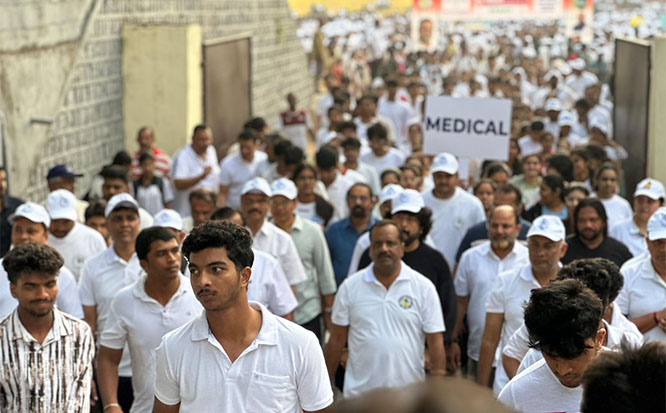
Mangaluru, Nov 29: Around 12,500 healthcare students from Medical, Dental, AYUSH, Pharmacy, Nursing, Physiotherapy and Allied Health Sciences colleges of Dakshina Kannada, affiliated to Rajiv Gandhi University of Health Sciences (RGUHS), took part in a massive walkathon to promote awareness on Organ Donation and Nasha Mukth Bharat.

The inaugural ceremony was held at Mangala Stadium. Dr Bhagavan B C, Hon’ble Vice-Chancellor of RGUHS, delivered the welcome address. The walkathon was flagged off by Shri U T Khader, Hon’ble Speaker of the Karnataka Legislative Assembly, and presided over by Shri Dinesh Gundu Rao, Hon’ble Minister for Health, Family Welfare and Dakshina Kannada District In-charge. Dakshina Kannada MP Shri Brijesh Chowta also addressed the students.

Music director Guru Kiran, MLA Dr Bharat Shetty (Mangalore North), Police Commissioner Shri Sudheer Kumar Reddy, Shri Manjunath Bhandary and Shri Harish Kumar were among those present.

Institution heads including Dr Haji U K Monu (Kanachur Colleges), Dr Shantharam Shetty (Tejaswini College), Dr Bhaskar Shetty (City Group of Colleges), Mr Abdul Rahiman (Kanachur Institute of Medical Sciences), and the District Health Officer, Mangalore, also participated.

The vote of thanks was delivered by Prof U T Ifthikar Fareed, Syndicate Member, RGUHS.

The event was organised by Dr U T Ifthikar Ali and Dr Shiva Sharan (Syndicate Members), Prof Vaishali (Senate Member), Prof Mohammad Suhail (Chairman, BOS Physiotherapy), Dr Sharan Shetty (Former Senate Member), along with principals and faculty of various colleges.

Students marched from Mangala Stadium to Karavali Grounds via MCC and Lalbagh signal. The event set a record as one of the largest gatherings of healthcare students for a social cause in the RGUHS Dakshina Kannada Zone.

health7.jpg

health6.jpg

health5.jpg

health4.jpg

health3.jpg

health2.jpg

Comments

Add new comment

  • Coastaldigest.com reserves the right to delete or block any comments.
  • Coastaldigset.com is not responsible for its readers’ comments.
  • Comments that are abusive, incendiary or irrelevant are strictly prohibited.
  • Please use a genuine email ID and provide your name to avoid reject.
News Network
December 2,2025

Mangaluru, Dec 2: Mangaluru International Airport responded to a medical emergency late on Monday night. Air India Express flight IX 522, travelling from Riyadh to Thiruvananthapuram, was diverted to Mangaluru Airport after a passenger in his late 30s experienced a medical emergency on board.

The Airport’s Operations Control Centre received an alert regarding the passenger’s health condition. The airport activated its emergency response protocol, mobilising the airport medical team and coordinating with stakeholders including CISF, immigration, and customs. 

Upon landing, airport medical personnel attended to the passenger, assessed his condition, and arranged to shift him to a local tertiary-care hospital for further treatment. The passenger’s relatives accompanied the passenger, who incidentally received necessary medical care on board, which helped stabilise the situation.

Following the handling of the emergency, the flight departed for Thiruvananthapuram at 2:05 am on Tuesday.

"We appreciate the cooperation of all parties involved, and this incident reaffirms our ongoing commitment to prioritising passenger safety and readiness to respond to unforeseen emergencies with professionalism and care," the Airport spokesperson said. 

Comments

Add new comment

  • Coastaldigest.com reserves the right to delete or block any comments.
  • Coastaldigset.com is not responsible for its readers’ comments.
  • Comments that are abusive, incendiary or irrelevant are strictly prohibited.
  • Please use a genuine email ID and provide your name to avoid reject.
P A Hameed Padubidri
November 26,2025

CD.jpg

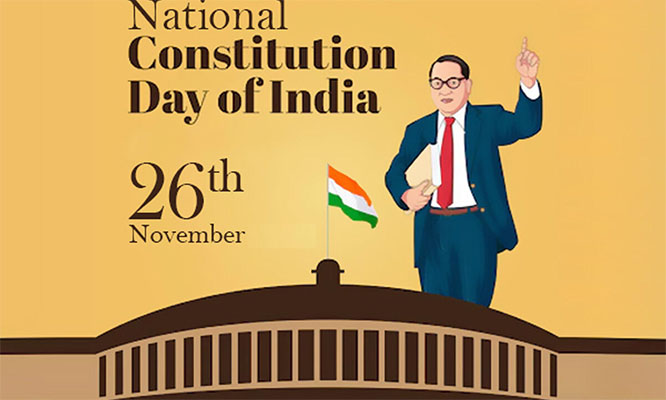
Constitution Day, also known as Samvidhan Divas, is observed every year on November 26 to honor the adoption of the Constitution of India and to recognize the visionary effort that shaped the world’s largest democracy.

Historical Background

It’s on November 26, 1949, the Constituent Assembly of India formally adopted the Constitution.This date is commemorated to acknowledge the completion of nearly three years of drafting, debate, and refinement.

On January 26, 1950, the Constitution came into force, marking India’s transition from a dominion to a sovereign republic.

The date 26 January was chosen to honor the “Purna Swaraj” declaration made in 1930 that marked the relentless efforts & sacrifices of the many. 

Why Constitution Day is Celebrated

* To honor & remember the framers of the Constitution, especially Dr. B. R. Ambedkar, the Chairman of the Drafting Committee, & many others. 

* To remind the citizens of the values, responsibilities, and rights enshrined in the Constitution.

* To promote constitutional values & literacy among students, institutions, and the general public.

* To reaffirm the nation’s commitment to justice, equality, liberty, fraternity and secular values. 

Vision and Significance of the Constitution

It establishes the fundamental political and legal framework for the nation.

Defines the structure, powers and functions of:
    •    The Executive
    •    The Legislature
    •    The Judiciary
    •    Guarantees a comprehensive set of Fundamental Rights, including:

-Equality before law
-Freedom of speech & expression
-Protection of life and personal liberty
-Freedom of religion
-Embeds Directive Principles of State Policy, guiding governance toward social justice and welfare.
-Introduces Fundamental Duties to ensure civic responsibility among citizens.

Key Features Celebrated on Constitution Day

-The Indian constitution is considered one of the longest written constitutions of the world. It’s systematically drafted considering almost all aspects that properly fits to the country. 

-Blend of multiple global constitutional principles while staying rooted in Indian values and realities.

-Framework that balances Federalism, Secularism, Democracy and Rule of Law. This makes everyone-from President to common man-below the law & are equal in the sight of law. 

-Another feature is that it’s based on built-in mechanisms for amendments, ensuring the Constitution grows with changing needs.

Message of the Day

The core ethos of this  Constitution Day is not merely about looking back at history-it’s a reminder of the continuous duty to protect democratic values, respect diversity and uphold the principles that define India as a sovereign, socialist, secular and democratic republic.

Happy Constitution Day to all my compatriots

Comments

Add new comment

  • Coastaldigest.com reserves the right to delete or block any comments.
  • Coastaldigset.com is not responsible for its readers’ comments.
  • Comments that are abusive, incendiary or irrelevant are strictly prohibited.
  • Please use a genuine email ID and provide your name to avoid reject.