



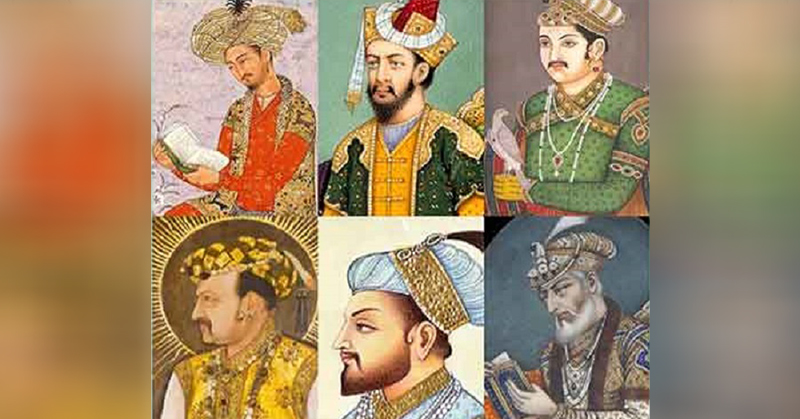
When James Mill periodized the Indian History into Hindu Period, Muslim Period and British period, he not only gave the tool to British to pursue their policy of ‘divide and rule’, he also gave the potent weapon to the future pursuers of communal politics to intensify the divisive policies in the future. The Muslim communalists later claimed that India was ruled by Muslims and Hindu communalists claimed that Muslims are foreigners and this has been the land of Hindus from times immemorial.
One was reminded of the deep penetration of this communal view of History when, Yogi Aditaynath, the CM of Uttar Pradesh announced that the upcoming Mughal Museum in Agra to be recast as Chatrapati Shivaji Maharaj Museum. As per him such a historical museum is a reflection of subservient mentality and the symbol of ‘mentality of slavery’. The Mughal Museum’s foundation was laid by Akhilesh Yadav, the earlier Chief Minister of UP. The Museum was to come up near TajMahal in Agra and was to show the cultural aspects and armaments of Mughal kings. The aim was to give a boost to tourism industry in UP.
Same Taj is downgraded now by the Hindu communalists. One P.N.Oak has been trying to propagate that it was Tajomahlaya, Shiv Tample, which was converted into Mausoleum by Shahjahan. The fact as recorded by Tavernier, a French Jeweller his travelogues tell us that Shahjahan built it in memory of his wife Mumtaj Mahal. The same is also inferred from the account books of Shahjahan’s Court, which give a details break of regular expenses for the construction of this tomb. The land was acquired from Raja Jaisingh with due compensation.
As Yogi came to power he omitted Taj from the places of importance in UP. His recent utterances that remembering Mughals is symbol of slave mentality are in tune with the communal ideology which regards Islam as alien religion and Muslims as foreigners. As such we see that Indian History has been looked up in three particular ways. One was the Gandhi-Nehru, Indian nationalist interpretation where India is a place of rich diversity. The Muslim kings who ruled parts of India ruled here and lived here as the part of the land. Most of the Muslim kings respected the diverse religious tradition prevailing here.
Mahatma Gandhi points out, “the Hindus flourished under Moslem sovereigns and Moslems under the Hindu. Each party recognized that mutual fighting was suicidal and that neither party would abandon its religion by force of arms. Both parties, therefore, decided to live in peace. With the English advent quarrels recommenced.”
Similarly Jawaharlal Nehru in his book Discovery of India shows the thick interaction between Hindus and Muslims leading to what he famously termed as ‘Ganga Jamani Tehjeeb’, the beautiful portrayal of this is seen in the serial Shyam Benegals’ ‘Bharat Ek Khoj’.
Does this period, in which some parts of the country were ruled by Muslim Kings, (not only Mughals, there were the ones’ from others dynasties also Ghulam, Khaljis, Gazanavid’s. and in South Bahamanis, Haider and Tipu) are a period of slavery? While some kings like Mahmud Gazanavi, Mohammad Ghori, Ghengis Khan did plunder for wealth, the kings who ruled here became the part of this land. They presided over a system of exploitation, like any other king, in which the producer was the farmer. This was true of any king, anywhere for that matter.
This period in no way can be called a period of slavery of the country. Country’s slavery begins with the British, who ruled here and plundered our wealth and implemented the policy of super exploitation of peasantry. Shashi Tharoor has done a good job (An Era of Darkness) in showing as to how India contributed nearly 23% of global GDP and British brought it down to mere 3% by the time they left. On the plus side of British rule was that while social structure did not change in pre British period, during British rule social changes towards democratic society did start taking place with the introduction of railways, communication, modern education, modern Judiciary etc.
The communalists, Muslim and Hindus take off from the British in interpreting the History as a fight between Hindus and Muslims, and twisting it in a way where their own selves are shown to be the real owners of the land and also victims of the other community. The British plunder and impositions are hidden under the carpet in their scheme of understanding.
At yet another level Ambedkar sees the Indian History primarily as the clash between the values of equality of Buddhism against the caste and gender hierarchy inherent in Brahmanism.
All Hindus kings were not great and all Muslims kings were not villains. Akbar and Dara Shukoh stand out as upholders of diversity, picking up from other religions, while Shivaji ensured that the taxation on poor peasants is curtailed.
As such the real heroes of Independent India are those who contributed to building of Modern India. The three major streams of this are Gandhi, who united the country in the bond of anti colonial struggle, Ambedkar who endeavoured for social equality and democratic rights, and Bhagat Singh who stood for for the cause of poor while giving fighting against British rule in India. It is these values which should inspire the modern India and not the values of Kings, which are essentially based on social inequality and taxation of peasants. All the positive developments strengthening pluralism and diversity with equality are the principles and values we need to look up to in times to come.
Mughal museum was just a small attempt to uphold the cultural background of our lived past and in no way symbol of subservience or of slave mentality. Unfortunately we are living in times where full attempts are going on to erase the symbols; like this upcoming Museum along with changing the names of cities (Allahabad, Faiazabad, Mughal Sarai), the Muslim contribution to Indian culture.

Comments
Add new comment