



Was Mughal Rule really the period of India’s Slavery?

Ram Puniyani
September 30, 2020

mughal-rule.jpg

When James Mill periodized the Indian History into Hindu Period, Muslim Period and British period, he not only gave the tool to British to pursue their policy of ‘divide and rule’, he also gave the potent weapon to the future pursuers of communal politics to intensify the divisive policies in the future. The Muslim communalists later claimed that India was ruled by Muslims and Hindu communalists claimed that Muslims are foreigners and this has been the land of Hindus from times immemorial.

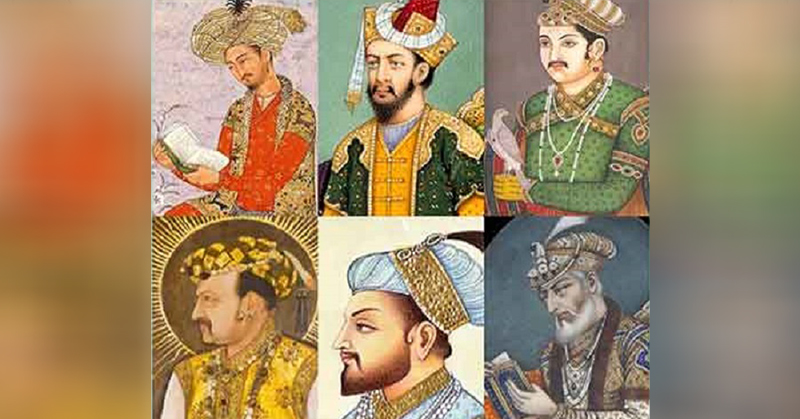
One was reminded of the deep penetration of this communal view of History when, Yogi Aditaynath, the CM of Uttar Pradesh announced that the upcoming Mughal Museum in Agra to be recast as Chatrapati Shivaji Maharaj Museum. As per him such a historical museum is a reflection of subservient mentality and the symbol of ‘mentality of slavery’. The Mughal Museum’s foundation was laid by Akhilesh Yadav, the earlier Chief Minister of UP. The Museum was to come up near TajMahal in Agra and was to show the cultural aspects and armaments of Mughal kings. The aim was to give a boost to tourism industry in UP.

Same Taj is downgraded now by the Hindu communalists. One P.N.Oak has been trying to propagate that it was Tajomahlaya, Shiv Tample, which was converted into Mausoleum by Shahjahan. The fact as recorded by Tavernier, a French Jeweller his travelogues tell us that Shahjahan built it in memory of his wife Mumtaj Mahal. The same is also inferred from the account books of Shahjahan’s Court, which give a details break of regular expenses for the construction of this tomb. The land was acquired from Raja Jaisingh with due compensation.

As Yogi came to power he omitted Taj from the places of importance in UP. His recent utterances that remembering Mughals is symbol of slave mentality are in tune with the communal ideology which regards Islam as alien religion and Muslims as foreigners. As such we see that Indian History has been looked up in three particular ways. One was the Gandhi-Nehru, Indian nationalist interpretation where India is a place of rich diversity. The Muslim kings who ruled parts of India ruled here and lived here as the part of the land. Most of the Muslim kings respected the diverse religious tradition prevailing here.

Mahatma Gandhi points out, “the Hindus flourished under Moslem sovereigns and Moslems under the Hindu. Each party recognized that mutual fighting was suicidal and that neither party would abandon its religion by force of arms. Both parties, therefore, decided to live in peace. With the English advent quarrels recommenced.”

Similarly Jawaharlal Nehru in his book Discovery of India shows the thick interaction between Hindus and Muslims leading to what he famously termed as ‘Ganga Jamani Tehjeeb’, the beautiful portrayal of this is seen in the serial Shyam Benegals’ ‘Bharat Ek Khoj’.

Does this period, in which some parts of the country were ruled by Muslim Kings, (not only Mughals, there were the ones’ from others dynasties also Ghulam, Khaljis, Gazanavid’s. and in South Bahamanis, Haider and Tipu) are a period of slavery? While some kings like Mahmud Gazanavi, Mohammad Ghori, Ghengis Khan did plunder for wealth, the kings who ruled here became the part of this land. They presided over a system of exploitation, like any other king, in which the producer was the farmer. This was true of any king, anywhere for that matter.

This period in no way can be called a period of slavery of the country. Country’s slavery begins with the British, who ruled here and plundered our wealth and implemented the policy of super exploitation of peasantry. Shashi Tharoor has done a good job (An Era of Darkness) in showing as to how India contributed nearly 23% of global GDP and British brought it down to mere 3% by the time they left. On the plus side of British rule was that while social structure did not change in pre British period, during British rule social changes towards democratic society did start taking place with the introduction of railways, communication, modern education, modern Judiciary etc.   

The communalists, Muslim and Hindus take off from the British in interpreting the History as a fight between Hindus and Muslims, and twisting it in a way where their own selves are shown to be the real owners of the land and also victims of the other community. The British plunder and impositions are hidden under the carpet in their scheme of understanding.

At yet another level Ambedkar sees the Indian History primarily as the clash between the values of equality of Buddhism against the caste and gender hierarchy inherent in Brahmanism.

All Hindus kings were not great and all Muslims kings were not villains. Akbar and Dara Shukoh stand out as upholders of diversity, picking up from other religions, while Shivaji ensured that the taxation on poor peasants is curtailed.

As such the real heroes of Independent India are those who contributed to building of Modern India. The three major streams of this are Gandhi, who united the country in the bond of anti colonial struggle, Ambedkar who endeavoured for social equality and democratic rights, and Bhagat Singh who stood for for the cause of poor while giving fighting against British rule in India. It is these values which should inspire the modern India and not the values of Kings, which are essentially based on social inequality and taxation of peasants. All the positive developments strengthening pluralism and diversity with equality are the principles and values we need to look up to in times to come.

Mughal museum was just a small attempt to uphold the cultural background of our lived past and in no way symbol of subservience or of slave mentality. Unfortunately we are living in times where full attempts are going on to erase the symbols; like this upcoming Museum along with changing the names of cities (Allahabad, Faiazabad, Mughal Sarai), the Muslim contribution to Indian culture.

Comments

Add new comment

  • Coastaldigest.com reserves the right to delete or block any comments.
  • Coastaldigset.com is not responsible for its readers’ comments.
  • Comments that are abusive, incendiary or irrelevant are strictly prohibited.
  • Please use a genuine email ID and provide your name to avoid reject.
News Network
November 30,2025

airportmetro.jpg

Udupi: The pontiffs of Sri Paryaya Puttige Mutt, the sacred seat of Jagadguru Shrimad Madhvacharya Moola Samsthanam, have submitted a proposal to the Prime Minister seeking comprehensive development for Udupi district. 

Proposal for International Airport

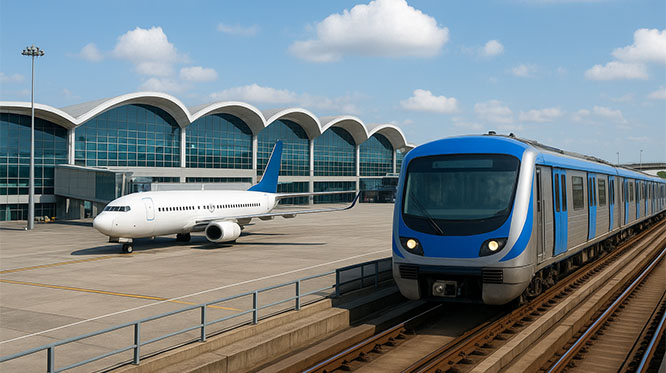
A key request is the establishment of an international airport. Highlighting that around 1,000 acres of land are available and suitable, the pontiffs noted that the existing Mangalore Airport provides limited international connectivity. They suggested the airport be developed under a Public-Private Partnership (PPP) or as a Greenfield Airport to boost trade, education, healthcare, and spiritual tourism.

Metro and Rapid Transit Connectivity

The proposal also calls for Metro Rail or Rapid Transit between Mangaluru and Udupi. The 55 km coastal stretch experiences heavy daily commuter traffic, causing congestion. The district administration is ready to prepare an initial project report for a Mass Rapid Transit corridor and requested inclusion under national urban mobility programmes to ensure safe, green, and time-efficient regional transport.

Port and Coastal Development

The pontiffs urged the development of an international-standard port with a cruise terminal along Udupi’s coast. They also requested fast-tracking of pending coastal tourism projects and revising Coastal Regulation Zone (CRZ) norms to encourage sustainable infrastructure and hospitality investment.

IT, AI and Technological Infrastructure

Support was sought for an IT and AI Innovation Park with incubation facilities under Digital India and Startup India initiatives. The proposal also emphasized the need for strengthened data security and cloud computing infrastructure to boost India’s technological independence.

Sports and Education Initiatives

The pontiffs requested national sports status for Kambala, along with financial and infrastructure support. They also sought the establishment of an AIIMS in Udupi, a new IIT campus, and approval for an IIM to promote higher education in the district.

Representation to the Prime Minister

Sri Sugunendra Tirtha Pontiff and Sri Sushrendra Tirtha Swamiji represented the pontiffs in submitting the comprehensive development proposal to the Prime Minister during his recent visit.

Comments

Add new comment

  • Coastaldigest.com reserves the right to delete or block any comments.
  • Coastaldigset.com is not responsible for its readers’ comments.
  • Comments that are abusive, incendiary or irrelevant are strictly prohibited.
  • Please use a genuine email ID and provide your name to avoid reject.
News Network
December 4,2025

Mangaluru: Chaos erupted at Mangaluru International Airport (MIA) after IndiGo flight 6E 5150, bound for Mumbai, was repeatedly delayed and ultimately cancelled, leaving around 100 passengers stranded overnight. The incident highlights the ongoing country-wide operational disruptions affecting the airline, largely due to the implementation of new Flight Duty Time Limitations (FDTL) norms for crew.

The flight was initially scheduled for 9:25 PM on Tuesday but was first postponed to 11:40 PM, then midnight, before being cancelled around 3:00 AM. Passengers expressed frustration over last-minute communication and the lack of clarity, with elderly and ailing travellers particularly affected. “Though the airline arranged food, there was no proper communication, leaving us confused,” said one family member.

An IndiGo executive at MIA cited the FDTL rules, designed to prevent pilot fatigue by limiting crew working hours, as the cause of the cancellation. While alternative arrangements, including hotel stays, were offered, about 100 passengers chose to remain at the airport, creating tension. A replacement flight was arranged but also faced delays due to the same constraints, finally departing for Mumbai around 1:45 PM on Wednesday. Passengers either flew, requested refunds, or postponed their travel.

The Mangaluru delay is part of a broader crisis for IndiGo. The airline has been forced to make “calibrated schedule adjustments”—a euphemism for widespread cancellations and delays—after stricter FDTL norms came into effect on November 1.

While an IndiGo spokesperson acknowledged unavoidable flight disruptions due to technology issues, operational requirements, and the updated crew rostering rules, the DGCA has intervened, summoning senior airline officials to explain the chaos and outline corrective measures.

The ripple effect has been felt across the country, with major hubs like Bengaluru and Mumbai reporting numerous cancellations. The Mangaluru incident underscores the systemic operational strain currently confronting India’s largest carrier, leaving passengers nationwide grappling with uncertainty and delays.

Comments

Add new comment

  • Coastaldigest.com reserves the right to delete or block any comments.
  • Coastaldigset.com is not responsible for its readers’ comments.
  • Comments that are abusive, incendiary or irrelevant are strictly prohibited.
  • Please use a genuine email ID and provide your name to avoid reject.
News Network
December 4,2025

indigoflight.jpg

Domestic carrier IndiGo has cancelled over 180 flights from three major airports — Mumbai, Delhi and Bengaluru — on Thursday, December 4, as the airline struggles to secure the required crew to operate its flights in the wake of new flight-duty and rest-period norms for pilots.

While the number of cancellations at Mumbai airport stands at 86 (41 arrivals and 45 departures) for the day, at Bengaluru, 73 flights have been cancelled, including 41 arrivals, according to a PTI report that quoted sources.

"IndiGo cancelled over 180 flights on Thursday at three airports-Mumbai, Delhi and Bengaluru," the source told the news agency.

Besides, it had cancelled as many as 33 flights at Delhi airport for Thursday, the source said, adding, "The number of cancellations is expected to be higher by the end of the day."

The Gurugram-based airline's On-Time Performance (OTP) nosedived to 19.7 per cent at six key airports — Delhi, Mumbai, Chennai, Kolkata, Bengaluru and Hyderabad — on December 3, as it struggled to get the required crew to operate its services, down from almost half of December 2, when it was 35 per cent.

"IndiGo has been facing acute crew shortage since the implementation of the second phase of the FDTL (Flight Duty Time Limitations) norms, leading to cancellations and huge delays in its operations across the airports," a source had told PTI on Wednesday.

Chaos continued at several major airports for the third day on Thursday because of the cancellations.

A spokesperson for the Kempegowda International Airport (KIA) in Bengaluru said that 73 IndiGo flights had been cancelled on Thursday.

At least 150 flights were cancelled and dozens of others delayed on Wednesday, airport sources said, leaving thousands of travellers stranded, according to news agency Reuters.

The Directorate General of Civil Aviation (DGCA) has said it is investigating IndiGo flight disruptions and has asked the airline to submit the reasons for the current situation, as well as its plans to reduce flight cancellations and delays.

It may be mentioned here that the pilots' body, Federation of Indian Pilots (FIP), has alleged that IndiGo, despite getting a two-year preparatory window before the full implementation of new flight duty and rest period norms for cockpit crew, "inexplicably" adopted a "hiring freeze".

The FIP said it has urged the safety regulator, the DGCA, not to approve airlines' seasonal flight schedules unless they have adequate staff to operate their services "safely and reliably" in accordance with the New Flight Duty Time Limitations (FDTL) norms.

In a letter to the DGCA late on Wednesday, the FIP urged the DGCA to consider re-evaluating and reallocating slots to other airlines, which have the capacity to operate them without disruption during the peak holiday and fog season if IndiGo continues to "fail in delivering on its commitments to passengers due to its own avoidable staffing shortages."

Comments

Add new comment

  • Coastaldigest.com reserves the right to delete or block any comments.
  • Coastaldigset.com is not responsible for its readers’ comments.
  • Comments that are abusive, incendiary or irrelevant are strictly prohibited.
  • Please use a genuine email ID and provide your name to avoid reject.