



View about emperor Aurangzeb as bigot has colonial roots: US historian

February 28, 2017

New Delhi, Feb 28: Historian Audrey Truschke refuses to buy the argument that Aurangzeb razed temples because he hated Hindus saying it has roots in colonial-era scholarship, where positing timeless Hindu-Muslim animosity embodied the British strategy of divide and conquer.
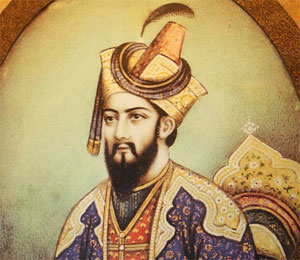
aurangzeb
In her new book, she also says that had Aurangzeb’s reign been 20 years shorter, he would have been judged differently by modern historians. Truschke, an assistant professor of South Asian history at Rutgers University in Newark and an avid follower of Mughal history, New Jersey, has now come up with a new biography on Aurangzeb.

"Aurangzeb: The Man and The Myth", published by Penguin Random House, takes a fresh look at the controversial Mughal emperor. According to Truschke, Hindu and Jain temples dotting the landscape of Aurangzeb's kingdom were entitled to Mughal state protection, and he generally endeavoured to ensure their well-being.

"By the same token, from a Mughal perspective, that goodwill could be revoked when specific temples or their associates acted against imperial interests. Accordingly, Emperor Aurangzeb authorised targeted temple destructions and desecrations throughout his rule," she claims.

"Many modern people view Aurangzeb's orders to harm specific temples as symptomatic of a larger vendetta against Hindus. Such views have roots in colonial-era scholarship, where positing timeless Hindu-Muslim animosity embodied the British strategy of divide and conquer," she writes.

She says there are, however, numerous gaping holes in the proposition that Aurangzeb razed temples because he hated Hindus.

"Most glaringly, Aurangzeb counted thousands of Hindu temples within his domains and yet destroyed, at most, a few dozen. This incongruity makes little sense if we cling to a vision of Aurangzeb as a cartoon bigot driven by a single-minded agenda of ridding India of Hindu places of worship.

"A historically legitimate view of Aurangzeb must explain why he protected Hindu temples more often than he demolished them." Truschke argues that Aurangzeb followed Islamic law in granting protection to non-Muslim religious leaders and institutions.

"Indo-Muslim rulers had counted Hindus as dhimmis, a protected class under Islamic law, since the eighth century, and Hindus were thus entitled to certain rights and state defences.

"Yet, Aurangzeb went beyond the requirements of Islamic law in his conduct towards Hindu and Jain religious communities. Instead, for Aurangzeb, protecting and, at times, razing temples served the cause of ensuring justice for all throughout the Mughal Empire."

Truschke claims state interests constrained religious freedom in Mughal India, and Aurangzeb did not hesitate to strike hard against religious institutions and leaders that he deemed seditious or immoral.

"But in the absence of such concerns, Aurangzeb's vision of himself as an even-handed ruler of all Indians prompted him to extend state security to temples."

She says Aurangzeb had 49 years to make good on his princely promise of cultivating religious tolerance in the Mughal Empire, and he got off to a strong start.

"In one of his early acts as emperor, Aurangzeb issued an imperial order (farman) to local Mughal officials at Benares that directed them to halt any interference in the affairs of local temples."

Truschke claims that political events incited Aurangzeb to initiate assaults on certain Hindu temples. She also argues that if Aurangzeb's reign had been 20 years shorter, closer to that of Jahangir (who ruled for 22 years) or Shah Jahan (who ruled for 30 years), modern historians would judge him rather differently.

"But Aurangzeb's later decades of fettering his sons, depending on an increasingly bloated administration, and undertaking ill-advised warring are a hefty part of his tangled legacy. Thus, we are left with a mixed assessment of a complex man and monarch who was plagued by an unbridgeable gap between his lofty ambitions and the realities of Mughal India," she writes.


Comments

suresh
 - 
Wednesday, 1 Mar 2017

#4,AHMED K.C. - HINDUISM THRIVED FROM AFGANISTHAN TO BURMA,
Its the effect of Muslim rulers today Afganisthan, Pakistan, Bangladesh, have 100% muslim population. And how rest of India hinduism survived was becoz of Rulers like Pritviraj Chauhan, Maharana pratap, Chatrapati Shivaji maharaj, and so on.

Ahmed K.C.
 - 
Wednesday, 1 Mar 2017

Muslims ruled India for 700 years. If there was atrocities against Hindus and forced conversion there would not have been only 24% Muslims at the time of Independence in the year 1947. Even today Muslims are only 15% according to statistics.
If Muslims rulers were really bad, then Muslims population in India would have been 80% and all other would have been 20%

shaji
 - 
Tuesday, 28 Feb 2017

Undermine muslims is the prime and main agenda of BJP which is agreed by being followed by them including name sake indians Mukhtar Abbas and Shanawaz are following. BJP and Trump are two faces of a coin.

KhasaiKhane
 - 
Tuesday, 28 Feb 2017

Aurangzeb (Allah have mercy on him) spread justice across \Akhand \" Bharath (which was from Afghan to South of India).
A devout Muslim is always the one who rules over his people with fear of Allah & justice, and he is always hated by a bigoted section.
Beats Shivaji all around Maharashtra, British couldn't establish anything during his reign, Poor enjoyed power, Farmers were given highest preference in his administration, Criminals feared the shariah law.

No rapes, or threats, or lynching, That's why Sanghis hate him!

May Allah forgive his faults, shower his mercy on him...!"

Rikaz
 - 
Tuesday, 28 Feb 2017

BJP came to power just to undermine Muslims....that is it....no development (vikas).....problem creators....

Add new comment

  • Coastaldigest.com reserves the right to delete or block any comments.
  • Coastaldigset.com is not responsible for its readers’ comments.
  • Comments that are abusive, incendiary or irrelevant are strictly prohibited.
  • Please use a genuine email ID and provide your name to avoid reject.
News Network
December 3,2025

arrival.jpg

Mangaluru, Dec 3: A group of Congress workers gathered at the Mangaluru International Airport on Wednesday to welcome AICC general secretary K C Venugopal, but the reception quickly turned into a display of support for Deputy Chief Minister D K Shivakumar.

Venugopal arrived in the city to participate in the centenary commemoration of the historic dialogue between Mahatma Gandhi and Narayana Guru. The event, organised by the Sivagiri Mutt, Varkala, in association with the Mangalore University Sri Narayana Guru Study Chair, is being held on the university’s Konaje campus.

KPCC general secretary Mithun Rai and several party workers had assembled at the airport to receive Venugopal. However, the moment he stepped out, workers began raising slogans backing Shivakumar.

The university programme will be inaugurated by Chief Minister Siddaramaiah.

This show of support comes just a day after Siddaramaiah remarked that Shivakumar would lead the government “when the high command decides.” The chief minister made the comment after a breakfast meeting at Shivakumar’s residence—another public display of camaraderie between the two leaders amid ongoing attempts by the party high command to downplay their leadership rivalry.

Comments

Add new comment

  • Coastaldigest.com reserves the right to delete or block any comments.
  • Coastaldigset.com is not responsible for its readers’ comments.
  • Comments that are abusive, incendiary or irrelevant are strictly prohibited.
  • Please use a genuine email ID and provide your name to avoid reject.
News Network
December 15,2025

Mangaluru, Dec 15: Air India Express has announced that it will resume direct flight services between Mangaluru and Muscat from March 2026, restoring an important international air link for passengers from the coastal region.

Airport authorities said the service will operate twice a week—on Sundays and Tuesdays—from March 1. The initial flights are scheduled on March 3, 8 and 10, followed by March 15 and 17, with the same operating pattern to continue thereafter. The flight duration is approximately three hours and 25 minutes.

The Mangaluru–Muscat route was earlier operated under the 2025 summer schedule, with services beginning on July 14. At that time, Air India Express had operated four flights a week before suspending the service.

Officials said the summer schedule will come into effect from March 29, after which changes in flight timings and departure schedules from Mangaluru are expected. Passengers have been advised to check the latest schedules while planning their travel.

The resumption of direct flights to Muscat is expected to significantly benefit expatriates, business travellers and others, further strengthening Mangaluru’s air connectivity with the Gulf region.

Comments

Add new comment

  • Coastaldigest.com reserves the right to delete or block any comments.
  • Coastaldigset.com is not responsible for its readers’ comments.
  • Comments that are abusive, incendiary or irrelevant are strictly prohibited.
  • Please use a genuine email ID and provide your name to avoid reject.
News Network
December 15,2025

Udupi, Dec 15: What was meant to be a post-pilgrimage gathering turned tragic in Padukere village of Brahmavar taluk, Udupi district, late Sunday night, when a clash among youths escalated into a fatal assault, leaving one man dead.

The victim has been identified as 30-year-old Santosh Mogaveera, a resident of Padukere.

According to preliminary information, the incident took place during a late-night drinking party involving a group of local youths who had recently returned after completing their pilgrimage to the Sabarimala shrine. An argument reportedly broke out among the group and soon escalated into a violent confrontation.

During the ensuing brawl, Santosh Mogaveera was allegedly assaulted and collapsed at the spot after sustaining serious injuries. He was rushed by local residents to a private hospital in Brahmavar, where doctors declared him dead.

On receiving information, senior police officials, including Brahmavar Circle Inspector Gopikrishna, Kota Police Sub-Inspector Praveen Kumar T, Station ASI Manthesh Jabagoudar, and head constables Pradeep and Ashok, visited the spot and conducted an inspection.

Police have taken four youths into custody in connection with the incident. A case has been registered at the Kota police station, and further investigation is underway to ascertain the exact sequence of events leading to the death.

Comments

Add new comment

  • Coastaldigest.com reserves the right to delete or block any comments.
  • Coastaldigset.com is not responsible for its readers’ comments.
  • Comments that are abusive, incendiary or irrelevant are strictly prohibited.
  • Please use a genuine email ID and provide your name to avoid reject.