



Mumbai, Oct 12: Malik Abdullah's plastic recycling business in Dharavi, the sprawling slum in Mumbai that is among the largest in Asia, has survived fire, building collapses, and the criminal underworld for decades. Now, it is threatened by development.
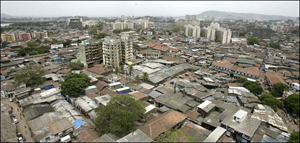
Thousands of small businesses like his thrive in Dharavi, creating an informal economy with an annual turnover of $1 billion by some estimates.
Now, plans to replace the ramshackle workshops and decrepit homes with office blocks and high-rise apartments threaten the businesses that employ thousands of its 1 million residents.
"The city doesn't care about the businesses here, which are our livelihood," said Abdullah, 52, standing in an alley crammed with towering stacks of plastic containers.
"This is where we live, this is where we work. Where will we go if they only build flats and offices?" he said.
During the past two decades, there have been several attempts to develop Dharavi, which sprawls over 240 hectares (590 acres). However, residents have opposed many of them, saying they do not consider their interests.
Real estate in Mumbai, India's financial hub, is among the most expensive in the world. The contrast between rich and poor is stark, and about 60 percent of the city's population of more than 18 million lives in slums.
Dharavi has always been a magnet for migrants from across India. Many have lived there for decades, their one-room tenements and low-rise homes dwarfed by the gleaming glass and chrome office towers and luxury hotels that dot the city.
Amid Dharavi's narrow alleys, open drains and canopies of electric cables, migrants who came in search of better economic opportunities have created a community of schools, temples, mosques, restaurants, tailors and mobile phone shops.
Tens of thousands work as potters, leather tanners, weavers, soap makers, and in Dharavi's massive recycling industry.
Most homes double up as work spaces, the whirr of sewing machines, the clang of metal and the pungent odour of spices mingling with the call for prayer and the putrid smell of trash.
"People think of slums as places of static despair as depicted in films such as 'Slumdog Millionaire'," said Sanjeev Sanyal, an economist and writer, referring to the Academy Award-winning movie that exposed the gritty underbelly of Dharavi.
"If one looks past the open drains and plastic sheets, one will see that slums are ecosystems buzzing with activity... Creating neat low-income housing estates will not work unless they allow for many of the messy economic and social activities that thrive in slums," he said.
Roof Tops
Once a small fishing village, Dharavi was notorious as a den of crime in the 1970s and '80s. Following a massive crackdown, violent crime is rare and Dharavi has featured in movies, art projects and a Harvard Business School case study.
Fed by two suburban railway lines and perilously close to the Mumbai airport, Dharavi has lured developers, too.
Recent plans by city officials envisaged private developers clearing the area and building high-rise flats in which each eligible family gets a free 225 sq ft (21 sq metres) unit. The developer in turn gets rights to build commercial space to rent.
Dozens of such housing blocks have been built over the years, falling into disrepair as facilities were not upgraded.
What these buildings also lack is room for work. The squat tenements are perfectly suited for businesses, with living and sleeping spaces sitting atop work spaces, workers spilling into the alleys, and material stacked outside and on roof tops.
In Kumbharwada, the potter's colony, where migrants from neighbouring Gujarat state make earthen water pots and lamps, potters' wheels can be seen through open doorways, while ready pots are stacked in the alleys awaiting pickup.
The colony is abuzz ahead of the Dussehra and Diwali festivals, when decorated pots and lamps are in demand. With small televisions turned on low, women sit cross-legged on the floor in their homes, painting motifs in red, yellow and green, and gluing on sequins and shiny bits of mica.
Down another alley, a group of women chat and braid leather strips for belts and bags on the stoop of a home.
"We want new flats, but they are small," said Sharada Tape, who earns about 100 rupees ($1.50) a day. "There are no spaces like this where we can all sit and work. It will be difficult, but we need the money," she said.
Residents Want More Say
City officials last month submitted a new 250 billion rupee ($3.7 billion) redevelopment plan to Maharashtra state for approval after previous plans failed to attract bidders.
The new plan, a public-private partnership, has ample commercial space for businesses, but only for the "formal, legitimate" ones, said Debashish Chakrabarty, head of the Dharavi Redevelopment Authority.
"All the licensed businesses will have space under the plan. It will be better, cleaner than what they have now," he said.
"Those that are engaged in informal businesses have the option of applying for commercial licences, then they can also get a space. If they don't, then we can't help them," he said.
It is this narrow definition of what's legal and permissible that is the biggest challenge, not just to recognising Dharavi's businesses, but also determining Dharavi's fate, said Rahul Srivastava, a founder of the Institute of Urbanology in Mumbai.
"The biggest impediment to the improvement of many of these settlements is the misconception that they are illegitimate, because residents don't own the land they occupy," he said.
"Can settlements which are home to fifth-generation migrants be called 'informal'? We need to transform our perception of these neighbourhoods," he said.
Across the country, plans to build modern Smart Cities will force tens of thousands of people from their slum homes as planners spruce up central business districts and build metro train lines, activists say.
Campaigners say until authorities give Dharavi residents more power and recognise the vital role of their businesses, any redevelopment plan is destined to fail.
"If we don't have these small enterprises, it wouldn't be Dharavi," said Jockin Arputham, president of the National Slum Dwellers' Federation in Mumbai.
"This is a people-sponsored economic zone, and the redevelopment should be around the economic zone. It is a township, not a slum, and it should be treated as one," he said.
Abdullah, the plastic recycler, is reconciled to his fate. "We want development. We also want to keep our businesses," he said. "But we have to be prepared for any eventuality. We are not owners of the land, so we may have to shut down," he said.

Comments
Awesome article! According to statistics 60% of Mumbai’s segregated waste comes to Dharavi for processing; indicating the vital role of waste recycling and processing units ...in maintaining and managing Mumbai’s solid waste management landscape. They are not only managing the waste, but they are making big money out of it and generating employment as well. Dharavi is home to some 30,000 rag pickers – scavengers who find and sort recyclable scraps from the city’s garbage dumps.
It is a good idea that they will get 250 SQFT of apartments...that will create a clean environment and everything will be disciplined.
Most of the Rich are always greedy, The more they build the more eager to want everything and they will never be satisfied until death takes over them... They want to invest were poor people are living comfortably with their small Jopady... and the Govt should not bow down to the rich for small petty gains...
Add new comment