China must admit to massive crackdown on Muslims in Xinjiang: Amnesty

Agencies
September 24, 2018

Beijing, Sept 24: China must come clean about the fate of an estimated one million minority Muslims swept up in a "massive crackdown" in the far western region of Xinjiang, Amnesty International said in a new report on Monday.
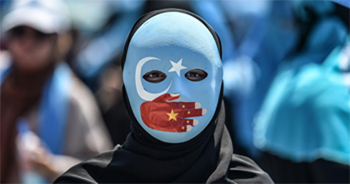
Beijing has ramped up restrictions on Muslim minorities to combat what it calls Islamic extremism and separatist elements in the far western province. But critics say the drive risks fuelling resentment towards Beijing and further inflaming separatist sentiment.

In a new report, which included testimony from people held in the camps, Amnesty said Beijing had rolled out "an intensifying government campaign of mass internment, intrusive surveillance, political indoctrination and forced cultural assimilation". Uighurs and other Muslim minorities are punished for violating regulations banning beards and burqas, and for the possession of unauthorised Korans, it added.

Up to a million people are detained in internment camps, a United Nations panel on racial discrimination reported last month, with many interned for offences as minor as making contact with family members outside the country or sharing Islamic holiday greetings on social media.

"Hundreds of thousands of families have been torn apart by this massive crackdown," said Nicholas Bequelin, Amnesty International's East Asia director in a statement. "They are desperate to know what has happened to their loved ones and it is time the Chinese authorities give them answers."

Beijing has denied reports of the camps but the evidence is mounting in the form of government documents and escapee testimony. It suggests Chinese authorities are detaining large groups of people in a network of extrajudicial camps for political and cultural indoctrination on a scale unseen since the Maoist era.

Amnesty's report interviewed several former detainees who said they were put in shackles, tortured, and made to sing political songs and learn about the Communist Party. The testimony tallies with similar evidence gathered by foreign reporters and rights groups in the last year.

Amnesty also called on governments around to world to hold Beijing to account for "the nightmare" unfolding in Xinjiang. Last week, US Secretary of State Mike Pompeo denounced "awful abuses" of Uighur Muslim detained in re-education camps.

China's top leaders recently called for religious practices to be brought in line with "traditional" Chinese values and culture, sparking concern among rights groups. Earlier this month, draft regulations suggested that Beijing was considering restrictions on religious content online, such as images of people praying or chanting.

State supervision of religion has increased in a bid to "block extremism", and authorities have removed Islamic symbols such as crescents from public spaces in areas with significant Muslim populations.

Christians have also been targeted in crackdowns, with a prominent Beijing "underground" church shuttered by authorities earlier this month, while churches in central Henan province have seen their crosses torn down and followers harassed.

Comments

ABDUL AZIZ
 - 
Monday, 24 Sep 2018

Better stop to do with muslims and human beings. , or else , wait for ALLAH,S wrath  soon.

Add new comment

  • Coastaldigest.com reserves the right to delete or block any comments.
  • Coastaldigset.com is not responsible for its readers’ comments.
  • Comments that are abusive, incendiary or irrelevant are strictly prohibited.
  • Please use a genuine email ID and provide your name to avoid reject.
News Network
December 13,2025

New Delhi: School-going children are picking up drug and smoking habits and engaging in consumption of alcohol, with the average age of introduction to such harmful substances found to be around 13 years, suggesting a need for earlier interventions as early as primary school, a multi-city survey by AIIMS-Delhi said.

The findings also showed substance use increased in higher grades, with grade XI/XII students two times more likely to report use of substances when compared with grade VIII students. This emphasised the importance of continued prevention and intervention through middle and high school.

The study led by Dr Anju Dhawan of AIIMS's National Drug Dependence Treatment Centre, published in the National Medical Journal of India this month, looks at adolescent substance use across diverse regions.

The survey included 5,920 students from classes 8, 9, 11 and 12 in urban government, private and rural schools across 10 cities -- Bengaluru, Chandigarh, Delhi, Dibrugarh, Hyderabad, Imphal, Jammu, Lucknow, Mumbai, and Ranchi. The data were collected between May 2018 and June 2019.

The average age of initiation for any substance was 12.9 (2.8) years. It was lowest for inhalants (11.3 years) followed by heroin (12.3 years) and opioid pharmaceuticals (without prescription; 12.5 years).

Overall, 15.1 per cent of participants reported lifetime use, 10.3 per cent reported past year use, and 7.2 per cent reported use in the past month of any substance, the study found.

The most common substances used in the past year, after tobacco (4 per cent) and alcohol (3.8 per cent), were opioids (2.8 per cent), followed by cannabis (2 per cent) and inhalants (1.9 per cent). Use of non-prescribed pharmaceutical opioids was most common among opioid users (90.2 per cent).

On being asked, 'Do you think this substance is easily available for a person of your age' separately for each substance category, nearly half the students (46.3 per cent) endorsed that tobacco products and more than one-third of the students (36.5 per cent) agreed that a person of their age can easily procure alcohol products.

Similarly, for Bhang (21.9 per cent), ganja/charas (16.1 per cent), inhalants (15.2 per cent), sedatives (13.7 per cent), opium and heroin (10 per cent each), the students endorsed that these can be easily procured.

About 95 per cent of the children, irrespective of their grade, agreed with the statement that 'drug use is harmful'.

The rates of substance use (any) among boys were significantly higher than those of girls for substance use (ever), use in the past year and use in the past 30 days. Compared to grade VIII students, grade IX students were more likely, and grade XI/XII students were twice as likely to have used any substance (ever).

The likelihood of past-year use of any substance was also higher for grade IX students and for grade XI/XII students as compared to grade VIII students.

About 40 per cent of students mentioned that they had a family member who used tobacco or alcohol each. The use of cannabis (any product) and opioid (any product) by a family member was reported by 8.2 per cent and 3.9 per cent of students, respectively, while the use of other substances, such as inhalants/sedatives by family was 2-3 per cent, the study found.

A relatively smaller percentage of students reported use of tobacco or alcohol among peers as compared to among family members, while a higher percentage reported inhalants, sedatives, cannabis or opioid use among peers.

Children using substances (past year) compared to non-users reported significantly higher any substance use by their family members and peers.

There were 25.7 per cent students who replied 'yes' to the question 'conflicts/fights often occur in your family'. Most students also replied affirmatively to 'family members are aware of how their time is being spent' and 'damily members are aware of with whom they spend their time'.

Comments

Add new comment

  • Coastaldigest.com reserves the right to delete or block any comments.
  • Coastaldigset.com is not responsible for its readers’ comments.
  • Comments that are abusive, incendiary or irrelevant are strictly prohibited.
  • Please use a genuine email ID and provide your name to avoid reject.
coastaldigest.com news network
November 29,2025

health1.jpg

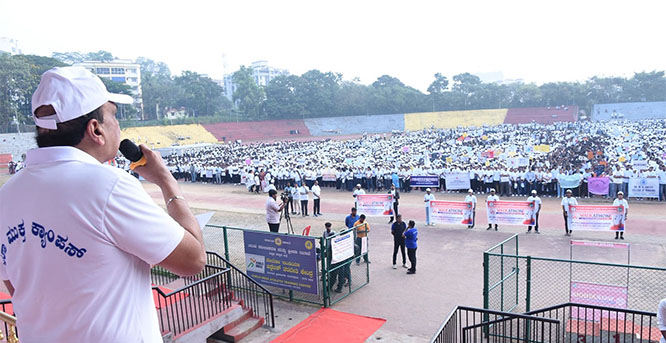
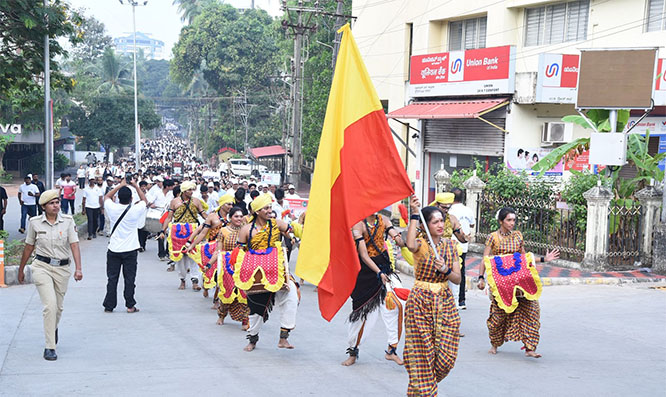
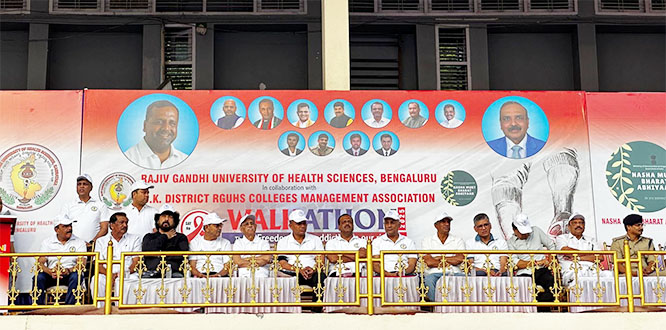
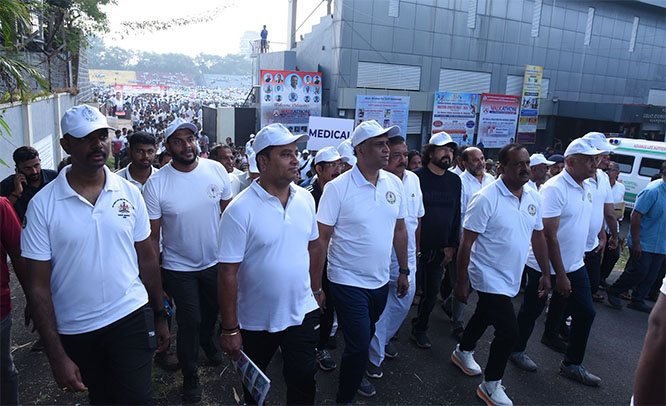
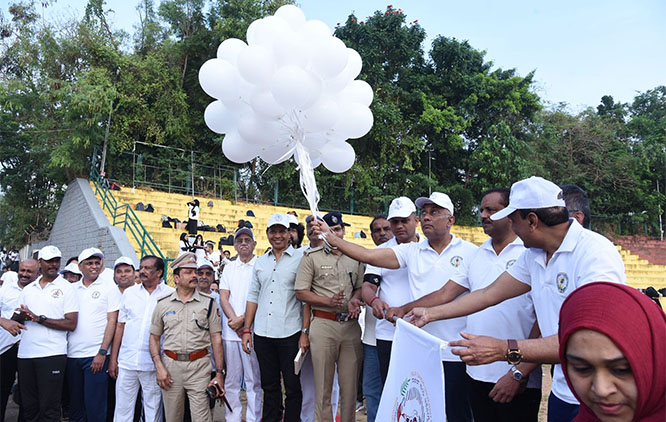
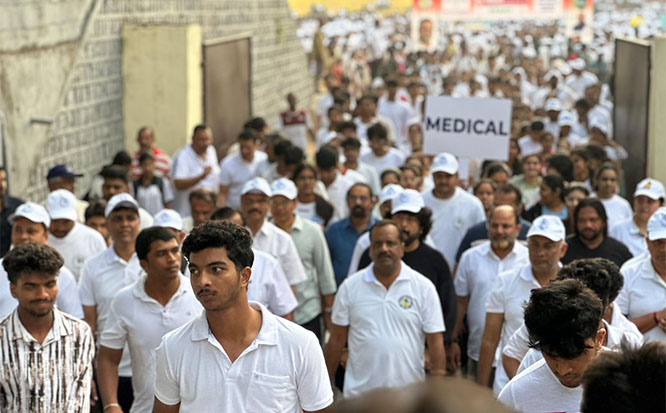
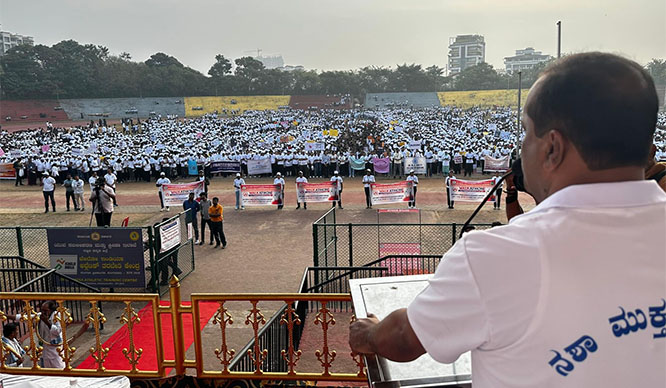
Mangaluru, Nov 29: Around 12,500 healthcare students from Medical, Dental, AYUSH, Pharmacy, Nursing, Physiotherapy and Allied Health Sciences colleges of Dakshina Kannada, affiliated to Rajiv Gandhi University of Health Sciences (RGUHS), took part in a massive walkathon to promote awareness on Organ Donation and Nasha Mukth Bharat.

The inaugural ceremony was held at Mangala Stadium. Dr Bhagavan B C, Hon’ble Vice-Chancellor of RGUHS, delivered the welcome address. The walkathon was flagged off by Shri U T Khader, Hon’ble Speaker of the Karnataka Legislative Assembly, and presided over by Shri Dinesh Gundu Rao, Hon’ble Minister for Health, Family Welfare and Dakshina Kannada District In-charge. Dakshina Kannada MP Shri Brijesh Chowta also addressed the students.

Music director Guru Kiran, MLA Dr Bharat Shetty (Mangalore North), Police Commissioner Shri Sudheer Kumar Reddy, Shri Manjunath Bhandary and Shri Harish Kumar were among those present.

Institution heads including Dr Haji U K Monu (Kanachur Colleges), Dr Shantharam Shetty (Tejaswini College), Dr Bhaskar Shetty (City Group of Colleges), Mr Abdul Rahiman (Kanachur Institute of Medical Sciences), and the District Health Officer, Mangalore, also participated.

The vote of thanks was delivered by Prof U T Ifthikar Fareed, Syndicate Member, RGUHS.

The event was organised by Dr U T Ifthikar Ali and Dr Shiva Sharan (Syndicate Members), Prof Vaishali (Senate Member), Prof Mohammad Suhail (Chairman, BOS Physiotherapy), Dr Sharan Shetty (Former Senate Member), along with principals and faculty of various colleges.

Students marched from Mangala Stadium to Karavali Grounds via MCC and Lalbagh signal. The event set a record as one of the largest gatherings of healthcare students for a social cause in the RGUHS Dakshina Kannada Zone.

health7.jpg

health6.jpg

health5.jpg

health4.jpg

health3.jpg

health2.jpg

Comments

Add new comment

  • Coastaldigest.com reserves the right to delete or block any comments.
  • Coastaldigset.com is not responsible for its readers’ comments.
  • Comments that are abusive, incendiary or irrelevant are strictly prohibited.
  • Please use a genuine email ID and provide your name to avoid reject.
News Network
December 4,2025

indigoflight.jpg

Domestic carrier IndiGo has cancelled over 180 flights from three major airports — Mumbai, Delhi and Bengaluru — on Thursday, December 4, as the airline struggles to secure the required crew to operate its flights in the wake of new flight-duty and rest-period norms for pilots.

While the number of cancellations at Mumbai airport stands at 86 (41 arrivals and 45 departures) for the day, at Bengaluru, 73 flights have been cancelled, including 41 arrivals, according to a PTI report that quoted sources.

"IndiGo cancelled over 180 flights on Thursday at three airports-Mumbai, Delhi and Bengaluru," the source told the news agency.

Besides, it had cancelled as many as 33 flights at Delhi airport for Thursday, the source said, adding, "The number of cancellations is expected to be higher by the end of the day."

The Gurugram-based airline's On-Time Performance (OTP) nosedived to 19.7 per cent at six key airports — Delhi, Mumbai, Chennai, Kolkata, Bengaluru and Hyderabad — on December 3, as it struggled to get the required crew to operate its services, down from almost half of December 2, when it was 35 per cent.

"IndiGo has been facing acute crew shortage since the implementation of the second phase of the FDTL (Flight Duty Time Limitations) norms, leading to cancellations and huge delays in its operations across the airports," a source had told PTI on Wednesday.

Chaos continued at several major airports for the third day on Thursday because of the cancellations.

A spokesperson for the Kempegowda International Airport (KIA) in Bengaluru said that 73 IndiGo flights had been cancelled on Thursday.

At least 150 flights were cancelled and dozens of others delayed on Wednesday, airport sources said, leaving thousands of travellers stranded, according to news agency Reuters.

The Directorate General of Civil Aviation (DGCA) has said it is investigating IndiGo flight disruptions and has asked the airline to submit the reasons for the current situation, as well as its plans to reduce flight cancellations and delays.

It may be mentioned here that the pilots' body, Federation of Indian Pilots (FIP), has alleged that IndiGo, despite getting a two-year preparatory window before the full implementation of new flight duty and rest period norms for cockpit crew, "inexplicably" adopted a "hiring freeze".

The FIP said it has urged the safety regulator, the DGCA, not to approve airlines' seasonal flight schedules unless they have adequate staff to operate their services "safely and reliably" in accordance with the New Flight Duty Time Limitations (FDTL) norms.

In a letter to the DGCA late on Wednesday, the FIP urged the DGCA to consider re-evaluating and reallocating slots to other airlines, which have the capacity to operate them without disruption during the peak holiday and fog season if IndiGo continues to "fail in delivering on its commitments to passengers due to its own avoidable staffing shortages."

Comments

Add new comment

  • Coastaldigest.com reserves the right to delete or block any comments.
  • Coastaldigset.com is not responsible for its readers’ comments.
  • Comments that are abusive, incendiary or irrelevant are strictly prohibited.
  • Please use a genuine email ID and provide your name to avoid reject.