Netflix’s ‘A Suitable Boy’ & Modi era

Safiyat Naseem
November 9, 2020

suitable.jpg

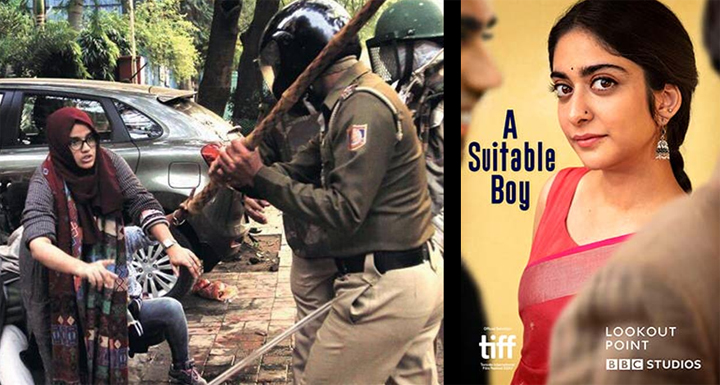
Recently binge-watched a six part mini series directed by Mira Nair on Netflix, titled “A Suitable Boy”, an adaptation of Vikram Seth’s novel of the same title. And while I am neither a movie critic or reviewer, nor a fan of watching series with a backdrop of the post Independence era, I was still moved to write about it. To lay down my emotions on paper with nothing but words. It isn’t extra-ordinary, or brilliantly amazing, neither the characters are made to grow on you nor the plot is meticulously twisted, then what was it, you may ask.

It was Relatable, I would remark.

I usually don’t prefer series or movies that lay down the post Independence India theme with 1950s timeline because I don’t relate to it’s story or characters, and I don’t know if I watched it for Tanya Manikalata who played the character of Lata in the series or the fact that this series was on number 1 on Netflix, but I know for sure that I don’t regret watching it.

Being an Indian Muslim Women, it was shocking or rather depressing to relate to the newly Independent India even after 73 years. The political clashes, the Hindu-Muslim riots, the hatered based on religion, the stigma layed down on love between hindu and muslim, lack of women empowerment and discrimination, what was there is still here, now and growing more than ever.

It’s been 73 years and we as a Nation are still dealing with the same issues, we haven’t grown together, the lack of secularism is till there, the hatred and fear still reside or worse, it’s reoccurring.

When in the first episode the issue of Mosque was depicted, where the muslims demanded a peaceful place to pray, for those who still stayed in India, and the Raja started establishing a mandir in its direction to make them deprived of this right, I remembered the recent demolition of Babri Masjid and the Supreme Court’s judgement and acquittal of the accused.

As Maan went to the village with Rasheed, and acknowledged the miseries of farmers and labourers, the atrocious behaviour towards womens and workers, it wasn’t surprising or new. I thought about the Farm Bill 2020, the egregious condition of the working class amidsts pandemic, the walks they took barefoot and with empty bellies to go back to their hometowns as they were dealing with unemployment, lack of resources and ignorance of the Government and society. I remembered the Hathras case and other numerous sexual harassment as well as domestic violence cases. How I wish to get shocked by the problems of 1950s shown in the series, but unfortunately I was’t, I am rather acclimated to it. I have been there, heard it, been a part of it…even after 73 years, I have still seen it.

And as Rasheed told Maan “Aur bhi dukh hain Zamane mai mohabbat ke siva” (There are many other sorrows in this world besides love)… Indeed Rasheed, Indeed.

In the later episodes, as a communal riot emerged as Muslim and Hindu mobs were crossing roads, and one of them pushed the other, my mind instantly went towards the Delhi Riots. As Maan and Firoz were running together to save their lives, I connected with them and my eyes filled with tears as I remembered the misfortunate event that took place in Jamia Millia Islamia on 15th December 2019. Being a Jamia Student I remembered hiding under the table in the old library of my campus where Delhi Police showered us with tear gas shells.

When Maan and Firoz gets caught by the angry mob, and one of them asked Maan to say Gayatri Mantar to prove he’s not a muslim, and Maan obliged and did the same to save his and Firoz’s life, but Firoz couldn’t say it being a Muslim. I remembered the viral video on the internet that showed two people in the car, forcing a Muslim man to say Jai Mata Di, and were constantly abusing him.

As the main plot evolves, we see Lata falling in love with his schoolmate whose name’s not known up until the time when Lata’s friend warns her to not meet the guy, as he a Muslim, named Kabir Durrani. But Lata follows her heart and as predicted her mother took her away from the city to find her a suitable boy, and definitely not a Muslim. Tanishq’s advertisement flashed across my mind, the controversy revolving around how it depicts so called ‘love jihad’, whereas all it does is showcase communal harmony, and how they had to shut down the ad because apparently it hurts the “sentiment” of people. It’s been 73 years, and communal harmony still hurts the sentiment?

In the first episode, as the establishment of the mandir was taking place, it was already mentioned that there were bound to be protests regarding the same, still the government didn’t uphold the security levels and gave direct orders to shoot if the protesters didn’t stop. Not shockingly, it was a peaceful protest until the police started shooting, 20 people died. And as we see later in the Parliament meeting, the government was nonchalant to this action of police. Remember again, the attack on Jamia Millia Islamia, peaceful protest, tear gas shells and bullets… similar isn’t it? Potato-Patato, same thing…no?

Well, I believe nothing much has changed, the situation in 1947 and Modi era are almost the same, one way or the other. Except that in 1947, India was a newly democratic and independent country where freedom of speech was introduced, Jamia was a symbol of resistance and nationalism and people were the priority of the government. Whereas in Modi era, India is a newly non-democratic country, where freedom of speech is a myth, Jamia is an anti-national University, Islam is terrorism, people are least of the priority and Modi is God.

Comments

Add new comment

  • Coastaldigest.com reserves the right to delete or block any comments.
  • Coastaldigset.com is not responsible for its readers’ comments.
  • Comments that are abusive, incendiary or irrelevant are strictly prohibited.
  • Please use a genuine email ID and provide your name to avoid reject.
News Network
November 24,2025

israelsyra.jpg

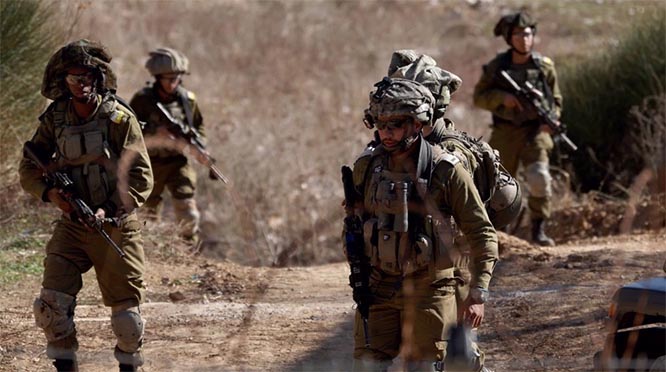
Israeli forces have pushed over the Syrian frontier, erecting a checkpoint and stopping vehicles in the southwestern city of Quneitra, in yet another breach of the Arab country’s sovereignty.

The violation took place on Sunday, when the troops made their way across the border, setting up the outpost near the Ain al-Bayda junction in northern Quneitra, Syrian outlets reported.

According to the al-Ikhbariya paper, an Israeli detachment positioned itself at the junction, halting cars and conducting searches.

The Syrian Arab News Agency (SANA) reported that three Israeli military vehicles then moved further into the northern countryside, deploying between the town of Jubata al-Khashab and the villages of Ofaniya and Ain al-Bayda. The agency added that a separate Israeli unit mounted a new incursion in the central region, approaching the villages of Umm Batina and al-Ajraf.

Residents said such activities have surged in recent months, pointing to Israeli advances onto farmland, leveling of extensive forested areas, arrests, and spread of mobile checkpoints.

The Israeli regime began markedly increasing its military aggression against Syria last year.

The escalation coincided with increasingly ferocious onslaughts throughout the country by the so-called Hay'at Tahrir al-Sham (HTS) Takfiri terrorist group, which the government of President Bashar al-Assad had confined to northwestern Syria. The HTS, however, managed to overthrow the government as the Israeli attacks would pummel the country’s civilian and defensive infrastructure.

Various reports have shown that, during the escalation, the regime conducted more than 1,000 airstrikes on the Syrian territory and over 400 ground raids into the south.

Following the collapse of the Assad government, Tel Aviv also widened its grip over the occupied Golan Heights by taking control of a demilitarized buffer zone, in defiance of a 1974 Disengagement Agreement. Earlier this month, senior Israeli officials, including Prime Minister Benjamin Netanyahu, visited the buffer zone, prompting expressions of alarm on the part of the United Nations.

The United States, the regime’s biggest ally, has, meanwhile, been fraternizing the HTS head Abu Mohammed al-Jolani amid the widely reported prospect of rapprochement with Tel Aviv.

Comments

Add new comment

  • Coastaldigest.com reserves the right to delete or block any comments.
  • Coastaldigset.com is not responsible for its readers’ comments.
  • Comments that are abusive, incendiary or irrelevant are strictly prohibited.
  • Please use a genuine email ID and provide your name to avoid reject.
P A Hameed Padubidri
November 26,2025

CD.jpg

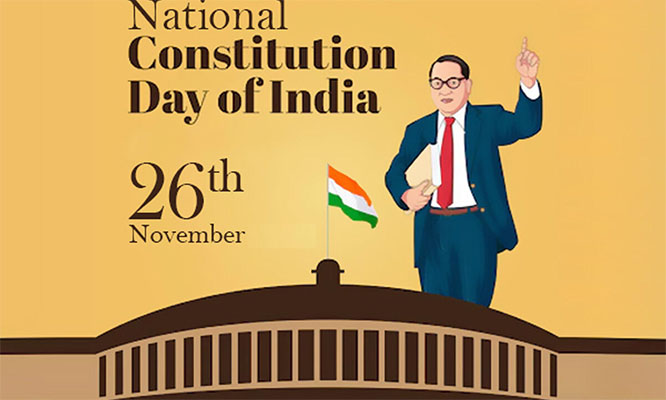
Constitution Day, also known as Samvidhan Divas, is observed every year on November 26 to honor the adoption of the Constitution of India and to recognize the visionary effort that shaped the world’s largest democracy.

Historical Background

It’s on November 26, 1949, the Constituent Assembly of India formally adopted the Constitution.This date is commemorated to acknowledge the completion of nearly three years of drafting, debate, and refinement.

On January 26, 1950, the Constitution came into force, marking India’s transition from a dominion to a sovereign republic.

The date 26 January was chosen to honor the “Purna Swaraj” declaration made in 1930 that marked the relentless efforts & sacrifices of the many. 

Why Constitution Day is Celebrated

* To honor & remember the framers of the Constitution, especially Dr. B. R. Ambedkar, the Chairman of the Drafting Committee, & many others. 

* To remind the citizens of the values, responsibilities, and rights enshrined in the Constitution.

* To promote constitutional values & literacy among students, institutions, and the general public.

* To reaffirm the nation’s commitment to justice, equality, liberty, fraternity and secular values. 

Vision and Significance of the Constitution

It establishes the fundamental political and legal framework for the nation.

Defines the structure, powers and functions of:
    •    The Executive
    •    The Legislature
    •    The Judiciary
    •    Guarantees a comprehensive set of Fundamental Rights, including:

-Equality before law
-Freedom of speech & expression
-Protection of life and personal liberty
-Freedom of religion
-Embeds Directive Principles of State Policy, guiding governance toward social justice and welfare.
-Introduces Fundamental Duties to ensure civic responsibility among citizens.

Key Features Celebrated on Constitution Day

-The Indian constitution is considered one of the longest written constitutions of the world. It’s systematically drafted considering almost all aspects that properly fits to the country. 

-Blend of multiple global constitutional principles while staying rooted in Indian values and realities.

-Framework that balances Federalism, Secularism, Democracy and Rule of Law. This makes everyone-from President to common man-below the law & are equal in the sight of law. 

-Another feature is that it’s based on built-in mechanisms for amendments, ensuring the Constitution grows with changing needs.

Message of the Day

The core ethos of this  Constitution Day is not merely about looking back at history-it’s a reminder of the continuous duty to protect democratic values, respect diversity and uphold the principles that define India as a sovereign, socialist, secular and democratic republic.

Happy Constitution Day to all my compatriots

Comments

Add new comment

  • Coastaldigest.com reserves the right to delete or block any comments.
  • Coastaldigset.com is not responsible for its readers’ comments.
  • Comments that are abusive, incendiary or irrelevant are strictly prohibited.
  • Please use a genuine email ID and provide your name to avoid reject.
News Network
November 26,2025

Mangaluru, Nov 26: Assembly Speaker and local MLA U.T. Khader has initiated a high-level push to resolve one of Mangaluru’s longest-standing traffic headaches: the narrow, high-density stretch of National Highway-66 between Nanthoor and Talapady.

He announced on Tuesday that a formal proposal has been submitted to the Union Ministry of Road Transport and Highways (MoRTH) seeking approval to prepare a Detailed Project Report (DPR) for the widening of this crucial corridor.

The plan specifically aims to expand the existing 45-meter road width to a full 60 meters, coupled with the construction of dedicated service roads. Khader highlighted that land for a 60-meter highway was originally acquired during the initial four-laning project, but only 45 meters were developed, leading to a perpetual bottleneck.

"With vehicle density rising sharply, the expansion has become unavoidable," Khader stated, stressing that the upgrade is essential for ensuring smoother traffic flow and improving safety at the city's main entry and exit points.

The stretch between Nanthoor and Talapady is a vital link on the busy Kochi-Panvel coastal highway and connects to major city junctions. The move to utilize the previously acquired land for the full 60-meter width is seen as a necessary measure to catch up with the region's rapid vehicular growth and prevent further traffic gridlocks.

Comments

Add new comment

  • Coastaldigest.com reserves the right to delete or block any comments.
  • Coastaldigset.com is not responsible for its readers’ comments.
  • Comments that are abusive, incendiary or irrelevant are strictly prohibited.
  • Please use a genuine email ID and provide your name to avoid reject.