Bahrain’s long-serving PM Khalifa bin Salman Al Khalifa, 84, passes away

News Network
November 11, 2020

king.JPG

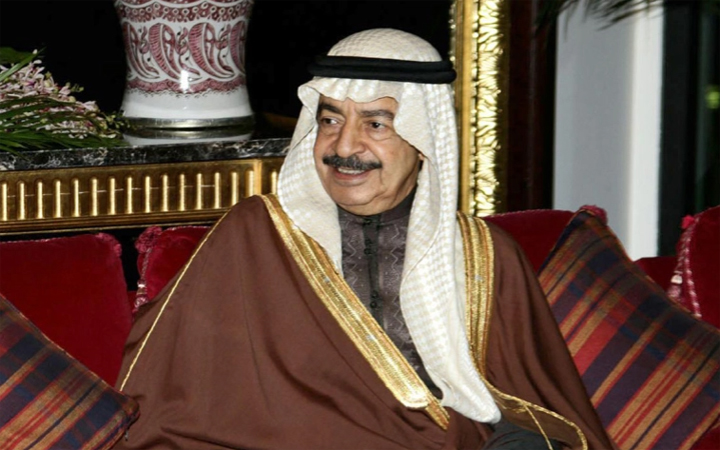
Manama, Nov 11: Bahrain’s long-serving Prime Minister Sheikh Khalifa bin Salman Al Khalifa has died, the state media reported. He was 84.

“The Royal Court mourns His Royal Highness … who passed away this morning at Mayo Clinic Hospital in the United States of America,” the Bahrain News Agency said on Wednesday, without elaborating.

The Gulf state’s King Sheikh Hamad bin Isa Al Khalifa announced official mourning for a week during which flags will be flown at half-mast, the agency said.

The burial ceremony will take place upon the repatriation of his body and the funeral will be limited to a specific number of relatives, it said.

Sheikh Khalifa was one of the world’s longest-serving prime ministers who led his island nation’s government for decades and survived the 2011 Arab Spring protests that demanded his removal over corruption allegations.

His stern response to the pro-democracy protests and criticism of similar unrest across the Arab world underlined what for many was the defining characteristic of his career, namely a stalwart defence of dynastic rule. The Al Khalifa family has ruled Bahrain since 1783.

In August, Sheikh Khalifa left the kingdom for what official media called at the time “a private visit abroad”. Earlier this year, he spent time in Germany for unspecified medical treatment, returning to Bahrain in March.

Bahrain, a staunch ally of neighbouring Saudi Arabia and the United States, is also the home base of the US Navy’s Fifth Fleet.

Controversial figure

Sheikh Khalifa’s power and wealth could be seen everywhere in Bahrain. His official portrait hung for decades on walls alongside the country’s ruler.

He had his own private island where he met foreign dignitaries, complete with a marina and a park that had peacocks and gazelle roam its grounds.

“Khalifa bin Salman represented the old guard in more ways than just age and seniority,” said Kristin Smith Diwan, a senior resident scholar at the Washington-based Arab Gulf States Institute.

“He represented an old social understanding rooted in royal privilege and expressed through personal patronage.”

The son of Bahrain’s former ruler, Sheikh Salman bin Hamad Al Khalifa, who ruled from 1942 to 1961, Sheikh Khalifa learned governance at his father’s side as the island remained a British protectorate.

His brother, Sheikh Isa bin Salman Al Khalifa, took power in 1961 and served as monarch when Bahrain gained its independence from Britain in 1971. Under an informal arrangement, Sheikh Isa handled the island’s diplomacy and ceremonial duties while Sheikh Khalifa ran the government and economy.

The years that followed saw Bahrain develop rapidly as it sought to move beyond its dependence on dwindling oil reserves. Manama at that time served as what Dubai in the United Arab Emirates ultimately became, a regional financial, service and tourism hub.

The opening of the King Fahd Causeway in 1986 gave the island nation its first land link with its rich and powerful neighbour, Saudi Arabia, and offered an escape for Westerners in the kingdom who wanted to enjoy Bahrain’s alcohol-soaked nightclubs and beaches.

But Sheikh Khalifa increasingly saw his name entangled in corruption allegations, such as a major foreign corruption practices case against aluminium producer Alcoa over using a London-based middleman to facilitate bribes for Bahraini officials. Alcoa agreed to pay $384m in fines to the US government to settle the case in 2014.

The US embassy in Manama similarly had its own suspicions about Sheikh Khalifa, writing in cables that the prince had “off-the-books access to income from the state-owned enterprises” such as the Bahrain Petroleum Co and Aluminium Bahrain, the country’s aluminium producer.

“I believe that Shaikh Khalifa is not wholly a negative influence,” wrote former US Ambassador Ronald E Neumann in 2004 in a cable released by WikiLeaks. “While certainly corrupt, he has built much of modern Bahrain.”

Those corruption allegations fuelled discontent, particularly among Bahrain’s Shia majority. In February 2011, protesters inspired by the Arab Spring demonstrations across the Middle East filled the streets and occupied the capital Manama’s Pearl Roundabout to demand political reforms and a greater say in the country’s future.

While some called for a constitutional monarchy, many others pressed for the removal of the long-ruling prime minister and other members of the Sunni royal family altogether, including King Hamad bin Isa Al Khalifa.

At one point during the height of the unrest in March 2011, thousands of protesters besieged the prime minister’s office while officials met inside, demanding Sheikh Khalifa step down.

Protesters also took to waving one Bahraini dinar notes over allegations the prime minister bought the land on which Bahrain’s Financial Harbour development sits for just a single dinar.

Bahraini officials soon crushed the protests with the backing of troops from neighbouring Saudi Arabia and the UAE. Low-level unrest continued in the years that followed, with Shia protesters frequently clashing with riot police.

In recent years, Sheikh Khalifa’s influence waned as he faced unexplained health problems.

Comments

Nasir ahmmed
 - 
Thursday, 26 Nov 2020

Please sir i need green signal because i need go back abudhabi please sir

Add new comment

  • Coastaldigest.com reserves the right to delete or block any comments.
  • Coastaldigset.com is not responsible for its readers’ comments.
  • Comments that are abusive, incendiary or irrelevant are strictly prohibited.
  • Please use a genuine email ID and provide your name to avoid reject.
P A Hameed Padubidri
November 26,2025

CD.jpg

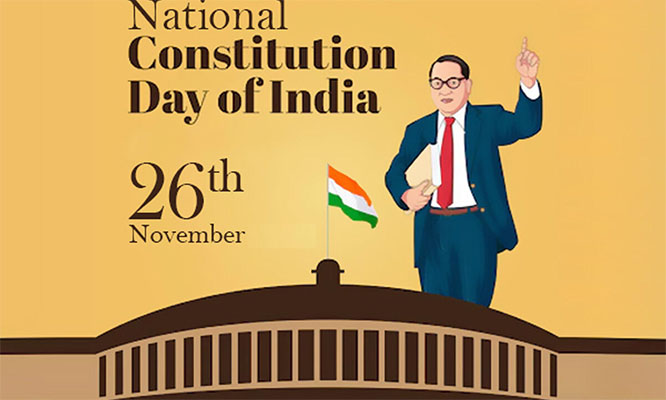
Constitution Day, also known as Samvidhan Divas, is observed every year on November 26 to honor the adoption of the Constitution of India and to recognize the visionary effort that shaped the world’s largest democracy.

Historical Background

It’s on November 26, 1949, the Constituent Assembly of India formally adopted the Constitution.This date is commemorated to acknowledge the completion of nearly three years of drafting, debate, and refinement.

On January 26, 1950, the Constitution came into force, marking India’s transition from a dominion to a sovereign republic.

The date 26 January was chosen to honor the “Purna Swaraj” declaration made in 1930 that marked the relentless efforts & sacrifices of the many. 

Why Constitution Day is Celebrated

* To honor & remember the framers of the Constitution, especially Dr. B. R. Ambedkar, the Chairman of the Drafting Committee, & many others. 

* To remind the citizens of the values, responsibilities, and rights enshrined in the Constitution.

* To promote constitutional values & literacy among students, institutions, and the general public.

* To reaffirm the nation’s commitment to justice, equality, liberty, fraternity and secular values. 

Vision and Significance of the Constitution

It establishes the fundamental political and legal framework for the nation.

Defines the structure, powers and functions of:
    •    The Executive
    •    The Legislature
    •    The Judiciary
    •    Guarantees a comprehensive set of Fundamental Rights, including:

-Equality before law
-Freedom of speech & expression
-Protection of life and personal liberty
-Freedom of religion
-Embeds Directive Principles of State Policy, guiding governance toward social justice and welfare.
-Introduces Fundamental Duties to ensure civic responsibility among citizens.

Key Features Celebrated on Constitution Day

-The Indian constitution is considered one of the longest written constitutions of the world. It’s systematically drafted considering almost all aspects that properly fits to the country. 

-Blend of multiple global constitutional principles while staying rooted in Indian values and realities.

-Framework that balances Federalism, Secularism, Democracy and Rule of Law. This makes everyone-from President to common man-below the law & are equal in the sight of law. 

-Another feature is that it’s based on built-in mechanisms for amendments, ensuring the Constitution grows with changing needs.

Message of the Day

The core ethos of this  Constitution Day is not merely about looking back at history-it’s a reminder of the continuous duty to protect democratic values, respect diversity and uphold the principles that define India as a sovereign, socialist, secular and democratic republic.

Happy Constitution Day to all my compatriots

Comments

Add new comment

  • Coastaldigest.com reserves the right to delete or block any comments.
  • Coastaldigset.com is not responsible for its readers’ comments.
  • Comments that are abusive, incendiary or irrelevant are strictly prohibited.
  • Please use a genuine email ID and provide your name to avoid reject.
coastaldigest.com news network
November 29,2025

health1.jpg

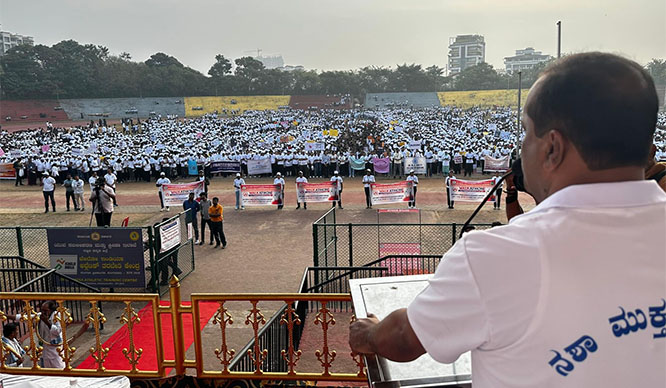
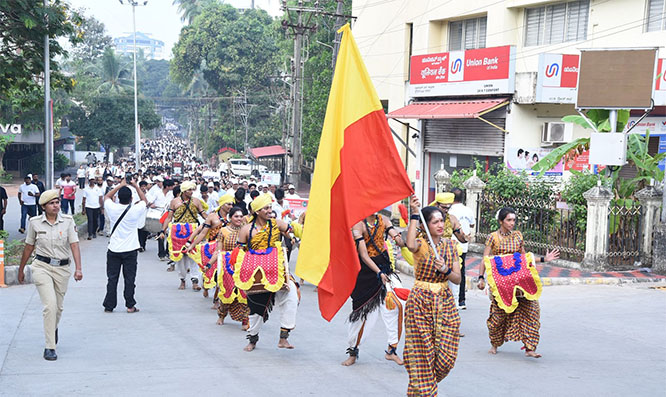
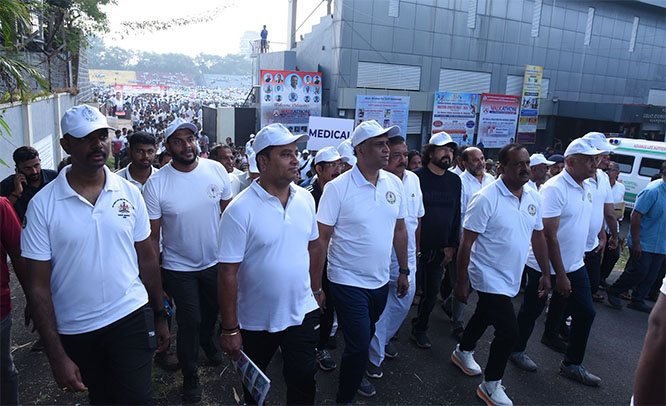
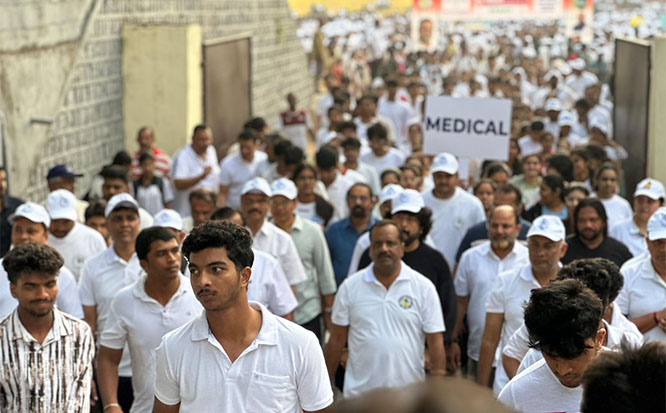
Mangaluru, Nov 29: Around 12,500 healthcare students from Medical, Dental, AYUSH, Pharmacy, Nursing, Physiotherapy and Allied Health Sciences colleges of Dakshina Kannada, affiliated to Rajiv Gandhi University of Health Sciences (RGUHS), took part in a massive walkathon to promote awareness on Organ Donation and Nasha Mukth Bharat.

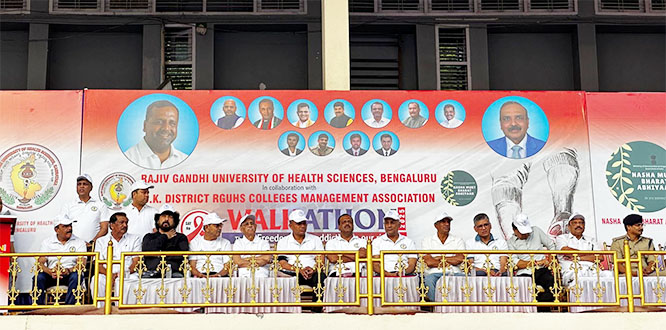
The inaugural ceremony was held at Mangala Stadium. Dr Bhagavan B C, Hon’ble Vice-Chancellor of RGUHS, delivered the welcome address. The walkathon was flagged off by Shri U T Khader, Hon’ble Speaker of the Karnataka Legislative Assembly, and presided over by Shri Dinesh Gundu Rao, Hon’ble Minister for Health, Family Welfare and Dakshina Kannada District In-charge. Dakshina Kannada MP Shri Brijesh Chowta also addressed the students.

Music director Guru Kiran, MLA Dr Bharat Shetty (Mangalore North), Police Commissioner Shri Sudheer Kumar Reddy, Shri Manjunath Bhandary and Shri Harish Kumar were among those present.

Institution heads including Dr Haji U K Monu (Kanachur Colleges), Dr Shantharam Shetty (Tejaswini College), Dr Bhaskar Shetty (City Group of Colleges), Mr Abdul Rahiman (Kanachur Institute of Medical Sciences), and the District Health Officer, Mangalore, also participated.

The vote of thanks was delivered by Prof U T Ifthikar Fareed, Syndicate Member, RGUHS.

The event was organised by Dr U T Ifthikar Ali and Dr Shiva Sharan (Syndicate Members), Prof Vaishali (Senate Member), Prof Mohammad Suhail (Chairman, BOS Physiotherapy), Dr Sharan Shetty (Former Senate Member), along with principals and faculty of various colleges.

Students marched from Mangala Stadium to Karavali Grounds via MCC and Lalbagh signal. The event set a record as one of the largest gatherings of healthcare students for a social cause in the RGUHS Dakshina Kannada Zone.

health7.jpg

health6.jpg

health5.jpg

health4.jpg

health3.jpg

health2.jpg

Comments

Add new comment

  • Coastaldigest.com reserves the right to delete or block any comments.
  • Coastaldigset.com is not responsible for its readers’ comments.
  • Comments that are abusive, incendiary or irrelevant are strictly prohibited.
  • Please use a genuine email ID and provide your name to avoid reject.
News Network
November 28,2025

ministerPM.jpg

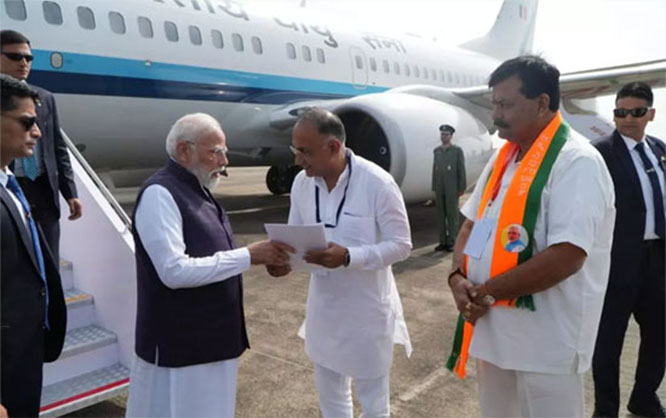
Mangaluru, Nov 28: Karnataka Health Minister and Dakshina Kannada district in-charge minister Dinesh Gundu Rao on Friday handed over Chief Minister Siddaramaiah’s letter to Prime Minister Narendra Modi, highlighting the severe distress faced by farmers due to crashing crop prices.

PM Modi arrived at the Mangaluru International Airport en route to Udupi, where Gundu Rao welcomed him and submitted the letter. The chief minister’s message stressed that farmers are suffering heavy losses because maize and green gram are being bought far below the Minimum Support Price (MSP). The state urged the Centre to immediately begin procurement at MSP.

According to the letter, Karnataka has a bumper harvest this year—over 54.74 lakh metric tons of maize and 1.98 lakh metric tons of green gram—yet farmers are unable to secure fair prices. Against the MSP of ₹2,400/MT for maize and ₹8,768/MT for green gram, market rates have plunged to ₹1,600–₹1,800 and ₹5,400 respectively.

The chief minister has requested the Centre to:

• Direct NAFED, FCI and NCCF to start MSP procurement immediately.
• Ensure ethanol units purchase maize directly from farmers or FPOs.
• Increase Karnataka’s ethanol allocation, citing high production capacity.
• Stop maize imports, which have depressed domestic prices.
• Relax quality norms for green gram, allowing up to 10% discoloration due to rains.

The letter stresses that MSP is crucial for farmer dignity and income stability and calls for swift central intervention to prevent a deepening crisis.

Comments

Add new comment

  • Coastaldigest.com reserves the right to delete or block any comments.
  • Coastaldigset.com is not responsible for its readers’ comments.
  • Comments that are abusive, incendiary or irrelevant are strictly prohibited.
  • Please use a genuine email ID and provide your name to avoid reject.