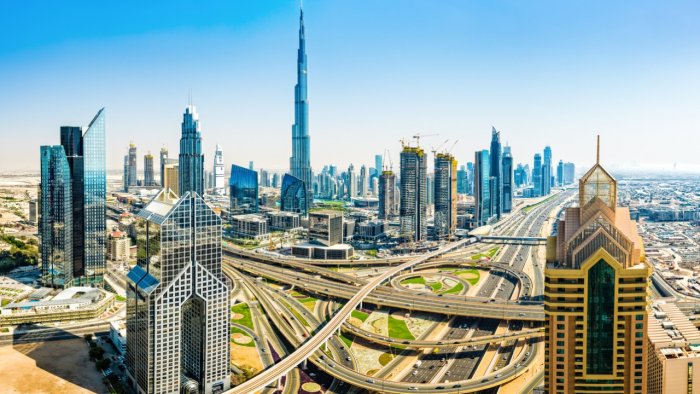
Dubai luxury home market soars as world’s rich flee covid

News Network
May 6, 2021

dubai.jpg

After nearly three decades in London, Christophe Reech was fed up with the city's pandemic lockdowns. This spring, he sold his luxury townhouse and jetted off to the desert sheikhdom of Dubai to start a new life with his family.

There was no turning back, he said. The French business magnate's super wealthy foreign friends were doing the same, driving an unprecedented surge in sales of Dubai's most-exclusive properties.

“Here in Dubai, there's only one strategy: Business as usual,” said Reech, the chairman of an eponymous group that owns real estate and financial technology companies. The philosophy is simple: “Let's make sure everyone's vaccinated and keep everything open."

“Of course that attracts people like me," he said.

As vaccines roll out unevenly worldwide and waves of infections force countries to extend restrictions, foreign buyers flush with cash have flooded Dubai's high-end property market, one of the few places in the world where they can dine, shop and do business in person.

They're snapping up record numbers of luxury villas and penthouses, sending prices rocketing in this boom-and-bust market.

Sales of Dubai's upscale properties, once slow, soared 230 per cent in the first quarter of 2021, compared to the same period last year.

Prices in some top-end areas rose as much as 40 per cent, according to Property Finder, the country's largest real-estate website.

A record-breaking 90 properties worth 10 million dirhams each (USD 2.7 million) changed hands last month, on top of 84 in March, surpassing heights hit eight years ago, according to real estate consultancy Property Monitor. For comparison, there were 54 such transactions in all of 2020.

"Tons of people are coming in and buying multimillion dollar properties on the spot, with no due diligence time whatsoever,” said Matthew Cooke, a partner at consultancy Knight Frank, who manages penthouse sales on Dubai's Palm Jumeirah artificial archipelago.

As with previous cycles, cash buyers started snatching up homes at bargain prices and flipping them for profits. Analysts say that will continue until prices rise too high and returns diminish.

How long the craze lasts and what awaits the skyscraper-studded city then remains unclear. Home prices are still falling in the middle tiers of the city's saturated property market, which has seen values drop sharply since peaks reached seven years ago due to overbuilding.

Average residence sale prices in the Burj Khalifa, the world's tallest building, collapsed to USD 400 per square foot this month from USD 1,300 in 2013.

“The market is going through a boom time ... but people are very aware that Dubai can run too quickly and it all falls apart," said Jackie Johns, partner at Premier Estates, an affiliate of Christie's International Real Estate, referring to the debt-driven crisis that brought the city to its knees in 2008.

The hot streak in the luxury market isn't unique to Dubai, as ultra-low interest rates and families' desire for more space has seen the wealthy in cities like New York and Paris decamp to suburban mansions. But there are other factors at play in the glitzy emirate, home to the long-haul carrier Emirates and tallest tower on Earth.

Since first reopening to tourists last summer, Dubai has pitched itself as the world's pandemic-friendly vacation spot.

With no mandatory dayslong quarantines, foreign visitors now party in Dubai's bustling bars and on its beaches, their selfies at hotel-resorts and helicopter pads stirring resentment back home.

The tourist influx helped drive the country's dramatic surge in coronavirus cases in January, prompting the UK to suspend flights.

But the United Arab Emirates, with its young population and low mortality rates, has fared relatively well during the pandemic.

The country of over 9 million, which relied heavily on the Chinese state-backed Sinopharm vaccine for its inoculation campaign, has administered 10.6 million vaccine doses.

A global financial center known as an oasis in the volatile Middle East, Dubai long has benefitted from capital flight. Homeowners on the Palm Jumeirah — which saw 43 per cent of all April transactions — include Afghan warlords and the political elite from countries like Nigeria, Syria and Lebanon, all searching for a safe place to park their savings.

Comments

Grace
 - 
Tuesday, 18 May 2021

The fewest elders, the lowest dead toll. As simple as that.

Add new comment

  • Coastaldigest.com reserves the right to delete or block any comments.
  • Coastaldigset.com is not responsible for its readers’ comments.
  • Comments that are abusive, incendiary or irrelevant are strictly prohibited.
  • Please use a genuine email ID and provide your name to avoid reject.
coastaldigest.com news network
November 29,2025

health1.jpg

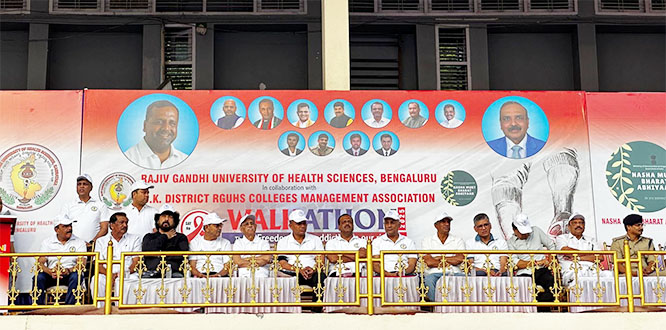
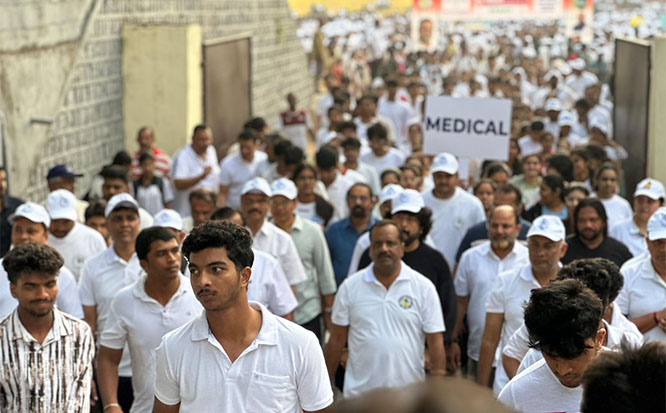
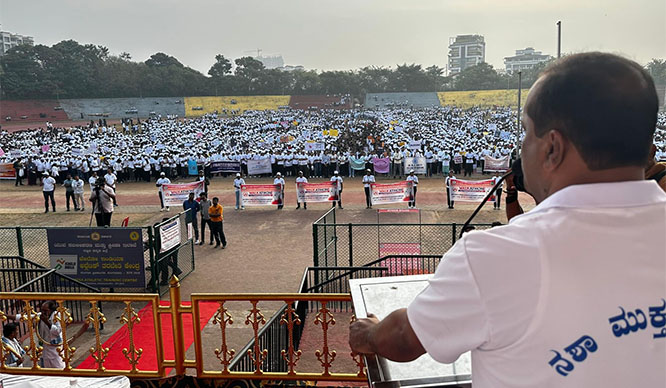
Mangaluru, Nov 29: Around 12,500 healthcare students from Medical, Dental, AYUSH, Pharmacy, Nursing, Physiotherapy and Allied Health Sciences colleges of Dakshina Kannada, affiliated to Rajiv Gandhi University of Health Sciences (RGUHS), took part in a massive walkathon to promote awareness on Organ Donation and Nasha Mukth Bharat.

The inaugural ceremony was held at Mangala Stadium. Dr Bhagavan B C, Hon’ble Vice-Chancellor of RGUHS, delivered the welcome address. The walkathon was flagged off by Shri U T Khader, Hon’ble Speaker of the Karnataka Legislative Assembly, and presided over by Shri Dinesh Gundu Rao, Hon’ble Minister for Health, Family Welfare and Dakshina Kannada District In-charge. Dakshina Kannada MP Shri Brijesh Chowta also addressed the students.

Music director Guru Kiran, MLA Dr Bharat Shetty (Mangalore North), Police Commissioner Shri Sudheer Kumar Reddy, Shri Manjunath Bhandary and Shri Harish Kumar were among those present.

Institution heads including Dr Haji U K Monu (Kanachur Colleges), Dr Shantharam Shetty (Tejaswini College), Dr Bhaskar Shetty (City Group of Colleges), Mr Abdul Rahiman (Kanachur Institute of Medical Sciences), and the District Health Officer, Mangalore, also participated.

The vote of thanks was delivered by Prof U T Ifthikar Fareed, Syndicate Member, RGUHS.

The event was organised by Dr U T Ifthikar Ali and Dr Shiva Sharan (Syndicate Members), Prof Vaishali (Senate Member), Prof Mohammad Suhail (Chairman, BOS Physiotherapy), Dr Sharan Shetty (Former Senate Member), along with principals and faculty of various colleges.

Students marched from Mangala Stadium to Karavali Grounds via MCC and Lalbagh signal. The event set a record as one of the largest gatherings of healthcare students for a social cause in the RGUHS Dakshina Kannada Zone.

health7.jpg

health6.jpg

health5.jpg

health4.jpg

health3.jpg

health2.jpg

Comments

Add new comment

  • Coastaldigest.com reserves the right to delete or block any comments.
  • Coastaldigset.com is not responsible for its readers’ comments.
  • Comments that are abusive, incendiary or irrelevant are strictly prohibited.
  • Please use a genuine email ID and provide your name to avoid reject.
News Network
November 24,2025

israelsyra.jpg

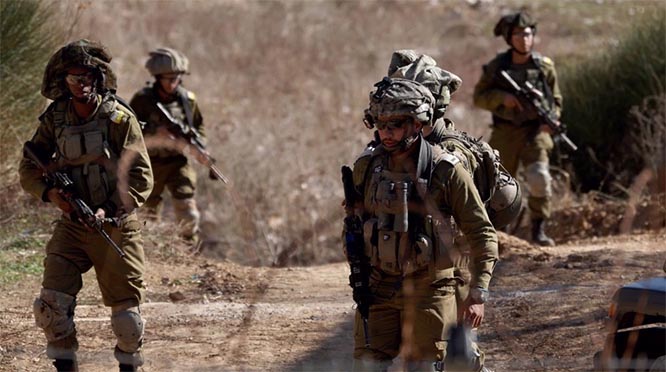
Israeli forces have pushed over the Syrian frontier, erecting a checkpoint and stopping vehicles in the southwestern city of Quneitra, in yet another breach of the Arab country’s sovereignty.

The violation took place on Sunday, when the troops made their way across the border, setting up the outpost near the Ain al-Bayda junction in northern Quneitra, Syrian outlets reported.

According to the al-Ikhbariya paper, an Israeli detachment positioned itself at the junction, halting cars and conducting searches.

The Syrian Arab News Agency (SANA) reported that three Israeli military vehicles then moved further into the northern countryside, deploying between the town of Jubata al-Khashab and the villages of Ofaniya and Ain al-Bayda. The agency added that a separate Israeli unit mounted a new incursion in the central region, approaching the villages of Umm Batina and al-Ajraf.

Residents said such activities have surged in recent months, pointing to Israeli advances onto farmland, leveling of extensive forested areas, arrests, and spread of mobile checkpoints.

The Israeli regime began markedly increasing its military aggression against Syria last year.

The escalation coincided with increasingly ferocious onslaughts throughout the country by the so-called Hay'at Tahrir al-Sham (HTS) Takfiri terrorist group, which the government of President Bashar al-Assad had confined to northwestern Syria. The HTS, however, managed to overthrow the government as the Israeli attacks would pummel the country’s civilian and defensive infrastructure.

Various reports have shown that, during the escalation, the regime conducted more than 1,000 airstrikes on the Syrian territory and over 400 ground raids into the south.

Following the collapse of the Assad government, Tel Aviv also widened its grip over the occupied Golan Heights by taking control of a demilitarized buffer zone, in defiance of a 1974 Disengagement Agreement. Earlier this month, senior Israeli officials, including Prime Minister Benjamin Netanyahu, visited the buffer zone, prompting expressions of alarm on the part of the United Nations.

The United States, the regime’s biggest ally, has, meanwhile, been fraternizing the HTS head Abu Mohammed al-Jolani amid the widely reported prospect of rapprochement with Tel Aviv.

Comments

Add new comment

  • Coastaldigest.com reserves the right to delete or block any comments.
  • Coastaldigset.com is not responsible for its readers’ comments.
  • Comments that are abusive, incendiary or irrelevant are strictly prohibited.
  • Please use a genuine email ID and provide your name to avoid reject.
News Network
December 4,2025

Mangaluru: Chaos erupted at Mangaluru International Airport (MIA) after IndiGo flight 6E 5150, bound for Mumbai, was repeatedly delayed and ultimately cancelled, leaving around 100 passengers stranded overnight. The incident highlights the ongoing country-wide operational disruptions affecting the airline, largely due to the implementation of new Flight Duty Time Limitations (FDTL) norms for crew.

The flight was initially scheduled for 9:25 PM on Tuesday but was first postponed to 11:40 PM, then midnight, before being cancelled around 3:00 AM. Passengers expressed frustration over last-minute communication and the lack of clarity, with elderly and ailing travellers particularly affected. “Though the airline arranged food, there was no proper communication, leaving us confused,” said one family member.

An IndiGo executive at MIA cited the FDTL rules, designed to prevent pilot fatigue by limiting crew working hours, as the cause of the cancellation. While alternative arrangements, including hotel stays, were offered, about 100 passengers chose to remain at the airport, creating tension. A replacement flight was arranged but also faced delays due to the same constraints, finally departing for Mumbai around 1:45 PM on Wednesday. Passengers either flew, requested refunds, or postponed their travel.

The Mangaluru delay is part of a broader crisis for IndiGo. The airline has been forced to make “calibrated schedule adjustments”—a euphemism for widespread cancellations and delays—after stricter FDTL norms came into effect on November 1.

While an IndiGo spokesperson acknowledged unavoidable flight disruptions due to technology issues, operational requirements, and the updated crew rostering rules, the DGCA has intervened, summoning senior airline officials to explain the chaos and outline corrective measures.

The ripple effect has been felt across the country, with major hubs like Bengaluru and Mumbai reporting numerous cancellations. The Mangaluru incident underscores the systemic operational strain currently confronting India’s largest carrier, leaving passengers nationwide grappling with uncertainty and delays.

Comments

Add new comment

  • Coastaldigest.com reserves the right to delete or block any comments.
  • Coastaldigset.com is not responsible for its readers’ comments.
  • Comments that are abusive, incendiary or irrelevant are strictly prohibited.
  • Please use a genuine email ID and provide your name to avoid reject.