PM Modi in tears makes people question motives

Mafazah Sharafuddin
May 26, 2021

modis.jpg

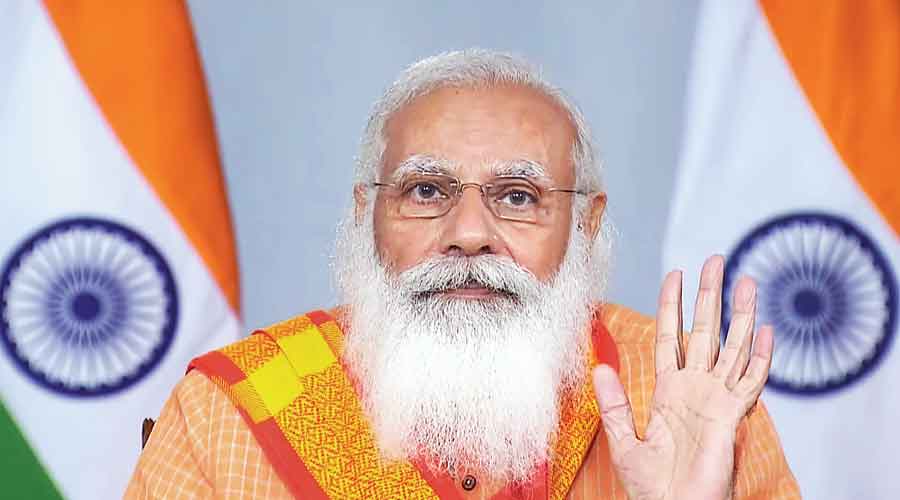
Prime Minister Narendra Modi choking up at the plight of healthcare workers in Varanasi had brewed up a storm. It has been met with both sympathy and disbelief. The Indian public is divided on what to make of the spectacle.

It is no secret that politics is most often elaborately planned and executed. The speeches are written, the leaders are told what to say, what questions to answer, what questions to evade. That is not to say that there is no truth to what they say, but simply that they choose what truth, and how much of it, to speak.

The question then arises, how much of it is an act?

The video of the Prime Minister in tears has, predictably, gone viral. By his supporters, it has been described as an outpouring of grief. He is commented for empathizing with the terrible situation the healthcare workers are in. It is perceived as him truly caring about the Indian public.

The more skeptical of the Indian public, on the other hand, have called it a spectacle of ‘crocodile tears’. It’s been referred to as drama. Rising to the occasion as always, trolls on the internet have begun to refer to it as PMCries, an allusion to the ‘relief fund’ PMCares.

Pathos has always been the preferred tool in BJP’s arsenal. Indians are sentimental folk, and swaying the public’s emotions is a good way to gain their support. Strategically speaking, it is undoubtedly a smart move. In terms of credibility, however, it leaves much to be desired.

Some other instances of PM Modi being ‘moved to tears in the history of Indian politics may help shed some more light on the current situation. A few notable moments are after he was chosen as the leader of the parliamentary party in 2014 and during the demonetization debacle in 2016. 

The two instances are great examples of the two different kinds of scenarios that brings PM Modi to tears in public. 

When he was chosen as the leader in 2014, he was made emotional saying that he was grateful for the BJP for giving a ‘poor boy’ such an opportunity. It is an act of humanizing politicians. One of removing the professional distance maintained to give the public enough of a glance into their personal lives to make them see them as individuals rather than an amorphous blob of party ideology.  Although the PM’s current lifestyle is far from one of a ‘poor boy’, it creates a relatable figure to look up to. He goes from simply being a man in power, to an underdog who fought against circumstance to get there.  

During the time of demonetization, the public was up in arms, outraged. It was a policy that hit the middle class and poorer sections of society hard. The speech that had him in tears did not speak of how the crisis would be solved, or why it was considered appropriate to plunge the country into crisis without warning. Instead, he tearfully spoke of his sacrifices to reach that position. He said he wasn’t in it for the ‘kursi’ and requested that the public endure the hardships brought about by demonetization. .

Rahul Gandhi tweeted “No Vaccines. Lowest GDP. Highest Covid deaths...GOI’s response? PMCries.”

Amidst the struggle to find beds, oxygen and medicine, along with the mismanagement of the vaccine and social distancing measures, the pressure on the government is high. There has been some questionable decision making, like conducting the Kumbh Mela amidst the pandemic that further exacerbates the public’s skepticism towards how well the government is handling the situation. 

It is important to remember that trying to earn an emotional response happens when logic and competence have both failed. 

Comments

Ramesh Mishra
 - 
Wednesday, 2 Jun 2021

PM MODI IN TEARS: INDIA
The article authored by Mafazah Sharafuddin about the Honourable Modi's tears is to hoodwink the people that he is a genuine person who cares for the people. I welcome the scholarly article and congratulate the writer. I am a UP NRI, have studied, worked and travelled the world for over 50 years. My comment is made in good faith based on my learning, experience and my personal dealings with the UP and the Central Government. Both levels of the governments are governed by irresponsible politicians, IAS, IPS, PCS, terrorists, who are mostly unskilled, uneducated, uncivilised with a Godly attitude. People of India are the victims of the religious faith at the hands of our politicians and their executive's
mafia and their culture are fundamentally barbaric, irrational, violent and horrifying. I provide a simple example that Modi, PM and Yogi CM of UP are untrustworthy and unfit to Govern and they have no moral, as an example for the progress of civilised society. I made a parental property partition application before the civil Courts. My younger brother, his wife and children, other co-shareholders consulted advocates related to my co-shareholders, the advocates advised them that since I married a Japanese Buddhist women I was not entitled to get my shares in the parental properties. I am 75 years old with three children residing in Canada since 1975. My co-shareholders are related to an IAS in Assam, who conspired with 3, IAS, 4, PCS of UP, police, politicians and bhumafia and recruited one relative of co-shareholders late Vikas Dubey of Kanpur to murder me with a motive to steal my properties which is possessed in gun violence by my brother. I prayed to Modi and Yogi for the protection of my life and property they ignored me in a similar way as they ignored the victims of Covid-19, pandemic causing a massive death all over India. The Indian politicians and their executives were willfully negligent which negligence has ruined India. It is up to the Courts of India to judge the conduct of Modi. In my opinion India is a lawless Nation governed by Gundas and no one and no one's property is safe.
Ramesh Mishra
Victoria BC CANADA

Add new comment

  • Coastaldigest.com reserves the right to delete or block any comments.
  • Coastaldigset.com is not responsible for its readers’ comments.
  • Comments that are abusive, incendiary or irrelevant are strictly prohibited.
  • Please use a genuine email ID and provide your name to avoid reject.
News Network
December 5,2025

indigoCEO.jpg

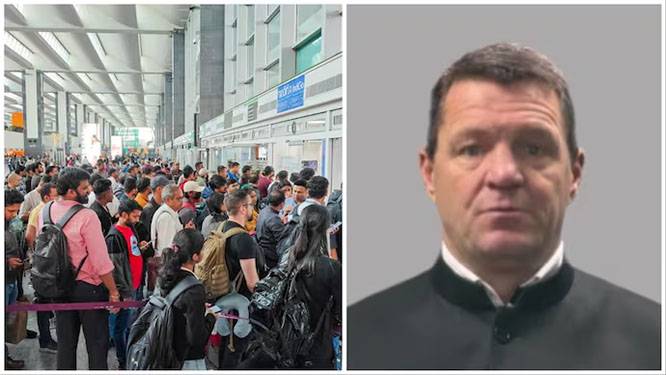
New Delhi, Dec 5: IndiGo CEO Pieter Elbers issued a public apology this evening after more than a thousand flights were cancelled today, making it the "most severely impacted day" in terms of cancellations. The biggest airline of the country cancelled "more than half" of its daily number of flights on Friday, said Elbers. He also said that even though the crisis will persist on Saturday, the airline anticipates fewer than 1,000 flight cancellations.

"Full normalisation is expected between December 10 and 15, though IndiGo cautions that recovery will take time due to the scale of operations," the IndiGo CEO said. 

IndiGo operates around 2,300 domestic and international flights daily.

Pieter Elbers, while apologising for the major inconvenience due to delays and cancellations, said the situation is a result of various causes.

The crisis at IndiGo stems from new regulations that boost pilots' weekly rest requirements by 12 hours to 48 and allow only two night-time landings per week, down from six. IndiGo has attributed the mass cancellations to "misjudgment and planning gaps".

Elbers also listed three lines of action that the airline will adopt to address the issue.

"Firstly, customer communication and addressing your needs, for this, messages have been sent on social media. And just now, a more detailed communication with information, refunds, cancellations and other customer support measures was sent," he said.

The airline has also stepped up its call centre capacity.

"Secondly, due to yesterday's situation, we had customers stranded mostly at the nation's largest airports. Our focus was for all of them to be able to travel today itself, which will be achieved. For this, we also ask customers whose flights are cancelled not to come to the airports as notifications are sent," the CEO said.

"Thirdly, cancellations were made for today to align our crew and planes to be where they need to start tomorrow morning afresh. Earlier measures of the last few days, regrettable, have proven not to be enough, but we have decided today to reboot all our systems and schedules, resulting in the highest numbers of cancellations so far, but imperative for progressive improvements starting from tomorrow," he added.

As airports witnessed chaotic scenes, the Directorate General of Civil Aviation (DGCA) stepped in to grant IndiGo a temporary exemption from stricter night duty rules for pilots. It also allowed substitution of leaves with a weekly rest period. 

Civil Aviation Minister Ram Mohan Naidu has said a high-level inquiry will be ordered and accountability will be fixed.

Comments

Add new comment

  • Coastaldigest.com reserves the right to delete or block any comments.
  • Coastaldigset.com is not responsible for its readers’ comments.
  • Comments that are abusive, incendiary or irrelevant are strictly prohibited.
  • Please use a genuine email ID and provide your name to avoid reject.
News Network
December 4,2025

indigocrisis.jpg

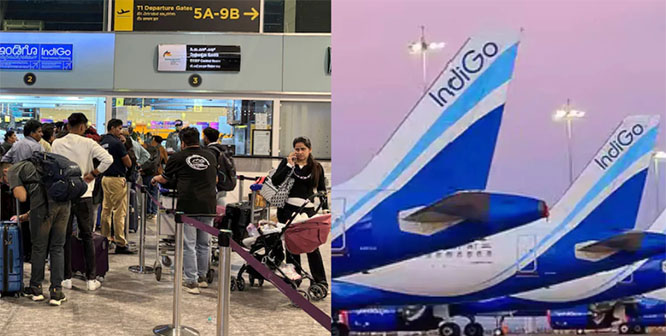
Angry outbursts, long queues, and desperate appeals filled airports across India today as IndiGo grappled with a severe operational breakdown. Hundreds of flights have been cancelled or delayed, leaving thousands of passengers stranded through the night and forcing many to spend long hours at helpdesks.

Social media was flooded with videos of fliers pleading for assistance, accusing the airline of misleading updates, and demanding accommodation after being stuck for 10 to 12 hours at airports such as Hyderabad and Bengaluru.

What Triggered the Meltdown?

IndiGo has attributed the widespread disruption to “a multitude of unforeseen operational challenges.” These include:

•    Minor technology glitches
•    Winter-season schedule adjustments
•    Bad weather
•    Congestion in the aviation network
•    New crew rostering rules (Flight Duty Time Limitations or FDTL)

Among these, the most disruptive has been the implementation of the updated FDTL norms introduced by the Directorate General of Civil Aviation (DGCA) in January 2024.

These rules were designed to reduce pilot fatigue and improve passenger safety. Key changes include:

•    Longer weekly rest periods for flight crew
•    A revised definition of “night,” extending it by an extra hour
•    Tighter caps on flight duty timing and night landings
•    Cutting night shifts for pilots and crew from six per roster cycle to just two

Once these norms became fully enforceable, airlines were required to overhaul rosters well in advance. For IndiGo, this triggered a sudden shortage of crew available for duty, leading to cascading delays and cancellations.

Why IndiGo Was Hit the Hardest

IndiGo is India’s largest airline by a wide margin, operating over 2,200 flights daily. That’s roughly double the number operated by Air India.

When an airline of this size experiences even a 10–20% disruption, it translates to 200–400 flights being delayed or grounded — producing massive spillover effects across the country.

IndiGo also relies heavily on high-frequency overnight operations, a model typical of low-cost carriers that aim to maximise aircraft utilisation and reduce downtime. The stricter FDTL norms clash with these overnight-heavy schedules, forcing the airline to pull back services.

Aviation bodies have also criticised IndiGo’s preparedness. The Airline Pilots' Association of India (ALPA) said airlines were given a two-year window to plan for the new rules but “started preparing rather late.” IndiGo, it said, failed to rebuild crew rosters 15 days in advance as required.

The Federation of Indian Pilots (FIP) went further, calling the crisis the result of IndiGo’s “prolonged and unorthodox lean manpower strategy,” and alleging that the airline adopted a hiring freeze even as it knew the new rules would require more careful staffing.

How Many Flights Are Affected?

In the past 48 hours, over 300 flights have been cancelled. At least 100 more are expected to be cancelled today.

City-wise impact:

•    Hyderabad: 33 expected cancellations; several fliers stranded overnight
•    Bengaluru: over 70 expected cancellations
•    Delhi, Mumbai, Chennai, Kolkata: widespread delays and missed connections

Passengers shared distressing accounts online.

One customer at Hyderabad airport said they waited from 6 PM to 9 AM with “no action taken” regarding their delayed Pune flight. Another said IndiGo repeatedly told them the crew was “arriving soon,” only for the delay to stretch over 12 hours.

IndiGo has apologised for the disruption and promised that operations will stabilise within 48 hours, adding that “calibrated adjustments” are being made to contain the chaos.

What Should Passengers Do Now?

For those flying in the next few days, especially with IndiGo, here are key precautions:

1. Keep Checking Flight Status
Monitor your flight closely before leaving for the airport, as delays may be announced last-minute.

2. Arrive Early
Expect long queues at counters and security due to crowding and rescheduling.

3. Carry Essentials
Pack snacks, water, basic medicines, chargers, and items for children or senior citizens. Extended waiting times should be anticipated.

4. Use Flexible Booking Options
If you booked tickets with a free-date-change or cancellation option, consider using them.
If you haven’t booked yet, prefer refundable or flexible fares, or even consider alternate airlines.

5. Follow IndiGo’s Updates
Keep an eye on IndiGo’s official social media channels and contact customer support for rebooking and refund queries.

What Needs to Change?

Pilot groups have raised concerns not just about staffing but also the planning practices behind it.
The Federation of Indian Pilots accused IndiGo of:

•    Imposing an unexplained hiring freeze despite knowing the FDTL changes were coming
•    Entering non-poaching agreements that limited talent movement
•    Keeping pilot pay frozen
•    Underestimating the need to restructure operations in advance

They have urged DGCA to approve seasonal schedules only after airlines prove they have adequate pilot strength under the new norms.

ALPA also warned that some airlines might be using the delays as an “immature pressure tactic” to push DGCA for relaxations in the new rules — which, if granted, could compromise the very safety standards the norms were meant to protect.

Both pilot bodies stressed that no exemption should dilute safety, and any deviations should be based solely on scientific risk assessment.

Is a Solution in Sight?

While IndiGo says normalcy will return within two days, aviation experts believe that fully stabilising operations could take longer, depending on how quickly the airline can:
•    Re-align rosters
•    Mobilise rested crew
•    Boost staffing
•    Adjust its winter schedule to match regulatory requirements
Passengers are advised to remain prepared for continued delays over the next few days as the airline works through its backlog. 

Comments

Add new comment

  • Coastaldigest.com reserves the right to delete or block any comments.
  • Coastaldigset.com is not responsible for its readers’ comments.
  • Comments that are abusive, incendiary or irrelevant are strictly prohibited.
  • Please use a genuine email ID and provide your name to avoid reject.
News Network
November 22,2025

gaza.jpg

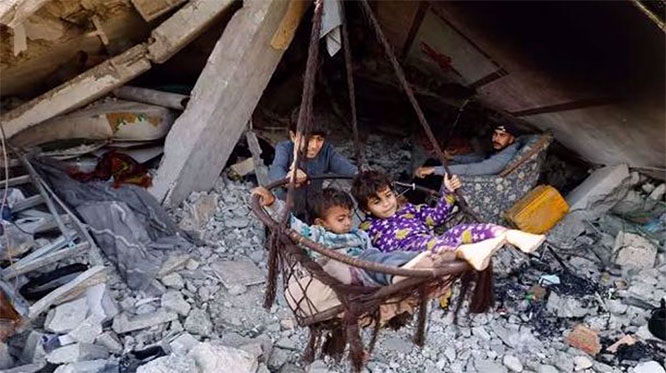
The Israeli regime’s forces have killed two Palestinian children in the Gaza Strip every day since the ceasefire began in early October, UNICEF has warned.

The UN children’s agency said on Friday that Israeli forces continue to attack Palestinians in Gaza even though the agreement was meant to stop the killing.

“Since 11 October, while the ceasefire has been in effect, at least 67 children have been killed in conflict-related incidents in the Gaza Strip. Dozens more have been injured. That is an average of almost two children killed every day since the ceasefire took effect,” UNICEF spokesperson Ricardo Pires said in Geneva, reminding that each number in the statistics represents a child whose life had ended violently.

“These are not statistics,” he said. “Each child had a story, a family, and a future that was stolen from them.”

Data from Palestinian factions, human rights groups, and government bodies recorded since the US-brokered ceasefire deal went into effect on October 10 show that Israeli forces have carried out numerous attacks, each constituting a separate ceasefire violation.

UNICEF teams say they repeatedly continue to witness heart-wrenching scenes of fearful Palestinian children sleeping outdoors with amputated limbs, while others live as orphans in flooded, makeshift shelters.

“I saw this myself in August. There is no safe place for them. The world cannot normalize their suffering,” Pires said, lamenting that the UN could “do a lot more if the aid that is really needed was entering faster.”

The UNICEF spokesperson warned that with the advent of winter, the risks for hundreds of thousands of displaced children will increase.

He warned, “The stakes are incredibly high” for children as winter acts as a threat multiplier, where children have no heating, no insulation, and few blankets. He said respiratory infections rise.

“Too many children have already paid the highest price,” Pires said. “Too many are still paying it, even under a ceasefire. The world promised them it would stop and that we would protect them.”

“Now we must act like it,” the UNICEF spokesperson added.

Since the Israeli regime launched its genocidal war against Palestinians in Gaza in October 2023, it has killed nearly 70,000 people in the territory, most of them women and children, and injured over 170,000 more, while reducing most of the structures in the enclave to rubble.

Comments

Add new comment

  • Coastaldigest.com reserves the right to delete or block any comments.
  • Coastaldigset.com is not responsible for its readers’ comments.
  • Comments that are abusive, incendiary or irrelevant are strictly prohibited.
  • Please use a genuine email ID and provide your name to avoid reject.