Not just 'Missile Man': Here are five scientific contributions of APJ Abdul Kalam on his 89th birth anniversary

News Network
October 15, 2020

kalam.jpg

New Delhi, Oct 15: From being the people's President to spearheading the development of the most significant Indian missiles, late President Dr APJ Abdul Kalam has contributed to the development of the country in different spheres.

As an aerospace scientist, Kalam worked with India's two major space research organisations - Defence Research and Development Organisation (DRDO) and Indian Space Research Organisation (ISRO).

While, his work in the development and operationalisation of Indigenous guided missiles - AGNI and PRITHVI - earned him the title of the 'Missile Man of India,' there are many more ways in which Kalam has helped India in the division of science and technology.

On the 89th birth anniversary of Dr APJ Abdul Kalam, here are 5 of his scientific contributions to the country: -

1. Directed the project to develop India's first Satellite Launch Vehicle (SLV)

Back in 1980s, when India had hardly dreamt of having its indigenous Satellite Launch Vehicle (SLV), Dr Kalam's over 10-year-long hard work as the project director for the development of the indigenous Satellite Launch Vehicle at ISRO led to the ground-breaking scientific development.

It was in July 1980, that India's SLV-III successfully deployed the Rohini satellite in the near-Earth orbit leading to the country becoming a member of the exclusive Space Club.

2. Directed projects for the development of ballistic missiles

Kalam also headed the projects Devil and Valiant which had the aim of developing ballistic missiles using the technology behind the successful SLV program. Under mission Kalam with other projects, members developed many missiles including AGNI which is an intermediate-range ballistic missile and PRITHVI which is a surface-to-surface missile.

3. Headed multiple nuclear tests at Pokhran

Serving as the Chief Scientific Adviser to the then Prime Minister, Kalam played a major role in heading the Pokhran-II nuclear testing leading to him being known as the best nuclear scientist of the country at that time. The nuclear testing under the supervision of Kalam during the period of July 1992 to December 1999 made India a nuclear-armed state.

4. He worked in making healthcare accessible to all

Working jointly with cardiologist Soma Raju, the late President developed a cost-effective coronary stent 'Kalam-Raju Stent' which helped in making healthcare accessible to all.

5. Developed the rugged 'Kalam-Raju tablet'

The duo of Kalam and Soma Raju later in 2012 designed a rugged tablet computer for better health care administration in the rural pockets of the country. They termed it the 'Kalam-Raju tablet.'

For his work in the stream of science and politics, the 11th President was also awarded India's highest civilian honour or the Bharat Ratna.

Kalam breathed his last on July 27, 2015, while delivering a lecture at the Indian Institute of Management Shillong when he collapsed and died from a cardiac arrest.

Five years after his demise, his contributions are still remembered as some of the best scientific and technological developments in the country.

Comments

YUVI
 - 
Friday, 19 Nov 2021

This Information Helped Me A Lot

Add new comment

  • Coastaldigest.com reserves the right to delete or block any comments.
  • Coastaldigset.com is not responsible for its readers’ comments.
  • Comments that are abusive, incendiary or irrelevant are strictly prohibited.
  • Please use a genuine email ID and provide your name to avoid reject.
News Network
November 30,2025

The United Nations Committee against Torture (CAT) has condemned the Israeli regime for enforcing a policy of “organized torture” against Palestinians.

In a report published on Friday, CAT stated that the occupying regime enforces a deliberate policy of “organized and widespread torture and ill-treatment” against Palestinian abductees, particularly since October 7, 2023, when Israel launched its genocidal war on Gaza.

The committee expressed “deep concern over repeated severe beatings, dog attacks, electrocution, water-boarding, use of prolonged stress positions [and] sexual violence” inflicted on Palestinians.

Palestinian prisoners were degraded by “being made to act like animals or being urinated on,” systematically denied medical care, and subjected to excessive restraints, “in some cases resulting in amputation,” the report added.

CAT also condemned the routine application of “unlawful combatants law” to justify the prolonged detention without trial of thousands of Palestinian men, women, and children.

More than 10,000 Palestinians, including women and children, are currently held in Israeli prisons, according to Palestinian and international human rights groups, with 3,474 Palestinians in “administrative detention,” meaning they are imprisoned without trial for indefinite periods.

The report highlighted the “high proportion of children who are currently detained without charge or on remand,” noting that while Israel sets the age of criminal responsibility at 12, even younger children have been abducted.

Children designated as security prisoners face severe restrictions on family contact, may be subjected to solitary confinement, and are denied access to education, in clear violation of international law.

The committee further suggested that Israel’s policies across the Occupied Territories constitute collective torture against the Palestinian population.

“A range of policies adopted by Israel in the course of its continued unlawful presence in the Occupied Palestinian Territory amounts to cruel, inhuman or degrading living conditions for the Palestinian population,” the report said.

On Thursday, the Palestinian resistance movement Hamas condemned the systematic killing and torture of Palestinian abductees in Israeli prisons, urging international action to halt these abuses.

Citing human rights data, Hamas stated that 94 Palestinians have been killed in Israeli prisons since the start of Tel Aviv’s genocidal war on Gaza.

“This reflects an organized criminal approach that has turned these prisons into direct killing grounds to eliminate our people,” the resistance movement said.

Hamas called on the international community, the UN, and human rights organizations to immediately pressure Israel to end crimes against prisoners and uphold their rights as guaranteed by all international conventions and norms.

Comments

Add new comment

  • Coastaldigest.com reserves the right to delete or block any comments.
  • Coastaldigset.com is not responsible for its readers’ comments.
  • Comments that are abusive, incendiary or irrelevant are strictly prohibited.
  • Please use a genuine email ID and provide your name to avoid reject.
News Network
December 7,2025

SHRIMP.jpg

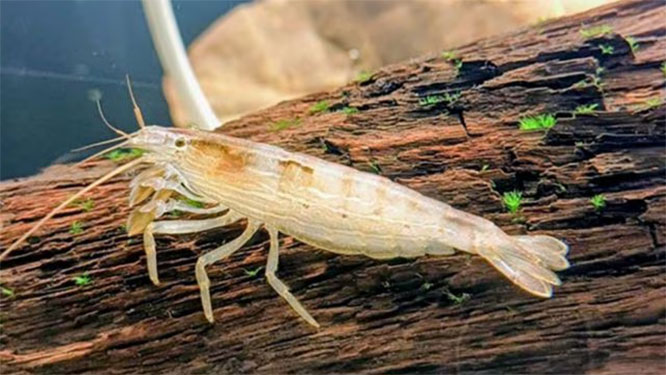
Mangaluru, Dec 7: A rare bamboo shrimp has been rediscovered on mainland India more than 70 years after it was last reported, confirming for the first time the presence of Atyopsis spinipes in the country. The find was made by researchers from the Centre for Climate Change Studies at Sathyabama Institute of Science and Technology, Chennai, during surveys in Karnataka and Odisha.

The team — shrimp expert Dr S Prakash, PhD scholar K Kunjulakshmi, and Mangaluru-based researcher Maclean Antony Santos — combined field surveys, ecological assessments and DNA analysis to identify the elusive species. Their findings, published in Zootaxa, resolve decades of taxonomic confusion stemming from a 1951 report that misidentified the species as Atyopsis moluccensis without strong evidence.

The shrimp has now been confirmed at two locations: the Mulki–Pavanje estuary near Mangaluru and the Kuakhai River in Bhubaneswar. Historical specimens from the Andaman Islands, previously labelled as A. moluccensis, were also found to be misidentified and actually belong to A. spinipes.

The rediscovery began after an aquarium hobbyist in Odisha spotted a shrimp in 2022, prompting systematic surveys across Udupi, Karwar and Mangaluru. Four female specimens were collected in Mulki and one in Odisha, all genetically matching.

Researchers warn the species may exist in very small, vulnerable populations as freshwater habitats face increasing pressure from pollution, sand mining and infrastructure development. All verified specimens have been deposited with the Zoological Survey of India for future reference.

Comments

Add new comment

  • Coastaldigest.com reserves the right to delete or block any comments.
  • Coastaldigset.com is not responsible for its readers’ comments.
  • Comments that are abusive, incendiary or irrelevant are strictly prohibited.
  • Please use a genuine email ID and provide your name to avoid reject.
News Network
November 28,2025

ministerPM.jpg

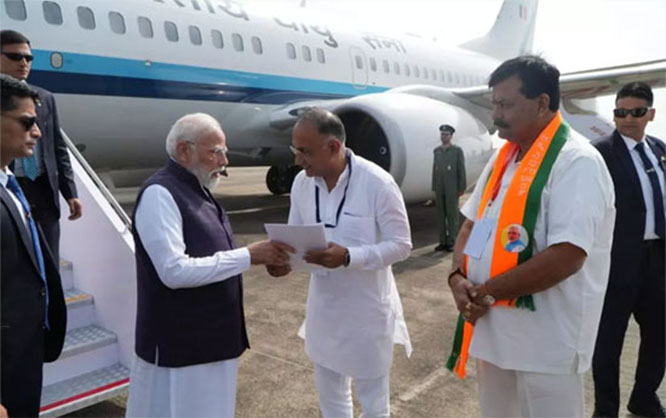
Mangaluru, Nov 28: Karnataka Health Minister and Dakshina Kannada district in-charge minister Dinesh Gundu Rao on Friday handed over Chief Minister Siddaramaiah’s letter to Prime Minister Narendra Modi, highlighting the severe distress faced by farmers due to crashing crop prices.

PM Modi arrived at the Mangaluru International Airport en route to Udupi, where Gundu Rao welcomed him and submitted the letter. The chief minister’s message stressed that farmers are suffering heavy losses because maize and green gram are being bought far below the Minimum Support Price (MSP). The state urged the Centre to immediately begin procurement at MSP.

According to the letter, Karnataka has a bumper harvest this year—over 54.74 lakh metric tons of maize and 1.98 lakh metric tons of green gram—yet farmers are unable to secure fair prices. Against the MSP of ₹2,400/MT for maize and ₹8,768/MT for green gram, market rates have plunged to ₹1,600–₹1,800 and ₹5,400 respectively.

The chief minister has requested the Centre to:

• Direct NAFED, FCI and NCCF to start MSP procurement immediately.
• Ensure ethanol units purchase maize directly from farmers or FPOs.
• Increase Karnataka’s ethanol allocation, citing high production capacity.
• Stop maize imports, which have depressed domestic prices.
• Relax quality norms for green gram, allowing up to 10% discoloration due to rains.

The letter stresses that MSP is crucial for farmer dignity and income stability and calls for swift central intervention to prevent a deepening crisis.

Comments

Add new comment

  • Coastaldigest.com reserves the right to delete or block any comments.
  • Coastaldigset.com is not responsible for its readers’ comments.
  • Comments that are abusive, incendiary or irrelevant are strictly prohibited.
  • Please use a genuine email ID and provide your name to avoid reject.