Eminent historians hit out at BJP for calling Tipu Sultan “anti-national”

November 8, 2015

Bengaluru, Nov 8: The Karnataka government's decision to observe Tipu Sultan's birthday has stirred a debate with the Right, led by the Sangh Parivar, slamming it and those on the other side of the ideological spectrum supporting it.
tipuf
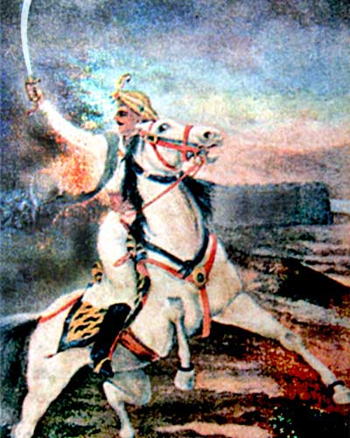
BJP dismissed the legendary Mysore ruler, who has inspired generations of patriots, as an anti-national. Its Mysuru legislator, Go Madhusudan, decried the move to set up a university in Tipu's name and explained the logic behind branding him an anti-national: "Let's not forget the recorded fact that he invited Afghan king Ahmad Shah Abdali to wage a war against India. This shows he was an anti-national and doesn't deserve to be venerated."

The BJP, in its zeal to paint Tipu in anti-national colours, didn't realise the fallacy of its claim. The first time Abdali invaded India in 1748, Tipu was not even born. When Abdali defeated the Marathas at Panipat in 1761, Tipu was only a 10-year-old child and a hostage of Khande Rao, the Mysorean general who had hatched a plot with the Wodeyar queen mother to oust Hyder Ali, then the subedar of Dindigul and jagirdar of Bangalore. In fact, it was the Maratha defeat at Panipat that had helped Tipu's beleaguered father to seize power in 1761.

Tipu Sultan did, however, seek an international alliance with Abdali's grandson, Zaman Shah Durrani, Revolutionary France, Iran and the Ottoman Empire to throw out the British. Now, if he could be called anti-national for this, then we have to imagine the British as the rightful rulers of this country.

Historian Dilip Menon was aghast by this portrayal of Tipu Sultan. "Why does the BJP oppose the celebration of Tipu Sultan's birthday by the Karnataka government? Historically, Tipu is a complex figure: supporter of the French revolution; anti-colonial warrior dying in battle against the East India Company forces at Seringapatam; enlightened monarch and supporter of scholarship. In short, one of the best of the 18th-century monarchs in India. However, amidst his campaigns, there were also stories of forced conversions of Hindus and destruction of temples which to modern eyes fit too well into a Muslim monarch in a Hindu society frame. In the 18th century, the Marathas were depredators of temples from east to south India, stationing troops in the garbha-griha (sanctum sanctorum) of major temples, melting temple metal for ammunition and so on. This was a period of war and normal rules didn't apply, and marauders were no respecters of religious differences. Interestingly, the ideal monarch, Ashoka, ancient exemplar for modern India, self-confessedly killed hundreds of thousands of Hindus in war before converting to Buddhism. So will the BJP reject Ashoka? History means knowing context and not subscribing to polarising myths," Menon said.

Military historian Mandeep Singh Bajwa was plain angry at this "lack of understanding" of Tipu. "Instead of making these empty noises, they should be studying the administration and warfare of Hyder Ali and Tipu Sultan. Today, you have a hostile China and Pakistan as neighbours and a new violent order in the form of Islamic State is rising. Both Hyder Ali and Tipu Sultan managed to stay independent for decades fighting the alliance of the British, the Marathas and the Nizam. Ultimately, the more experienced and professional British prevailed. Yet wasn't it a great achievement to keep your head up even when facing insurmountable odds?" Bajwa said.

Tipu was both feared and hated by the British for being a strong adversary. The hatred found vent in propaganda, which, centuries later, has inspired canards about Tipu that pop-up in social media every now and then. Yet today, the British place Tipu along with Napoleon among the greatest adversaries they ever faced in history.

One of the greatest tributes to Tipu came from Sir Walter Scott, who commented on the abdication of Napoleon Bonaparte in 1814 thus: "Although I never supposed that he (Napoleon) possessed, allowing for some difference of education, the liberality of conduct and political views which were sometimes exhibited by old Haidar Ally, yet I did think he (Napoleon) might have shown the same resolved and dogged spirit of resolution which induced Tippoo Saib to die manfully upon the breach of his capital city with his sabre clenched in his hand."

Comments

Add new comment

  • Coastaldigest.com reserves the right to delete or block any comments.
  • Coastaldigset.com is not responsible for its readers’ comments.
  • Comments that are abusive, incendiary or irrelevant are strictly prohibited.
  • Please use a genuine email ID and provide your name to avoid reject.
News Network
December 2,2025

DKSsiddu.jpg

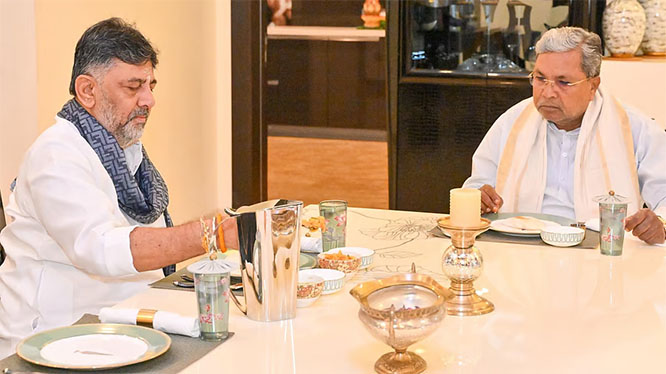
Bengaluru: 'Nati koli saaru' (country chicken curry) considered one of Chief Minister Siddaramaiah’s favourites along with steaming hot idlis was on the breakfast menu at Deputy CM D K Shivakumar’s residence on Tuesday, according to official sources.

The spread also included 'nati koli' fry, vada and pongal, among other items, they said.

In an apparent show of unity, Siddaramaiah visited Shivakumar’s residence for breakfast, just days after the two leaders shared a meal amid a simmering power tussle in the state Congress.

Siddaramaiah drove to the Deputy CM’s residence in Sadashivanagar, where he was received by Shivakumar and his brother D K Suresh, who is a former Congress MP.

Suresh and Kunigal MLA H D Ranganath, a relative of Shivakumar, joined them for breakfast, which featured a mix of vegetarian and non-vegetarian dishes.

Speaking to reporters later, Siddaramaiah said Shivakumar had invited him during his visit to the CM’s residence for breakfast on Saturday.

Asked about the difference between the two meals, the chief minister said, "At his (Shivakumar’s) house it was non-veg, while at my house it was veg. He is a vegetarian, I am a non-vegetarian. I had not prepared non-veg. I told DK to get chicken from the village as you won’t get the original in Bengaluru."

Shivakumar said he had initially invited Siddaramaiah to his residence, but the CM had suggested visiting his place first and reciprocating later. "It was a vegetarian breakfast at the CM’s house on Saturday," he noted.

"Today, I invited him (the CM) to my house. He enjoyed the breakfast, which had his Mysuru taste," Shivakumar added. At this point, Siddaramaiah remarked that Shivakumar’s wife is also from Mysuru.

Saturday’s breakfast at Siddaramaiah’s official residence, held as part of efforts by the Congress high command to ease tensions in the leadership dispute between the two, reportedly included idlis and sambar, according to official sources.

Comments

Add new comment

  • Coastaldigest.com reserves the right to delete or block any comments.
  • Coastaldigset.com is not responsible for its readers’ comments.
  • Comments that are abusive, incendiary or irrelevant are strictly prohibited.
  • Please use a genuine email ID and provide your name to avoid reject.
News Network
November 30,2025

girlnomore.jpg

Mangaluru, Nov 30: A 22-year-old college student succumbed to her injuries at a private hospital in Mangaluru today, days after she was hit by a goods tempo while crossing a road in Padubidri.

The deceased has been identified as Preksha, a resident of Nadsalu Billitota in Padubidri. The fatal incident occurred as Preksha, who was returning home after completing her examination, attempted to cross the service road towards Mangaluru. She was struck by a goods tempo approaching from the Udupi side, causing her to fall and sustain a severe head injury.

Prompt action from local residents ensured she received immediate first aid before being rushed to a hospital in Mangaluru for specialised treatment. Despite medical efforts, she passed away while undergoing care.

Preksha was a student at Karavali College, Vamanjoor on the outskirts of Mangaluru city. The tragedy is compounded by the fact that she belonged to a financially vulnerable family, having previously lost her father. She is survived by her mother and brother.

A case related to the accident has been registered at the Padubidri police station, and an investigation is underway to determine the exact circumstances that led to the collision. The incident highlights the growing concerns over road safety, particularly on busy service roads, and serves as a tragic reminder of the human cost of traffic accidents.

Comments

Add new comment

  • Coastaldigest.com reserves the right to delete or block any comments.
  • Coastaldigset.com is not responsible for its readers’ comments.
  • Comments that are abusive, incendiary or irrelevant are strictly prohibited.
  • Please use a genuine email ID and provide your name to avoid reject.
News Network
December 7,2025

SHRIMP.jpg

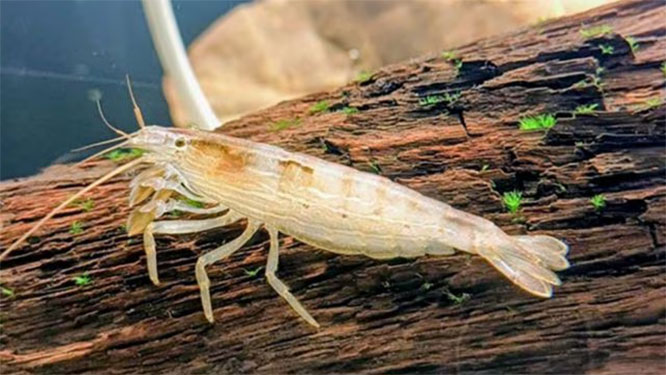
Mangaluru, Dec 7: A rare bamboo shrimp has been rediscovered on mainland India more than 70 years after it was last reported, confirming for the first time the presence of Atyopsis spinipes in the country. The find was made by researchers from the Centre for Climate Change Studies at Sathyabama Institute of Science and Technology, Chennai, during surveys in Karnataka and Odisha.

The team — shrimp expert Dr S Prakash, PhD scholar K Kunjulakshmi, and Mangaluru-based researcher Maclean Antony Santos — combined field surveys, ecological assessments and DNA analysis to identify the elusive species. Their findings, published in Zootaxa, resolve decades of taxonomic confusion stemming from a 1951 report that misidentified the species as Atyopsis moluccensis without strong evidence.

The shrimp has now been confirmed at two locations: the Mulki–Pavanje estuary near Mangaluru and the Kuakhai River in Bhubaneswar. Historical specimens from the Andaman Islands, previously labelled as A. moluccensis, were also found to be misidentified and actually belong to A. spinipes.

The rediscovery began after an aquarium hobbyist in Odisha spotted a shrimp in 2022, prompting systematic surveys across Udupi, Karwar and Mangaluru. Four female specimens were collected in Mulki and one in Odisha, all genetically matching.

Researchers warn the species may exist in very small, vulnerable populations as freshwater habitats face increasing pressure from pollution, sand mining and infrastructure development. All verified specimens have been deposited with the Zoological Survey of India for future reference.

Comments

Add new comment

  • Coastaldigest.com reserves the right to delete or block any comments.
  • Coastaldigset.com is not responsible for its readers’ comments.
  • Comments that are abusive, incendiary or irrelevant are strictly prohibited.
  • Please use a genuine email ID and provide your name to avoid reject.