Ethiopian Airlines Pilot Cried 'Pull Up' Before 737 Max Crash, Preliminary Report Blames Boeing

Agencies
April 5, 2019

Apr 5: Ethiopian Airlines' doomed 737 MAX jet hit excessive speed and was forced downwards by a wrongly-triggered automation system as pilots wrestled to regain control, a preliminary report into the crash that has shaken the aviation world showed on Thursday. Three times the captain, Yared Getachew, cried "pull up", before the Boeing Co plane plunged into a field six minutes after takeoff from Addis Ababa, killing all 157 passengers and crew, said the report by Ethiopian investigators.

The March 10 disaster, and parallels with another 737 MAX crash in Indonesia last October in which 189 people died, has led to the worldwide grounding of Boeing's flagship model.

It has also brought uncomfortable scrutiny over new software, pilot training and regulatory rigour.

The report leaves unanswered questions, aviation experts said, over whether crew followed guidance not to restore power to a troublesome anti-stall system following sensor damage, possibly caused by a bird strike. The plane was also left at unusually high thrust throughout the flight, data suggested.

While the Ethiopian Civil Aviation Authority's Accident Prevention and Investigation Bureau had a remit to investigate rather than blame, it implicitly pointed the finger at Boeing by defending the pilots, recommending the U.S. company fix its control systems, and saying regulators must be certain before allowing the MAX back in the air.

"The crew performed all the procedures repeatedly provided by the manufacturer but was not able to control the aircraft," Transport Minister Dagmawit Moges told a news conference.

"Since repetitive uncommanded aircraft nose down conditions are noticed ... it is recommended that the aircraft control system shall be reviewed by the manufacturer."

Boeing, the world's biggest planemaker and one of the United States' most important exporters with a $500 billion order book for the MAX, says a new software fix for its MCAS anti-stall system will enable pilots to always override if necessary.

Responding to the preliminary report, Boeing Chief Executive Officer Dennis Muilenburg said: "As pilots have told us, erroneous activation of the MCAS function can add to what is already a high workload environment."

"It's our responsibility to eliminate this risk. We own it and we know how to do it," Muilenburg said in a statement.

FRAGMENTS IN A CRATER

According to the preliminary report, an alarm indicating excess speed was heard on the cockpit voice reporter as the jet reached 500 knots (575 miles per hour) - well above operational limits.

The plane had faulty "angle of attack" sensor readings, its nose was pushed down automatically, and the crew lost control despite following recommended instructions, it said.

"Most of the wreckage was found buried in the ground," the report said, indicating the strength of the impact on an arid field in an agricultural zone. No bodies were recovered, only charred fragments among the debris in a crater.

A final report by Ethiopian authorities aided by air-safety experts from the United States and Europe is due to be published within a year.

Boeing has seen billions wiped off its market value since the crash, but its shares rose 2.9 percent on Thursday. Morgan Stanley said the report of flight control problems, whichBoeing was already trying to fix, meant a "worst case scenario" of a new cause was probably off the table.

The software update "along with the associated training and additional educational materials that pilots want in the wake of these accidents, will eliminate the possibility of unintended MCAS activation and prevent an MCAS-related accident from ever happening again," Muilenburg's statement said.

Families of the victims, regulators and travellers around the world have been waiting to find out to what extent Boeing technology or the pilots' actions played a role.

The preliminary report into the crash of a Lion Air 737 MAX in Indonesia suggested pilots also lost control after grappling with the MCAS software, a new automated anti-stall feature that repeatedly lowered the nose based on faulty sensor data.

"Whatever the issues were, they better be 110 percent sure about their resolution, otherwise the 157 lives lost would have been for nothing if something like this happens again," said one woman, who lost her father in the Ethiopian crash, asking not to be identified. "This is a lesson to not take shortcuts in order to try and save bucks."

'PROFITS OVER SAFETY'?

The U.S. Federal Aviation Administration regulator, under fire for its certification of the MAX, cautioned the inquiry was not over. "As we learn more about the accident and findings become available, we will take appropriate action," it said.

Boeing may press to know more about how crew members responded to problems triggered by the faulty data. The New York Times quoted the Ethiopian government's Dagmawit as saying pilots turned MCAS off and on, which is not the step recommended in procedures telling crew to leave it off once disabled.

With bereaved families angry and confused, relatives of an American woman killed in the Ethiopian crash, Samya Stumo, filed the first lawsuit on behalf of a U.S. victim in Chicago. The complaint named Boeing and Rosemount Aerospace Inc, the manufacturer of the angle of attack sensor, as defendants.

Stumo is the niece of consumer activist Ralph Nader, who called for a boycott of the 737 MAX on Thursday.

Pilots around the world were watching closely.

"If the preliminary report from the Ethiopian authorities is accurate, the pilots quickly identified the malfunction and applied the manufacturer's checklist," said Captain Jason Goldberg, spokesman for Allied Pilots Association, which represents American Airlines pilots.

"Following this checklist did not appear to allow the pilots to regain control of the aircraft."

But a former U.S. National Transportation Safety Board investigator questioned the aircraft's speed, which according to data in the report was left on a higher than usual setting. Aviation experts say the sensor fault should have required the crew to take manual control of the power since it would disrupt accurate speed readings in the cockpit.

"The report does not address information about unreliable airspeed procedures which should be considered," said Greg Feith, a former NTSB air safety investigator.

Comments

Add new comment

  • Coastaldigest.com reserves the right to delete or block any comments.
  • Coastaldigset.com is not responsible for its readers’ comments.
  • Comments that are abusive, incendiary or irrelevant are strictly prohibited.
  • Please use a genuine email ID and provide your name to avoid reject.
News Network
December 3,2025

indigo.jpg

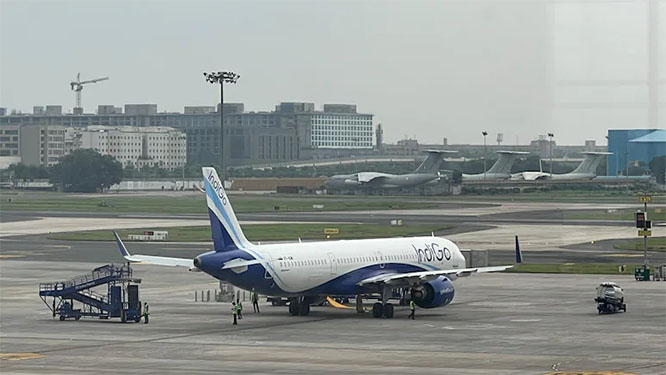
IndiGo, India’s largest airline, is battling one of its worst operational disruptions in recent years, with hundreds of delays and cancellations throwing domestic travel into chaos.

Government data on Tuesday showed its on-time performance plunging to 35%, an unusual dip for a carrier long associated with punctuality.

By Wednesday afternoon, airports in Delhi, Mumbai, Bengaluru and Hyderabad had collectively reported close to 200 cancellations, stranding travellers across the country.

Crew Shortage After New Duty Norms

A major trigger behind the meltdown is a severe crew shortage, especially among pilots, following the rollout of revised Flight Duty Time Limitation (FDTL) norms last month.

The rules mandate longer rest hours and more humane rosters — a shift IndiGo has struggled to incorporate across its vast network.

Sources said several flights were grounded due to lack of cabin crew, while some delays stretched upwards of eight hours.

With IndiGo controlling over 60% of India’s domestic aviation market, the ripple effect has impacted airports nationwide.

IndiGo Issues Apology, Lists “Compounding Factors”

In a statement, IndiGo acknowledged the large-scale disruption:

“We sincerely apologise to customers. A series of unforeseen operational challenges — technology glitches, winter schedule changes, adverse weather, system congestion and updated FDTL norms — created a compounding impact that could not have been anticipated.”

To stabilise operations, the airline has begun calibrated schedule adjustments for the next 48 hours, aiming to restore punctuality. Affected passengers are being offered refunds or alternate travel arrangements, IndiGo said.

What the FDTL Rules Require

The FDTL norms, designed to reduce pilot fatigue, cap duty and flying hours as follows:
•    Maximum 8 hours of flying per day
•    35 hours per week
•    125 hours per month
•    1,000 hours per year

Crew must also receive rest equalling twice the flight duration, with a minimum 10-hour rest period in any 24-hour window.

The DGCA introduced these limits to enhance flight safety.

Hyderabad: 33 Flights Cancelled, Long Queues Reported

Hyderabad’s Rajiv Gandhi International Airport saw heavy early-morning crowds as 33 IndiGo flights (arrivals and departures) were cancelled.

The airport clarified on X that operations were normal, advising passengers to contact IndiGo directly for latest flight status.

Cancellations included flights to and from Visakhapatnam, Goa, Ahmedabad, Delhi, Bengaluru, Chennai, Madurai, Hubli, Bhopal and Bhubaneswar.

Bengaluru: 42 Flights Disrupted

Bengaluru’s Kempegowda International Airport recorded 42 cancellations — 22 arrivals and 20 departures — affecting routes to Delhi, Mumbai, Chennai, Hyderabad, Goa, Kolkata and Lucknow.

Passengers Vent on Social Media

Irate travellers took to X to share their experiences. One passenger stranded in Hyderabad wrote: “I have been here since 3 a.m. and missed an important meeting.”

Another said: “My flight was pushed from 1:55 PM to 2:55 PM and now 4:35 PM. I was informed only three minutes before entering the airport.”

Delhi Airport Hit by Tech Glitch

At Delhi Airport, the disruption deepened due to a slowdown in the Amadeus system — used for reservations, check-ins and departure control.

The technical issue led to longer queues and sluggish processing, adding to delays already worsened by staff shortages.

Comments

Add new comment

  • Coastaldigest.com reserves the right to delete or block any comments.
  • Coastaldigset.com is not responsible for its readers’ comments.
  • Comments that are abusive, incendiary or irrelevant are strictly prohibited.
  • Please use a genuine email ID and provide your name to avoid reject.
News Network
November 24,2025

israelsyra.jpg

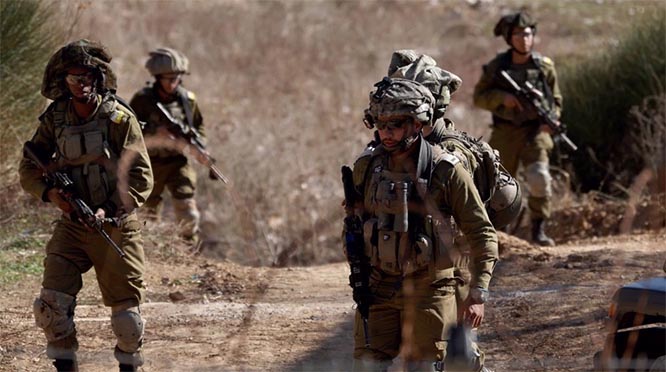
Israeli forces have pushed over the Syrian frontier, erecting a checkpoint and stopping vehicles in the southwestern city of Quneitra, in yet another breach of the Arab country’s sovereignty.

The violation took place on Sunday, when the troops made their way across the border, setting up the outpost near the Ain al-Bayda junction in northern Quneitra, Syrian outlets reported.

According to the al-Ikhbariya paper, an Israeli detachment positioned itself at the junction, halting cars and conducting searches.

The Syrian Arab News Agency (SANA) reported that three Israeli military vehicles then moved further into the northern countryside, deploying between the town of Jubata al-Khashab and the villages of Ofaniya and Ain al-Bayda. The agency added that a separate Israeli unit mounted a new incursion in the central region, approaching the villages of Umm Batina and al-Ajraf.

Residents said such activities have surged in recent months, pointing to Israeli advances onto farmland, leveling of extensive forested areas, arrests, and spread of mobile checkpoints.

The Israeli regime began markedly increasing its military aggression against Syria last year.

The escalation coincided with increasingly ferocious onslaughts throughout the country by the so-called Hay'at Tahrir al-Sham (HTS) Takfiri terrorist group, which the government of President Bashar al-Assad had confined to northwestern Syria. The HTS, however, managed to overthrow the government as the Israeli attacks would pummel the country’s civilian and defensive infrastructure.

Various reports have shown that, during the escalation, the regime conducted more than 1,000 airstrikes on the Syrian territory and over 400 ground raids into the south.

Following the collapse of the Assad government, Tel Aviv also widened its grip over the occupied Golan Heights by taking control of a demilitarized buffer zone, in defiance of a 1974 Disengagement Agreement. Earlier this month, senior Israeli officials, including Prime Minister Benjamin Netanyahu, visited the buffer zone, prompting expressions of alarm on the part of the United Nations.

The United States, the regime’s biggest ally, has, meanwhile, been fraternizing the HTS head Abu Mohammed al-Jolani amid the widely reported prospect of rapprochement with Tel Aviv.

Comments

Add new comment

  • Coastaldigest.com reserves the right to delete or block any comments.
  • Coastaldigset.com is not responsible for its readers’ comments.
  • Comments that are abusive, incendiary or irrelevant are strictly prohibited.
  • Please use a genuine email ID and provide your name to avoid reject.