GoM for 12% GST on AC eateries, composition scheme tax cut

Agencies
October 30, 2017

New Delhi, Oct 30: The ministerial panel working to make GST composition scheme more attractive today suggested slashing tax rate to 1 per cent for manufacturers and restaurants, while easier norms for traders opting for it.

Currently, manufacturers and restaurants with turnover up to Rs 1 crore pay GST under composition scheme at 2 per cent and 5 per cent respectively. The same for traders is 1 per cent.

In its second meeting, the Group of Ministers, headed by Assam Finance Minister Himanta Biswa Sarma, today also suggested doing away with the tax rate distinction between AC and non-AC restaurants, those which are not covered under composition scheme, and tax them at 12 per cent with input credit.

It also suggested that eating out at hotels, which has room tariff of more than Rs 7,500, should attract an uniform 18 per cent tax rate instead of any separate category for 5- star hotel.

The GST Council, chaired by Union Finance Minister Arun Jaitley and comprising his state counterparts, on November 10 in Guwahati is likely to take up the recommendations of the GoM, which was set up earlier this month.

With regard to traders, the GoM suggested two prongedapproach for taxation under the composition scheme.

It suggested that traders who want to exclude the sale proceeds of tax-free items from its turnover, it can pay 1 per cent GST (Goods and Services Tax). However, those traders who pay tax on total turnover, the tax rate has been proposed at 0.5 per cent.

For example, supposing a trader deals in goods which are tax exempt as well as those which are taxable under the GST and has a turnover of Rs 1 crore. Of this, Rs 40 lakh turnover is from sale of tax-exempt items and remaining Rs 60 lakh from taxable goods.

So, traders deciding to pay tax on total Rs 1 crore turnover can pay 0.5 per cent, while those wanting to pay tax on Rs 60 lakh can cough up 1 per cent GST.

"The GoM decided that tax rates under composition scheme for restaurants and manufacturers be lowered to 1 per cent. For traders the ministerial group suggested two tax rates," an official told PTI.

The GoM also recommended allowing businesses who are engaged in inter-state sale to avail the composition scheme, he added.

Around 15 lakh businesses opted for composition scheme, which allows them to pay taxes at a concessional rate and makes compliance easy under the Goods and Services Tax (GST) which rolled out from July 1. There are over 1 crore businesses registered under GST.

Composition scheme is open for manufacturers, restaurants and traders whose turnover does not exceed Rs 1 crore. This threshold was earlier Rs 75 lakh and the GST Council earlier this month raised it to Rs 1 crore from October 1.

While a regular taxpayer has to pay taxes on a monthly basis, a composition supplier is required to file only one return and pay taxes on a quarterly basis.

Also, a composition taxpayer is not required to keep detailed records that a normal taxpayer is supposed to maintain.

The GoM was tasked with revisiting the tax structure of different categories of restaurants with the aim of rationalising or reducing the rates, apart from making composition scheme more attractive for businesses.

Currently, GST is levied at 12 per cent on non-AC restaurants, while it is 18 per cent for air-conditioned ones.

The other members of the GoM are Bihar Deputy Chief Minister Sushil Modi, Jammu and Kashmir Finance Minister Haseeb Drabu, Punjab Finance Minister Manpreet Singh Badal and Chhattisgarh Minister of Commercial Taxes Amar Agrawal.

The GoM has also suggested that manufacturers engaged in job works can be allowed to opt for composition scheme, the official added.

Comments

Add new comment

  • Coastaldigest.com reserves the right to delete or block any comments.
  • Coastaldigset.com is not responsible for its readers’ comments.
  • Comments that are abusive, incendiary or irrelevant are strictly prohibited.
  • Please use a genuine email ID and provide your name to avoid reject.
News Network
November 24,2025

israelsyra.jpg

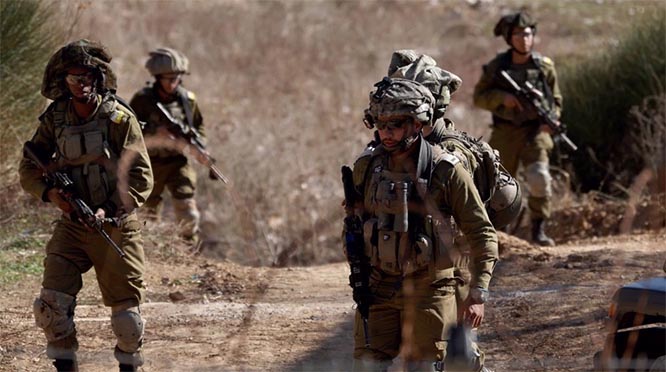
Israeli forces have pushed over the Syrian frontier, erecting a checkpoint and stopping vehicles in the southwestern city of Quneitra, in yet another breach of the Arab country’s sovereignty.

The violation took place on Sunday, when the troops made their way across the border, setting up the outpost near the Ain al-Bayda junction in northern Quneitra, Syrian outlets reported.

According to the al-Ikhbariya paper, an Israeli detachment positioned itself at the junction, halting cars and conducting searches.

The Syrian Arab News Agency (SANA) reported that three Israeli military vehicles then moved further into the northern countryside, deploying between the town of Jubata al-Khashab and the villages of Ofaniya and Ain al-Bayda. The agency added that a separate Israeli unit mounted a new incursion in the central region, approaching the villages of Umm Batina and al-Ajraf.

Residents said such activities have surged in recent months, pointing to Israeli advances onto farmland, leveling of extensive forested areas, arrests, and spread of mobile checkpoints.

The Israeli regime began markedly increasing its military aggression against Syria last year.

The escalation coincided with increasingly ferocious onslaughts throughout the country by the so-called Hay'at Tahrir al-Sham (HTS) Takfiri terrorist group, which the government of President Bashar al-Assad had confined to northwestern Syria. The HTS, however, managed to overthrow the government as the Israeli attacks would pummel the country’s civilian and defensive infrastructure.

Various reports have shown that, during the escalation, the regime conducted more than 1,000 airstrikes on the Syrian territory and over 400 ground raids into the south.

Following the collapse of the Assad government, Tel Aviv also widened its grip over the occupied Golan Heights by taking control of a demilitarized buffer zone, in defiance of a 1974 Disengagement Agreement. Earlier this month, senior Israeli officials, including Prime Minister Benjamin Netanyahu, visited the buffer zone, prompting expressions of alarm on the part of the United Nations.

The United States, the regime’s biggest ally, has, meanwhile, been fraternizing the HTS head Abu Mohammed al-Jolani amid the widely reported prospect of rapprochement with Tel Aviv.

Comments

Add new comment

  • Coastaldigest.com reserves the right to delete or block any comments.
  • Coastaldigset.com is not responsible for its readers’ comments.
  • Comments that are abusive, incendiary or irrelevant are strictly prohibited.
  • Please use a genuine email ID and provide your name to avoid reject.
News Network
November 28,2025

ministerPM.jpg

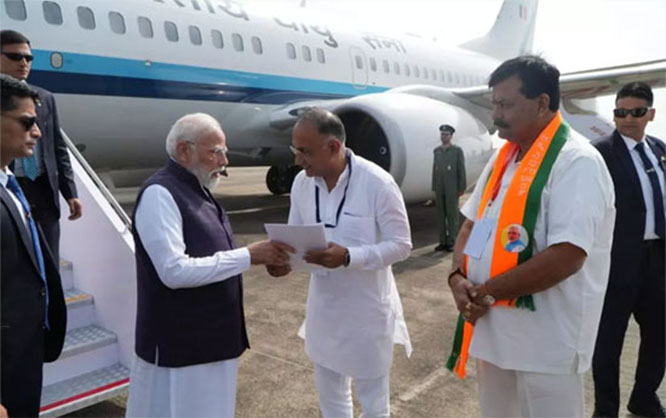
Mangaluru, Nov 28: Karnataka Health Minister and Dakshina Kannada district in-charge minister Dinesh Gundu Rao on Friday handed over Chief Minister Siddaramaiah’s letter to Prime Minister Narendra Modi, highlighting the severe distress faced by farmers due to crashing crop prices.

PM Modi arrived at the Mangaluru International Airport en route to Udupi, where Gundu Rao welcomed him and submitted the letter. The chief minister’s message stressed that farmers are suffering heavy losses because maize and green gram are being bought far below the Minimum Support Price (MSP). The state urged the Centre to immediately begin procurement at MSP.

According to the letter, Karnataka has a bumper harvest this year—over 54.74 lakh metric tons of maize and 1.98 lakh metric tons of green gram—yet farmers are unable to secure fair prices. Against the MSP of ₹2,400/MT for maize and ₹8,768/MT for green gram, market rates have plunged to ₹1,600–₹1,800 and ₹5,400 respectively.

The chief minister has requested the Centre to:

• Direct NAFED, FCI and NCCF to start MSP procurement immediately.
• Ensure ethanol units purchase maize directly from farmers or FPOs.
• Increase Karnataka’s ethanol allocation, citing high production capacity.
• Stop maize imports, which have depressed domestic prices.
• Relax quality norms for green gram, allowing up to 10% discoloration due to rains.

The letter stresses that MSP is crucial for farmer dignity and income stability and calls for swift central intervention to prevent a deepening crisis.

Comments

Add new comment

  • Coastaldigest.com reserves the right to delete or block any comments.
  • Coastaldigset.com is not responsible for its readers’ comments.
  • Comments that are abusive, incendiary or irrelevant are strictly prohibited.
  • Please use a genuine email ID and provide your name to avoid reject.
News Network
December 4,2025

Mangaluru: Chaos erupted at Mangaluru International Airport (MIA) after IndiGo flight 6E 5150, bound for Mumbai, was repeatedly delayed and ultimately cancelled, leaving around 100 passengers stranded overnight. The incident highlights the ongoing country-wide operational disruptions affecting the airline, largely due to the implementation of new Flight Duty Time Limitations (FDTL) norms for crew.

The flight was initially scheduled for 9:25 PM on Tuesday but was first postponed to 11:40 PM, then midnight, before being cancelled around 3:00 AM. Passengers expressed frustration over last-minute communication and the lack of clarity, with elderly and ailing travellers particularly affected. “Though the airline arranged food, there was no proper communication, leaving us confused,” said one family member.

An IndiGo executive at MIA cited the FDTL rules, designed to prevent pilot fatigue by limiting crew working hours, as the cause of the cancellation. While alternative arrangements, including hotel stays, were offered, about 100 passengers chose to remain at the airport, creating tension. A replacement flight was arranged but also faced delays due to the same constraints, finally departing for Mumbai around 1:45 PM on Wednesday. Passengers either flew, requested refunds, or postponed their travel.

The Mangaluru delay is part of a broader crisis for IndiGo. The airline has been forced to make “calibrated schedule adjustments”—a euphemism for widespread cancellations and delays—after stricter FDTL norms came into effect on November 1.

While an IndiGo spokesperson acknowledged unavoidable flight disruptions due to technology issues, operational requirements, and the updated crew rostering rules, the DGCA has intervened, summoning senior airline officials to explain the chaos and outline corrective measures.

The ripple effect has been felt across the country, with major hubs like Bengaluru and Mumbai reporting numerous cancellations. The Mangaluru incident underscores the systemic operational strain currently confronting India’s largest carrier, leaving passengers nationwide grappling with uncertainty and delays.

Comments

Add new comment

  • Coastaldigest.com reserves the right to delete or block any comments.
  • Coastaldigset.com is not responsible for its readers’ comments.
  • Comments that are abusive, incendiary or irrelevant are strictly prohibited.
  • Please use a genuine email ID and provide your name to avoid reject.