



'Grand alliance' failed to take off as Rahul Gandhi did not override local satraps: Tarun Gogoi

Agencies
March 29, 2019

Guwahati, Mar 29: The opposition's anti-BJP 'grand alliance' failed to take the desired shape as Congress president Rahul Gandhi chose not to "override" the sentiments of state leaders who did not favour the move, party veteran and thrice Assam chief minister Tarun Gogoi said.
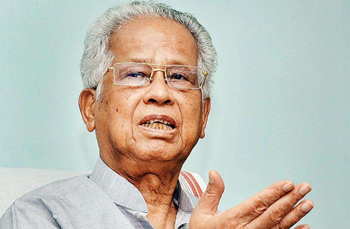
Gogoi, a six-term former MP and union minister, also rubbished the BJP's allegation of the Congress being a "dynastic" party, insisting it was the "most democratic" in the country.

He said despite the opposition alliance being nebulous because of lack of formal tie-ups, the anti-BJP parties were united in their intent of defeating the saffron party and its allies.

"Rahul Gandhi was keen on alliance most of the time. But the local party leaders said no. Our party gives importance to regional leadership. That is why we have not been able to form alliances in many places," Gogoi told PTI in an interview.

"Though the Congress is often dubbed as a dynastic party, it is the most democratic party. Rahul Gandhi does not override the sentiments of local leaders who are heard and given due importance," he said.

Gogoi, when asked if a pre-poll pact between potential partners of the proposed grand alliance could have got them more seats, said nobody can predict that with any amount of certainty.

The Assam leader also appeared to favour the largest party in a winning coalition deciding which direction the government would take.

"Even in case of alliance, the largest party can administer and rule the country. That is also needed. The single largest party must have sufficient strength so that it is not dependent on alliance all the time. Otherwise, the alliance (its smaller constituents) will dictate. And that is not a good for the country," he said.

Referring to the seat sharing agreement between the Congress and CPI(M) for the West Bengal assembly elections in 2016, he said it was not beneficial as "sometimes alliances do not help and go against our own interest".

The Congress leader conceded that uniting all opposition parties on one platform is not an easy task as ideological differences and reluctance to cede political space to each other often come in the way.

"Yes, votes get divided because of this. But who will make the sacrifice? Nobody will sacrifice. Why should we leave our seat when the other party doesn't? Yes, is will be better if things are done in the spirit of give and take, but that is not possible because of divergence and differences among us," he said.

Gogoi was responding to a question about division of secular votes in 2014 that helped BJP secure a majority in the Lok Sabha on its own, the strongest public mandate secured by any party since 1984 when the Congress had won a landslide.

"How much vote did they (BJP) get last time? Only 31 per cent. He (Modi) only gave an impression that he is the most popular prime minister. Probably, he is the only one to become the prime minister with lowest percentage of votes," Gogoi said.

When asked about Congress's failure to clinch an electoral pact with the CPI(M) in West Bengal, the former chief minister said it was because the two were on the rival side of the political divide in Kerala.

"If we praise them here, how will we criticise them there?"

He, however, insisted all opposition parties were unanimous in their view that they must fight the Narendra Modi government's "dictatorial and pro-rich" policies.

The Congress veteran leader claimed the Centre's assertions on development were "sheer propaganda".

"Farm distress, job loss, slowdown in construction and manufacturing, failure to check price rise, fall in exports and decline in GDP....Overall the the Indian economy is in a bad shape. Indications are that the country is on decline. It is not moving up, but going down," he claimed.

Gogoi was, however, optimistic about the Congress's prospects in the elections despite the opposition alliance failing to take off the way it should have.

"The Congress's prospects this time are very good. I think it will get around 200 seats. Indian people are intelligent. They would sometimes punish and then reward," he said, apparently the party's lowest ever tally of 44 seats in 2014 LS polls weighing on his mind.

He also maintained the BJP's tally in states like Uttar Pradesh, Gujarat, Maharashtra, Chhattisgarh, Rajasthan and Madhya Pradesh, where it had scored impressive victories like never before, will go down.

Comments

Add new comment

  • Coastaldigest.com reserves the right to delete or block any comments.
  • Coastaldigset.com is not responsible for its readers’ comments.
  • Comments that are abusive, incendiary or irrelevant are strictly prohibited.
  • Please use a genuine email ID and provide your name to avoid reject.
News Network
December 13,2025

New Delhi: School-going children are picking up drug and smoking habits and engaging in consumption of alcohol, with the average age of introduction to such harmful substances found to be around 13 years, suggesting a need for earlier interventions as early as primary school, a multi-city survey by AIIMS-Delhi said.

The findings also showed substance use increased in higher grades, with grade XI/XII students two times more likely to report use of substances when compared with grade VIII students. This emphasised the importance of continued prevention and intervention through middle and high school.

The study led by Dr Anju Dhawan of AIIMS's National Drug Dependence Treatment Centre, published in the National Medical Journal of India this month, looks at adolescent substance use across diverse regions.

The survey included 5,920 students from classes 8, 9, 11 and 12 in urban government, private and rural schools across 10 cities -- Bengaluru, Chandigarh, Delhi, Dibrugarh, Hyderabad, Imphal, Jammu, Lucknow, Mumbai, and Ranchi. The data were collected between May 2018 and June 2019.

The average age of initiation for any substance was 12.9 (2.8) years. It was lowest for inhalants (11.3 years) followed by heroin (12.3 years) and opioid pharmaceuticals (without prescription; 12.5 years).

Overall, 15.1 per cent of participants reported lifetime use, 10.3 per cent reported past year use, and 7.2 per cent reported use in the past month of any substance, the study found.

The most common substances used in the past year, after tobacco (4 per cent) and alcohol (3.8 per cent), were opioids (2.8 per cent), followed by cannabis (2 per cent) and inhalants (1.9 per cent). Use of non-prescribed pharmaceutical opioids was most common among opioid users (90.2 per cent).

On being asked, 'Do you think this substance is easily available for a person of your age' separately for each substance category, nearly half the students (46.3 per cent) endorsed that tobacco products and more than one-third of the students (36.5 per cent) agreed that a person of their age can easily procure alcohol products.

Similarly, for Bhang (21.9 per cent), ganja/charas (16.1 per cent), inhalants (15.2 per cent), sedatives (13.7 per cent), opium and heroin (10 per cent each), the students endorsed that these can be easily procured.

About 95 per cent of the children, irrespective of their grade, agreed with the statement that 'drug use is harmful'.

The rates of substance use (any) among boys were significantly higher than those of girls for substance use (ever), use in the past year and use in the past 30 days. Compared to grade VIII students, grade IX students were more likely, and grade XI/XII students were twice as likely to have used any substance (ever).

The likelihood of past-year use of any substance was also higher for grade IX students and for grade XI/XII students as compared to grade VIII students.

About 40 per cent of students mentioned that they had a family member who used tobacco or alcohol each. The use of cannabis (any product) and opioid (any product) by a family member was reported by 8.2 per cent and 3.9 per cent of students, respectively, while the use of other substances, such as inhalants/sedatives by family was 2-3 per cent, the study found.

A relatively smaller percentage of students reported use of tobacco or alcohol among peers as compared to among family members, while a higher percentage reported inhalants, sedatives, cannabis or opioid use among peers.

Children using substances (past year) compared to non-users reported significantly higher any substance use by their family members and peers.

There were 25.7 per cent students who replied 'yes' to the question 'conflicts/fights often occur in your family'. Most students also replied affirmatively to 'family members are aware of how their time is being spent' and 'damily members are aware of with whom they spend their time'.

Comments

Add new comment

  • Coastaldigest.com reserves the right to delete or block any comments.
  • Coastaldigset.com is not responsible for its readers’ comments.
  • Comments that are abusive, incendiary or irrelevant are strictly prohibited.
  • Please use a genuine email ID and provide your name to avoid reject.
News Network
December 13,2025

New Delhi: School-going children are picking up drug and smoking habits and engaging in consumption of alcohol, with the average age of introduction to such harmful substances found to be around 13 years, suggesting a need for earlier interventions as early as primary school, a multi-city survey by AIIMS-Delhi said.

The findings also showed substance use increased in higher grades, with grade XI/XII students two times more likely to report use of substances when compared with grade VIII students. This emphasised the importance of continued prevention and intervention through middle and high school.

The study led by Dr Anju Dhawan of AIIMS's National Drug Dependence Treatment Centre, published in the National Medical Journal of India this month, looks at adolescent substance use across diverse regions.

The survey included 5,920 students from classes 8, 9, 11 and 12 in urban government, private and rural schools across 10 cities -- Bengaluru, Chandigarh, Delhi, Dibrugarh, Hyderabad, Imphal, Jammu, Lucknow, Mumbai, and Ranchi. The data were collected between May 2018 and June 2019.

The average age of initiation for any substance was 12.9 (2.8) years. It was lowest for inhalants (11.3 years) followed by heroin (12.3 years) and opioid pharmaceuticals (without prescription; 12.5 years).

Overall, 15.1 per cent of participants reported lifetime use, 10.3 per cent reported past year use, and 7.2 per cent reported use in the past month of any substance, the study found.

The most common substances used in the past year, after tobacco (4 per cent) and alcohol (3.8 per cent), were opioids (2.8 per cent), followed by cannabis (2 per cent) and inhalants (1.9 per cent). Use of non-prescribed pharmaceutical opioids was most common among opioid users (90.2 per cent).

On being asked, 'Do you think this substance is easily available for a person of your age' separately for each substance category, nearly half the students (46.3 per cent) endorsed that tobacco products and more than one-third of the students (36.5 per cent) agreed that a person of their age can easily procure alcohol products.

Similarly, for Bhang (21.9 per cent), ganja/charas (16.1 per cent), inhalants (15.2 per cent), sedatives (13.7 per cent), opium and heroin (10 per cent each), the students endorsed that these can be easily procured.

About 95 per cent of the children, irrespective of their grade, agreed with the statement that 'drug use is harmful'.

The rates of substance use (any) among boys were significantly higher than those of girls for substance use (ever), use in the past year and use in the past 30 days. Compared to grade VIII students, grade IX students were more likely, and grade XI/XII students were twice as likely to have used any substance (ever).

The likelihood of past-year use of any substance was also higher for grade IX students and for grade XI/XII students as compared to grade VIII students.

About 40 per cent of students mentioned that they had a family member who used tobacco or alcohol each. The use of cannabis (any product) and opioid (any product) by a family member was reported by 8.2 per cent and 3.9 per cent of students, respectively, while the use of other substances, such as inhalants/sedatives by family was 2-3 per cent, the study found.

A relatively smaller percentage of students reported use of tobacco or alcohol among peers as compared to among family members, while a higher percentage reported inhalants, sedatives, cannabis or opioid use among peers.

Children using substances (past year) compared to non-users reported significantly higher any substance use by their family members and peers.

There were 25.7 per cent students who replied 'yes' to the question 'conflicts/fights often occur in your family'. Most students also replied affirmatively to 'family members are aware of how their time is being spent' and 'damily members are aware of with whom they spend their time'.

Comments

Add new comment

  • Coastaldigest.com reserves the right to delete or block any comments.
  • Coastaldigset.com is not responsible for its readers’ comments.
  • Comments that are abusive, incendiary or irrelevant are strictly prohibited.
  • Please use a genuine email ID and provide your name to avoid reject.
News Network
December 2,2025

Puttur: The long-cherished dream of a government medical college in Puttur has moved a decisive step closer to reality, with the Karnataka State Finance Department granting its official approval for the construction of a new 300-bed hospital.

Puttur MLA Ashok Kumar Rai announced the crucial development to reporters on Monday, confirming that the official communication from the finance department was issued on November 27. This 300-bed facility is intended to be the cornerstone for the establishment of the government medical college, a project announced in the state budget.

Fast-Track Implementation

The MLA outlined an aggressive timeline for the project:

•    A Detailed Project Report (DPR) for the hospital is expected to be ready within 45 days.

•    The tender process for the construction will be completed within two months.

Following the completion of the tender process, Chief Minister Siddaramaiah is scheduled to lay the foundation stone for the project.

"Setting up a medical college in Puttur is a historical decision by the Congress government in Karnataka," Rai stated. The project has an estimated budget allocation of Rs 1,000 crore for the medical college.

Focus on Medical Education Department

The MLA highlighted a key strategic move: requesting the government to implement the hospital construction through the Medical Education Department instead of the Health and Family Welfare Department. This is intended to streamline the entire process of establishing the full medical college, ensuring the facilities—including labs, operation theatres, and other necessary infrastructure—adhere to the strict guidelines set by the Medical Council of India (MCI). The proposed site for the project is in Bannur.

Rai also took the opportunity to address political criticism, stating that the government has fulfilled its promise despite "apprehensions" and "mocking and criticising" from opposition parties who had failed to take similar initiatives when they were in power. "Chief Minister Siddaramaiah has kept his word," he added.

Comments

Add new comment

  • Coastaldigest.com reserves the right to delete or block any comments.
  • Coastaldigset.com is not responsible for its readers’ comments.
  • Comments that are abusive, incendiary or irrelevant are strictly prohibited.
  • Please use a genuine email ID and provide your name to avoid reject.