



Harsh Vardhan appeals all states, Union Territories to ban sale of smokeless tobacco products, spitting in public

News Network
May 15, 2020

New Delhi, May 15: Union Health Minister Harsh Vardhan has appealed to all states and Union Territories to ban the sale of smokeless tobacco products and spitting in public places in line with the orders of the Rajasthan and Jharkhand governments to prevent the spread of coronavirus infection.

In a letter to all state health ministers, Vardhan said smokeless tobacco users have a tendency to spit in public places or otherwise and therefore, increase health risks especially those of spreading contagious diseases like COVID-19, tuberculosis, swine flu, encephalitis and others.

"Use of smokeless tobacco also creates an unhygienic environment which further spreads the diseases. The large gathering at the retail outlets where smokeless tobacco products are sold, also pose the risk of spread of COVID-19," he said.

In the letter dated May 11, the Union minister underlined that tobacco use is a major threat to public health globally. He also mentioned the Indian Council of Medical Research's (ICMR) appeal to the public not to consume and spit smokeless tobacco products in public places.

Chewing tobacco products and areca nut increases the production of saliva followed by a very strong urge to spit. Spitting in public places could enhance the spread of the COVID-19, Vardhan said.

"By banning spitting in public places, states and UTs can help in achieving not only Swachh Bharat but also Swasth Bharat (Clean India and Healthy India)," he said.

Vardhan also mentioned the May 1 guidelines issued by the Union Home Ministry under the National Disaster Management Act, 2005, which stipulate that "spitting in public places shall be punishable with fine as may be prescribed by the state/UT local authority and consumption of liquor, pan, gutkha, tobacco etc in public places is not allowed".

Appreciating the efforts of Rajasthan and Jharkhand in this direction, the Union Health Minister urged all states to take similar measures and create widespread awareness regarding the harm of spitting in public places.

The Rajasthan government had by an ordinance banned spinning in public places and sale of paan, gutka and tobacco in the wake of the coronavirus outbreak. The Jharkhand too has imposed a complete ban on all types of tobacco products to prevent spitting in public places that could increase the spread of coronavirus infection.

"I am happy to note that the governments of Jharkhand and Rajasthan have already completely banned the sale of tobacco products and spitting in public places. Therefore, I urge upon you to take similar measures and also create widespread awareness in your state/ UT regarding harms of spitting in public places.

"It is also requested that the directions of Ministry of Home Affairs in this regard may be implemented scrupulously and effectively," Vardhan said in the letter.

Tobacco smoking is a known risk factor for many respiratory infections and increases the severity of related diseases. A review of studies by public health experts convened by WHO on April 29 found that smokers are more likely to develop severe diseases, compared to non-smokers, said Binoy Mathew, senior programme officer of Voluntary Health Association of India.

It is one of the main risk factors for a number of chronic ailments, including cancer, lung and cardiovascular diseases, he said, adding that according to the Global Adult Tobacco Survey, with 268 million or 28.6 per cent of all adults in India, the country has the second largest number of tobacco users in the world.

At least 12 lakh die from tobacco-related diseases every year, Mathew said.

Those keen to quit smoking and smokeless products can avail of free of charge telephone-based services launched by the government. The Ministry of Health has set up a National Tobacco Quit Line Services to provide counselling services to help tobacco consumers quit the habit.

Comments

Add new comment

  • Coastaldigest.com reserves the right to delete or block any comments.
  • Coastaldigset.com is not responsible for its readers’ comments.
  • Comments that are abusive, incendiary or irrelevant are strictly prohibited.
  • Please use a genuine email ID and provide your name to avoid reject.
News Network
December 5,2025

indigoCEO.jpg

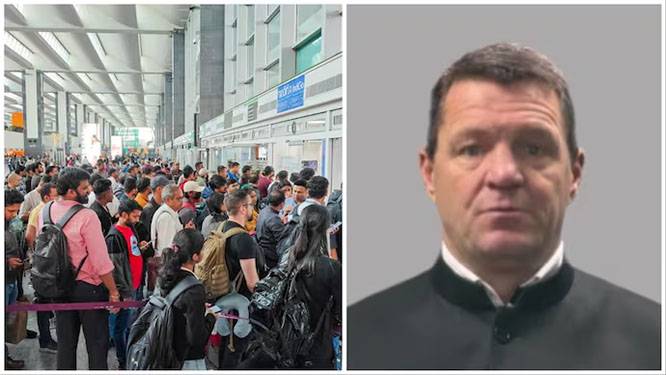
New Delhi, Dec 5: IndiGo CEO Pieter Elbers issued a public apology this evening after more than a thousand flights were cancelled today, making it the "most severely impacted day" in terms of cancellations. The biggest airline of the country cancelled "more than half" of its daily number of flights on Friday, said Elbers. He also said that even though the crisis will persist on Saturday, the airline anticipates fewer than 1,000 flight cancellations.

"Full normalisation is expected between December 10 and 15, though IndiGo cautions that recovery will take time due to the scale of operations," the IndiGo CEO said. 

IndiGo operates around 2,300 domestic and international flights daily.

Pieter Elbers, while apologising for the major inconvenience due to delays and cancellations, said the situation is a result of various causes.

The crisis at IndiGo stems from new regulations that boost pilots' weekly rest requirements by 12 hours to 48 and allow only two night-time landings per week, down from six. IndiGo has attributed the mass cancellations to "misjudgment and planning gaps".

Elbers also listed three lines of action that the airline will adopt to address the issue.

"Firstly, customer communication and addressing your needs, for this, messages have been sent on social media. And just now, a more detailed communication with information, refunds, cancellations and other customer support measures was sent," he said.

The airline has also stepped up its call centre capacity.

"Secondly, due to yesterday's situation, we had customers stranded mostly at the nation's largest airports. Our focus was for all of them to be able to travel today itself, which will be achieved. For this, we also ask customers whose flights are cancelled not to come to the airports as notifications are sent," the CEO said.

"Thirdly, cancellations were made for today to align our crew and planes to be where they need to start tomorrow morning afresh. Earlier measures of the last few days, regrettable, have proven not to be enough, but we have decided today to reboot all our systems and schedules, resulting in the highest numbers of cancellations so far, but imperative for progressive improvements starting from tomorrow," he added.

As airports witnessed chaotic scenes, the Directorate General of Civil Aviation (DGCA) stepped in to grant IndiGo a temporary exemption from stricter night duty rules for pilots. It also allowed substitution of leaves with a weekly rest period. 

Civil Aviation Minister Ram Mohan Naidu has said a high-level inquiry will be ordered and accountability will be fixed.

Comments

Add new comment

  • Coastaldigest.com reserves the right to delete or block any comments.
  • Coastaldigset.com is not responsible for its readers’ comments.
  • Comments that are abusive, incendiary or irrelevant are strictly prohibited.
  • Please use a genuine email ID and provide your name to avoid reject.
News Network
December 4,2025

indigoflight.jpg

Domestic carrier IndiGo has cancelled over 180 flights from three major airports — Mumbai, Delhi and Bengaluru — on Thursday, December 4, as the airline struggles to secure the required crew to operate its flights in the wake of new flight-duty and rest-period norms for pilots.

While the number of cancellations at Mumbai airport stands at 86 (41 arrivals and 45 departures) for the day, at Bengaluru, 73 flights have been cancelled, including 41 arrivals, according to a PTI report that quoted sources.

"IndiGo cancelled over 180 flights on Thursday at three airports-Mumbai, Delhi and Bengaluru," the source told the news agency.

Besides, it had cancelled as many as 33 flights at Delhi airport for Thursday, the source said, adding, "The number of cancellations is expected to be higher by the end of the day."

The Gurugram-based airline's On-Time Performance (OTP) nosedived to 19.7 per cent at six key airports — Delhi, Mumbai, Chennai, Kolkata, Bengaluru and Hyderabad — on December 3, as it struggled to get the required crew to operate its services, down from almost half of December 2, when it was 35 per cent.

"IndiGo has been facing acute crew shortage since the implementation of the second phase of the FDTL (Flight Duty Time Limitations) norms, leading to cancellations and huge delays in its operations across the airports," a source had told PTI on Wednesday.

Chaos continued at several major airports for the third day on Thursday because of the cancellations.

A spokesperson for the Kempegowda International Airport (KIA) in Bengaluru said that 73 IndiGo flights had been cancelled on Thursday.

At least 150 flights were cancelled and dozens of others delayed on Wednesday, airport sources said, leaving thousands of travellers stranded, according to news agency Reuters.

The Directorate General of Civil Aviation (DGCA) has said it is investigating IndiGo flight disruptions and has asked the airline to submit the reasons for the current situation, as well as its plans to reduce flight cancellations and delays.

It may be mentioned here that the pilots' body, Federation of Indian Pilots (FIP), has alleged that IndiGo, despite getting a two-year preparatory window before the full implementation of new flight duty and rest period norms for cockpit crew, "inexplicably" adopted a "hiring freeze".

The FIP said it has urged the safety regulator, the DGCA, not to approve airlines' seasonal flight schedules unless they have adequate staff to operate their services "safely and reliably" in accordance with the New Flight Duty Time Limitations (FDTL) norms.

In a letter to the DGCA late on Wednesday, the FIP urged the DGCA to consider re-evaluating and reallocating slots to other airlines, which have the capacity to operate them without disruption during the peak holiday and fog season if IndiGo continues to "fail in delivering on its commitments to passengers due to its own avoidable staffing shortages."

Comments

Add new comment

  • Coastaldigest.com reserves the right to delete or block any comments.
  • Coastaldigset.com is not responsible for its readers’ comments.
  • Comments that are abusive, incendiary or irrelevant are strictly prohibited.
  • Please use a genuine email ID and provide your name to avoid reject.
News Network
December 6,2025

pilot.jpg

New Delhi: IndiGo, India’s largest airline, faced major operational turbulence this week after failing to prepare for new pilot-fatigue regulations issued by the Directorate General of Civil Aviation (DGCA). The stricter rules—designed to improve flight safety—took effect in phases through 2024, with the latest implementation on November 1. IndiGo has acknowledged that inadequate roster planning led to widespread cancellations and delays.

Below are the key DGCA rules that affected IndiGo’s operations:

1. Longer Mandatory Weekly Rest

Weekly rest for pilots has been increased from 36 hours to 48 hours.

The government says the extended break is essential to curb cumulative fatigue. This rule remains in force despite the current crisis.

2. Cap on Night Landings

Pilots can now perform only two night landings per week—a steep reduction from the earlier limit of six.

Night hours, defined as midnight to early morning, are considered the least alert period for pilots.

Given the disruptions, this rule has been temporarily relaxed for IndiGo until February 10.

3. Reduced Maximum Night Flight Duty

Flight duty that stretches into the night is now capped at 10 hours.

This measure has also been kept on hold for IndiGo until February 10 to stabilize operations.

4. Weekly Rest Cannot Be Replaced With Personal Leave

Airlines can no longer count a pilot’s personal leave as part of the mandatory 48-hour rest.

Pilots say this closes a loophole that previously reduced actual rest time.

Currently, all airlines are exempt from this rule to normalise travel.

5. Mandatory Fatigue Monitoring

Airlines must submit quarterly fatigue reports along with corrective actions to DGCA.

This system aims to create a transparent fatigue-tracking framework across the industry.

The DGCA has stressed that these rules were crafted to strengthen flight safety and align India with global fatigue-management standards. The temporary relaxations are expected to remain until February 2025, giving IndiGo time to stabilise its schedules and restore normal air travel.

Comments

Add new comment

  • Coastaldigest.com reserves the right to delete or block any comments.
  • Coastaldigset.com is not responsible for its readers’ comments.
  • Comments that are abusive, incendiary or irrelevant are strictly prohibited.
  • Please use a genuine email ID and provide your name to avoid reject.
