Coronavirus is a master of mixing its genome; vaccines may become less effective: Scientists

Agencies
February 6, 2021

Feb 6: In recent weeks, scientists have sounded the alarm about new variants of the coronavirus that carry a handful of tiny mutations, some of which seem to make vaccines less effective.

But it is not just these small genetic changes that are raising concerns. The novel coronavirus has a propensity to mix large chunks of its genome when it makes copies of itself. Unlike small mutations, which are like typos in the sequence, a phenomenon called recombination resembles a major copy-and-paste error in which the second half of a sentence is completely overwritten with a slightly different version.

A flurry of new studies suggests that recombination may allow the virus to shapeshift in dangerous ways. But in the long term, this biological machinery may offer a silver lining, helping researchers find drugs to stop the virus in its tracks.

“There’s no question that recombination is happening,” said Nels Elde, an evolutionary geneticist at the University of Utah. “And in fact, it’s probably a bit underappreciated and could be at play even in the emergence of some of the new variants of concern.”

The coronavirus mutations that most people have heard about, such as those in the B.1.351 variant first detected in South Africa, are changes in a single “letter” of the virus’s long genetic sequence, or RNA. Because the virus has a robust system for proofreading its RNA code, these small mutations are relatively rare.

Recombination, in contrast, is rife in coronaviruses.

Researchers at Vanderbilt University Medical Center led by the virus expert Mark Denison recently studied how things go awry during replication in three coronaviruses, including SARS-CoV-2, which causes COVID. The team found that all three viruses showed “extensive” recombination when replicating separately in the laboratory.

Scientists worry that recombination might allow for different variants of the coronavirus to combine into more dangerous versions inside of a person’s body. The B.1.1.7 variant first detected in Britain, for example, had more than a dozen mutations that seemed to appear suddenly.

Elde said that recombination may have merged mutations from different variants that arose spontaneously within the same person over time or that co-infected someone simultaneously. For now, he said, that idea is speculative: “It’s really hard to see these invisible scars from a recombination event.” And although getting infected with two variants at once is possible, it’s thought to be rare.

Katrina Lythgoe, an evolutionary epidemiologist at the Oxford Big Data Institute in Britain, is skeptical that co-infection happens often. “But the new variants of concern have taught us that rare events can still have a big impact,” she added.

Recombination might also allow two different coronaviruses from the same taxonomic group to swap some of their genes. To examine that risk more closely, Elde and his colleagues compared the genetic sequences of many different coronaviruses, including SARS-CoV-2 and some of its distant relatives known to infect pigs and cattle.

Using specially developed software, the scientists highlighted the places where those viruses’ sequences aligned and matched — and where they didn’t. The software suggested that over the past couple of centuries of the viruses’ evolution, many of the recombination events involved segments that made the spike protein, which helps the virus enter human cells. That’s troubling, the scientists said, because it could be a route through which one virus essentially equips another to infect people.

“Through this recombination, a virus that can’t infect people could recombine with a virus like SARS-CoV-2 and take the sequence for spike, and could become able to infect people,” said Stephen Goldstein, an evolutionary virologist who worked on the study.

The findings, which were posted online on Thursday but have not yet been published in a scientific journal, offered fresh evidence that related coronaviruses are quite promiscuous in terms of recombining with each other. There were also many sequences that cropped up in the coronaviruses that seemed to come out of nowhere.

“In some cases, it almost looks like there’s sequence dropping in from outer space, from coronaviruses we don’t even know about yet,” Elde said. The recombination of coronaviruses across totally different groups has not been closely studied, in part because such experiments would potentially have to undergo government review in the United States because of safety risks.

Feng Gao, a virologist at Jinan University in Guangzhou, China, said that although the new software from the Utah researchers found unusual sequences in coronaviruses, that doesn’t provide ironclad evidence for recombination. It could simply be that they evolved that way on their own.

“Diversity, no matter how much, does not mean recombination,” Gao said. “It can well be caused by huge diversification during viral evolution.”

Scientists have limited knowledge about whether recombination could give rise to new pandemic coronaviruses, said Vincent Munster, a viral ecologist with the National Institute of Allergy and Infectious Diseases who has studied coronaviruses for years.

Still, that evidence is growing. In a study released in July and formally published today, Munster and his collaborators suggested that recombination is likely how both SARS-CoV-2 and the virus behind the original SARS outbreak in 2003 both ended up with a version of the spike protein that allows them to deftly enter human cells. That spike protein binds to a particular entry point in human cells called ACE2. That paper calls for greater surveillance of coronaviruses to see if there are others that use ACE2 and may thus pose similar threats to people.

Some scientists are studying recombination machinery not only to fend off the next pandemic, but to help fight this one.

For example, in his recent study on the recombination of three coronaviruses, Denison of Vanderbilt found that blocking an enzyme known as nsp14-ExoN in a mouse coronavirus caused recombination events to plummet. This suggested that the enzyme is vital to coronaviruses’ ability to mix-and-match their RNA as they replicate.

Now, Denison and Sandra Weller, a virologist at the University of Connecticut School of Medicine, are investigating whether this insight could treat people with COVID.

Certain antiviral drugs such as remdesivir fight infections by serving as RNA decoys that gum up the viral replication process. But these medications don’t work as well as some had hoped for coronaviruses. One theory is that the nsp14-ExoN enzyme chucks out the errors caused by these drugs, thereby rescuing the virus.

Denison and Weller, among others, are looking for drugs that would block the activity of nsp14-ExoN, allowing remdesivir and other antivirals to work more Weller likens this approach to the cocktail therapies for HIV, which combine molecules that act on different aspects of the virus’s replication. “We need combination therapy for coronaviruses,” she said.

Weller notes that nsp14-ExoN is shared across coronaviruses, so a drug that successfully suppresses it could act against more than just SARS-CoV-2. She and Denison are still at the early stages of drug discovery, testing different molecules in cells.

Other scientists see potential in this approach, not only to make drugs like remdesivir work better, but to prevent the virus from fixing any of its replication mistakes.

“I think it’s a good idea,” Goldstein said, “because you would push the virus into what’s known as ‘error catastrophe’ — basically that it would mutate so much that it’s lethal for the virus.”

Comments

Add new comment

  • Coastaldigest.com reserves the right to delete or block any comments.
  • Coastaldigset.com is not responsible for its readers’ comments.
  • Comments that are abusive, incendiary or irrelevant are strictly prohibited.
  • Please use a genuine email ID and provide your name to avoid reject.
News Network
December 2,2025

A major upgrade in safety and monitoring is planned for Haj 2026, with every Indian pilgrim set to receive a Haj Suvidha smart wristband linked to the official Haj Suvidha mobile app. The initiative aims to support pilgrims—especially senior citizens—who may struggle with smartphones during the 45-day journey.

What the Smart Wristband Will Do

Officials said the device will come with:
•    Location tracking
•    Pedometer
•    SOS emergency button
•    Qibla compass
•    Prayer timings
•    Basic health monitoring

SP Tiwari, secretary of the UP State Haj Committee, said the goal is to make the pilgrimage safer and more comfortable.

“Most Hajis are elderly and not comfortable with mobile apps,” he said. “The smartwatch will help locate pilgrims who forget their way or cannot communicate their location.”

The wristbands will be monitored by the Consulate General of India in Saudi Arabia, similar to mobile tracking via the Haj Suvidha App.

Free Distribution and Training

•    Smart wristbands will be given free of cost.
•    Training for pilgrims will be conducted between January and February 2026.
•    Sample units will reach state Haj committees soon.
•    Final devices will be distributed as pilgrims begin their journey.

New Rules for Accommodation

Two major decisions have also been finalised for Haj 2026:
1.    Separate rooms for men and women – including married couples. They may stay on the same floor but must occupy different rooms, following stricter Saudi guidelines.
2.    Cooking banned – gas cylinders will not be allowed; all meals will be provided through official catering services arranged by the Haj Committee of India.

These decisions were finalised during a meeting of the Haj Committee of India and state representatives in Mumbai.

Haj Suvidha App Launched Earlier

The government launched the Haj Suvidha App in 2024, offering:

•    Training modules
•    Accommodation and flight details
•    Baggage information
•    SOS and translation tools
•    Grievance redressal

Haj 2026 Quota and Key States

•    India’s total Haj quota for 2026: 1,75,025 pilgrims
•    70% (1,25,000) allotted to the Haj Committee of India
•    30% (around 50,000) reserved for Haj Group Organisers

Uttar Pradesh has the largest allocation (around 30,000 seats), though approximately 18,000 pilgrims are expected to go this year. States with high pilgrim numbers include Kerala, Maharashtra and Gujarat.

Dates of Haj 2026

The pilgrimage is scheduled to take place from 24 May to 29 May, 2026 (tentative).
Haj is one of the five pillars of Islam and is mandatory for Muslims who meet the required conditions.

Comments

Add new comment

  • Coastaldigest.com reserves the right to delete or block any comments.
  • Coastaldigset.com is not responsible for its readers’ comments.
  • Comments that are abusive, incendiary or irrelevant are strictly prohibited.
  • Please use a genuine email ID and provide your name to avoid reject.
News Network
December 5,2025

indigoCEO.jpg

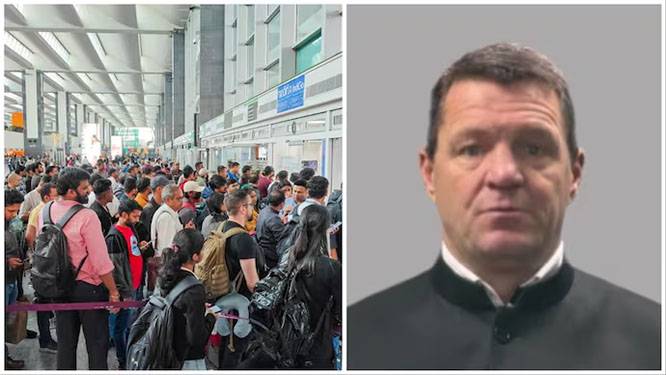
New Delhi, Dec 5: IndiGo CEO Pieter Elbers issued a public apology this evening after more than a thousand flights were cancelled today, making it the "most severely impacted day" in terms of cancellations. The biggest airline of the country cancelled "more than half" of its daily number of flights on Friday, said Elbers. He also said that even though the crisis will persist on Saturday, the airline anticipates fewer than 1,000 flight cancellations.

"Full normalisation is expected between December 10 and 15, though IndiGo cautions that recovery will take time due to the scale of operations," the IndiGo CEO said. 

IndiGo operates around 2,300 domestic and international flights daily.

Pieter Elbers, while apologising for the major inconvenience due to delays and cancellations, said the situation is a result of various causes.

The crisis at IndiGo stems from new regulations that boost pilots' weekly rest requirements by 12 hours to 48 and allow only two night-time landings per week, down from six. IndiGo has attributed the mass cancellations to "misjudgment and planning gaps".

Elbers also listed three lines of action that the airline will adopt to address the issue.

"Firstly, customer communication and addressing your needs, for this, messages have been sent on social media. And just now, a more detailed communication with information, refunds, cancellations and other customer support measures was sent," he said.

The airline has also stepped up its call centre capacity.

"Secondly, due to yesterday's situation, we had customers stranded mostly at the nation's largest airports. Our focus was for all of them to be able to travel today itself, which will be achieved. For this, we also ask customers whose flights are cancelled not to come to the airports as notifications are sent," the CEO said.

"Thirdly, cancellations were made for today to align our crew and planes to be where they need to start tomorrow morning afresh. Earlier measures of the last few days, regrettable, have proven not to be enough, but we have decided today to reboot all our systems and schedules, resulting in the highest numbers of cancellations so far, but imperative for progressive improvements starting from tomorrow," he added.

As airports witnessed chaotic scenes, the Directorate General of Civil Aviation (DGCA) stepped in to grant IndiGo a temporary exemption from stricter night duty rules for pilots. It also allowed substitution of leaves with a weekly rest period. 

Civil Aviation Minister Ram Mohan Naidu has said a high-level inquiry will be ordered and accountability will be fixed.

Comments

Add new comment

  • Coastaldigest.com reserves the right to delete or block any comments.
  • Coastaldigset.com is not responsible for its readers’ comments.
  • Comments that are abusive, incendiary or irrelevant are strictly prohibited.
  • Please use a genuine email ID and provide your name to avoid reject.
News Network
December 6,2025

indigoticket.jpg

With IndiGo flight disruptions impacting thousands of passengers, the airline on Saturday said that it will offer full waiver on all cancellations/reschedule requests for travel bookings between December 5, 2025 and December 15, 2025.

Earlier in the day, the civil aviation ministry had directed the airline to complete the ticket refund process for the cancelled flights by Sunday evening, as well as ensure baggage separated from the travellers are delivered in the next two days.

In a post on X, titled 'No questions asked', IndiGo wrote, "In response to recent events, all refunds for your cancellations will be processed automatically to your original mode of payment."

"We are deeply sorry for the hardships caused," it further added.

Several passengers, however, complained of not getting full refund as promised by the airline.

Netizens have shared screenchots of getting charged for airline cancellation fee and convenience fee.

"Please tell me why u have did this airline cancellation charges when u say full amount will be refunded (sic)," a user wrote sharing a screenshot of the refund page.

"Well, but you have still debited the convenience charges," wrote another.

Passengers have also raised concerns about the "cancel" option being disabled on the IndiGo app. "First enable the 'Cancel' button on your App & offer full refund on tickets cancelled by customers between the said dates," wrote a user.

A day after the country's largest airline, IndiGo, cancelled more than 1,000 flights and caused disruptions for the fifth day on Saturday, the ministry said that any delay or non-compliance in refund processing will invite immediate regulatory action.

The refund process for all cancelled or disrupted flights must be completed by 8 pm on Sunday, the ministry said in a statement.

"Airlines have also been instructed not to levy any rescheduling charges for passengers whose travel plans were affected by cancellations," it said.

On Saturday, more than 400 flights were cancelled at various airports.

IndiGo has also been instructed to set up dedicated passenger support and refund facilitation cells.

Comments

Add new comment

  • Coastaldigest.com reserves the right to delete or block any comments.
  • Coastaldigset.com is not responsible for its readers’ comments.
  • Comments that are abusive, incendiary or irrelevant are strictly prohibited.
  • Please use a genuine email ID and provide your name to avoid reject.