Do masks actually protect you from novel coronavirus?

News Network
November 19, 2020

virus.JPG

Researchers in Denmark reported on Wednesday that surgical masks did not protect the wearers against infection with the coronavirus in a large randomized clinical trial. But the findings conflict with those from a number of other studies, experts said, and is not likely to alter public health recommendations in the United States.

The study, published in the Annals of Internal Medicine, did not contradict growing evidence that masks can prevent transmission of the virus from wearer to others. But the conclusion is at odds with the view that masks also protect the wearers — a position endorsed just last week by the Centers for Disease Control and Prevention.

Critics were quick to note the study’s limitations, among them that the design depended heavily on participants reporting their own test results and behavior, at a time when both mask-wearing and infection were rare in Denmark.

Coronavirus infections are soaring throughout the United States, and even officials who had resisted mask mandates are reversing course. Roughly 40 states have implemented mask requirements of some sort, according to a database maintained by The New York Times.

Dr. Anthony Fauci, director of the National Institute of Allergy and Infectious Diseases, advocates a national mask mandate, as does President-elect Joe Biden.

“I won’t be president until January 20th, but my message today to everyone is this: wear a mask,” Biden recently wrote on Twitter.

From early April to early June, researchers at the University of Copenhagen recruited 6,024 participants who had been tested beforehand to be sure they were not infected with the coronavirus.

Half were given surgical masks and told to wear them when leaving their homes; the others were told not to wear masks in public.

At that time, 2% of the Danish population was infected — a rate lower than that in many places in the United States and Europe today. Social distancing and frequent hand-washing were common, but masks were not.

About 4,860 participants completed the study. The researchers had hoped that masks would cut the infection rate by half among wearers. Instead, 42 people in the mask group, or 1.8%, got infected, compared with 53 in the unmasked group, or 2.1%. The difference was not statistically significant.

“Our study gives an indication of how much you gain from wearing a mask,” said Dr. Henning Bundgaard, lead author of the study and a cardiologist at the University of Copenhagen. “Not a lot.”

Dr. Mette Kalager, a professor of medical decision-making at the University of Oslo, found the research compelling. The study showed that “although there might be a symbolic effect,” she wrote in an email, “the effect of wearing a mask does not substantially reduce risk” for wearers.

Other experts were unconvinced. The incidence of infections in Denmark was lower than it is today in many places, meaning the effectiveness of masks for wearers may have been harder to detect, they noted.

Participants reported their own test results; mask use was not independently verified, and users may not have worn them correctly.

“There is absolutely no doubt that masks work as source control,” preventing people from infecting others, said Dr. Thomas Frieden, chief executive of Resolve to Save Lives, an advocacy group, and former director of the CDC, who wrote an editorial outlining weaknesses of the research.

“The question this study was designed to answer is: Do they work as personal protection?” The answer depends on what mask is used and what sort of exposure to the virus each person has, Frieden said, and the study was not designed to tease out those details.

“An N95 mask is better than a surgical mask,” Frieden said. “A surgical mask is better than most cloth masks. A cloth mask is better than nothing.”

The study’s conclusion flies in the face of other research suggesting that masks do protect the wearer. In its recent bulletin, the CDC cited a dozen studies finding that even cloth masks may help protect the wearer. Most of them were laboratory examinations of the particles blocked by materials of various types.

Susan Ellenberg, a biostatistician at the University of Pennsylvania Perelman School of Medicine, noted that protection conferred by masks on the wearer trended “in the direction of benefit” in the trial, even if the results were not statistically significant.

“Nothing in this study suggests to me that it is useless to wear a mask,” she said.

Dr. Elizabeth Halloran, a statistician at Fred Hutchinson Cancer Research Center in Seattle, said the usefulness of masks also depends on how much virus a person is exposed to.

“If you show this article to a health care provider who works in a COVID ward in a hospital, I doubt she or he would say that this article convinces them not to wear a mask,” she said.

But Dr. Christine Laine, editor in chief of the Annals of Internal Medicine, described the previous evidence that masks protect wearers as weak.

“These studies cannot differentiate between source control and personal protection of the mask wearer,” she said.

Laine said the new study underscored the need for adherence to other precautions, like social distancing. Masks “are not a magic bullet,” she said. “There are people who say, ‘I’m fine, I’m wearing a mask.’ They need to realize they are not invulnerable to infection.”


Comments

Add new comment

  • Coastaldigest.com reserves the right to delete or block any comments.
  • Coastaldigset.com is not responsible for its readers’ comments.
  • Comments that are abusive, incendiary or irrelevant are strictly prohibited.
  • Please use a genuine email ID and provide your name to avoid reject.
News Network
November 24,2025

israelsyra.jpg

Israeli forces have pushed over the Syrian frontier, erecting a checkpoint and stopping vehicles in the southwestern city of Quneitra, in yet another breach of the Arab country’s sovereignty.

The violation took place on Sunday, when the troops made their way across the border, setting up the outpost near the Ain al-Bayda junction in northern Quneitra, Syrian outlets reported.

According to the al-Ikhbariya paper, an Israeli detachment positioned itself at the junction, halting cars and conducting searches.

The Syrian Arab News Agency (SANA) reported that three Israeli military vehicles then moved further into the northern countryside, deploying between the town of Jubata al-Khashab and the villages of Ofaniya and Ain al-Bayda. The agency added that a separate Israeli unit mounted a new incursion in the central region, approaching the villages of Umm Batina and al-Ajraf.

Residents said such activities have surged in recent months, pointing to Israeli advances onto farmland, leveling of extensive forested areas, arrests, and spread of mobile checkpoints.

The Israeli regime began markedly increasing its military aggression against Syria last year.

The escalation coincided with increasingly ferocious onslaughts throughout the country by the so-called Hay'at Tahrir al-Sham (HTS) Takfiri terrorist group, which the government of President Bashar al-Assad had confined to northwestern Syria. The HTS, however, managed to overthrow the government as the Israeli attacks would pummel the country’s civilian and defensive infrastructure.

Various reports have shown that, during the escalation, the regime conducted more than 1,000 airstrikes on the Syrian territory and over 400 ground raids into the south.

Following the collapse of the Assad government, Tel Aviv also widened its grip over the occupied Golan Heights by taking control of a demilitarized buffer zone, in defiance of a 1974 Disengagement Agreement. Earlier this month, senior Israeli officials, including Prime Minister Benjamin Netanyahu, visited the buffer zone, prompting expressions of alarm on the part of the United Nations.

The United States, the regime’s biggest ally, has, meanwhile, been fraternizing the HTS head Abu Mohammed al-Jolani amid the widely reported prospect of rapprochement with Tel Aviv.

Comments

Add new comment

  • Coastaldigest.com reserves the right to delete or block any comments.
  • Coastaldigset.com is not responsible for its readers’ comments.
  • Comments that are abusive, incendiary or irrelevant are strictly prohibited.
  • Please use a genuine email ID and provide your name to avoid reject.
News Network
November 26,2025

Mangaluru, Nov 26: Mangaluru East police have registered a case following a sophisticated online fraud where a 57-year-old local resident was allegedly cheated out of ₹13.4 lakh after being targeted on Facebook.

The scam began in February when the complainant, while browsing Facebook reels, was contacted by a woman identifying herself as "Lillian Mary George" from London. After establishing a chat relationship, the woman claimed she would visit India in November and bring a significant sum of money.

The trap was sprung on November 15, when the victim received a call from a woman named "Sonali Gupta," who claimed Lillian had arrived at Mumbai International Airport but was detained by customs. The fraudsters convinced the man that Lillian was carrying £25,000 (about ₹26 lakh) in traveller’s cheques and 1 kg of gold (valued at around ₹30 lakh).

Under the pretense of clearing these items, the victim was asked to make numerous online transfers between November 15 and 18 for various bogus charges, including:

•    "Pounds exchange registration"
•    "Customs declaration issues"
•    "Discount charges"
•    "Money-laundering charges"

Believing the fictitious story, the complainant transferred the cumulative sum of ₹13.4 lakh to various bank accounts provided by the fraudsters. He realised he was cheated when the culprits later promised a refund within two days but stopped answering his calls. The Mangaluru East police are now investigating the case, which highlights the continuing threat of transnational cyber fraud using social engineering and promises of fictitious wealth.

Comments

Add new comment

  • Coastaldigest.com reserves the right to delete or block any comments.
  • Coastaldigset.com is not responsible for its readers’ comments.
  • Comments that are abusive, incendiary or irrelevant are strictly prohibited.
  • Please use a genuine email ID and provide your name to avoid reject.
News Network
November 22,2025

gaza.jpg

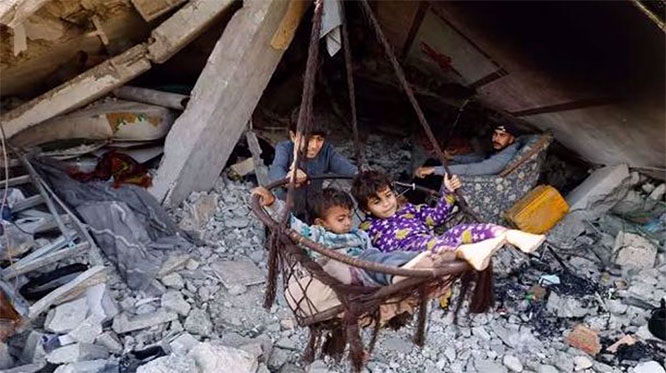
The Israeli regime’s forces have killed two Palestinian children in the Gaza Strip every day since the ceasefire began in early October, UNICEF has warned.

The UN children’s agency said on Friday that Israeli forces continue to attack Palestinians in Gaza even though the agreement was meant to stop the killing.

“Since 11 October, while the ceasefire has been in effect, at least 67 children have been killed in conflict-related incidents in the Gaza Strip. Dozens more have been injured. That is an average of almost two children killed every day since the ceasefire took effect,” UNICEF spokesperson Ricardo Pires said in Geneva, reminding that each number in the statistics represents a child whose life had ended violently.

“These are not statistics,” he said. “Each child had a story, a family, and a future that was stolen from them.”

Data from Palestinian factions, human rights groups, and government bodies recorded since the US-brokered ceasefire deal went into effect on October 10 show that Israeli forces have carried out numerous attacks, each constituting a separate ceasefire violation.

UNICEF teams say they repeatedly continue to witness heart-wrenching scenes of fearful Palestinian children sleeping outdoors with amputated limbs, while others live as orphans in flooded, makeshift shelters.

“I saw this myself in August. There is no safe place for them. The world cannot normalize their suffering,” Pires said, lamenting that the UN could “do a lot more if the aid that is really needed was entering faster.”

The UNICEF spokesperson warned that with the advent of winter, the risks for hundreds of thousands of displaced children will increase.

He warned, “The stakes are incredibly high” for children as winter acts as a threat multiplier, where children have no heating, no insulation, and few blankets. He said respiratory infections rise.

“Too many children have already paid the highest price,” Pires said. “Too many are still paying it, even under a ceasefire. The world promised them it would stop and that we would protect them.”

“Now we must act like it,” the UNICEF spokesperson added.

Since the Israeli regime launched its genocidal war against Palestinians in Gaza in October 2023, it has killed nearly 70,000 people in the territory, most of them women and children, and injured over 170,000 more, while reducing most of the structures in the enclave to rubble.

Comments

Add new comment

  • Coastaldigest.com reserves the right to delete or block any comments.
  • Coastaldigset.com is not responsible for its readers’ comments.
  • Comments that are abusive, incendiary or irrelevant are strictly prohibited.
  • Please use a genuine email ID and provide your name to avoid reject.