



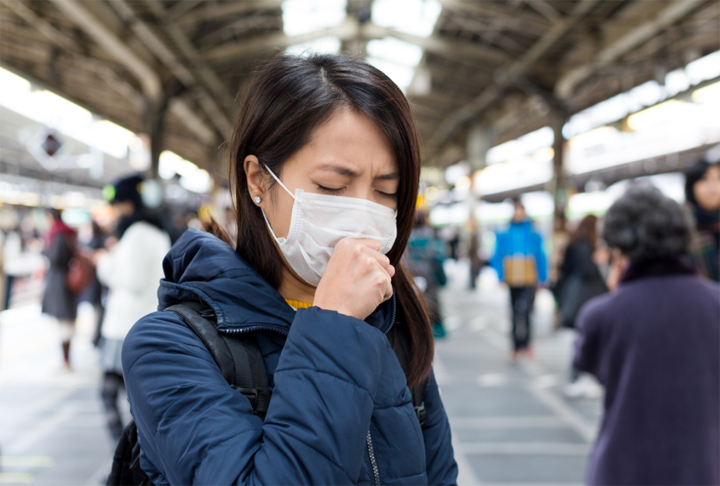
Do masks actually protect you from novel coronavirus?

News Network
November 19, 2020

virus.JPG

Researchers in Denmark reported on Wednesday that surgical masks did not protect the wearers against infection with the coronavirus in a large randomized clinical trial. But the findings conflict with those from a number of other studies, experts said, and is not likely to alter public health recommendations in the United States.

The study, published in the Annals of Internal Medicine, did not contradict growing evidence that masks can prevent transmission of the virus from wearer to others. But the conclusion is at odds with the view that masks also protect the wearers — a position endorsed just last week by the Centers for Disease Control and Prevention.

Critics were quick to note the study’s limitations, among them that the design depended heavily on participants reporting their own test results and behavior, at a time when both mask-wearing and infection were rare in Denmark.

Coronavirus infections are soaring throughout the United States, and even officials who had resisted mask mandates are reversing course. Roughly 40 states have implemented mask requirements of some sort, according to a database maintained by The New York Times.

Dr. Anthony Fauci, director of the National Institute of Allergy and Infectious Diseases, advocates a national mask mandate, as does President-elect Joe Biden.

“I won’t be president until January 20th, but my message today to everyone is this: wear a mask,” Biden recently wrote on Twitter.

From early April to early June, researchers at the University of Copenhagen recruited 6,024 participants who had been tested beforehand to be sure they were not infected with the coronavirus.

Half were given surgical masks and told to wear them when leaving their homes; the others were told not to wear masks in public.

At that time, 2% of the Danish population was infected — a rate lower than that in many places in the United States and Europe today. Social distancing and frequent hand-washing were common, but masks were not.

About 4,860 participants completed the study. The researchers had hoped that masks would cut the infection rate by half among wearers. Instead, 42 people in the mask group, or 1.8%, got infected, compared with 53 in the unmasked group, or 2.1%. The difference was not statistically significant.

“Our study gives an indication of how much you gain from wearing a mask,” said Dr. Henning Bundgaard, lead author of the study and a cardiologist at the University of Copenhagen. “Not a lot.”

Dr. Mette Kalager, a professor of medical decision-making at the University of Oslo, found the research compelling. The study showed that “although there might be a symbolic effect,” she wrote in an email, “the effect of wearing a mask does not substantially reduce risk” for wearers.

Other experts were unconvinced. The incidence of infections in Denmark was lower than it is today in many places, meaning the effectiveness of masks for wearers may have been harder to detect, they noted.

Participants reported their own test results; mask use was not independently verified, and users may not have worn them correctly.

“There is absolutely no doubt that masks work as source control,” preventing people from infecting others, said Dr. Thomas Frieden, chief executive of Resolve to Save Lives, an advocacy group, and former director of the CDC, who wrote an editorial outlining weaknesses of the research.

“The question this study was designed to answer is: Do they work as personal protection?” The answer depends on what mask is used and what sort of exposure to the virus each person has, Frieden said, and the study was not designed to tease out those details.

“An N95 mask is better than a surgical mask,” Frieden said. “A surgical mask is better than most cloth masks. A cloth mask is better than nothing.”

The study’s conclusion flies in the face of other research suggesting that masks do protect the wearer. In its recent bulletin, the CDC cited a dozen studies finding that even cloth masks may help protect the wearer. Most of them were laboratory examinations of the particles blocked by materials of various types.

Susan Ellenberg, a biostatistician at the University of Pennsylvania Perelman School of Medicine, noted that protection conferred by masks on the wearer trended “in the direction of benefit” in the trial, even if the results were not statistically significant.

“Nothing in this study suggests to me that it is useless to wear a mask,” she said.

Dr. Elizabeth Halloran, a statistician at Fred Hutchinson Cancer Research Center in Seattle, said the usefulness of masks also depends on how much virus a person is exposed to.

“If you show this article to a health care provider who works in a COVID ward in a hospital, I doubt she or he would say that this article convinces them not to wear a mask,” she said.

But Dr. Christine Laine, editor in chief of the Annals of Internal Medicine, described the previous evidence that masks protect wearers as weak.

“These studies cannot differentiate between source control and personal protection of the mask wearer,” she said.

Laine said the new study underscored the need for adherence to other precautions, like social distancing. Masks “are not a magic bullet,” she said. “There are people who say, ‘I’m fine, I’m wearing a mask.’ They need to realize they are not invulnerable to infection.”

Comments

Add new comment

  • Coastaldigest.com reserves the right to delete or block any comments.
  • Coastaldigset.com is not responsible for its readers’ comments.
  • Comments that are abusive, incendiary or irrelevant are strictly prohibited.
  • Please use a genuine email ID and provide your name to avoid reject.
News Network
December 2,2025

A major upgrade in safety and monitoring is planned for Haj 2026, with every Indian pilgrim set to receive a Haj Suvidha smart wristband linked to the official Haj Suvidha mobile app. The initiative aims to support pilgrims—especially senior citizens—who may struggle with smartphones during the 45-day journey.

What the Smart Wristband Will Do

Officials said the device will come with:
•    Location tracking
•    Pedometer
•    SOS emergency button
•    Qibla compass
•    Prayer timings
•    Basic health monitoring

SP Tiwari, secretary of the UP State Haj Committee, said the goal is to make the pilgrimage safer and more comfortable.

“Most Hajis are elderly and not comfortable with mobile apps,” he said. “The smartwatch will help locate pilgrims who forget their way or cannot communicate their location.”

The wristbands will be monitored by the Consulate General of India in Saudi Arabia, similar to mobile tracking via the Haj Suvidha App.

Free Distribution and Training

•    Smart wristbands will be given free of cost.
•    Training for pilgrims will be conducted between January and February 2026.
•    Sample units will reach state Haj committees soon.
•    Final devices will be distributed as pilgrims begin their journey.

New Rules for Accommodation

Two major decisions have also been finalised for Haj 2026:
1.    Separate rooms for men and women – including married couples. They may stay on the same floor but must occupy different rooms, following stricter Saudi guidelines.
2.    Cooking banned – gas cylinders will not be allowed; all meals will be provided through official catering services arranged by the Haj Committee of India.

These decisions were finalised during a meeting of the Haj Committee of India and state representatives in Mumbai.

Haj Suvidha App Launched Earlier

The government launched the Haj Suvidha App in 2024, offering:

•    Training modules
•    Accommodation and flight details
•    Baggage information
•    SOS and translation tools
•    Grievance redressal

Haj 2026 Quota and Key States

•    India’s total Haj quota for 2026: 1,75,025 pilgrims
•    70% (1,25,000) allotted to the Haj Committee of India
•    30% (around 50,000) reserved for Haj Group Organisers

Uttar Pradesh has the largest allocation (around 30,000 seats), though approximately 18,000 pilgrims are expected to go this year. States with high pilgrim numbers include Kerala, Maharashtra and Gujarat.

Dates of Haj 2026

The pilgrimage is scheduled to take place from 24 May to 29 May, 2026 (tentative).
Haj is one of the five pillars of Islam and is mandatory for Muslims who meet the required conditions.

Comments

Add new comment

  • Coastaldigest.com reserves the right to delete or block any comments.
  • Coastaldigset.com is not responsible for its readers’ comments.
  • Comments that are abusive, incendiary or irrelevant are strictly prohibited.
  • Please use a genuine email ID and provide your name to avoid reject.
News Network
December 4,2025

Udupi: A 40-year-old NRI from Udupi has reportedly lost more than Rs 12.25 lakh in an online investment scam operated through Telegram.

According to a complaint filed at the CEN police station, Leo Jerome Mendonsa, who has been working in Dubai for the past 15 years in computer accessories sales, maintains NRI accounts in Karkala and Nitte.

On November 12, 2025, Mendonsa was added to a Telegram group called Instaflow Earnings by unknown individuals. Users identified as Priya and Dipannita persuaded him to invest in “Revenue Tasks.” Initially, Mendonsa transferred Rs 1,100 multiple times and received the promised returns, encouraging him to continue.

On November 14, another user, Nishmitha Shetty, directed him to register on a website, digitvisionuoce.cc, and invest Rs 4 lakh in various shares. Over the next few days, he made multiple transfers totaling Rs 12,25,000, including Rs 50,000 via Google Pay, believing the scheme was legitimate.

After receiving the money, the alleged handlers stopped responding, and neither the invested amount nor the promised profits were returned.

The CEN police have registered a case under Sections 66(C) and 66(D) of the IT Act and Section 318(4) of the Bharatiya Nyaya Sanhita (BNS), and investigations are ongoing.

Comments

Add new comment

  • Coastaldigest.com reserves the right to delete or block any comments.
  • Coastaldigset.com is not responsible for its readers’ comments.
  • Comments that are abusive, incendiary or irrelevant are strictly prohibited.
  • Please use a genuine email ID and provide your name to avoid reject.
News Network
December 4,2025

Mangaluru: Chaos erupted at Mangaluru International Airport (MIA) after IndiGo flight 6E 5150, bound for Mumbai, was repeatedly delayed and ultimately cancelled, leaving around 100 passengers stranded overnight. The incident highlights the ongoing country-wide operational disruptions affecting the airline, largely due to the implementation of new Flight Duty Time Limitations (FDTL) norms for crew.

The flight was initially scheduled for 9:25 PM on Tuesday but was first postponed to 11:40 PM, then midnight, before being cancelled around 3:00 AM. Passengers expressed frustration over last-minute communication and the lack of clarity, with elderly and ailing travellers particularly affected. “Though the airline arranged food, there was no proper communication, leaving us confused,” said one family member.

An IndiGo executive at MIA cited the FDTL rules, designed to prevent pilot fatigue by limiting crew working hours, as the cause of the cancellation. While alternative arrangements, including hotel stays, were offered, about 100 passengers chose to remain at the airport, creating tension. A replacement flight was arranged but also faced delays due to the same constraints, finally departing for Mumbai around 1:45 PM on Wednesday. Passengers either flew, requested refunds, or postponed their travel.

The Mangaluru delay is part of a broader crisis for IndiGo. The airline has been forced to make “calibrated schedule adjustments”—a euphemism for widespread cancellations and delays—after stricter FDTL norms came into effect on November 1.

While an IndiGo spokesperson acknowledged unavoidable flight disruptions due to technology issues, operational requirements, and the updated crew rostering rules, the DGCA has intervened, summoning senior airline officials to explain the chaos and outline corrective measures.

The ripple effect has been felt across the country, with major hubs like Bengaluru and Mumbai reporting numerous cancellations. The Mangaluru incident underscores the systemic operational strain currently confronting India’s largest carrier, leaving passengers nationwide grappling with uncertainty and delays.

Comments

Add new comment

  • Coastaldigest.com reserves the right to delete or block any comments.
  • Coastaldigset.com is not responsible for its readers’ comments.
  • Comments that are abusive, incendiary or irrelevant are strictly prohibited.
  • Please use a genuine email ID and provide your name to avoid reject.