India continues to rank below Pakistan, other neighbours on Inclusive Development Index

Agencies
January 22, 2018

Davos, Jan 22: India was on Monday ranked at the 62nd place among emerging economies on an Inclusive Development Index, much below China's 26th position and Pakistan's 47th. Norway remains the world's most inclusive advanced economy, while Lithuania again tops the list of emerging economies, the World Economic Forum (WEF) said while releasing the yearly index in Davos before the start of its annual meeting, to be attended by several world leaders including Prime Minister Narendra Modi and US President Donald Trump.

The index takes into account the "living standards, environmental sustainability and protection of future generations from further indebtedness", the WEF said. It urged the leaders to urgently move to a new model of inclusive growth and development, saying reliance on GDP as a measure of economic achievement is fuelling short-termism and inequality.

India was ranked 60th among 79 developing economies last year, as against China's 15th and Pakistan's 52nd position.

The 2018 index, which measures progress of 103 economies on three individual pillars -- growth and development; inclusion; and inter-generational equity -- has been divided into two parts. The first part covers 29 advanced economies and the second 74 emerging economies.

The index has also classified the countries into five sub-categories in terms of the five-year trend of their overall Inclusive Development Growth score -- receding, slowly receding, stable, slowly advancing and advancing.

Despite its low overall score, India is among the ten emerging economies with 'advancing' trend. Only two advanced economies have shown 'advancing' trend.

Among advanced economies, Norway is followed by Ireland, Luxembourg, Switzerland and Denmark in the top five. Small European economies dominate the top of the index, with Australia (9) the only non-European economy in the top 10. Of the G7 economies, Germany (12) ranks the highest. It is followed by Canada (17), France (18), the UK (21), the US (23), Japan (24) and Italy (27).

The top-five most inclusive emerging economies are Lithuania, Hungary, Azerbaijan, Latvia and Poland.

Performance is mixed among BRICS economies, with the Russian Federation ranking 19th, followed by China (26), Brazil (37), India (62) and South Africa (69).

Of the three pillars that make up the index, India ranks 72nd for inclusion, 66th for growth and development and 44th for inter-generational equity.

The neighbouring countries ranked above India include Sri Lanka (40), Bangladesh (34) and Nepal (22). The countries ranked better than India also include Mali, Uganda, Rwanda, Burundi, Ghana, Ukraine, Serbia, Philippines, Indonesia, Iran, Macedonia, Mexico, Thailand and Malaysia.

Although China ranks first among emerging economies in GDP per capita growth (6.8 per cent) and labour productivity growth (6.7 per cent) since 2012, its overall score is brought down by lacklustre performance on inclusion, the WEF said.

It found that decades of prioritising economic growth over social equity has led to historically high levels of wealth and income inequality and caused governments to miss out on a virtuous circle in which growth is strengthened by being shared more widely and generated without unduly straining the environment or burdening future generations.

Excessive reliance by economists and policy-makers on Gross Domestic Product as the primary metric of national economic performance is part of the problem, the WEF said.

The GDP measures current production of goods and services rather than the extent to which it contributes to broad socio-economic progress as manifested in median household income, employment opportunity, economic security and quality of life, it added.

The WEF also said that rich and poor countries alike are struggling to protect future generations, as it cautioned political and business leaders against expecting higher growth to be a panacea for the social frustrations, including those of younger generations who have shaken the politics of many countries in recent years.

Comments

Well Wisher
 - 
Monday, 22 Jan 2018

Effect of Acche Din saar.

en maadodhu namma karma. mangan kaiyalli manikya sikkideyalla

Add new comment

  • Coastaldigest.com reserves the right to delete or block any comments.
  • Coastaldigset.com is not responsible for its readers’ comments.
  • Comments that are abusive, incendiary or irrelevant are strictly prohibited.
  • Please use a genuine email ID and provide your name to avoid reject.
News Network
November 30,2025

The United Nations Committee against Torture (CAT) has condemned the Israeli regime for enforcing a policy of “organized torture” against Palestinians.

In a report published on Friday, CAT stated that the occupying regime enforces a deliberate policy of “organized and widespread torture and ill-treatment” against Palestinian abductees, particularly since October 7, 2023, when Israel launched its genocidal war on Gaza.

The committee expressed “deep concern over repeated severe beatings, dog attacks, electrocution, water-boarding, use of prolonged stress positions [and] sexual violence” inflicted on Palestinians.

Palestinian prisoners were degraded by “being made to act like animals or being urinated on,” systematically denied medical care, and subjected to excessive restraints, “in some cases resulting in amputation,” the report added.

CAT also condemned the routine application of “unlawful combatants law” to justify the prolonged detention without trial of thousands of Palestinian men, women, and children.

More than 10,000 Palestinians, including women and children, are currently held in Israeli prisons, according to Palestinian and international human rights groups, with 3,474 Palestinians in “administrative detention,” meaning they are imprisoned without trial for indefinite periods.

The report highlighted the “high proportion of children who are currently detained without charge or on remand,” noting that while Israel sets the age of criminal responsibility at 12, even younger children have been abducted.

Children designated as security prisoners face severe restrictions on family contact, may be subjected to solitary confinement, and are denied access to education, in clear violation of international law.

The committee further suggested that Israel’s policies across the Occupied Territories constitute collective torture against the Palestinian population.

“A range of policies adopted by Israel in the course of its continued unlawful presence in the Occupied Palestinian Territory amounts to cruel, inhuman or degrading living conditions for the Palestinian population,” the report said.

On Thursday, the Palestinian resistance movement Hamas condemned the systematic killing and torture of Palestinian abductees in Israeli prisons, urging international action to halt these abuses.

Citing human rights data, Hamas stated that 94 Palestinians have been killed in Israeli prisons since the start of Tel Aviv’s genocidal war on Gaza.

“This reflects an organized criminal approach that has turned these prisons into direct killing grounds to eliminate our people,” the resistance movement said.

Hamas called on the international community, the UN, and human rights organizations to immediately pressure Israel to end crimes against prisoners and uphold their rights as guaranteed by all international conventions and norms.

Comments

Add new comment

  • Coastaldigest.com reserves the right to delete or block any comments.
  • Coastaldigset.com is not responsible for its readers’ comments.
  • Comments that are abusive, incendiary or irrelevant are strictly prohibited.
  • Please use a genuine email ID and provide your name to avoid reject.
P A Hameed Padubidri
November 26,2025

CD.jpg

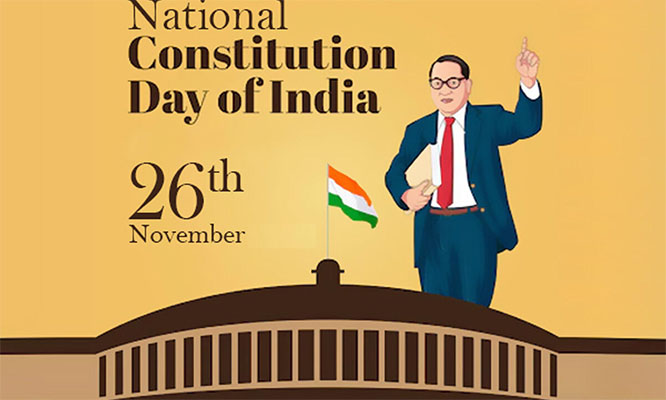
Constitution Day, also known as Samvidhan Divas, is observed every year on November 26 to honor the adoption of the Constitution of India and to recognize the visionary effort that shaped the world’s largest democracy.

Historical Background

It’s on November 26, 1949, the Constituent Assembly of India formally adopted the Constitution.This date is commemorated to acknowledge the completion of nearly three years of drafting, debate, and refinement.

On January 26, 1950, the Constitution came into force, marking India’s transition from a dominion to a sovereign republic.

The date 26 January was chosen to honor the “Purna Swaraj” declaration made in 1930 that marked the relentless efforts & sacrifices of the many. 

Why Constitution Day is Celebrated

* To honor & remember the framers of the Constitution, especially Dr. B. R. Ambedkar, the Chairman of the Drafting Committee, & many others. 

* To remind the citizens of the values, responsibilities, and rights enshrined in the Constitution.

* To promote constitutional values & literacy among students, institutions, and the general public.

* To reaffirm the nation’s commitment to justice, equality, liberty, fraternity and secular values. 

Vision and Significance of the Constitution

It establishes the fundamental political and legal framework for the nation.

Defines the structure, powers and functions of:
    •    The Executive
    •    The Legislature
    •    The Judiciary
    •    Guarantees a comprehensive set of Fundamental Rights, including:

-Equality before law
-Freedom of speech & expression
-Protection of life and personal liberty
-Freedom of religion
-Embeds Directive Principles of State Policy, guiding governance toward social justice and welfare.
-Introduces Fundamental Duties to ensure civic responsibility among citizens.

Key Features Celebrated on Constitution Day

-The Indian constitution is considered one of the longest written constitutions of the world. It’s systematically drafted considering almost all aspects that properly fits to the country. 

-Blend of multiple global constitutional principles while staying rooted in Indian values and realities.

-Framework that balances Federalism, Secularism, Democracy and Rule of Law. This makes everyone-from President to common man-below the law & are equal in the sight of law. 

-Another feature is that it’s based on built-in mechanisms for amendments, ensuring the Constitution grows with changing needs.

Message of the Day

The core ethos of this  Constitution Day is not merely about looking back at history-it’s a reminder of the continuous duty to protect democratic values, respect diversity and uphold the principles that define India as a sovereign, socialist, secular and democratic republic.

Happy Constitution Day to all my compatriots

Comments

Add new comment

  • Coastaldigest.com reserves the right to delete or block any comments.
  • Coastaldigset.com is not responsible for its readers’ comments.
  • Comments that are abusive, incendiary or irrelevant are strictly prohibited.
  • Please use a genuine email ID and provide your name to avoid reject.
coastaldigest.com news network
December 2,2025

karkala.jpg

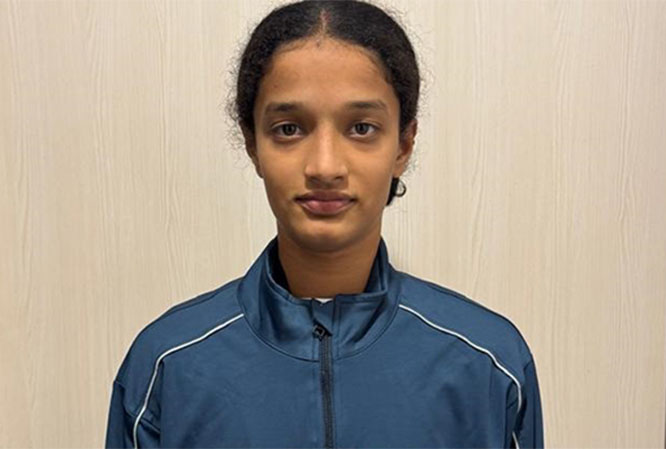
Udupi, Dec 2: A wave of regional pride is sweeping through Udupi district as Shagun S Verma Hegde, a talented Class 9 student from Christ King English Medium High School, Karkala, has been named the captain of the Indian National Team for the Under-15 Girls’ Volleyball Championship.

Shagun holds the unique distinction of being the sole player from Karnataka selected to represent the country in the prestigious international tournament. The championship, organized by the School Games Federation, is scheduled to take place in Shangluo, China, from December 3 to 13, where Shagun will lead the national squad.

A Remarkable Journey to the Top

Shagun’s selection is a testament to her dedication and exceptional skill on the court. Her journey included several rigorous rounds of selection:

•    She was the only player from Udupi district to qualify for the state-level selection camp.

•    Out of eight players from Karnataka who advanced to the national selection camp in Pune, Maharashtra, Shagun was the only one to secure a place in the final national squad.

•    The national camp saw participation from approximately 200 players, which was shortlisted to 23. Shagun not only made the final cut but was also ranked as the second-best player overall, solidifying her leadership role.

Shagun, who is the daughter of Sandesh Verma and Shruthiraj of Kallotte, Karkala, has trained under experienced coaches Santosh D’Souza, Jeevan D’Silva, Jairaj Poojary, and Ramesh. Her selection as the team captain has brought profound honour to her family, school, the Udupi district, and the entire state of Karnataka.

Comments

Add new comment

  • Coastaldigest.com reserves the right to delete or block any comments.
  • Coastaldigset.com is not responsible for its readers’ comments.
  • Comments that are abusive, incendiary or irrelevant are strictly prohibited.
  • Please use a genuine email ID and provide your name to avoid reject.