



India home to 101 billionaires, Mukesh Ambani tops list: Forbes

March 21, 2017

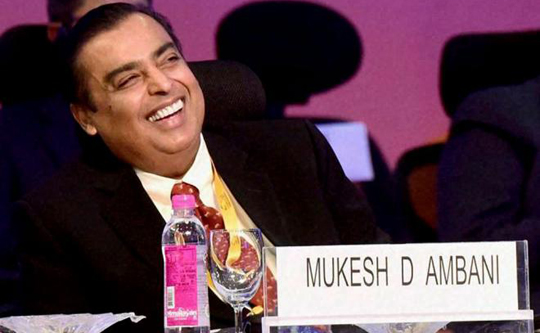
New York, Mar 21: India is home to world's fourth highest number of billionaires with Reliance Industries chief Mukesh Ambani leading the club of more than 100 super rich Indians, according to a new list released by Forbes magazine.
mda

The Forbes list of the 'World's Billionaires' 2017 consists of 2,043 of the richest people in the world who have a combined net worth of USD 7.67 trillion, a record 18-per cent increase over the past year.

The list has been topped by Microsoft co-founder Bill Gates for the fourth year in a row. He has been the richest person in the world for 18 out of the past 23 years. Gates has a fortune of USD 86 billion, up from USD 75 billion last year, followed by Berkshire Hathaway chief Warren Buffet with a new worth of USD 75.6 billion.

Amazon's Jeff Bezos added USD 27.6 billion to his fortune; now worth USD 72.8 billion, moving into the top three in the world for the first time, up from number five a year ago.

US President Donald Trump is ranked 544th on the list with his net worth of USD 3.5 billion.
India is home to 101 billionaires, the first time it has has more than 100 super rich individuals.

The US continues to have more billionaires than any other nation, with a record 565, up from 540 a year ago. China is catching up with 319, Germany has the third most with 114 and India has the fourth highest number of billionaires.

There are nearly 20 people of Indian-origin who have made fortunes in various nations across the world, led by UK-based Hinduja brothers ranked 64th with USD 15.4 billion net worth, Indian-born tycoon Pallonji Mistry, who controls the 152-year-old Mumbai-headquartered engineering giant Shapoorji Pallonji Group at the 77th spot with USD 14.3 billion net worth and petrochemicals major Indorama co-founder Sri Prakash Lohia at the 288th spot with USD 5.4 billion net worth.

Mistry's younger son Cyrus is embroiled in a legal battle with the Tata Group after he was suddenly ousted as chairman of Tata Sons, a position he had held since 2012. Ambani, 59, leads the pack of Indian billionaires, coming in at the 33rd position with a net worth of USD 23.2 billion.

Forbes said the "oil and gas tycoon" sparked a price war in India's hyper-competitive telecom market with the launch of 4G phone service Jio last September. His younger brother Anil is ranked 745th with a net worth of USD 2.7 billion.

The younger Ambani sibling "orchestrated the merger of his Reliance Communication's telecom business with that of rival Aircel, controlled by Malaysian billionaire Ananda Krishnan. The combine, which awaits regulatory approvals, will be the country's fourth-largest mobile phone operator," Forbes said.

Next on the list of Indian billionaires is ArcelorMittal chairman and CEO Lakshmi Mittal on the 56th spot with a net worth of USD 16.4 billion. Forbes said the Indian steel baron regains his status as the world's second richest Indian on an uptick in steel prices and demand. "The world's biggest steelmaker also got a reprieve from import tariffs on steel imposed by the US and Europe and a one-time USD 832 million saving from a new labour contract signed last year with its US workers," it added.

The list includes only four women billionaires from India, led by Savitri Jindal and her family at the 303rd position with a net worth of USD 5.2 billion. "After declining last year, the fortune of steel and power clan, whose matriarch Savitri Jindal chairs the OP Jindal Group, rose as steel prices recovered," Forbes said.

Smita Crishna-Godrej from the Godrej clan is ranked 814th followed by Biocon founder Kiran Mazumdar-Shaw (973) and Leena Tewari (1030), chair of USV India which specialises in diabetic and cardiovascular drugs.

Also making the list is Wipro chairman Azim Premji (72), Adani group founder Gautam Adani (250), Bajaj Group chair Rahul Bajaj (544), investor Rakesh Jhunjhunwala (939), Infosys co-founder NR Narayana Murthy (1161), chairman emeritus of Dabur Vivek Chand Burman (1290), Infosys co-founder Nandan Nilekani (1290), Wockhardt chair Habil Khorakiwala (1567), Mahindra group chief Anand Mahindra (1567), property tycoons Niranjan and Surendra Hiranandani (tied at 1678) and Yes Bank head Rana Kapoor (1795).

Founder of mobile wallet Paytm Vijay Shekhar Sharma is ranked 1567 with his net worth of USD 1.3 billion. Forbes said Paytm was "one of the biggest beneficiaries of the government's decision to demonetise 86 per cent of India's rupees and move to a cashless economy", notching up 200 million registered users and five million transactions daily.

Making his debut on the list at 814th spot is Acharya Balkrishna, friend of yoga guru Baba Ramdev, who holds 97 per cent stake in the fast-growing consumer goods firm Patanjali Ayurveda. His net worth is USD 2.5 billion.

Forbes said Facebook founder Mark Zuckerberg moved up to number five for the first time, after his fortune rose USD 11.4 billion in 12 months. Meanwhile Carlos Slim Helu of Mexico, once the world's richest man, fell to number six, the first time he's been out of the top five in a dozen years. There were 195 newcomers.

China had the most new ten-figure fortunes with 76. The US was second with 25. The list has 56 billionaires under age 40, down from 66 last year, after some aged out and others dropped below the USD 1-billion mark. Seventy-eight people fell off the list, including 33 from China, 7 Americans and 9 who are still super wealthy but share their wealth among extended family members and therefore are not eligible for these ranks.

Comments

Add new comment

  • Coastaldigest.com reserves the right to delete or block any comments.
  • Coastaldigset.com is not responsible for its readers’ comments.
  • Comments that are abusive, incendiary or irrelevant are strictly prohibited.
  • Please use a genuine email ID and provide your name to avoid reject.
News Network
December 13,2025

New Delhi: School-going children are picking up drug and smoking habits and engaging in consumption of alcohol, with the average age of introduction to such harmful substances found to be around 13 years, suggesting a need for earlier interventions as early as primary school, a multi-city survey by AIIMS-Delhi said.

The findings also showed substance use increased in higher grades, with grade XI/XII students two times more likely to report use of substances when compared with grade VIII students. This emphasised the importance of continued prevention and intervention through middle and high school.

The study led by Dr Anju Dhawan of AIIMS's National Drug Dependence Treatment Centre, published in the National Medical Journal of India this month, looks at adolescent substance use across diverse regions.

The survey included 5,920 students from classes 8, 9, 11 and 12 in urban government, private and rural schools across 10 cities -- Bengaluru, Chandigarh, Delhi, Dibrugarh, Hyderabad, Imphal, Jammu, Lucknow, Mumbai, and Ranchi. The data were collected between May 2018 and June 2019.

The average age of initiation for any substance was 12.9 (2.8) years. It was lowest for inhalants (11.3 years) followed by heroin (12.3 years) and opioid pharmaceuticals (without prescription; 12.5 years).

Overall, 15.1 per cent of participants reported lifetime use, 10.3 per cent reported past year use, and 7.2 per cent reported use in the past month of any substance, the study found.

The most common substances used in the past year, after tobacco (4 per cent) and alcohol (3.8 per cent), were opioids (2.8 per cent), followed by cannabis (2 per cent) and inhalants (1.9 per cent). Use of non-prescribed pharmaceutical opioids was most common among opioid users (90.2 per cent).

On being asked, 'Do you think this substance is easily available for a person of your age' separately for each substance category, nearly half the students (46.3 per cent) endorsed that tobacco products and more than one-third of the students (36.5 per cent) agreed that a person of their age can easily procure alcohol products.

Similarly, for Bhang (21.9 per cent), ganja/charas (16.1 per cent), inhalants (15.2 per cent), sedatives (13.7 per cent), opium and heroin (10 per cent each), the students endorsed that these can be easily procured.

About 95 per cent of the children, irrespective of their grade, agreed with the statement that 'drug use is harmful'.

The rates of substance use (any) among boys were significantly higher than those of girls for substance use (ever), use in the past year and use in the past 30 days. Compared to grade VIII students, grade IX students were more likely, and grade XI/XII students were twice as likely to have used any substance (ever).

The likelihood of past-year use of any substance was also higher for grade IX students and for grade XI/XII students as compared to grade VIII students.

About 40 per cent of students mentioned that they had a family member who used tobacco or alcohol each. The use of cannabis (any product) and opioid (any product) by a family member was reported by 8.2 per cent and 3.9 per cent of students, respectively, while the use of other substances, such as inhalants/sedatives by family was 2-3 per cent, the study found.

A relatively smaller percentage of students reported use of tobacco or alcohol among peers as compared to among family members, while a higher percentage reported inhalants, sedatives, cannabis or opioid use among peers.

Children using substances (past year) compared to non-users reported significantly higher any substance use by their family members and peers.

There were 25.7 per cent students who replied 'yes' to the question 'conflicts/fights often occur in your family'. Most students also replied affirmatively to 'family members are aware of how their time is being spent' and 'damily members are aware of with whom they spend their time'.

Comments

Add new comment

  • Coastaldigest.com reserves the right to delete or block any comments.
  • Coastaldigset.com is not responsible for its readers’ comments.
  • Comments that are abusive, incendiary or irrelevant are strictly prohibited.
  • Please use a genuine email ID and provide your name to avoid reject.
News Network
December 3,2025

indigo.jpg

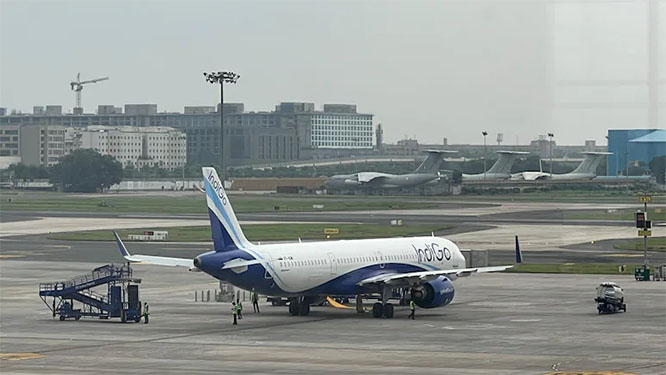
IndiGo, India’s largest airline, is battling one of its worst operational disruptions in recent years, with hundreds of delays and cancellations throwing domestic travel into chaos.

Government data on Tuesday showed its on-time performance plunging to 35%, an unusual dip for a carrier long associated with punctuality.

By Wednesday afternoon, airports in Delhi, Mumbai, Bengaluru and Hyderabad had collectively reported close to 200 cancellations, stranding travellers across the country.

Crew Shortage After New Duty Norms

A major trigger behind the meltdown is a severe crew shortage, especially among pilots, following the rollout of revised Flight Duty Time Limitation (FDTL) norms last month.

The rules mandate longer rest hours and more humane rosters — a shift IndiGo has struggled to incorporate across its vast network.

Sources said several flights were grounded due to lack of cabin crew, while some delays stretched upwards of eight hours.

With IndiGo controlling over 60% of India’s domestic aviation market, the ripple effect has impacted airports nationwide.

IndiGo Issues Apology, Lists “Compounding Factors”

In a statement, IndiGo acknowledged the large-scale disruption:

“We sincerely apologise to customers. A series of unforeseen operational challenges — technology glitches, winter schedule changes, adverse weather, system congestion and updated FDTL norms — created a compounding impact that could not have been anticipated.”

To stabilise operations, the airline has begun calibrated schedule adjustments for the next 48 hours, aiming to restore punctuality. Affected passengers are being offered refunds or alternate travel arrangements, IndiGo said.

What the FDTL Rules Require

The FDTL norms, designed to reduce pilot fatigue, cap duty and flying hours as follows:
•    Maximum 8 hours of flying per day
•    35 hours per week
•    125 hours per month
•    1,000 hours per year

Crew must also receive rest equalling twice the flight duration, with a minimum 10-hour rest period in any 24-hour window.

The DGCA introduced these limits to enhance flight safety.

Hyderabad: 33 Flights Cancelled, Long Queues Reported

Hyderabad’s Rajiv Gandhi International Airport saw heavy early-morning crowds as 33 IndiGo flights (arrivals and departures) were cancelled.

The airport clarified on X that operations were normal, advising passengers to contact IndiGo directly for latest flight status.

Cancellations included flights to and from Visakhapatnam, Goa, Ahmedabad, Delhi, Bengaluru, Chennai, Madurai, Hubli, Bhopal and Bhubaneswar.

Bengaluru: 42 Flights Disrupted

Bengaluru’s Kempegowda International Airport recorded 42 cancellations — 22 arrivals and 20 departures — affecting routes to Delhi, Mumbai, Chennai, Hyderabad, Goa, Kolkata and Lucknow.

Passengers Vent on Social Media

Irate travellers took to X to share their experiences. One passenger stranded in Hyderabad wrote: “I have been here since 3 a.m. and missed an important meeting.”

Another said: “My flight was pushed from 1:55 PM to 2:55 PM and now 4:35 PM. I was informed only three minutes before entering the airport.”

Delhi Airport Hit by Tech Glitch

At Delhi Airport, the disruption deepened due to a slowdown in the Amadeus system — used for reservations, check-ins and departure control.

The technical issue led to longer queues and sluggish processing, adding to delays already worsened by staff shortages.

Comments

Add new comment

  • Coastaldigest.com reserves the right to delete or block any comments.
  • Coastaldigset.com is not responsible for its readers’ comments.
  • Comments that are abusive, incendiary or irrelevant are strictly prohibited.
  • Please use a genuine email ID and provide your name to avoid reject.
News Network
December 4,2025

indigoflight.jpg

Domestic carrier IndiGo has cancelled over 180 flights from three major airports — Mumbai, Delhi and Bengaluru — on Thursday, December 4, as the airline struggles to secure the required crew to operate its flights in the wake of new flight-duty and rest-period norms for pilots.

While the number of cancellations at Mumbai airport stands at 86 (41 arrivals and 45 departures) for the day, at Bengaluru, 73 flights have been cancelled, including 41 arrivals, according to a PTI report that quoted sources.

"IndiGo cancelled over 180 flights on Thursday at three airports-Mumbai, Delhi and Bengaluru," the source told the news agency.

Besides, it had cancelled as many as 33 flights at Delhi airport for Thursday, the source said, adding, "The number of cancellations is expected to be higher by the end of the day."

The Gurugram-based airline's On-Time Performance (OTP) nosedived to 19.7 per cent at six key airports — Delhi, Mumbai, Chennai, Kolkata, Bengaluru and Hyderabad — on December 3, as it struggled to get the required crew to operate its services, down from almost half of December 2, when it was 35 per cent.

"IndiGo has been facing acute crew shortage since the implementation of the second phase of the FDTL (Flight Duty Time Limitations) norms, leading to cancellations and huge delays in its operations across the airports," a source had told PTI on Wednesday.

Chaos continued at several major airports for the third day on Thursday because of the cancellations.

A spokesperson for the Kempegowda International Airport (KIA) in Bengaluru said that 73 IndiGo flights had been cancelled on Thursday.

At least 150 flights were cancelled and dozens of others delayed on Wednesday, airport sources said, leaving thousands of travellers stranded, according to news agency Reuters.

The Directorate General of Civil Aviation (DGCA) has said it is investigating IndiGo flight disruptions and has asked the airline to submit the reasons for the current situation, as well as its plans to reduce flight cancellations and delays.

It may be mentioned here that the pilots' body, Federation of Indian Pilots (FIP), has alleged that IndiGo, despite getting a two-year preparatory window before the full implementation of new flight duty and rest period norms for cockpit crew, "inexplicably" adopted a "hiring freeze".

The FIP said it has urged the safety regulator, the DGCA, not to approve airlines' seasonal flight schedules unless they have adequate staff to operate their services "safely and reliably" in accordance with the New Flight Duty Time Limitations (FDTL) norms.

In a letter to the DGCA late on Wednesday, the FIP urged the DGCA to consider re-evaluating and reallocating slots to other airlines, which have the capacity to operate them without disruption during the peak holiday and fog season if IndiGo continues to "fail in delivering on its commitments to passengers due to its own avoidable staffing shortages."

Comments

Add new comment

  • Coastaldigest.com reserves the right to delete or block any comments.
  • Coastaldigset.com is not responsible for its readers’ comments.
  • Comments that are abusive, incendiary or irrelevant are strictly prohibited.
  • Please use a genuine email ID and provide your name to avoid reject.