



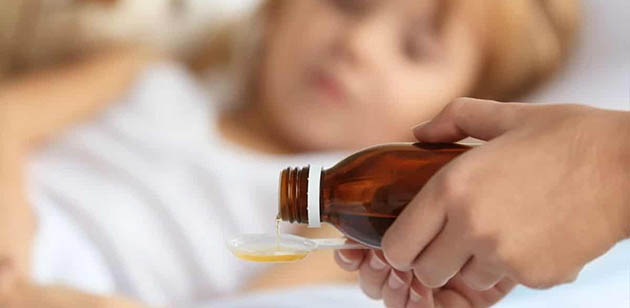
An Indian cold medication that was sold in Iraq is tainted with toxic chemicals, according to a test commissioned by Bloomberg News. With this, it becomes the latest in a series of alarming revelations about syrup medicines used by children around the world.
According to Valisure LLC, an independent US laboratory, a bottle of Cold Out purchased at a pharmacy in Baghdad in March contains 2.1% ethylene glycol, about 21 times the widely accepted limit.
The compound is lethal to humans in small amounts and played a role in mass child deaths caused by Indian-made cough syrups in Gambia and Uzbekistan last year, the report said.
On July 8, Bloomberg shared the test results with the World Health Organization as well as Iraqi and Indian officials.
The WHO told Bloomberg that it found Valisure’s test results to be “acceptable" and that it will issue an alert if the Iraqi government confirms the product was sold there. No public alert or recall has been announced yet.
In an interview, Saif al-Bader, a spokesman for Iraq’s health ministry said that the ministry has “strict regulations for the import, sale and distribution of medicines." He declined to answer specific questions about Cold Out.
Notably, it’s the fifth time in a year that testing has found an Indian exporter’s drugs to contain excessive levels of ethylene glycol. In addition to the Gambia and Uzbekistan outbreaks, testing by government laboratories has identified other contaminated products in the Marshall Islands and Liberia, although there were no reported illnesses associated with those drugs.
The Cold Out label indicates it was made by Fourrts (India) Pvt. Ltd., a Chennai-based manufacturer that exports medicines to more than 50 countries, including the UK, Germany, and Canada.
A vice president there, Bala Surendran, said that Fourrts subcontracted the manufacture of Cold Out to another Indian company, Puducherry-based Sharun Pharmaceuticals Pvt. Ltd, Bloomberg reported.
After Bloomberg’s inquiries, Fourrts tested a sample of Cold Out it had on hand and found it untainted, Surendran said. He said Indian regulators seized other samples from Sharun’s plant and that Fourrts hasn’t been informed of the results of those tests.
Officials at the national drug agency and two local regulators either did not respond to requests for comment or said they had no information to share. Sharun executives did not respond to requests for comment.
This month, the WHO said that a cough syrup blamed for 12 child deaths in Cameroon this year contained unsafe levels of diethylene glycol, a similar toxic compound. In that case, the medicine packaging doesn’t name a maker but bears the manufacturing license number of another Indian company.
Earlier this year, as part of an investigation into the global trade in unsafe drugs, Bloomberg purchased 33 samples of Indian-made syrups from pharmacies in Cambodia, Georgia, Ghana, India, Iraq, and Kenya.
The drugs were tested by New Haven, Connecticut-based Valisure using gas chromatography-mass spectrometry. The lab found four samples, all different brands, that contained either ethylene glycol, diethylene glycol, or both.
Valisure tested the Cold Out sample five times and found, on average, an ethylene glycol content of 2.1% and a diethylene glycol content of 0.25%. The diethylene glycol content is more than twice the limit. None of the other syrups with contaminants exceeded the 0.1% level.
Syrup medications consist of a small amount of active ingredients suspended in a watery solution. To cause the active ingredients to dissolve, manufacturers add a solvent such as propylene glycol — a harmless, clear, sweet-tasting liquid.
Ethylene glycol and diethylene glycol are chemically similar to propylene glycol but are cheaper and highly toxic, used in industrial applications such as antifreeze and brake fluid. Typically, contamination takes place when a chemical trader mislabels one of these chemicals as propylene glycol. Drug manufacturers are supposed to test propylene glycol for contamination prior to using it, but that doesn’t always happen, Bloomberg said in the report.
The packaging of the Cold Out obtained in Iraq indicates it was manufactured in January 2022. The WHO has said that it’s exploring whether a spike in prices of propylene glycol contributed to the recent contamination cases. In addition to those linked to Indian medication, an outbreak last year in Indonesia, caused by medication manufactured domestically, killed about 200 children.

Comments
Add new comment