1 Indian kills self every 4 minutes; Karnataka among top 5 states

Agencies
September 2, 2020

India has reported a 3.4% increase suicide cases in 2019, with a distraught person killing himself every four minutes in the country. Shockingly, five states -- Maharashtra, Tamil Nadu, West Bengal, Madhya Pradesh and Karnataka -- alone account for 49.5% of the suicides in the country.

Altogether, 1,39,123 people, including 41,493 women and 17 transgenders, took their own lives last year compared to 1,34,516 in 2018.

While the number of suicides in the country had decreased in 2016 (1.31 lakh) and 2017 (1.29 lakh), the numbers have shown an increase in the past two years. In 2015, the figures stood at 1.33 lakh.

In 1967 when the National Crime Records Bureau (NCRB) started collating reports on suicides, there were 38,829 suicides, including 16,192 women.

According to the 'Accidental Deaths and Suicides in India 2019' report, Maharashtra had the highest number of suicides at 18,916 followed by Tamil Nadu (13,493) and West Bengal (12,665). Madhya Pradesh with 12,457 and Karnataka with 11,288 cases were the other states in the top five.

Among the 53 mega cities with over 10 lakh population, Chennai (2,461), Delhi City (2,423), Bengaluru (2,081) and Mumbai (1,229) have reported higher numbers of suicides. These four cities together have reported almost 36.6% (22,390) of the total suicides.

Bengaluru City has shown a slight decline during 2019 over 2018 when 2,082 suicides were reported. Chennai has shown an increase of 17.1% (from 2,102 suicides to 2,461 suicides), Mumbai 4.7% (from 1,174 suicides to 1,229 suicides) and Delhi City has observed an increase of 2.3% (from 2,369 suicides to 2,423 suicides)

"Each suicide is a personal tragedy that prematurely takes the life of an individual and has a continuing ripple effect, dramatically affecting the lives of families, friends and communities," the report said.

Since 2008, 15.98 lakh people have taken their lives owing to various reasons like family problems, illness, career problems, sense of isolation, abuse, violence, family problems, mental disorders, addiction to alcohol, financial loss and chronic pain among others.

The 2019 figures also reinforce the trend that the poorest sections of the society take the extreme step the most.

Two-third of the total suicides in the country in 2019 were by those with an annual income of less than Rs one lakh, which meant the victims earned less than Rs 8,300 a month.

Last year saw 92,083 people (66.18% of 1.39 lakh) with an annual income less than Rs one lakh died by suicide.

Among the poorest victims, Tamil Nadu had the highest number of suicides at 9,723 followed by West Bengal 9,636, Karnataka (7,029) and Maharashtra (4,521).

While the 2019 figure for such people is more than that of 2018 (88,986 or 66.2%) and 2017 (84,934 or 65.4%), it has not crossed the 2016 numbers when India recorded 92,732 (70.8%) such incidents.

When it comes to people having an income of Rs one lakh to Rs five lakh, there were 41,497 people who took their own life while there were 4,824 with an annual income between Rs five lakh and ten lakh who died by suicide.

The number of people with more than Rs 10 lakh annual income was 1,089 with West Bengal topping the list with 218 cases followed by Telangana (180) and Haryana (152). Karnataka had 24 such cases.

When it comes to educational status, the number of people with higher qualifications was very less.

Only 335 professionals, including MBAs, committed suicide in 2019 compared to 403 in the previous year. However, the number of graduates and above rose to 5,185 from 4,447 and 4,027 in 2018 and 2017 respectively.

Those who had studied between Class VIII and Class X had the highest number at 32427 (31,757 in 2018) followed by 27,323 (26,252) in Class V-VII category, 22,469 (23,048) in Class 1-IV and 17,588 (17,026) with no education at all.

Comments

Add new comment

  • Coastaldigest.com reserves the right to delete or block any comments.
  • Coastaldigset.com is not responsible for its readers’ comments.
  • Comments that are abusive, incendiary or irrelevant are strictly prohibited.
  • Please use a genuine email ID and provide your name to avoid reject.
News Network
December 7,2025

envoy.jpg

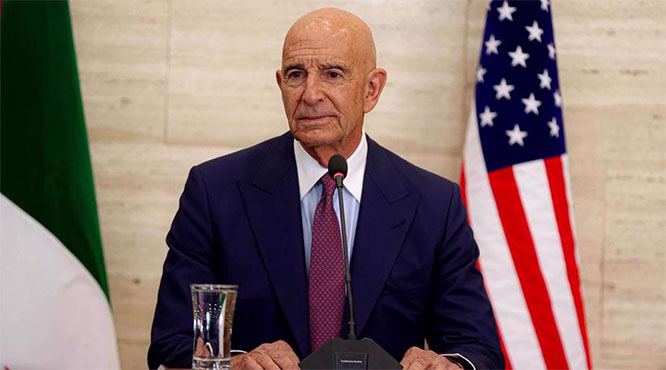
Since 1946, the United States has attempted 93 coups or “regime change” operations across the world — including two in Iran, US Special Envoy for Syria Tom Barrack has admitted.

Speaking to the UAE-based IMI Media Group, in remarks published by The National, Barrack said Washington tried twice to overthrow the Iranian government but failed both times. 

“For (Trump) then to be imputed with regime change — we had two regime changes in Iran already. Neither one worked. So I think wisely leave it to the region to solve,” said Barrack, who also serves as the US ambassador to Turkey.

His comments come six months after the US joined Israel in airstrikes against Iran during ongoing indirect nuclear negotiations between Tehran and Washington.

On June 13, Israel launched an attack on Iran that killed at least 1,064 people and hit civilian infrastructure. Days later, the United States targeted three nuclear facilities — Fordow, Natanz and Isfahan — in what Iran called a clear violation of international law. Iranian retaliation eventually forced a halt to the assault on June 24.

Barrack further claimed that US President Donald Trump and Foreign Secretary Marco Rubio are “not into regime change” and prefer a regional approach driven by Middle Eastern countries themselves. According to him, regional dialogue and non-interference by outside powers offer a more durable path forward.

He added that Washington is still open to an agreement with Tehran if Iranian authorities show “seriousness” and willingness to engage constructively.

However, Iran maintains the US has not shown readiness for meaningful talks. In an interview with Japan’s Kyodo News, Iranian Foreign Minister Abbas Araghchi said negotiations could advance only if Washington acknowledges Iran’s right to peaceful nuclear energy and lifts unilateral sanctions.

Comments

Add new comment

  • Coastaldigest.com reserves the right to delete or block any comments.
  • Coastaldigset.com is not responsible for its readers’ comments.
  • Comments that are abusive, incendiary or irrelevant are strictly prohibited.
  • Please use a genuine email ID and provide your name to avoid reject.
News Network
December 2,2025

A major upgrade in safety and monitoring is planned for Haj 2026, with every Indian pilgrim set to receive a Haj Suvidha smart wristband linked to the official Haj Suvidha mobile app. The initiative aims to support pilgrims—especially senior citizens—who may struggle with smartphones during the 45-day journey.

What the Smart Wristband Will Do

Officials said the device will come with:
•    Location tracking
•    Pedometer
•    SOS emergency button
•    Qibla compass
•    Prayer timings
•    Basic health monitoring

SP Tiwari, secretary of the UP State Haj Committee, said the goal is to make the pilgrimage safer and more comfortable.

“Most Hajis are elderly and not comfortable with mobile apps,” he said. “The smartwatch will help locate pilgrims who forget their way or cannot communicate their location.”

The wristbands will be monitored by the Consulate General of India in Saudi Arabia, similar to mobile tracking via the Haj Suvidha App.

Free Distribution and Training

•    Smart wristbands will be given free of cost.
•    Training for pilgrims will be conducted between January and February 2026.
•    Sample units will reach state Haj committees soon.
•    Final devices will be distributed as pilgrims begin their journey.

New Rules for Accommodation

Two major decisions have also been finalised for Haj 2026:
1.    Separate rooms for men and women – including married couples. They may stay on the same floor but must occupy different rooms, following stricter Saudi guidelines.
2.    Cooking banned – gas cylinders will not be allowed; all meals will be provided through official catering services arranged by the Haj Committee of India.

These decisions were finalised during a meeting of the Haj Committee of India and state representatives in Mumbai.

Haj Suvidha App Launched Earlier

The government launched the Haj Suvidha App in 2024, offering:

•    Training modules
•    Accommodation and flight details
•    Baggage information
•    SOS and translation tools
•    Grievance redressal

Haj 2026 Quota and Key States

•    India’s total Haj quota for 2026: 1,75,025 pilgrims
•    70% (1,25,000) allotted to the Haj Committee of India
•    30% (around 50,000) reserved for Haj Group Organisers

Uttar Pradesh has the largest allocation (around 30,000 seats), though approximately 18,000 pilgrims are expected to go this year. States with high pilgrim numbers include Kerala, Maharashtra and Gujarat.

Dates of Haj 2026

The pilgrimage is scheduled to take place from 24 May to 29 May, 2026 (tentative).
Haj is one of the five pillars of Islam and is mandatory for Muslims who meet the required conditions.

Comments

Add new comment

  • Coastaldigest.com reserves the right to delete or block any comments.
  • Coastaldigset.com is not responsible for its readers’ comments.
  • Comments that are abusive, incendiary or irrelevant are strictly prohibited.
  • Please use a genuine email ID and provide your name to avoid reject.
News Network
November 28,2025

ministerPM.jpg

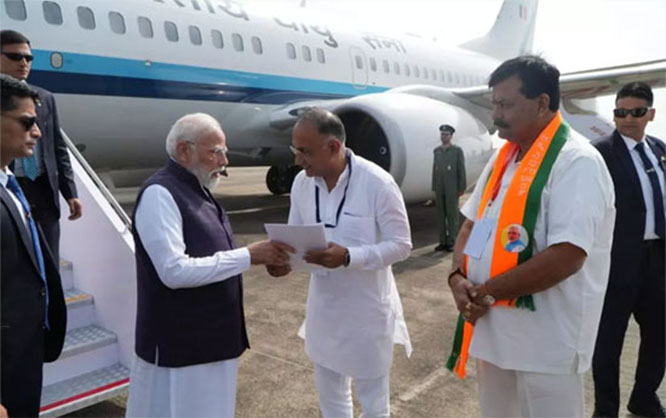
Mangaluru, Nov 28: Karnataka Health Minister and Dakshina Kannada district in-charge minister Dinesh Gundu Rao on Friday handed over Chief Minister Siddaramaiah’s letter to Prime Minister Narendra Modi, highlighting the severe distress faced by farmers due to crashing crop prices.

PM Modi arrived at the Mangaluru International Airport en route to Udupi, where Gundu Rao welcomed him and submitted the letter. The chief minister’s message stressed that farmers are suffering heavy losses because maize and green gram are being bought far below the Minimum Support Price (MSP). The state urged the Centre to immediately begin procurement at MSP.

According to the letter, Karnataka has a bumper harvest this year—over 54.74 lakh metric tons of maize and 1.98 lakh metric tons of green gram—yet farmers are unable to secure fair prices. Against the MSP of ₹2,400/MT for maize and ₹8,768/MT for green gram, market rates have plunged to ₹1,600–₹1,800 and ₹5,400 respectively.

The chief minister has requested the Centre to:

• Direct NAFED, FCI and NCCF to start MSP procurement immediately.
• Ensure ethanol units purchase maize directly from farmers or FPOs.
• Increase Karnataka’s ethanol allocation, citing high production capacity.
• Stop maize imports, which have depressed domestic prices.
• Relax quality norms for green gram, allowing up to 10% discoloration due to rains.

The letter stresses that MSP is crucial for farmer dignity and income stability and calls for swift central intervention to prevent a deepening crisis.

Comments

Add new comment

  • Coastaldigest.com reserves the right to delete or block any comments.
  • Coastaldigset.com is not responsible for its readers’ comments.
  • Comments that are abusive, incendiary or irrelevant are strictly prohibited.
  • Please use a genuine email ID and provide your name to avoid reject.