



2020: A year of struggle and innovation for teachers

Agencies
December 26, 2020

649874569.jpg

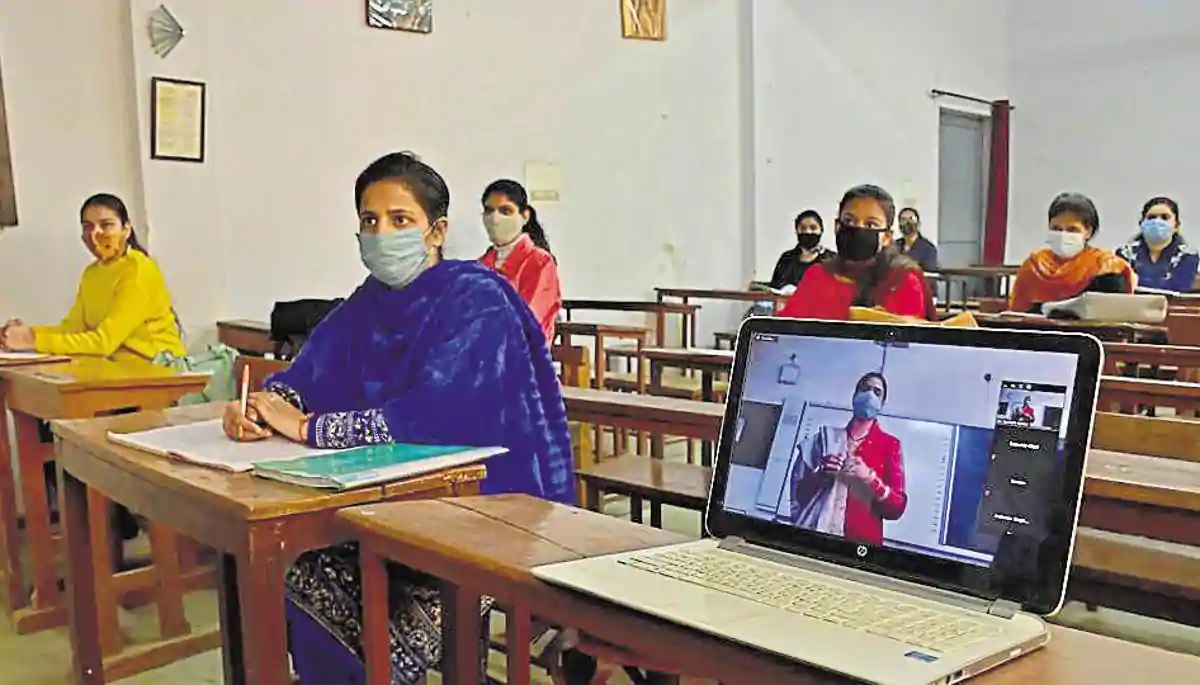
New Delhi, Dec 26: From turning walls of mud houses into blackboards to taking classes through loudspeakers on moving carts, from 'mohalla' classes to using public announcement system of panchayat bhawans, 2020 was full of struggle and innovation for teachers to ensure learning was not disrupted as schools remained closed due to COVID-19.

The over 10-month-long shutdown inspired creative ways to teach thousands of students who could not log on to online classes because they did not have access to smartphones and computers in several villages across the country.

Government school teachers in Dumka's Dumarthar village in Jharkhand found a new way to impart education to students who do not have access to smartphones.

They created blackboards on the walls of students' houses to teach them while maintaining social distancing.

"We started with an initiative called 'shiksha aapke dwaar' (education at your doorstep) to provide education to children who did not have access to smartphones and internet. More than 100 blackboards have been created on walls to teach students at their houses," said Tapan Kumar, a teacher in Dumarthar.

Every day, Indra Mukhi Chhetri, a maths and science teacher in Sikkim's Ravangala, visited homes of several students she identified and reached out to around 40 students in a week from class 1 to 5.

"Even if I take online classes, these students either do not have devices or Internet connectivity. Some of them may have access but then how do I maintain equality, others might feel left out. So I used to spend about 20 minutes with each student in a week.

"I collected their notebooks and write lessons for them, which they have to finish over the course of the week. I also brief the parents on what needs to be done," she said.

Ghanshyambhai, a teacher in Gujarat's Janan village, used the public announcement system of the village panchayat to share stories, songs, guidelines for parents on how to deal with children during the lockdown period, importance of exercising and much more.

"I also announced when I will be at Panchayat Bhawan so students or parents who want to clear any doubts or to interact can see me there, while maintaining social distancing," he added.

Teachers in Chhattisgarh conducted Mohalla (neighbourhood) classes in areas with low infection rates.

"We set up mini classrooms, with small groups of students, in community spaces. The teachers spent a couple of hours in each room, engaging with all students at least twice a week," one of the teachers said.

Another teacher in Chhattisgarh, Rudra Rana, used his motorcycle to conduct classes.

"The children were not able to go to study as schools were closed. So I thought why not bring the school to them. Even though schools continue to be shut, online classes are not viable for most rural students. I used a portable umbrella and a chalk board to take classes when I went to the village," he said.

In Haryana's Kanwarsika village, the morning bell announcing the start of a teaching session used to ring, not in the local school, but from a van equipped with a loudspeaker.

"Students settled down inside homes and in courtyards facing the street. First they recited a prayer following the teacher on loudspeaker and then they attended lessons of one subject each day," Noor Bano, a teacher with the government school in Nuh district, said.

In a newly-acquired daily practice, students in Haryana's Jhamri village opened their textbooks at the sight of the cart that arrived near their homes, filling the vacuum left by closure of schools due to the lockdown and lack of digital infrastructure such as feeble internet connectivity.

"I arranged for a loudspeaker system on a cart. The teachers were asked to turn-wise go with the cart and park it at a feasible location and impart lessons from there. It doesn't match up to the classroom learning levels but will at least ensure that students' don't drop out," said Satyanarayan Sharma, who runs a school in the village in Jhajjar district.

The lockdown induced by COVID-19 in March prompted schools and colleges to move to the virtual world for teaching and learning activities and exposed the existing digital divide in the country.

Comments

Add new comment

  • Coastaldigest.com reserves the right to delete or block any comments.
  • Coastaldigset.com is not responsible for its readers’ comments.
  • Comments that are abusive, incendiary or irrelevant are strictly prohibited.
  • Please use a genuine email ID and provide your name to avoid reject.
News Network
December 2,2025

A major upgrade in safety and monitoring is planned for Haj 2026, with every Indian pilgrim set to receive a Haj Suvidha smart wristband linked to the official Haj Suvidha mobile app. The initiative aims to support pilgrims—especially senior citizens—who may struggle with smartphones during the 45-day journey.

What the Smart Wristband Will Do

Officials said the device will come with:
•    Location tracking
•    Pedometer
•    SOS emergency button
•    Qibla compass
•    Prayer timings
•    Basic health monitoring

SP Tiwari, secretary of the UP State Haj Committee, said the goal is to make the pilgrimage safer and more comfortable.

“Most Hajis are elderly and not comfortable with mobile apps,” he said. “The smartwatch will help locate pilgrims who forget their way or cannot communicate their location.”

The wristbands will be monitored by the Consulate General of India in Saudi Arabia, similar to mobile tracking via the Haj Suvidha App.

Free Distribution and Training

•    Smart wristbands will be given free of cost.
•    Training for pilgrims will be conducted between January and February 2026.
•    Sample units will reach state Haj committees soon.
•    Final devices will be distributed as pilgrims begin their journey.

New Rules for Accommodation

Two major decisions have also been finalised for Haj 2026:
1.    Separate rooms for men and women – including married couples. They may stay on the same floor but must occupy different rooms, following stricter Saudi guidelines.
2.    Cooking banned – gas cylinders will not be allowed; all meals will be provided through official catering services arranged by the Haj Committee of India.

These decisions were finalised during a meeting of the Haj Committee of India and state representatives in Mumbai.

Haj Suvidha App Launched Earlier

The government launched the Haj Suvidha App in 2024, offering:

•    Training modules
•    Accommodation and flight details
•    Baggage information
•    SOS and translation tools
•    Grievance redressal

Haj 2026 Quota and Key States

•    India’s total Haj quota for 2026: 1,75,025 pilgrims
•    70% (1,25,000) allotted to the Haj Committee of India
•    30% (around 50,000) reserved for Haj Group Organisers

Uttar Pradesh has the largest allocation (around 30,000 seats), though approximately 18,000 pilgrims are expected to go this year. States with high pilgrim numbers include Kerala, Maharashtra and Gujarat.

Dates of Haj 2026

The pilgrimage is scheduled to take place from 24 May to 29 May, 2026 (tentative).
Haj is one of the five pillars of Islam and is mandatory for Muslims who meet the required conditions.

Comments

Add new comment

  • Coastaldigest.com reserves the right to delete or block any comments.
  • Coastaldigset.com is not responsible for its readers’ comments.
  • Comments that are abusive, incendiary or irrelevant are strictly prohibited.
  • Please use a genuine email ID and provide your name to avoid reject.
News Network
December 2,2025

Puttur: The long-cherished dream of a government medical college in Puttur has moved a decisive step closer to reality, with the Karnataka State Finance Department granting its official approval for the construction of a new 300-bed hospital.

Puttur MLA Ashok Kumar Rai announced the crucial development to reporters on Monday, confirming that the official communication from the finance department was issued on November 27. This 300-bed facility is intended to be the cornerstone for the establishment of the government medical college, a project announced in the state budget.

Fast-Track Implementation

The MLA outlined an aggressive timeline for the project:

•    A Detailed Project Report (DPR) for the hospital is expected to be ready within 45 days.

•    The tender process for the construction will be completed within two months.

Following the completion of the tender process, Chief Minister Siddaramaiah is scheduled to lay the foundation stone for the project.

"Setting up a medical college in Puttur is a historical decision by the Congress government in Karnataka," Rai stated. The project has an estimated budget allocation of Rs 1,000 crore for the medical college.

Focus on Medical Education Department

The MLA highlighted a key strategic move: requesting the government to implement the hospital construction through the Medical Education Department instead of the Health and Family Welfare Department. This is intended to streamline the entire process of establishing the full medical college, ensuring the facilities—including labs, operation theatres, and other necessary infrastructure—adhere to the strict guidelines set by the Medical Council of India (MCI). The proposed site for the project is in Bannur.

Rai also took the opportunity to address political criticism, stating that the government has fulfilled its promise despite "apprehensions" and "mocking and criticising" from opposition parties who had failed to take similar initiatives when they were in power. "Chief Minister Siddaramaiah has kept his word," he added.

Comments

Add new comment

  • Coastaldigest.com reserves the right to delete or block any comments.
  • Coastaldigset.com is not responsible for its readers’ comments.
  • Comments that are abusive, incendiary or irrelevant are strictly prohibited.
  • Please use a genuine email ID and provide your name to avoid reject.
News Network
November 24,2025

israelsyra.jpg

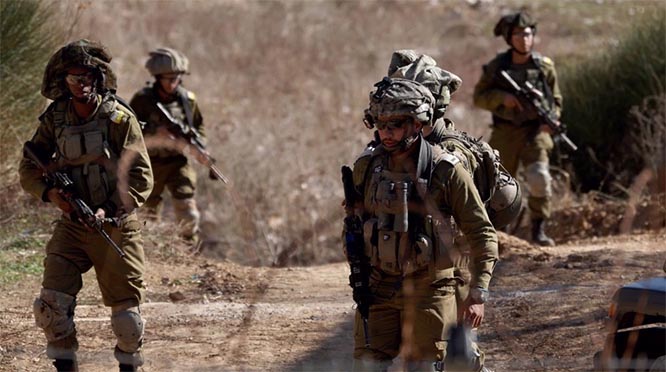
Israeli forces have pushed over the Syrian frontier, erecting a checkpoint and stopping vehicles in the southwestern city of Quneitra, in yet another breach of the Arab country’s sovereignty.

The violation took place on Sunday, when the troops made their way across the border, setting up the outpost near the Ain al-Bayda junction in northern Quneitra, Syrian outlets reported.

According to the al-Ikhbariya paper, an Israeli detachment positioned itself at the junction, halting cars and conducting searches.

The Syrian Arab News Agency (SANA) reported that three Israeli military vehicles then moved further into the northern countryside, deploying between the town of Jubata al-Khashab and the villages of Ofaniya and Ain al-Bayda. The agency added that a separate Israeli unit mounted a new incursion in the central region, approaching the villages of Umm Batina and al-Ajraf.

Residents said such activities have surged in recent months, pointing to Israeli advances onto farmland, leveling of extensive forested areas, arrests, and spread of mobile checkpoints.

The Israeli regime began markedly increasing its military aggression against Syria last year.

The escalation coincided with increasingly ferocious onslaughts throughout the country by the so-called Hay'at Tahrir al-Sham (HTS) Takfiri terrorist group, which the government of President Bashar al-Assad had confined to northwestern Syria. The HTS, however, managed to overthrow the government as the Israeli attacks would pummel the country’s civilian and defensive infrastructure.

Various reports have shown that, during the escalation, the regime conducted more than 1,000 airstrikes on the Syrian territory and over 400 ground raids into the south.

Following the collapse of the Assad government, Tel Aviv also widened its grip over the occupied Golan Heights by taking control of a demilitarized buffer zone, in defiance of a 1974 Disengagement Agreement. Earlier this month, senior Israeli officials, including Prime Minister Benjamin Netanyahu, visited the buffer zone, prompting expressions of alarm on the part of the United Nations.

The United States, the regime’s biggest ally, has, meanwhile, been fraternizing the HTS head Abu Mohammed al-Jolani amid the widely reported prospect of rapprochement with Tel Aviv.

Comments

Add new comment

  • Coastaldigest.com reserves the right to delete or block any comments.
  • Coastaldigset.com is not responsible for its readers’ comments.
  • Comments that are abusive, incendiary or irrelevant are strictly prohibited.
  • Please use a genuine email ID and provide your name to avoid reject.